• TalkBass has been independent since 1998. Add your voice.
    Create a free account to reply to discussions, view embedded media, and browse with fewer display ads.
    Join freeLog in
    Want zero display ads or expanded classifieds tools? Compare plans.

U.S. Peavey Club

Peavey necks are two pieces with a glued seam down the middle.
Ever see one that has split, wanna know why?
You put the sharp point of the micro tilt sticking up in the middle and then screw two screws, one on each side....just begging for a split.
Instead, put a shim directly under the two screws that are closer to the heel, there is zero pressure to cause any problems.
The key is to straddle the two screws with two holes in the shim.
This is the way Musicman does it and it makes sense.
Here is their 3 pack of thicknesses.
.010
.015
.020
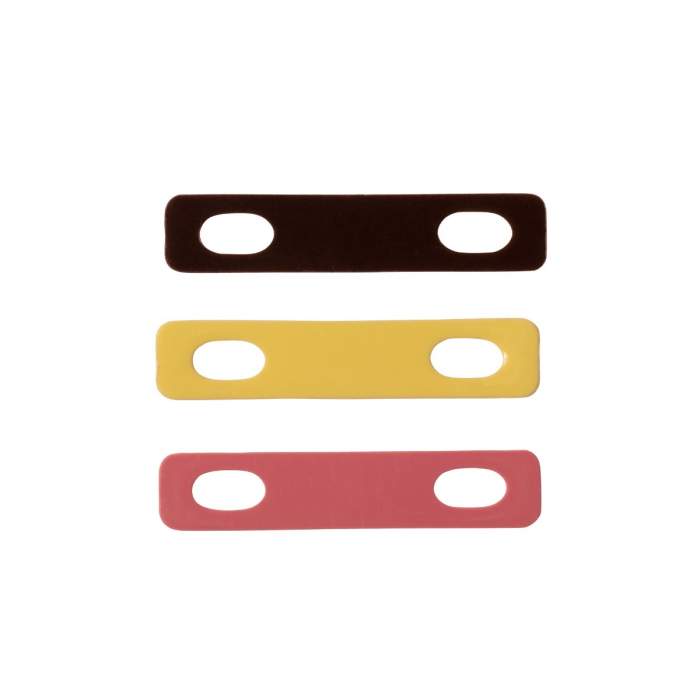
m06050.jpeg
 
Last edited:
  • Like
Reactions: Bassinthemudd
My (educated) guess:

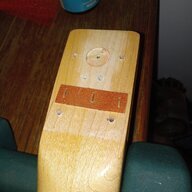
It's not a shim. Its purpose isn't to raise the level of the neck in the pocket. It's made of sandpaper, which suggests that its primary purpose is to resist any sideways forces on the neck that might cause it to shift in the pocket laterally.

Usually shims are used to raise the level of the neck in the pocket, but that's what the micro-tilt is for.

(Why are people against using the micro-tilt??)
I don't know why they were stapling sandpaper in there, I saw the sandpaper thing before Peavey was making basses/guitars and never knew what the heck it was for.
Why would you need sandpaper to hold a neck in the heel route? ...there are four large screws that serve as positional markers.
Once it's screwed down it's not going to shift, those screws apply a lot of pressure.
I do think five or six screws is a better idea though.

Shims are used to change the angle of the neck in the pocket, not really to raise the level of the neck in the pocket.

Both Fender and G&L abandoned the micro-tilt...probably to save money.
Fender was smart enough to go back to four screws instead of the three they used during micro-tilt days.
G&L abandoned it and went from three screws to six screws which was even smarter.
 
  • Like
Reactions: PVt40man
Shims are used to change the angle of the neck in the pocket, not really to raise the level of the neck in the pocket.

True, and that's really what I meant to impart anyway.

These days I just glue my necks in. Or build neck-thru. Get the geometry right the first time, and there's no need to adjust anything.
 
I know this has been covered on some forums before. And it seems that the solution to the neck hump (not the split of course) was to plane the finger board. But if the cause of the hump is counter presures between the microtilt and the neck screws (may not be, don't remember if this was determined) wouldn't doing the oposite (placing the neck on a flat surface and clamping it at the apex) cure the problem?
 
I don't know why they were stapling sandpaper in there, I saw the sandpaper thing before Peavey was making basses/guitars and never knew what the heck it was for.
Why would you need sandpaper to hold a neck in the heel route? ...there are four large screws that serve as positional markers.
Once it's screwed down it's not going to shift, those screws apply a lot of pressure.
I do think five or six screws is a better idea though.

Shims are used to change the angle of the neck in the pocket, not really to raise the level of the neck in the pocket.

Both Fender and G&L abandoned the micro-tilt...probably to save money.
Fender was smart enough to go back to four screws instead of the three they used during micro-tilt days.
G&L abandoned it and went from three screws to six screws which was even smarter.
Would you recommend removing the sandpaper then?
 
Would you recommend removing the sandpaper then?
I would remove the sandpaper, it is doing nothing useful.
And because the saddles on that bridge are 1/2" diameter (huge), I would put a .015 or a .020 shim at the two screws furthest towards the heel.
You can do it like the MusicMan one with a paper hole punch to make the holes.
Another good option is to replace those huge saddles with a brass set from a Wilkinson bridge, they are more reasonable sized and will never rust.
You can get a Wilkinson bridge for about $18.00 from several sources on EBay.
Not sure why Peavey decided to go with such large saddles but the Trapezoidal bridge just has saddles that are too big.
With that bridge, it seems you almost always have to shim or micro-tilt the neck.
Here are the Wilkinson brass saddles with the Peavey Trapezoidal bridge.
IMG_20220823_115443625.jpg
 
Last edited:
  • Like
Reactions: PVt40man
I would remove the sandpaper, it is doing nothing useful.
And because the saddles on that bridge are 1/2" diameter (huge), I would put a .015 or a .020 shim at the two screws furthest towards the heel.
You can do it like the MusicMan one with a paper hole punch to make the holes.
Another good option is to replace those huge saddles with a brass set from a Wilkinson bridge, they are more reasonable sized and will never rust.
You can get a Wilkinson bridge for about $18.00 from several sources on EBay.
Not sure why Peavey decided to go with such large saddles but the Trapezoidal bridge just has saddles that are too big.
With that bridge, it seems you almost always have to shim or micro-tilt the neck.
Here are the Wilkinson brass saddles with the Peavey Trapezoidal bridge.
View attachment 4917857
If I bought the Stew mac shims, which ones would I use. I see they don't have the sizes you mentioned. Thanks!
 
There have been long discussions on TalkBass about the "Ski Jump" hump at the point where the neck meets the body.
There have been long discussions on TalkBass about the last end (two or three frets) of the fretboard/heel getting a hump.
Five different luthiers can't completely agree on why.
But I know for sure that a neck that has had proper truss rod tension it's whole life can last for 30-40 years because I have a number of Peaveys with no neck problems.
I am suspicious of Micro-Tilt systems.
I prefer a shim to correct a mistake that should never happen in the first place.
If Fender, Peavey and others would make a neck heel that matches the neck pocket depth properly and they put on the correct bridge saddle size to match the neck and pocket, then we would not need shims.
Shims started because some people at Fender were sloppy, and it seems lots of other companies can't consistently get it right the first time either.
So they throw sandpaper and shims and whatnot to solve their problem.
It's not a big deal but so many basses are fixed with the correct bridge or a little shim, you would think the factories could make the correction!
Okay sorry...temper tantrum rant over. :bag:
 
If I bought the Stew mac shims, which ones would I use. I see they don't have the sizes you mentioned. Thanks!
The .5 degree is usually fine, but getting a .5 degree and a 1 degree will cover you for sure.
And since StewMac gouges on shipping, you might as well buy both and pay for shipping once.
The ash Gen 1 Fury above had the .5 degree and the Wilkinson saddles and that worked great.
It just got a different Peavey Fury neck (rosewood fretboard) and I took out the shim and lowered the saddles a bit and it is good again.
...which tells me that Peavey (and probably Fender) are not consistent with thickness tolerances.

I know this has been covered on some forums before. And it seems that the solution to the neck hump (not the split of course) was to plane the finger board. But if the cause of the hump is counter presures between the microtilt and the neck screws (may not be, don't remember if this was determined) wouldn't doing the oposite (placing the neck on a flat surface and clamping it at the apex) cure the problem?
The problem is that it took years and years to make the hump, so curing the hump takes a long time, or to add heat to the clamping.
 
Last edited:
  • Like
Reactions: PVt40man
The .5 degree is usually fine, but getting a .5 degree and a 1 degree will cover you for sure.
And since StewMac gouges on shipping, you might as well buy both and pay for shipping once.
The ash Gen 1 Fury above had the .5 degree and the Wilkinson saddles and that worked great.
It just got a different Peavey Fury neck (rosewood fretboard) and I took out the shim and lowered the saddles a bit and it is good again.
...which tells me that Peavey (and probably Fender) are not consistent with thickness tolerances.

The problem is that it took years and years to make the hump, so curing the hump takes a long time, or to add heat to the clamping.
I take it that a set neck with a sky jump is don for?
 
I take it that a set neck with a sky jump is don for?
I've never had a set neck bass but I think that fretboard planing can correct the problem, the question is, how long will that last? ...and I don't know the answer.
Does the hump problem come back because the original problem that caused it still exists? ...don't know that either.
I'm sort of afraid of set neck and neck through, because what if something goes wrong?
With bolt on, the option to replace the neck is always there.
 
  • Like
Reactions: Bleecker
I think it’s also worth saying that a lot of people have necks with considerable relief, way more than manufacturer spec, and then have to kick the neck back and deck the saddles to have action that *looks* somewhat playable, but is pretty out of whack if you look at what’s actually going on.

Not trying to make excuses or anything, a lot of times a shim is necessary. And some people like a lot of relief, but I think some folks blame the instrument more than their hamfisted technique sometimes. Just my 2 cents :)
 
...which tells me that Peavey (and probably Fender) are not consistent with thickness tolerances.

The problem is that it took years and years to make the hump, so curing the hump takes a long time, or to add heat to the clamping.

SHIM - I've worked in manufacturing... a quick shim is easier to mass produce than an angle. Through the years, I've setup over 500 usa peaveys (gulp). ... Always arrow straight... quality strings... shim... intonation... then align the geometry... intonation... I can consistently get action less than 1mm up and down the neck

PROBLEMS -
  • SKI JUMP - I've paid to have a rare peavey neck steamed (for the ski jump) ... in my case it worked... this is a gamble... the ski jump was the product of tuning an a bass (too much tension)
  • NUT - many dorks will mess with the nut (trying to lower... I've never known a bad factory Peavey Nut
  • FRET DRESSING - I own a carbon fiber acoustic (intended for hard hitting bluegrass players)... it has a neck bow. We ended up redoing the nut, bridge saddle... and frets.... it was NOT cheap... NOT quick... NOT something I'd suggest doing for most guitars
 
  • Like
Reactions: mb94952
SHIM - I've worked in manufacturing... a quick shim is easier to mass produce than an angle. Through the years, I've setup over 500 usa peaveys (gulp). ... Always arrow straight... quality strings... shim... intonation... then align the geometry... intonation... I can consistently get action less than 1mm up and down the neck

PROBLEMS -
  • SKI JUMP - I've paid to have a rare peavey neck steamed (for the ski jump) ... in my case it worked... this is a gamble... the ski jump was the product of tuning an a bass (too much tension)
  • NUT - many dorks will mess with the nut (trying to lower... I've never known a bad factory Peavey Nut
  • FRET DRESSING - I own a carbon fiber acoustic (intended for hard hitting bluegrass players)... it has a neck bow. We ended up redoing the nut, bridge saddle... and frets.... it was NOT cheap... NOT quick... NOT something I'd suggest doing for most guitars
CNC machines for guitar and bass manufacturing have obviously gotten better and better, I bought a Chinese made Warwick that had very precise tolerances.
I think Peavey made very good basses/guitars and all of their basses I've had here were able to be set up to whatever numbers I wanted pretty easily.
I think their bi-laminate necks tend to be at least as good as Fender necks, which is good enough for rock n roll. :bassist:
 
Last edited:
  • Like
Reactions: donhank and mb94952

Latest posts