
What’s so weird? Their vocal parts on that track, or that they did the session?That's just weird....

TalkBass has been independent since 1998. Add your voice.
Create a free account to reply to discussions, view embedded media, and browse with fewer display ads.
Join free Log in
Want zero display ads or expanded classifieds tools? Compare plans.
What’s so weird? Their vocal parts on that track, or that they did the session?That's just weird....
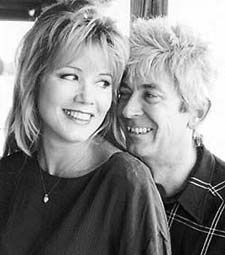
There’s more of a backstory to that, and a lot of it isn’t very pretty. Probably not known in the US except to hardcore fans of both groups, The Who and The Small Faces, as the two premier Mod outfits in the UK, were “brother” bands, socializing and gigging together. There was a riotous tour of Australia in ‘67 that got them both banned. As Keith Moon slipped into more and more irrational behavior, plus the drinking and drugs, Kim feared for her and Mandy’s safety(there had been some domestic violence issues). She was drawn to McLagen’s relative stability, and they moved in together; at one point an unhinged Moon threated to kill Mac. Eventually, after the Small Faces turned into the Faces, and then got ditched by Rod Stewart, the three of them moved to the US, first to Los Angeles, then to Austin, TX(a grown-up Amanda stayed in Southern California). Mac of course was a first call session keyboardist as well as having his own band, and Kim went into a beautician business, but sadly died in an Austin traffic accident in 2006.Kim Kerrigan, the wife of Who drummer Keith Moon (and mother of his daughter Amanda), was also married to Small Faces keyboard player Ian McLagan.
Joe Walsh was a local performer around here and thru a friend I actually met and partied with James Gang drummer Jimi Fox after Joe went solo. His license plate on his Jag was “Funk 49” and he said he made $40k a year off royalties from that song alone. Joe never had a great vocal style but boy he could (can) play with the best…like the Eagles!


I watched a documentary on Prince and his marketing company and press team had to send out a Floppy disc with his “name symbol” on it since no one could reproduce it!On his 35th birthday (June 7, 1993), he changed his name to an unpronounceable symbol, a mixture of the male and female signs combined with the alchemy symbol for soapstone. The media began referring to him as "The Artist Formerly Known As Prince," or simply "The Artist." His staff at Paisley Park, on the other hand, called him "the dude." In May 2000, he changed his name back to Prince.
Rob Grange is known for his work with The Amboy Dukes, and with Ted Nugent, as well as his unique bass lines in the song "Stranglehold".
Grange plays early Fender basses, circa '56–'62. In 1973 he was the first documented bassist to modify his '62 Fender Precision bass by adding a Pre-CBS Fender Jazz pickup, a configuration later to be known as a "P/J" bass. This resulted in adding highs to the tone. He took this a step further and added a toggle switch and an "out of phase" switch. This bass became known as the "Stranglehold Bass". It wasn't until the 80s that Fender picked up on this popular trend and produced their first Fender P/J basses.
Rob Grange is known for his work with The Amboy Dukes, and with Ted Nugent, as well as his unique bass lines in the song "Stranglehold".
Grange plays early Fender basses, circa '56–'62. In 1973 he was the first documented bassist to modify his '62 Fender Precision bass by adding a Pre-CBS Fender Jazz pickup, a configuration later to be known as a "P/J" bass. This resulted in adding highs to the tone. He took this a step further and added a toggle switch and an "out of phase" switch. This bass became known as the "Stranglehold Bass". It wasn't until the 80s that Fender picked up on this popular trend and produced their first Fender P/J basses.

Rob Grange is known for his work with The Amboy Dukes, and with Ted Nugent, as well as his unique bass lines in the song "Stranglehold".
Grange plays early Fender basses, circa '56–'62. In 1973 he was the first documented bassist to modify his '62 Fender Precision bass by adding a Pre-CBS Fender Jazz pickup, a configuration later to be known as a "P/J" bass. This resulted in adding highs to the tone. He took this a step further and added a toggle switch and an "out of phase" switch. This bass became known as the "Stranglehold Bass". It wasn't until the 80s that Fender picked up on this popular trend and produced their first Fender P/J basses.
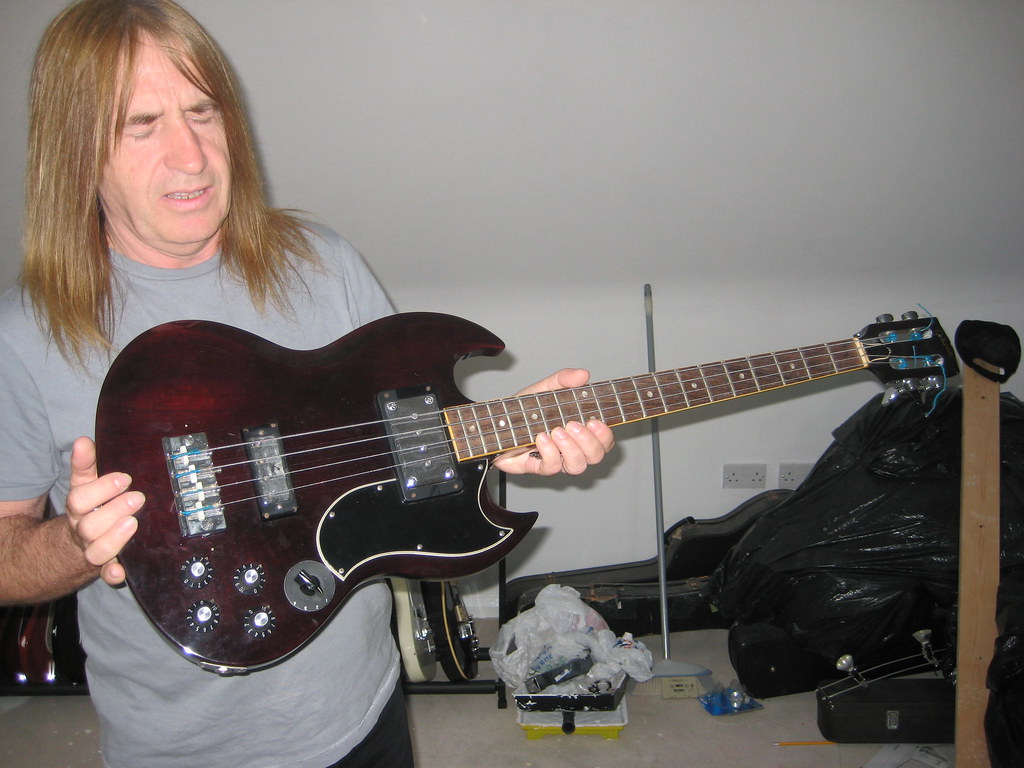
Trevor Bolder is an under-rated Bass player! He was Bowies' bassist with Spiders from Mars too. I saw Bowie in '72 and immediately went out and bought a slotted headstock EB-3 just like Trevors'. Never could grow the sideburns! Ha!I think Trevor Bolder played a P/J Bass when he was in Wishbone Ash too.

I guess you would call that a splitting headache.Michael Stipe of REM used to claim that he could predict earthquakes. He said he got a nasty headache a few days before they hit.
Yeah. I heard he had to call Alanis Morrisette to borrow a Jagged Little Pill to ease the pain.I guess you would call that a splitting headache.
Totally unrelated but nice segue…My 1st concert since COVID. I saw Collective Soul last Tuesday night and they rocked. They did a great version of REM’s The One I Love. Fantastic show from a bunch of old guys like me!Michael Stipe of REM used to claim that he could predict earthquakes. He said he got a nasty headache a few days before they hit.


