• TalkBass has been independent since 1998. Add your voice.
    Create a free account to reply to discussions, view embedded media, and browse with fewer display ads.
    Join freeLog in
    Want zero display ads or expanded classifieds tools? Compare plans.

Unusual Rock Trivia?

My Little Pony, meet Tupac Shakur.

Toymaker Hasbro has acquired gangster rap label Death Row Records — which counts Shakur and Snoop Dogg among its artists — as part of a bid to grow its stable of family-friendly entertainment.

The worldwide toymaker announced the $4 billion deal Thursday to buy British company Entertainment One, which produces animated kids shows such as “Peppa Pig” and “PJ Masks” but also owns the rap label.

Hasbro, which owns the rights to My Little Pony, Monopoly, and Mr. Potato Head, has said the company was looking to expand “family brands” and television production with the purchase.

“The acquisition of eOne adds beloved story-led global family brands that deliver strong operating returns to Hasbro’s portfolio and provides a pipeline of new brand creation driven by family-oriented storytelling,” Hasbro CEO Brian Goldner said in a statement.

Though Hasbro was aiming for more family-friendly programming, the toymaker ended up with Death Row Records, a division of Entertainment One purchased in 2013.


This is great news, as I've wanted Tupac and Suge action men since I was a kid. A toy death car would be cool, too. Most promising acquisition since Yamaha bought Ampeg, fingers crossed!
 
Invalid Link Removed

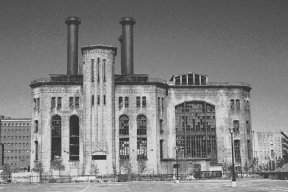
On October 17, 1919, Dr. Frank Conrad, "The Father of Radio Broadcasting", began regular broadcasting of phonograph records over the airwaves in Pittsburgh. Conrad first became interested in radio in 1912 when, in order to settle a bet on the accuracy of a watch, Conrad built a radio in order to hear time signals from the Arlington, Virginia Naval Observatory. He then constructed, in his garage, anew transmitter, licensed in 1916 as 8XK, whose signal could be heard throughout the Pittsburgh area. In response to popular demand, Conrad began broadcasting for two hours each Wednesday and Saturday night. When all civilian amateur radio operations ceased in 1917, Conrad began using his radio for military purposes during World War I.

Frank Conrad's broadcasts were attended by an increasing number of amateurs who would frequently call Conrad wanting to know when the next broadcast would be. According to S. M. Kintner, later head of Westinghouse and one of Conrad's early colleagues: "Finally these amateurs called up Conrad on the telephone so frequently and at such inconvenient times that he established regular times when he would operate his station. This generally was Wednesday and Saturday nights. The information regarding these concerts of Conrads' was gradually passed by word of mouth until quite a number knew of it." Conrad resumed his amateur radio broadcasts in October 1919. Most of the content of these early broadcasts was music: Conrad's sons and niece were talented musicians and Conrad played numerous songs from his record collection. He soon ran out of records, however, and struck a deal with a local music store: if the store would supply him with records, he would give the store on-air promotions. This exchange is arguably the first broadcast commercial in airwave history. He has also been called the first DJ in history.

There are also reports of football scores reported, as well as some talk programming. The vice-president of Westinghouse soon saw an ad in the newspaper for a toy store advertising radio sets that could receive Conrad's broadcasts. He saw the potential for mass communication that radio offered, and Westinghouse began manufacturing radio receivers. Westinghouse applied for a call sign in mid-October, 1920. The call sign arrived just in time for the November 2, 1920 election, and the radio station KDKA was born. The original station was a shack on top of a Westinghouse building in East Pittsburgh. Conrad was not there to witness the historical broadcast, however; worried that the station might go down, he was sitting in his Wilkinsburg garage with his own transmitter as a backup.
(Photo from http://thepittsburghhistoryjournal.com/)
 
Invalid Link Removed

On October 17, 1919, Dr. Frank Conrad, "The Father of Radio Broadcasting", began regular broadcasting of phonograph records over the airwaves in Pittsburgh. Conrad first became interested in radio in 1912 when, in order to settle a bet on the accuracy of a watch, Conrad built a radio in order to hear time signals from the Arlington, Virginia Naval Observatory. He then constructed, in his garage, anew transmitter, licensed in 1916 as 8XK, whose signal could be heard throughout the Pittsburgh area. In response to popular demand, Conrad began broadcasting for two hours each Wednesday and Saturday night. When all civilian amateur radio operations ceased in 1917, Conrad began using his radio for military purposes during World War I.

Frank Conrad's broadcasts were attended by an increasing number of amateurs who would frequently call Conrad wanting to know when the next broadcast would be. According to S. M. Kintner, later head of Westinghouse and one of Conrad's early colleagues: "Finally these amateurs called up Conrad on the telephone so frequently and at such inconvenient times that he established regular times when he would operate his station. This generally was Wednesday and Saturday nights. The information regarding these concerts of Conrads' was gradually passed by word of mouth until quite a number knew of it." Conrad resumed his amateur radio broadcasts in October 1919. Most of the content of these early broadcasts was music: Conrad's sons and niece were talented musicians and Conrad played numerous songs from his record collection. He soon ran out of records, however, and struck a deal with a local music store: if the store would supply him with records, he would give the store on-air promotions. This exchange is arguably the first broadcast commercial in airwave history. He has also been called the first DJ in history.

There are also reports of football scores reported, as well as some talk programming. The vice-president of Westinghouse soon saw an ad in the newspaper for a toy store advertising radio sets that could receive Conrad's broadcasts. He saw the potential for mass communication that radio offered, and Westinghouse began manufacturing radio receivers. Westinghouse applied for a call sign in mid-October, 1920. The call sign arrived just in time for the November 2, 1920 election, and the radio station KDKA was born. The original station was a shack on top of a Westinghouse building in East Pittsburgh. Conrad was not there to witness the historical broadcast, however; worried that the station might go down, he was sitting in his Wilkinsburg garage with his own transmitter as a backup.
(Photo from http://thepittsburghhistoryjournal.com/)
And, because of Conrad, my father has had a job since about 1970, and I have had one since 1986, and counting...

The station we both work at has been on the air since June 3rd, 1959. WGOH Grayson KY.

BnB
 
Carson Van Osten was the bass player in The Nazz with Todd Rundgren, Thom Mooney, and Robert "Stewkey" Antoni.

Van Osten studied at the Philadelphia College of Art. He formed The Nazz with Rundgren and Mooney in 1967. He recorded three albums with The Nazz and played on Open My Eyes and the original version of Hello It's Me.

Later, Van Osten became a writer and artist of Disney comics and created Mickey Mouse and Goofy comics. He was art director for Disney's comic strips department in the 1980s.

Van Osten also created an N scale model railroad, the Rio Poco, that was featured in the June 1991 issue of Model Railroader magazine.

On August 7, 2015, Van Osten was one of ten individuals who were honored with a Disney Legends Award. The annual awards ceremony recognizes those who have made significant contributions to the Walt Disney Company.

MODEL-RAILROADER-Magazine-June-1991-Volume.jpg


D23-Expo-2015-Disney-Legends-Handprint-5.jpg


lf?set=path%5B1%2F9%2F1%2F6%2F0%2F19160538%5D%2Csizedata%5B850x600%5D&call=url%5Bfile%3Aproduct.jpg


lf?set=path%5B1%2F9%2F2%2F3%2F0%2F19230330%5D%2Csizedata%5B850x600%5D&call=url%5Bfile%3Aproduct.jpg


The music to the song "Smile" was actually written by Charlie Chaplin. It was first used as an instrumental theme in the soundtrack for his 1936 movie Modern Times. Chaplin composed the music, inspired by Puccini's Tosca. John Turner and Geoffrey Parsons added lyrics and title in 1954. The lyrics are based on the film with the singer telling the listener to cheer up and that there is always a bright tomorrow, just as long as they smile. Nat King Cole recorded the first version with lyrics and had a hit in 1954.


A story about "Take Me Home Tonight" and how Eddie Money came to have a huge hit with it.

Eddie's career was on a down slide due to personal issues in the mid 80s. Columbia Records still wanted to keep him but limit his control on the songs and recordings. Record producer Richie Zito was brought in to revive his songs. Richie brought Money the song "Take Me Home Tonight"

Eddie tells this story: "I didn't care for the demo [but] it did have a good catch line. When I heard [a snippet of] 'Be My Baby' in it I said: 'Why can't we get Ronnie Spector to sing it?' and was told 'That's impossible.'" Money invited his friend Martha Davis, lead vocalist of The Motels, to sing the lines from "Be My Baby" on "Take Me Home Tonight": Davis encouraged him to try to recruit Spector herself and Money was eventually able to speak on the phone to Spector at her home in northern California.

"I could hear clinking and clanking in the background...She said: 'I'm doing the dishes, and I gotta change the kids' bedding. I’m not really in the business anymore, Eddie. Phil Spector and all that, it was a nightmare'...I said 'Ronnie, I got this song that’s truly amazing and it’s a tribute to you. It would be so great if you…did it with me.'"

The success of "Take Me Home Tonight" encouraged Spector to resume her singing career, and she released her second solo album, Unfinished Business, in 1987. Money would say of "Take Me Home Tonight": "I didn't like the song, but…it helped Ronnie out and it helped me get some of my other material on the album across, so now I'm happy I did it."

R.I.P. Eddie :crying:

 
Last edited:
A couple King Crimson related ones:

1) Bryan Ferry failed an audition for the KC lead vocal slot after Greg Lake left, but Fripp said he had potential in other areas. Not long after Roxy Music came into being. Fripp also helped them get signed.

2) Elton John was originally booked to sing on "In The Wake of Poseidon" but the arrangement was cancelled by Fripp.
 
Actress Rosanna Arquette had two hit songs with her in mind.

Toto keyboardist and vocalist David Paich wrote the Grammy winning song "Rosanna" when his bandmate Steve Porcaro was dating Rosanna Arquette. While the song is not about Rosanna, her name fit with his melody. Four years later, Peter Gabriel wrote "In You Eyes" with Rosanna in mind while he was dating her. She convinced Peter to let film director Cameron Crowe use the song in his movie Say Anything in the "boombox" scene with John Cusack that became iconic.
 
Tina Turner and The Ikettes were the uncredited backing vocalists on Frank Zappa's "Moving To Montana" .

Ike himself was furious when he heard of them doing the session.

They’re all over the entire Overnite Sensation album, not just the tune “Montana”. Can you imagine being in the studio watching Tina sing “Dyna-Mo Hum”? :::swoon:::
 
Tina Turner and The Ikettes were the uncredited backing vocalists on Frank Zappa's "Moving To Montana" .

Ike himself was furious when he heard of them doing the session.

From wiki:

Frank Zappa wanted to use backup singers on the songs "I'm the Slime", "Dirty Love", "Zomby Woof", "Dinah-Moe Humm" and "Montana". His road manager suggested The Ikettes, and Ike & Tina Turner were contacted. Invalid Link Removed insisted that Zappa pay the singers, including Tina Turner, no more than $25 per song.[1] However, an invoice shows that they were actually paid $25 per hour, and in total $187.50 each for 7 1/2 hours of service.[2] During the recording sessions at Bolic Sound, Tina brought Ike into the studio to hear the highly difficult middle section of "Montana" which had taken the Ikettes a few days to learn and master. Ike listened to the tape and responded "What is this s#!t?" before leaving the studio.[1] Ike later insisted that Zappa not credit the Ikettes on the released album.[1]

Over-Nite Sensation - Wikipedia