Oh, goodie! Another "Bash Fender" thread. Wow, we haven't had one of these in, like hours.

TalkBass has been independent since 1998. Add your voice.
Create a free account to reply to discussions, view embedded media, and browse with fewer display ads.
Join free Log in
Want zero display ads or expanded classifieds tools? Compare plans.

I like this perspective. It acknowledges the original advancements and refinements Leo provided us without the eye-rolling insistence that "Leo got it right the first time."I don't care if he got it right the first, second, or hundredth time. He got a lot of things right and established several landmarks for bass and guitar. But I get that sometimes we have a slow day on here.


I am reminded of an ancient question posed by Microsoft: Why are manhole covers round? Answer: It doesn't matter why. It is a standard. Same for Leo. He may not have gotten there first, but he did set the standard.

I've been playing Fender and Fender-type basses for since the '80s. I've also been a product/industrial designer and maker for about 30 years. I know some things about this.
Consider available materials, production methods, and industrial standards of the era. re tuner weight. Go get some Gotoh Res-O-Lite if you need the latest and lightest tech. They drop right in without changing anything about the bushing and mount screw locations.
I only have basses with threaded bridge saddles and zero problems with any strings moving or shifting.
The truss rod access does not necessarily require more than loosening the neck and tilting it in the pocket unless you're performing a large change or adjustment for different strings.
Single coil pickups, Tele, Strat, SCPB, or Jazz, etc. are not a fault and not the first or last single coil pickups ever designed. They're simply a type.
7.25" fretboard radius in practice or reality makes vanishingly little difference in neck relief and action. Nil actually. I should know; I have, I set up and I play 7.25 and 9.5 myself. The relief on all of them is very minimal--sub 0.01"-- and very low action without fret buzz.
Approximately never is about how much I want or need access to the 20th fret.
The '57 P wasn't the first iteration. Neither was the Jazz Bass Fender's first bass design so why refer to it as an example for single coils? That kind of helps to make my point though, thank you. '51 P was designed with SC. If SC pickups are fundamentally flawed to the extent of being considered fatally bad then why did Leo Fender choose to use SC pickups on his third bass iteration, the Jazz Bass, circa '59-'60?
I could probably go on further but I think this is a fairly solid first draft.
Not so sure about that last part about pickup placement. I'd wager that was very intentional. I believe he had a device to where he could "slide" the pickups up and down between the neck and bridge to find the sweet spots for each location.Lightweight vintage style bridge with threaded steel saddles has not been improved upon. Sturdier bridges with added mass (e.g., Badass, G&L) suck sonically to my ears. So IMHO he did get that right. Another thing he got right just by accident is the placement of the split P pickup. It's sublime. Something about it just sits right in a mix. But Leo likely placed it there because it looked right. YMMV


It's the fact that he made one mass producible that someone else has been able to improve on over the years. It happens...For the past five years, I've been using vintage-inspired Fender Jazzes and Precisions exclusively. I believed in the adage that Leo got it right the first time around with the Jazz and the '57 Precision onwards.
Yesterday, I got a "modern" bass and couldn't believe how wrong Leo had been:
Also, when we say, "Leo got it right the first time around," we usually mean the '57 Precision, which isn't exactly the "first time around."
- Truss rod access requires having to remove the neck
- Tuners weight so much, resulting in serious neck dive
- Bridge requires strings go through it, which is mildly inconvenient when changing strings
- Threaded saddles causes smaller gauge strings to move move around
- Single coil hum (Jazz bass)
- 7.25-inch fingerboard radius, requiring more neck relief and so higher action
- Heel design makes it had to access last frets.
You could Leo created a bass that works in most if not all genres, but isn't that only because it was, for a while, the only bass available on the market, more or less? Would we say the same thing of the Warwick Thumb, for example, had it been the first bass on the market and played on all those classic records?
So, what exactly did Leo get right?


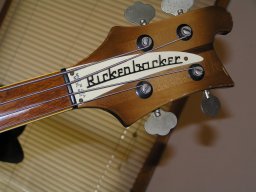

Nailed it.
The Precision suits all genres because we're used to hearing it in all genres. It defined what an electric bass sounds like.
Bet you hear it in waaay more recordings than you are aware, regardless of genre.Not all genres existed back then. Thus we are now in fact NOT used to hearing it in all genres.

This is objectively false there are several genres that will never use a Fender P.Nailed it.
The Precision suits all genres because we're used to hearing it in all genres. It defined what an electric bass sounds like.
Maybe on stage, but you never really know what was used in the studio.This is objectively false there are several genres that will never use a Fender P.

Just to be perverse but not all manhole covers are round!Actually it does. A round manhole cover cannot fall into the manhole. Any other shape can.
Manhole? Round...alwaysJust to be perverse but not all manhole covers are round!
I have fitted many in my time that weren't