• TalkBass has been independent since 1998. Add your voice.
    Create a free account to reply to discussions, view embedded media, and browse with fewer display ads.
    Join freeLog in
    Want zero display ads or expanded classifieds tools? Compare plans.

What makes an expensive bass expensive?

The buyer is what makes it expensive.
Price is a matter of supply and demand. If I can sell you a bunch of fried potatos for $3 when the potatos and oil and labor only cost me $1, that's because you are willing to pay $3.

So, what are high-end bass buyers willing to shell out the big bucks for?
1. Playability and sound - These are somewhat subjective. A lot of folks couldn't tell a Fender from a Fodera based on a blind sound clip.
2. Fit and finish - Your $5000 Ken Smith had better not have any imperfections in the build
3. Exotic materials - Does Purpleheart or Koa sound better than Ash? Maybe, maybe not... but they are scarcer and the raw material may cost twice as much, meaning the right buyer will pay ten times as much.
4. The Name. Some folks will pay top dollar for an instrument that has the right name on it, and walk right by a brand that's equivalent quality but less presigious. This doesn't necessarily mean the buyer is a snob, however. Having the wrong name on your headstock can close doors for you in the business.

 
Once you get past the $2K-$2.5K level, it is all about EXCLUSIVITY.
Just like any product or service, those crazy high prices ($200K Country Club entry fee, $20K watch, million dollar auto). People who can afford to pay want people who cannot afford to pay to not have......

I personally think that's a ridiculous generalization. It makes anyone with an expensive bass seem like an elitist snob. I'd bet most of us know all to well that most of the time NO ONE in the audience cares about the bass player, or what he's playing. Sure, WE may know that the bass player in the house band for SNL is playing a Fodera, or that Will Lee is playing a Sadowsky, but no one else cares. They play it for the quality and versatility, not the exclusivity.
 
Having the wrong name on your headstock can close doors for you in the business.[/QUOTE]

I've seen this in my (limited) experience, but the doors can close equally for Squier or SX as well as Alembic or Fodera. Meaning there are closed minds for whom nothing but tried and true (read Fender) will do. Bassists are mostly over this, but producers? Not so much.
 
"...as well as Alembic or Fodera."

This is cetainly true, we all know bands that have an unreasonable fear of a bass player that is too..."musiciany" lol.

They would rather have a rhythm guitar player with thick framed glasses and a broken old P-bass clone than someone who actually knows how to play more than just one note over any particular chord.

(I'm just kidding of course...)
 
Thanks guys. Seems like a mix of a lot of things. I appreciate the input, just to satisfy my curiosity. I can imagine part of the expense would just be the feeling you would get holding a $6000 bass. Much like driving a fancy car. I also appreciate the fodera guy chiming in!
 
  • Like
Reactions: eJake
The biggest single difference between a $300 bass and a $3000 bass is mass production. Quantity is what brings the price down.

A $300 bass is ordered and built in quantities of at least 1000 instruments at a time. Often it's 5000 or 10,000 at a time. That factory in China or Indonesia is a real mass-production factory. It has a couple million dollars worth of machines and tooling and fixtures all set up for fast production. CNC machines are part of it, but most of the work is still done with old fashioned labor and good tooling. There are a hundred employees working assembly-line style, each doing a particular job over and over. Yes, their labor cost is cheaper over there than here in the US, but the big reason the cost is lower is the total number of hours spent per instrument. A bass that retails for $300 is built in one of those factories in less than 5 hours total.

At the same time, all of the wood, metal, paint, screws, etc., are purchased ahead of time in quantities of many thousands' of instruments worth at a time. That's a huge difference in the cost per instrument for materials. Same for outsourced parts like bridges and tuners and pickups. Those are competitively bid out to smaller supplier companies who are all tooled up to make that one component. And the orders are for thousands at a time.

That's how you get a bass down to a retail price of $300. Someone has to make a big investment to order 1000 basses of a particular design. They may be in a few different colors, but they have to all use the same tooling and process to get that low price. And 1000 basses is like a minimum order to those factories. The more you order, the lower the price goes. To the factory, an order for 1000 basses is maybe 2 weeks work. They are taking orders for batches of instruments from customers all over the world. The only way that they can work efficiently and keep their prices low is to build in large batches at a time.

For the investor, there's a huge financial risk. They have to drop maybe $200K up front to have the basses build, and then hope that they can sell them all for prices that can make their money back, and make a profit too. Otherwise, why bother? The investor might be Guitar Center, who orders 1000 basses of their own in-house brand. Or it might be SplatMaster Guitars, who take out a loan to order 1000 SplatMaster basses. They then try to sell them to Guitar Center, and local music stores. Whatever those guys don't buy goes up on ebay for less than they paid. The risks are huge. What happens if nobody likes the SplatMasters, and Guitar Center cancels their order? Or when they open up the containers, one third of the new SplatMasters have twisted necks or bad frets, and are unsellable? They are stuck with them, and will take a big loss.

In comparison, a $3000 bass is built by a small company of 1 to 10 people. The basses are built in small batches of one or several at a time. A lot more labor goes into each bass, more like 30 to 70 hours each. Some of it is because of extra time added for higher quality and care, but a lot of the extra time is because of the inefficiency of working in small batches. It's not a rapid assembly line. Each person does a whole series of operations on one bass, then moves to the next bass and does them all over. And there's a lot more variation and custom orders between instruments. There's still a lot of financial risk for the small builder, but it's on a per-instrument basis. A dumb slip of a router or a bad piece of wood can wipe out all of the profit that would be made on a particular bass.

In almost all cases, a $3000 bass is going to be higher quality than a $300 bass. Better quality wood is a small part of it, but it's mostly about hours spent. It's about a 10 to 1 ratio in the hours spent building them. The extra time buys extra care on each step. Three hours on the frets and an hour on the setup are expected on a $3000 bass. That's not going to happen on a $300 bass, which only takes 5 hours total to build.

The extra expense buys skilled labor hours.

Thanks for the insight. It really does fit the diminishing returns you get for any luxury item.
 
Well, I usually play cheap basses. I try to get used bargains (bang for the buck), but sometimes there is less bang than I hope for.

My backup bass is a Peavey Millennium BXP, as cheap as they come. I had to do a lot of setup on it to make it playable (not only adjustments of bridge and truss rod, but also filing fret ends and doing major file work on the nut, which was "hand filed"... probably by unskilled labour working on a per nut basis).

I also realize they have to save on parts, but I didn't realize how cheaply such parts may be made. Do they really have to save on the amount of plastic in the nut?

I did an upgrade to a brass nut on my Peavey, but it was only when I got the old one popped off that realized the level of cheapness that is possible.

Take a look at this. Hollow nut? Is that really necessary?
2013727_Old_nut_hollow01.jpg


I guess an expensive bass is an insurance against stuff like this.
 
A lot of it is meticulous attention to detail, use of higher and more fancy and expensive grades of wood, plus being able to order it any way that suits your tastes rather than having to adapt to stock dimensions. Personally, I feel the same as you and don't like to spend that kind of money on basses, either, but I totally get why some get expensive ones.

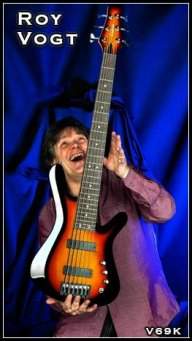
That's pretty much it, Jimmy. When you consider that there are a lot of man-hours involved in the instruments, it makes sense. I've always been partial to Carvins, which are somewhere in the middle of all this. I've just taken delivery on my Roy Vogt Signature Model 6 by Accuracy, which has a Street Price of $6800 or so (see Avatar). I can tell you the bass is very, very easy to play, dead quiet, and I can't find a flaw on it anywhere. I've used it in the Studio and Live and it sounds great with the band but I can find my "voice" on it pretty easily when it's time to solo. I've played Sean O'Bryan Smith's Rybski basses recently-same deal.
I will use all my basses-the SB5000 sounds great, the Icon sounds great, my LB Series Carvins sound great, the Modulus Quantums, Conklin Groove Tools and the Hotwire all sound great. The Accuracy is at a whole other level, so I get this. I just think it's cool that you can find a good bass at about any price point, great ones at affordable prices, and exceptional ones if you want to go there and have deep pockets. Play on!:bassist:
 
The biggest single difference between a $300 bass and a $3000 bass is mass production. Quantity is what brings the price down.

A $300 bass is ordered and built in quantities of at least 1000 instruments at a time. Often it's 5000 or 10,000 at a time. That factory in China or Indonesia is a real mass-production factory. It has a couple million dollars worth of machines and tooling and fixtures all set up for fast production. CNC machines are part of it, but most of the work is still done with old fashioned labor and good tooling. There are a hundred employees working assembly-line style, each doing a particular job over and over. Yes, their labor cost is cheaper over there than here in the US, but the big reason the cost is lower is the total number of hours spent per instrument. A bass that retails for $300 is built in one of those factories in less than 5 hours total.

At the same time, all of the wood, metal, paint, screws, etc., are purchased ahead of time in quantities of many thousands' of instruments worth at a time. That's a huge difference in the cost per instrument for materials. Same for outsourced parts like bridges and tuners and pickups. Those are competitively bid out to smaller supplier companies who are all tooled up to make that one component. And the orders are for thousands at a time.

That's how you get a bass down to a retail price of $300. Someone has to make a big investment to order 1000 basses of a particular design. They may be in a few different colors, but they have to all use the same tooling and process to get that low price. And 1000 basses is like a minimum order to those factories. The more you order, the lower the price goes. To the factory, an order for 1000 basses is maybe 2 weeks work. They are taking orders for batches of instruments from customers all over the world. The only way that they can work efficiently and keep their prices low is to build in large batches at a time.

For the investor, there's a huge financial risk. They have to drop maybe $200K up front to have the basses build, and then hope that they can sell them all for prices that can make their money back, and make a profit too. Otherwise, why bother? The investor might be Guitar Center, who orders 1000 basses of their own in-house brand. Or it might be SplatMaster Guitars, who take out a loan to order 1000 SplatMaster basses. They then try to sell them to Guitar Center, and local music stores. Whatever those guys don't buy goes up on ebay for less than they paid. The risks are huge. What happens if nobody likes the SplatMasters, and Guitar Center cancels their order? Or when they open up the containers, one third of the new SplatMasters have twisted necks or bad frets, and are unsellable? They are stuck with them, and will take a big loss.

In comparison, a $3000 bass is built by a small company of 1 to 10 people. The basses are built in small batches of one or several at a time. A lot more labor goes into each bass, more like 30 to 70 hours each. Some of it is because of extra time added for higher quality and care, but a lot of the extra time is because of the inefficiency of working in small batches. It's not a rapid assembly line. Each person does a whole series of operations on one bass, then moves to the next bass and does them all over. And there's a lot more variation and custom orders between instruments. There's still a lot of financial risk for the small builder, but it's on a per-instrument basis. A dumb slip of a router or a bad piece of wood can wipe out all of the profit that would be made on a particular bass.

In almost all cases, a $3000 bass is going to be higher quality than a $300 bass. Better quality wood is a small part of it, but it's mostly about hours spent. It's about a 10 to 1 ratio in the hours spent building them. The extra time buys extra care on each step. Three hours on the frets and an hour on the setup are expected on a $3000 bass. That's not going to happen on a $300 bass, which only takes 5 hours total to build.

The extra expense buys skilled labor hours.
Well said, Bruce!
 
The most expensive bass I've had is a Roscoe. I got my current one used but new a bass with the specs it has is right around $4,000.

In paying for the wood, the fabulous neck, attention to detail, American labor, custom options and amazing customer service. I've seen the shop, hung with the guys, and am convinced there's no where else I want to spend my money.

OT - the money I paid for this bass wil go to the former owner buying another Roscoe.
 
The most expensive bass I've had is a Roscoe. I got my current one used but new a bass with the specs it has is right around $4,000.

In paying for the wood, the fabulous neck, attention to detail, American labor, custom options and amazing customer service. I've seen the shop, hung with the guys, and am convinced there's no where else I want to spend my money.

OT - the money I paid for this bass wil go to the former owner buying another Roscoe.

Roscoes are an exceptional value! Gard's pretty cool, too! :)
 
The biggest cost comes from Labor followed by materials. If you work with skilled artisans that are paid well (with things like health benefits and a retirement plan) then your labor costs are far, far higher than they would otherwise be. Additionally, the way in which we build instruments is more rooted in the 19th century than the 21st century, so the number of hours spent on each instrument is many, many, many times that of what you'll generally see being spent on a less expensive one.

In terms of materials, a fanatical obsession with only using the best leads to lots of expense from sourcing the best wood followed by lots of waste (for wood that might look fine but sound poorly).

Then we use all proprietary parts in our instruments with the exception of the machine heads. Everything else is made for us (or by us) to our designs and specs in very small batches. And, as anyone in manufacturing knows, low volume production is very expensive because there are no economies of scale to be had. The cost (to us) for a set of our dual coil pickups far exceeds that of the retail price of some very well known entry level instruments.

Finally, we all live and work in and around the New York Metropolitan area and that entails its own level of expense both from a real estate and personnel cost standpoint.

There are many threads here on TB where I post in great detail about the costs of running Fodera, but at the end of the day we consider ourselves quite fortunate if in any given time period if we can earn a 10% - 12% profit margin. So, one place that the money paid for our instruments generally does not go in abundance is to making a lot of money for us as owners.

I hope this makes sense.

Kindest regards,

Jason
Well said, Jason!
 
I dare say that not every player can get the most out of an expensive bass, either.

Personal style notwithstanding, technique and talent limitations will likely limit the appreciation and utility of a really good instrument.
The old adage that a good player will make a cheap instrument sound good while a poor player will make an expensive instrument sound bad holds true.

For most players, the mid level is plenty good enough for our talent/technique levels.

For the reasons for the higher cost of high end instruments, if the explanation from the gentleman from Fodera doesn't enlighten you, I'm afraid I can't offer anything more clear.
 
The price of a handmade bass is the price of a bass.

The price of a mass produced bass is the result of savings gained by mass production.

Additionally, the way in which we build instruments is more rooted in the 19th century than the 21st century, so the number of hours spent on each instrument is many, many, many times that of what you'll generally see being spent on a less expensive one.

This is why the real question is, what makes a cheap bass cheap.

This. In our modern world, we sometimes forget the value of a skilled craftsman's time and expertise. There was a time when luthiers had to make everything from scratch by hand.
 
more expensive has better sound. that's just the way it is in music most of the time.

play an american standard jazz bass and a mexican jazz bass side by side. you can hear a big difference in the way they sound.

i don't spend a ton on basses. i find around $1000 is good. a american jazz bass or a stingray are the best sounding basses to me. they are simple, classic basses played on tons of albums over the years. they have great sound to them.

there are what i call "fancy" basses out there. they all have like 10 knobs on them, super active eq and whatever. it's just too much. overkill. they have all that and they still dont' sound as good as a classic bass. maybe they fit certain types of music like jazz or whatever but i just like plain 'ol rock music. lol
 
What makes a Ferrari better than a Chevy? They are both mostly metal, glass and plastic, and go when you push the gas:D

Mmmm, bad analogy. The Ferrari is only better for a few things, and living with day to day is not one of them. Admittedly, what the Ferrari is better at, it is way way better.

The only thing better about the "Chevy" bass is that you don't care much what happens to it.
 
The majority of expensive basses are expensive for at least one of these reasons.
Rare woods (pretty much any boutique)
Unique electronics (Alembic)
Unique materials (Status, Modulus, Zon)
High production costs due to location (Sadowsky, Fodera)
High labor costs (any boutique)
Top notch support

Are they worth it? I don't know. I am really lucky to have a couple of high dollar basses, and while they are very nice and I enjoy playing them, I play no better on my Alembic than on my Squier. Sound better though.