

Enjoy the benefits of a premium membership!
Upgrade Account
-
TalkBass has been independent since 1998. Add your voice.
Create a free account to reply to discussions, view embedded media, and browse with fewer display ads.
Join free Log in
Want zero display ads or expanded classifieds tools? Compare plans.
You are using an out of date browser. It may not display this or other websites correctly.
You should upgrade or use an alternative browser.
You should upgrade or use an alternative browser.
What's On Your Workbench?
- Thread starter HaMMerHeD
- Start date
More options
Who Replied?
Nice shaping. What finish?
I'll use zpoxy to seal it, and a black pore-filler (Ebony Timbermate) scraped clean from the surface, with a final top-coat of satin Minwax Polycrylic water-based polyurethane.

Hopkins
Commercial User
Hopkins
Commercial User
Well does a new toy count too? I just got this wired up 220 this morning and I can't wait to start milling. Also another semi-sin from a bass builder...shhhh..a guitar. I love Telies and this has blue LEDs in the cut outs.
View attachment 996671
View attachment 996673
View attachment 996674
View attachment 996675
I really need a new drill press, my old war horse has seen better days and has a wobble that I just cant seem to get rid of.

Means2nEnd
Supporting Member
Well depending Hopkins on how much you use a drill press it may be worth it. The unit is about $1450 but then you need a fair amount of accoutrements but I have to say I used it this past weekend and I was floored. Mine is wired 220 and the the power is incredible and the precision is amazing. I put steel inserts into my necks and once locked in on the deck everything stays in perfect position to a 1000th of an inch. I used brad point bits then switched to forstner and everything stayed perfect and I did the recessed holes for the insets measured to 8.5 thou of an inch and they were all perfect. Was a total pleasure to use and although it may save a little time everything is so precise it's like CNC.
I always used the next size up to take into account some play but I did everything to exact sizes and it's cleaner and much better looking and functioning. Definitely elevating my builds. I'll be using it to cut brass nuts and bridges and bone as well. I'm totally geeked out on it. My 14" Craftsman is in the corner now with a fixture to drill side jack holes in bodies accurately and I think that's all I'll use it for in the future. I'm also converting my table saw to 220 as well I had to pay an electrician to run it down in my shop but motors love it..
I always used the next size up to take into account some play but I did everything to exact sizes and it's cleaner and much better looking and functioning. Definitely elevating my builds. I'll be using it to cut brass nuts and bridges and bone as well. I'm totally geeked out on it. My 14" Craftsman is in the corner now with a fixture to drill side jack holes in bodies accurately and I think that's all I'll use it for in the future. I'm also converting my table saw to 220 as well I had to pay an electrician to run it down in my shop but motors love it..


some cool stuff from all of you guys!!! Big B I do remember that build... didn't you also build one that was mutilaminated? was that you?
Just so folks don't become mis-informed, there's little difference between a motor wired for 220 and 110. The power consumption, and the amount of produced horsepower, is identical. The savings of using higher voltage is derived from the savings on being able to run a smaller conductor size for the supply wiring.Well depending Hopkins on how much you use a drill press it may be worth it. The unit is about $1450 but then you need a fair amount of accoutrements but I have to say I used it this past weekend and I was floored. Mine is wired 220 and the the power is incredible and the precision is amazing. I put steel inserts into my necks and once locked in on the deck everything stays in perfect position to a 1000th of an inch. I used brad point bits then switched to forstner and everything stayed perfect and I did the recessed holes for the insets measured to 8.5 thou of an inch and they were all perfect. Was a total pleasure to use and although it may save a little time everything is so precise it's like CNC.
I always used the next size up to take into account some play but I did everything to exact sizes and it's cleaner and much better looking and functioning. Definitely elevating my builds. I'll be using it to cut brass nuts and bridges and bone as well. I'm totally geeked out on it. My 14" Craftsman is in the corner now with a fixture to drill side jack holes in bodies accurately and I think that's all I'll use it for in the future. I'm also converting my table saw to 220 as well I had to pay an electrician to run it down in my shop but motors love it..

some cool stuff from all of you guys!!! Big B I do remember that build... didn't you also build one that was mutilaminated? was that you?
Thanks for the compliments gentlemen . Yes, the first bass I built with the curved form was for the 5 string build off we had a few years back.
Fortunately that thread still has its pictures and follows the build in pretty great detail.
Fretless five competition: Mad scientist edition
Means2nEnd
Supporting Member
Just so folks don't become mis-informed, there's little difference between a motor wired for 220 and 110. The power consumption, and the amount of produced horsepower, is identical. The savings of using higher voltage is derived from the savings on being able to run a smaller conductor size for the supply wiring.
Motors start faster and are less likely to bog down under load at 220. There's more headroom for a hard working motor that needs a few more amps now and then under a sudden increased load. I do agree power consumption and horsepower produced is identical under normal or minimal use but at start up and under sudden heavy load the 220 motor performs more efficiently.
I was told I would normally see smoother and more consistent cuts with saws and jointers by two different 40 year master woodworkers and furniture builders and I have experienced it in Stu's shop here in Lancaster and now in my own so maybe little difference to you for me it's enough of a difference that on my larger tools like my drill press and table saw and jointer I will eventually have them all running at 220. I do not mean to mis-inform anyone for sure but this has been my experience your experience may vary.

Some of you old timers might remember the thread for this bass.

All the pics got deleted from the old thread so I thought you might like a look at how it turned out. I'm also working on a little brother for a guitarist I work with.


 that is all
- Dec 20, 2004
- 4,267
- 2,481
- Disclosures
- Player-Builder-Founder: Honey Badger Pickups & Regenerate Guitar Works
Started work on a commission build for a 'well known' artist who shall remain anonymous for the time being. CNC work is now completed for the top side
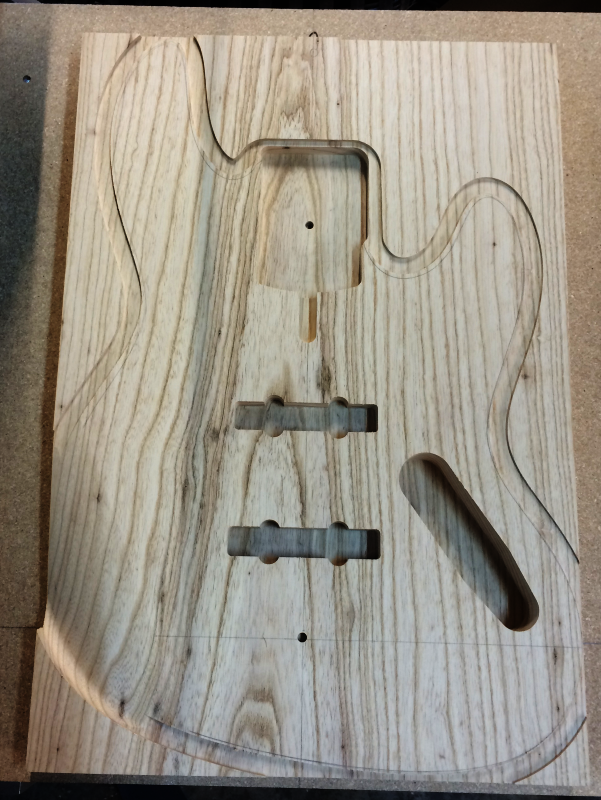
Next up is to trim the outline at the bandsaw, then secure the body in place onto the table utilizing the two alignment pins. I leave about .06" of waste material to trim off the outline from the back side, and will also cut the gut-cut and neck mounting holes before rounding the edges at the router table. Last up will be quite a bit of detailing with hand tools, then off to the paint shop for a clear satin finish.
Next up is to trim the outline at the bandsaw, then secure the body in place onto the table utilizing the two alignment pins. I leave about .06" of waste material to trim off the outline from the back side, and will also cut the gut-cut and neck mounting holes before rounding the edges at the router table. Last up will be quite a bit of detailing with hand tools, then off to the paint shop for a clear satin finish.
- Dec 20, 2004
- 4,267
- 2,481
- Disclosures
- Player-Builder-Founder: Honey Badger Pickups & Regenerate Guitar Works
so this happened today ...

- Alder body with spalted Western Maple burl top
- 3-piece Maple / Pau Ferro neck
- Honey Badger Heavy Hitters pickup set in wooden covers (swapping to Wenge or Walnut covers instead of Bubinga)
- Black Hipshot hardware
- Noll preamp
I still need to round over the top/back edges and rasp the forearm contour ahead of getting this ready for a clear satin finish
- Alder body with spalted Western Maple burl top
- 3-piece Maple / Pau Ferro neck
- Honey Badger Heavy Hitters pickup set in wooden covers (swapping to Wenge or Walnut covers instead of Bubinga)
- Black Hipshot hardware
- Noll preamp
I still need to round over the top/back edges and rasp the forearm contour ahead of getting this ready for a clear satin finish

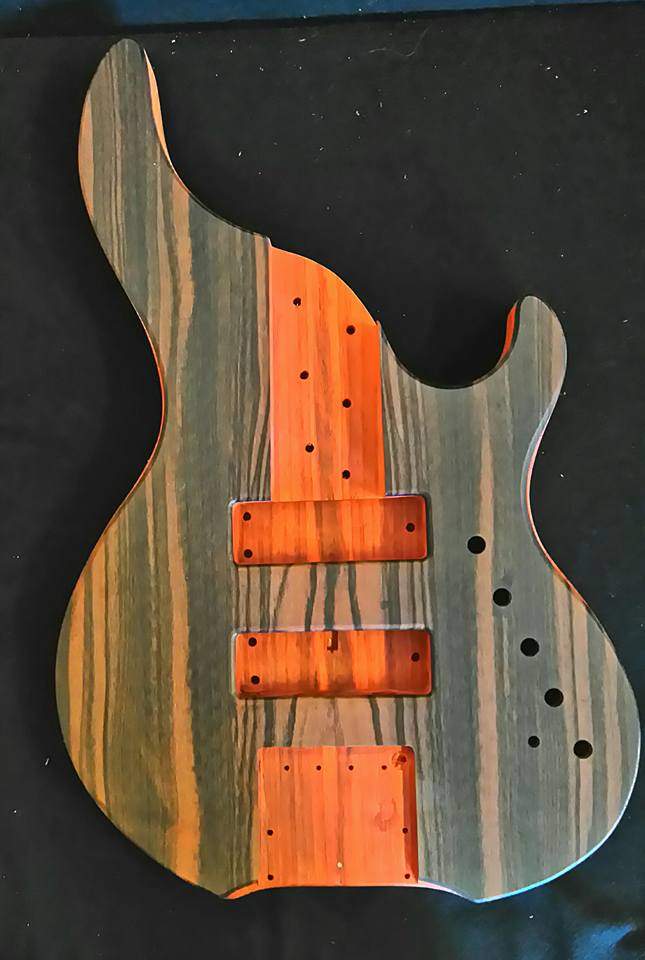
Started work on a commission build for a 'well known' artist who shall remain anonymous for the time being. CNC work is now completed for the top side
View attachment 1013629
Next up is to trim the outline at the bandsaw, then secure the body in place onto the table utilizing the two alignment pins. I leave about .06" of waste material to trim off the outline from the back side, and will also cut the gut-cut and neck mounting holes before rounding the edges at the router table. Last up will be quite a bit of detailing with hand tools, then off to the paint shop for a clear satin finish.
Keep us updated on this one. That body blank is stellar
Nice! What kind of wood? Looks like ash, with eyes and staining that I'm not familiar with.Started work on a commission build for a 'well known' artist who shall remain anonymous for the time being. CNC work is now completed for the top side
View attachment 1013629
Next up is to trim the outline at the bandsaw, then secure the body in place onto the table utilizing the two alignment pins. I leave about .06" of waste material to trim off the outline from the back side, and will also cut the gut-cut and neck mounting holes before rounding the edges at the router table. Last up will be quite a bit of detailing with hand tools, then off to the paint shop for a clear satin finish.

Nice! What kind of wood? Looks like ash, with eyes and staining that I'm not familiar with.
Roasted ash, maybe?
Looks pretty great to me, whatever it is...
Last edited:
- Dec 20, 2004
- 4,267
- 2,481
- Disclosures
- Player-Builder-Founder: Honey Badger Pickups & Regenerate Guitar Works
a slab of old growth Swamp Ash with quite a bit of dark mineral staining. definitely not the bright taupe hued SA I typically see
- Dec 20, 2004
- 4,267
- 2,481
- Disclosures
- Player-Builder-Founder: Honey Badger Pickups & Regenerate Guitar Works
on the bench, 23 Nov 2016 - retrofitting blocks to a neck built last summer and hanging in inventory, would have been loads easier to do this during the initial build process ...
View attachment 995259
still a lot of hand detailing left to do prior to fitting the black blocks into place
an update to how the QS Wenge blocks fit into this M/M neck. Here's a closeup of the 15/17th fret inlays right after the blocks were leveled and sanded to 150 grit with a radius block
This is going to be sweet when the Wenge darkens up during the finish application
- Dec 20, 2004
- 4,267
- 2,481
- Disclosures
- Player-Builder-Founder: Honey Badger Pickups & Regenerate Guitar Works
here's a poor camera phone type image of the neck with the sealer applied, and set into the body it will eventually be mounted to

Depending on what bassists you follow, I'm sure several will catch the inspiration for this commissioned build
Depending on what bassists you follow, I'm sure several will catch the inspiration for this commissioned build

This thread is just what we need. I am trying hard to make time for a dedicated thread - barely managed to start one recently on a finished bass. It's tough to keep up. But that also means that we're busy which is great innit?
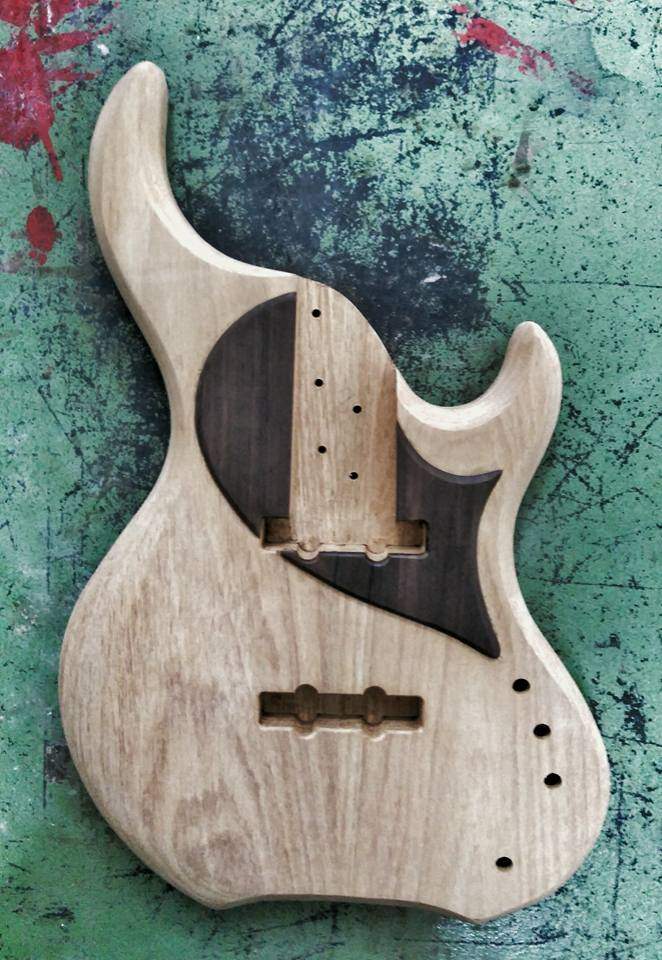
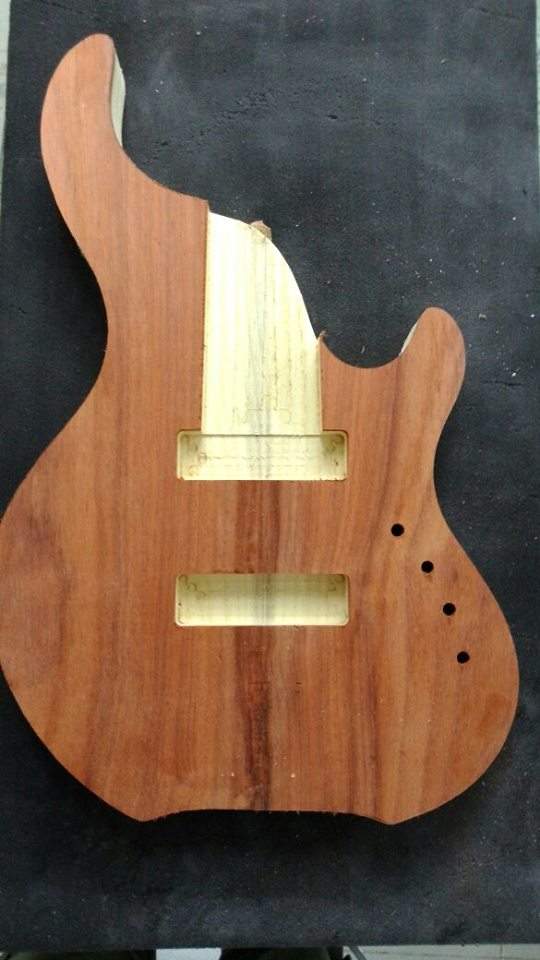
Here are a few basses I'm working on.
Pistachio top over chambered padauk body. Padauk/maple neck and maple board.

Asian ash body with blackwood pickguard. (Maple neck and bloodwood board)
Padauk over chambered ash. (padauk/maple neck and birdseye maple board)
Macassar ebony over chambered padauk body. Wenge/padauk neck. Macassar board.
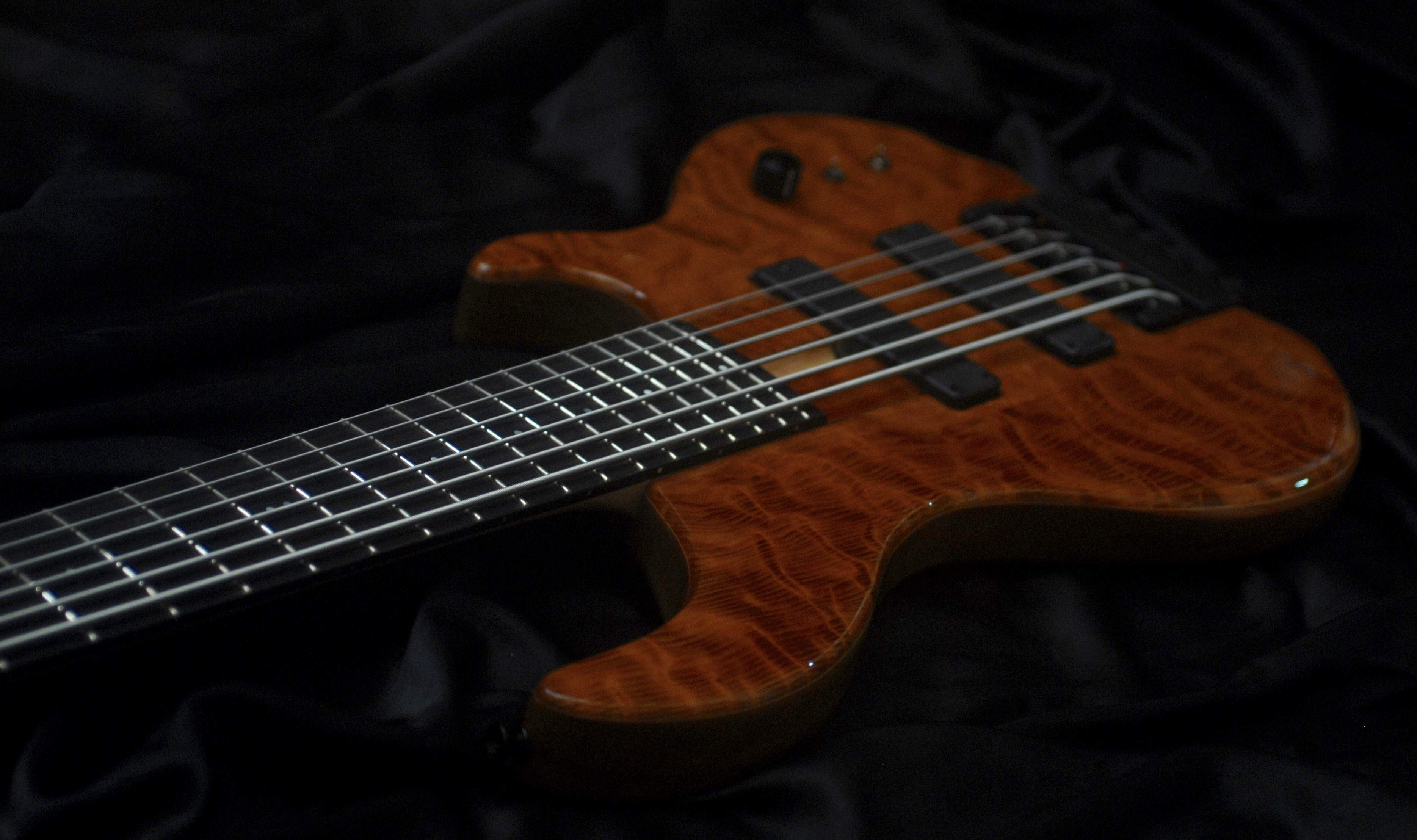
I recently finished these two basses. They are not exactly on the work bench. But maybe a little celebration after so much sawdust won't hurt
This one is a Über-Groove Airborne six stringer with extra tight string spacing: 15mm at bridge and 45mm total width at nut (that's a fiver!). Redwood top, chambered flamed Asian mahogany back, maple/wenge neck, ebony board, Barts and custom preamp.
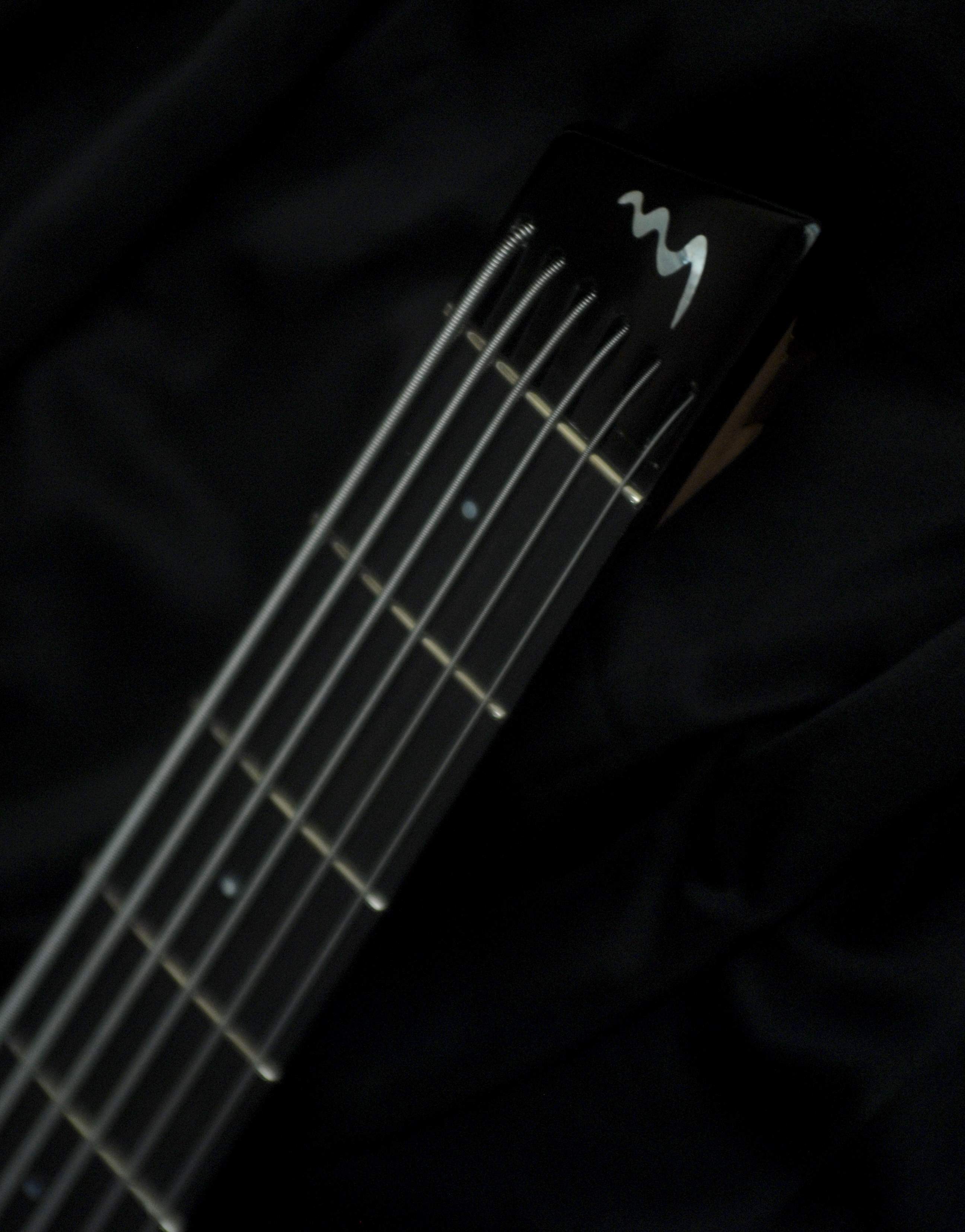
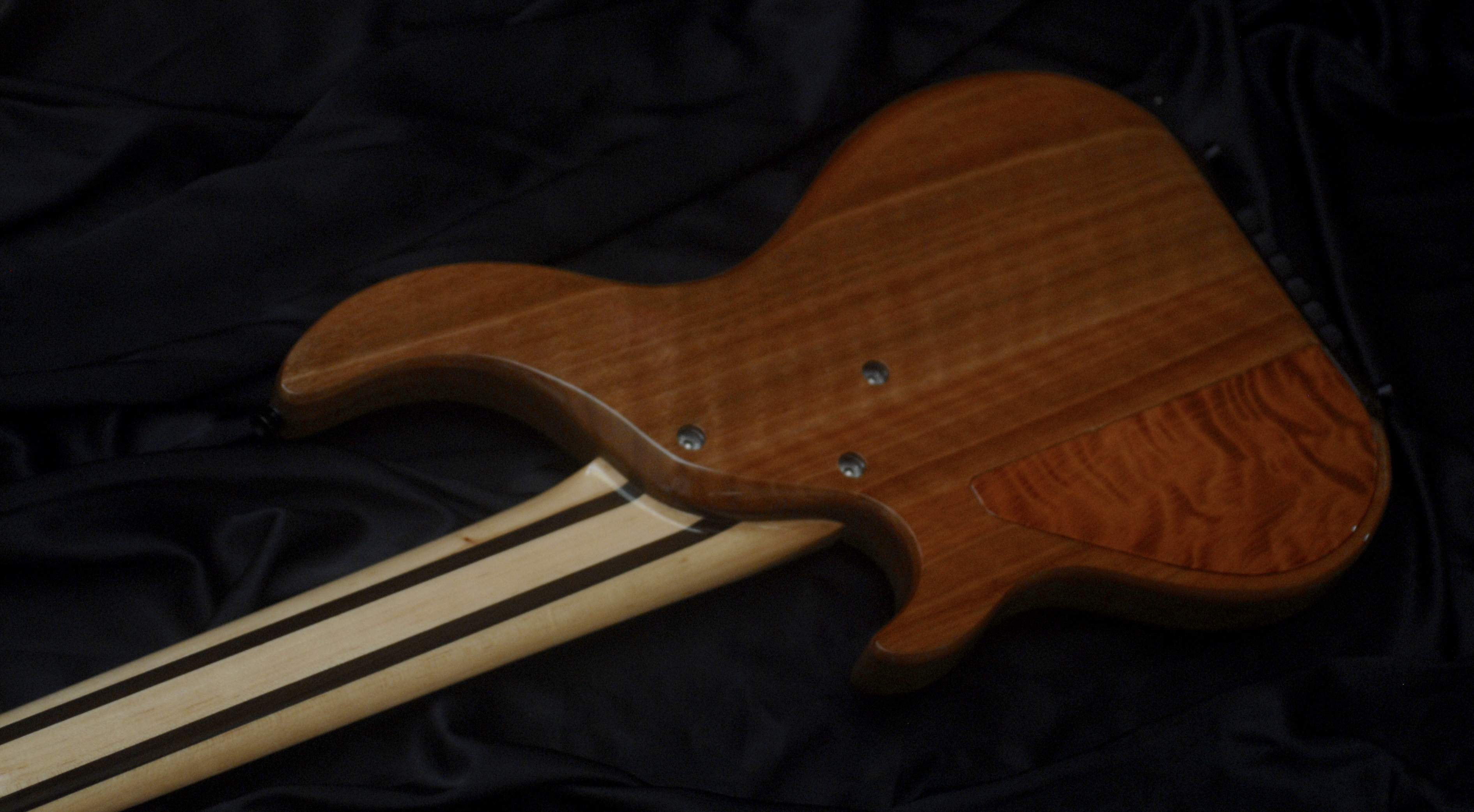
On its way to London.
The other one is a Über-Jay 5. Buckeye top, chambered black limba body, maple/wenge neck, ebony board, custom MOP markers, bartolini p-ups and preamp. Shipping soon to Florida.
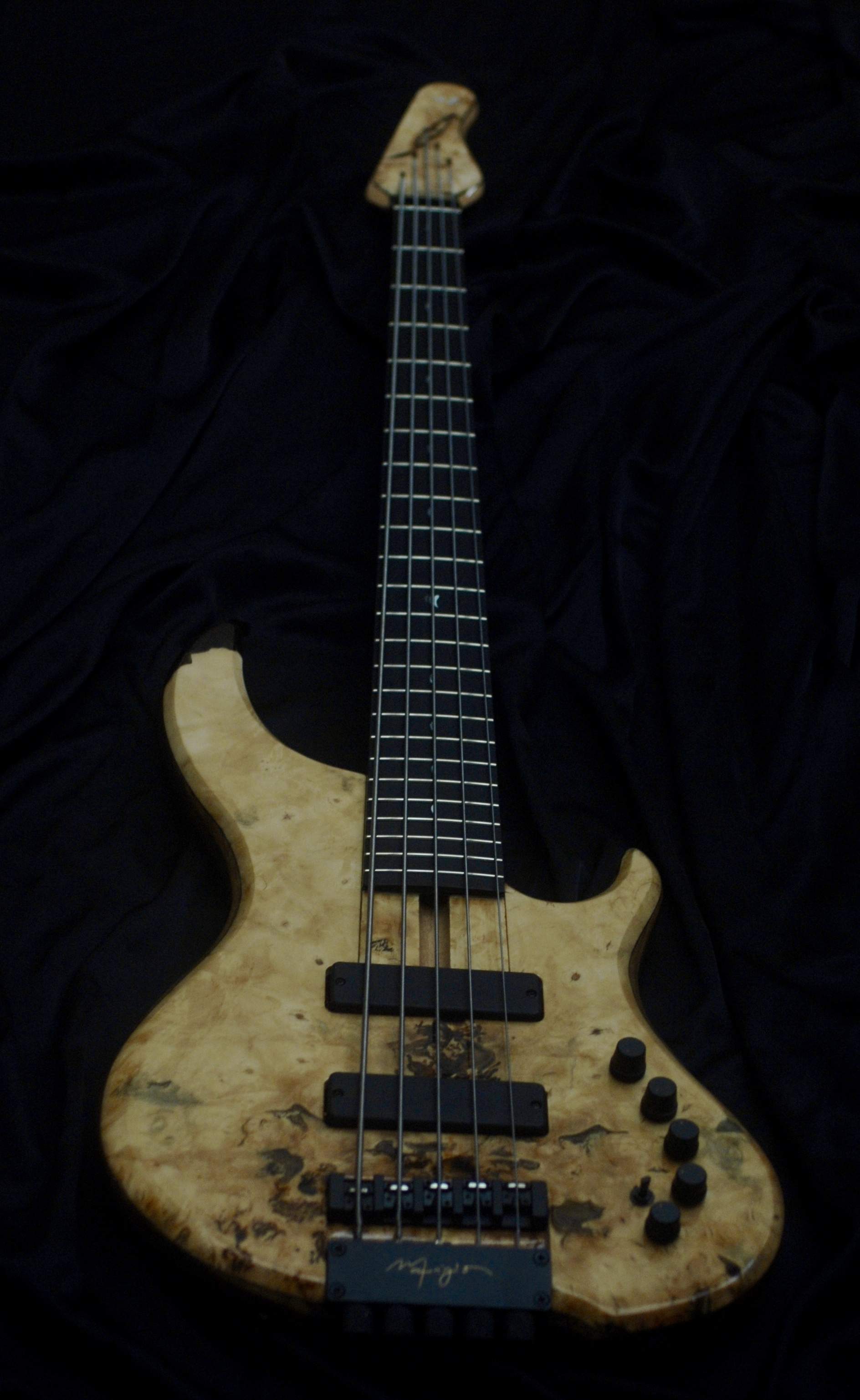
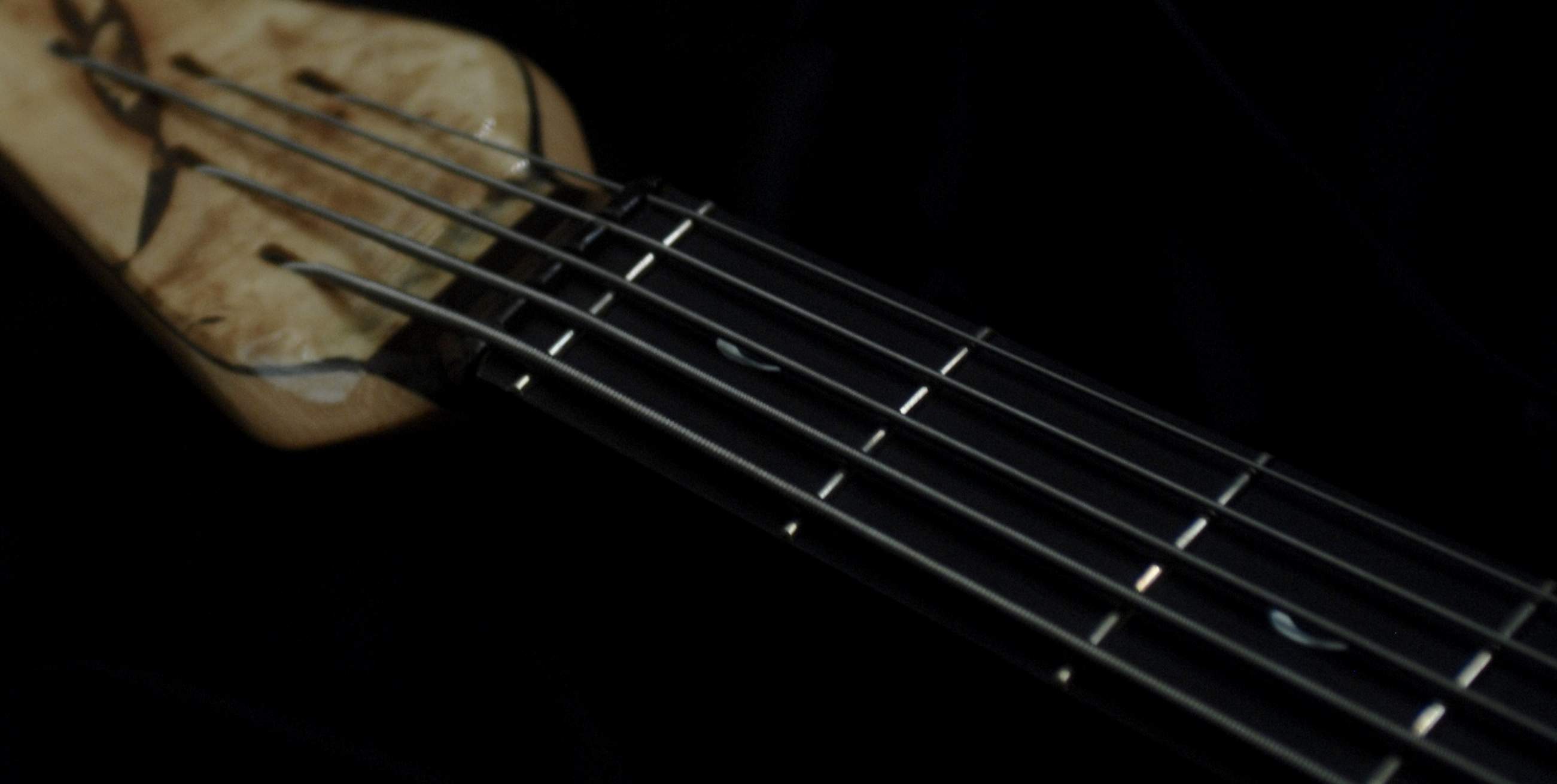
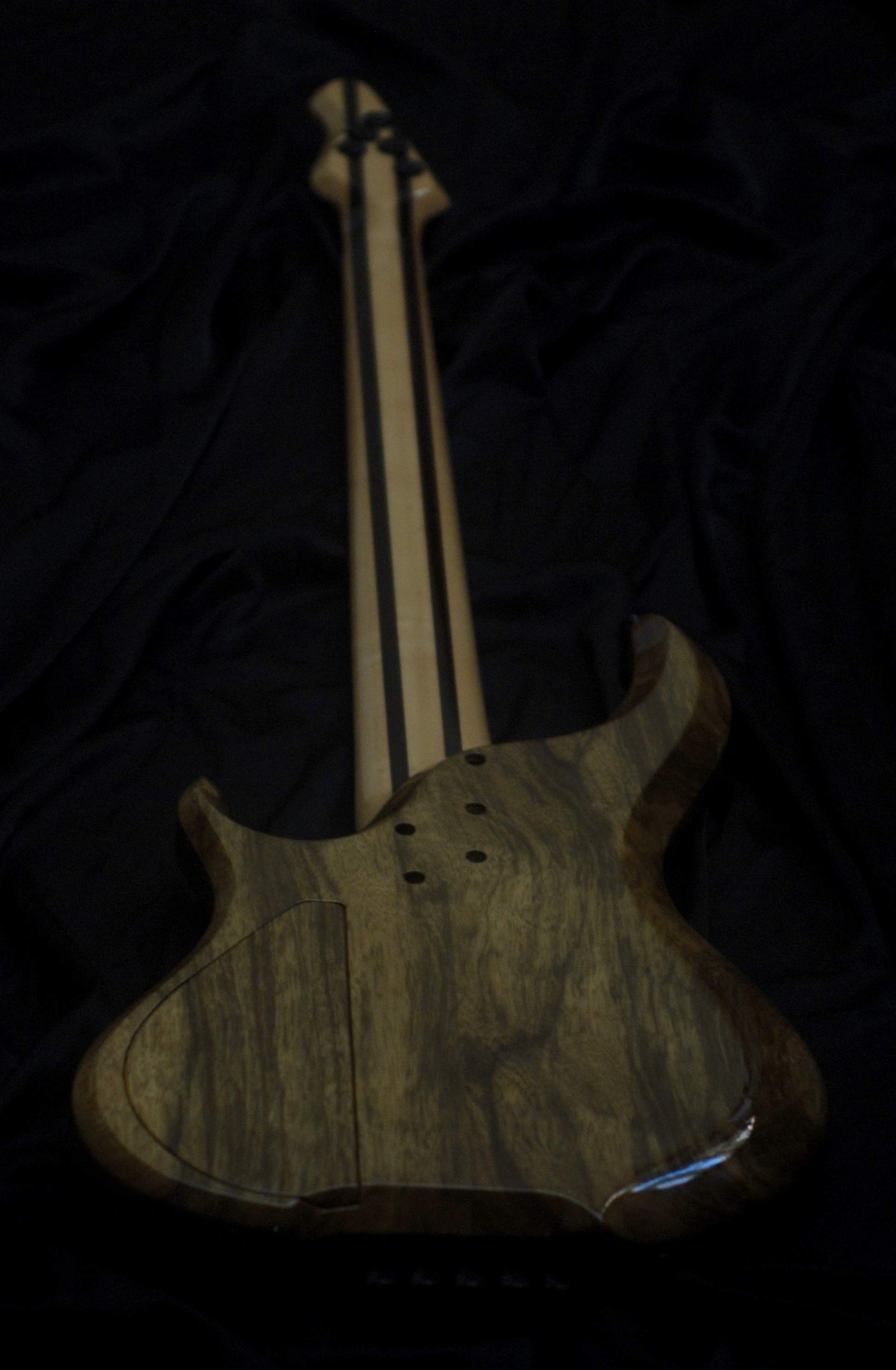
back to the bench soon.
A great new year to all of us sawdust addicted
mau
Here are a few basses I'm working on.
Pistachio top over chambered padauk body. Padauk/maple neck and maple board.
Asian ash body with blackwood pickguard. (Maple neck and bloodwood board)
Padauk over chambered ash. (padauk/maple neck and birdseye maple board)
Macassar ebony over chambered padauk body. Wenge/padauk neck. Macassar board.
I recently finished these two basses. They are not exactly on the work bench. But maybe a little celebration after so much sawdust won't hurt
This one is a Über-Groove Airborne six stringer with extra tight string spacing: 15mm at bridge and 45mm total width at nut (that's a fiver!). Redwood top, chambered flamed Asian mahogany back, maple/wenge neck, ebony board, Barts and custom preamp.
On its way to London.
The other one is a Über-Jay 5. Buckeye top, chambered black limba body, maple/wenge neck, ebony board, custom MOP markers, bartolini p-ups and preamp. Shipping soon to Florida.
back to the bench soon.
A great new year to all of us sawdust addicted
mau
The fret slots are narrower than the board. Finished cutting down the tangs and bull nosing the free ends.


