• TalkBass has been independent since 1998. Add your voice.
    Create a free account to reply to discussions, view embedded media, and browse with fewer display ads.
    Join freeLog in
    Want zero display ads or expanded classifieds tools? Compare plans.

What's On Your Workbench?

So I ended up using my sketch I made from tracing an image in AutoCAD, and this is a fair bit different than the Mothership's Bird. I know that because I verified it against the actual shape
Glad you got some use from the pattern I traced from the original MK1 IB custom shop template and clandestinely sent to you .... :cautious::meh:


(Did I say that out loud? )
 
  • Haha
Reactions: TerribleTim68
Happy New Year!

A little Run of 5 units to start year!:hyper:


Oh....
20241231_081620.jpg


... in time for NAMM?
.... ummm... 🤷‍♂️
 
A session of machine sanding to start the new year!
IMG_8013.jpeg

I took it to 150 grit in all the places it was easy to reach. Even with the contour sander getting into the cutaways is pretty restricted. I was able to almost completely address bruises from its sordid history and tool marks from my clumsy scraping. The rest will require hand sanding, which I wasn’t ready to start on a lazy, rainy new year’s day.

IMG_8012.jpeg

IMG_8011.jpeg

I’ll block sand it to 240 and then start finishing. Still deciding on whether I want to follow @Bruce Johnson ’s recommendation of using oil-modified Minwax poly, to the tune of about 10 coats or try a clear grain filler like Aquacoat followed by a different clear finish. Either way, there are giant gullies in the grain that are going to end up needing to be filled.
 
Still deciding on whether I want to follow @Bruce Johnson ’s recommendation of using oil-modified Minwax poly, to the tune of about 10 coats or try a clear grain filler like Aquacoat followed by a different clear finish. Either way, there are giant gullies in the grain that are going to end up needing to be filled.

Yes, the deep grain is an inherent feature of ash. If you use the Minwax to fill the grain, it will take about 5 coats, sanding back between each coat. And the grain will end up a medium dark brown color. Then 2 or 3 coats overall will bring it to a nice light golden amber, with the dark brown grain in contrast. A good color scheme for ash. The Minwax has a nice built-in color tint, similar to most Oil Finishes.

I've never tried Aquacoat, but I assume that it would fill the ash grain in 1 or 2 coats, sanding back. And you could add some brown pigment to it if you wanted.
 
  • Like
Reactions: Lo-E
Yes, the deep grain is an inherent feature of ash. If you use the Minwax to fill the grain, it will take about 5 coats, sanding back between each coat. And the grain will end up a medium dark brown color. Then 2 or 3 coats overall will bring it to a nice light golden amber, with the dark brown grain in contrast. A good color scheme for ash. The Minwax has a nice built-in color tint, similar to most Oil Finishes.

I've never tried Aquacoat, but I assume that it would fill the ash grain in 1 or 2 coats, sanding back. And you could add some brown pigment to it if you wanted.
I’m not really looking for the contrasting grain, although I’m not opposed to it, either.

You’ve mentioned that the Minwax product doesn’t get along well with other products so if I do go the Aquacoat route, I’ll probably just use a different top coat for it. Decisions, decisions….
 
So, I uh...well I've made some changes.

I "formally" quit building basses a bit ago, due to some health issues I was having. And while some of that is ongoing, I have dealt with the biggest problem, which eluded my complete understanding at the time.

Allergies remain a problem, but that can be mitigated. And scar tissue from my covid ordeal is still there, but can also be mitigated. The biggest problem, it turned out, was simply that I was too overweight to be able to stand and work comfortably anymore. That manifest, to me at the time, as extreme fatigue and difficulty breathing, which compounded the effects of the aforementioned issues. But I have been working a fairly aggressive weight loss campaign since autumn of 2023, and it is going great. My initial goal was to lose 163 pounds so that I can go see my oldest kid graduate from college in May 2025, which meant I needed to lose about 8 pounds per month from when I started. A long road indeed, so I got started.

Well it has gone well. On the last day of 2024, I had lost a total of 130 pounds, so I have 33 to go. I've done this entirely the old-fashioned way, by changing my eating habits and getting some exercise...mostly lifting weights. Well, all lifting weights, because f#&k cardio. I did not go the semaglutide/ozempic route because I had heard how difficult it would be to get my insurance to pay for it.

Anyway, as the weight has come off, I have felt better, more free, stronger, etc. All the things. I did not adequately understand at the time how much of my constant body pain, depression, and general lack of enjoyment in life and hobbies came from the excess weight I had been carrying around. With that, my desire to build basses has really come back strong. So I've been working on some designs, and consulting with some people on how to adjust processes to produce less dust. Short version: more hand tools, fewer power tools. More scraping, less sanding. Better dust extraction for the power tools I will be using, and a whole-shop air-cleaner system will be installed.

Here's the one I'm going to start with. I'm not sure when I'll be able to get started. I still have some new tools to acquire.

1735761892598.png


It's a neck-thru 5-string headless mutliscale, obvs. 37-35" scales. Going for an EMG MM5TW pickup and EXB pre-amp, running at 18 volts. Body profiling will be a lot more 3D than my previous designs.

Anyway....I have really enjoyed watching you folks build stuff, and I'm looking forward to jumping back in...whenever that is.
 
So, I uh...well I've made some changes.

I "formally" quit building basses a bit ago, due to some health issues I was having. And while some of that is ongoing, I have dealt with the biggest problem, which eluded my complete understanding at the time.

Allergies remain a problem, but that can be mitigated. And scar tissue from my covid ordeal is still there, but can also be mitigated. The biggest problem, it turned out, was simply that I was too overweight to be able to stand and work comfortably anymore. That manifest, to me at the time, as extreme fatigue and difficulty breathing, which compounded the effects of the aforementioned issues. But I have been working a fairly aggressive weight loss campaign since autumn of 2023, and it is going great. My initial goal was to lose 163 pounds so that I can go see my oldest kid graduate from college in May 2025, which meant I needed to lose about 8 pounds per month from when I started. A long road indeed, so I got started.

Well it has gone well. On the last day of 2024, I had lost a total of 130 pounds, so I have 33 to go. I've done this entirely the old-fashioned way, by changing my eating habits and getting some exercise...mostly lifting weights. Well, all lifting weights, because f#&k cardio. I did not go the semaglutide/ozempic route because I had heard how difficult it would be to get my insurance to pay for it.

Anyway, as the weight has come off, I have felt better, more free, stronger, etc. All the things. I did not adequately understand at the time how much of my constant body pain, depression, and general lack of enjoyment in life and hobbies came from the excess weight I had been carrying around. With that, my desire to build basses has really come back strong. So I've been working on some designs, and consulting with some people on how to adjust processes to produce less dust. Short version: more hand tools, fewer power tools. More scraping, less sanding. Better dust extraction for the power tools I will be using, and a whole-shop air-cleaner system will be installed.

Here's the one I'm going to start with. I'm not sure when I'll be able to get started. I still have some new tools to acquire.

View attachment 7113660

It's a neck-thru 5-string headless mutliscale, obvs. 37-35" scales. Going for an EMG MM5TW pickup and EXB pre-amp, running at 18 volts. Body profiling will be a lot more 3D than my previous designs.

Anyway....I have really enjoyed watching you folks build stuff, and I'm looking forward to jumping back in...whenever that is.


That’s fantastic! Congratulations, especially for doing it the hard way and not going the scrip route. Looking forward to seeing more builds.
 
So, I uh...well I've made some changes.

I "formally" quit building basses a bit ago, due to some health issues I was having. And while some of that is ongoing, I have dealt with the biggest problem, which eluded my complete understanding at the time.

Allergies remain a problem, but that can be mitigated. And scar tissue from my covid ordeal is still there, but can also be mitigated. The biggest problem, it turned out, was simply that I was too overweight to be able to stand and work comfortably anymore. That manifest, to me at the time, as extreme fatigue and difficulty breathing, which compounded the effects of the aforementioned issues. But I have been working a fairly aggressive weight loss campaign since autumn of 2023, and it is going great. My initial goal was to lose 163 pounds so that I can go see my oldest kid graduate from college in May 2025, which meant I needed to lose about 8 pounds per month from when I started. A long road indeed, so I got started.

Well it has gone well. On the last day of 2024, I had lost a total of 130 pounds, so I have 33 to go. I've done this entirely the old-fashioned way, by changing my eating habits and getting some exercise...mostly lifting weights. Well, all lifting weights, because f#&k cardio. I did not go the semaglutide/ozempic route because I had heard how difficult it would be to get my insurance to pay for it.

Anyway, as the weight has come off, I have felt better, more free, stronger, etc. All the things. I did not adequately understand at the time how much of my constant body pain, depression, and general lack of enjoyment in life and hobbies came from the excess weight I had been carrying around. With that, my desire to build basses has really come back strong. So I've been working on some designs, and consulting with some people on how to adjust processes to produce less dust. Short version: more hand tools, fewer power tools. More scraping, less sanding. Better dust extraction for the power tools I will be using, and a whole-shop air-cleaner system will be installed.

Here's the one I'm going to start with. I'm not sure when I'll be able to get started. I still have some new tools to acquire.

View attachment 7113660

It's a neck-thru 5-string headless mutliscale, obvs. 37-35" scales. Going for an EMG MM5TW pickup and EXB pre-amp, running at 18 volts. Body profiling will be a lot more 3D than my previous designs.

Anyway....I have really enjoyed watching you folks build stuff, and I'm looking forward to jumping back in...whenever that is.
Congratulations on your achievement and newfound motivation!
 
That's great. One side benefit of using more planes and scrapers is less noise as well as less dust, so you can hear the shop stereo!

As you probably know, the main main thing with planes is sharpening. The difference between just barely not-sharp enough and sharp enough is small in terms of sharpening effort and huge in terms of plane function, and accessing the sheer joy of peeling off shavings.
 
  • Like
Reactions: rwkeating and Lo-E
So, I uh...well I've made some changes.

I "formally" quit building basses a bit ago, due to some health issues I was having. And while some of that is ongoing, I have dealt with the biggest problem, which eluded my complete understanding at the time.

Allergies remain a problem, but that can be mitigated. And scar tissue from my covid ordeal is still there, but can also be mitigated. The biggest problem, it turned out, was simply that I was too overweight to be able to stand and work comfortably anymore. That manifest, to me at the time, as extreme fatigue and difficulty breathing, which compounded the effects of the aforementioned issues. But I have been working a fairly aggressive weight loss campaign since autumn of 2023, and it is going great. My initial goal was to lose 163 pounds so that I can go see my oldest kid graduate from college in May 2025, which meant I needed to lose about 8 pounds per month from when I started. A long road indeed, so I got started.

Well it has gone well. On the last day of 2024, I had lost a total of 130 pounds, so I have 33 to go. I've done this entirely the old-fashioned way, by changing my eating habits and getting some exercise...mostly lifting weights. Well, all lifting weights, because f#&k cardio. I did not go the semaglutide/ozempic route because I had heard how difficult it would be to get my insurance to pay for it.

Anyway, as the weight has come off, I have felt better, more free, stronger, etc. All the things. I did not adequately understand at the time how much of my constant body pain, depression, and general lack of enjoyment in life and hobbies came from the excess weight I had been carrying around. With that, my desire to build basses has really come back strong. So I've been working on some designs, and consulting with some people on how to adjust processes to produce less dust. Short version: more hand tools, fewer power tools. More scraping, less sanding. Better dust extraction for the power tools I will be using, and a whole-shop air-cleaner system will be installed.

Here's the one I'm going to start with. I'm not sure when I'll be able to get started. I still have some new tools to acquire.

View attachment 7113660

It's a neck-thru 5-string headless mutliscale, obvs. 37-35" scales. Going for an EMG MM5TW pickup and EXB pre-amp, running at 18 volts. Body profiling will be a lot more 3D than my previous designs.

Anyway....I have really enjoyed watching you folks build stuff, and I'm looking forward to jumping back in...whenever that is.
Such great news! Both about your health and about getting back to building.

Your decision to lose weight the way you have is SO much healthier! It takes a strong commitment and I applaud your determination. Now I’m looking forward to seeing you build your next new toy!
 
One side benefit of using more planes and scrapers is less noise as well as less dust, so you can hear the shop stereo!
I don’t listen to music in the shop much (I’m not really sure why) but the reduced dust and the quiet are two of the main reasons I like using hand tools. Another is the tactile feedback and control you have when there’s no motor doing the cutting.

Another, of course, is that I just think they’re cool and so I like having them around!
 
  • Like
Reactions: darev
As you probably know, the main main thing with planes is sharpening. The difference between just barely not-sharp enough and sharp enough is small in terms of sharpening effort and huge in terms of plane function, and accessing the sheer joy of peeling off shavings.

Yeah I've always had a few handplanes in my toolkit, but I'll be expanding that at least a bit. I don't think it needs to be a huge amount though. A smoothing plane, a low-angle block, and a jointer should be all that is really required. I confess I currently do not enjoy plane iron maintenance, but I'm willing to deal with it anyway.
 
  • Like
Reactions: Lo-E
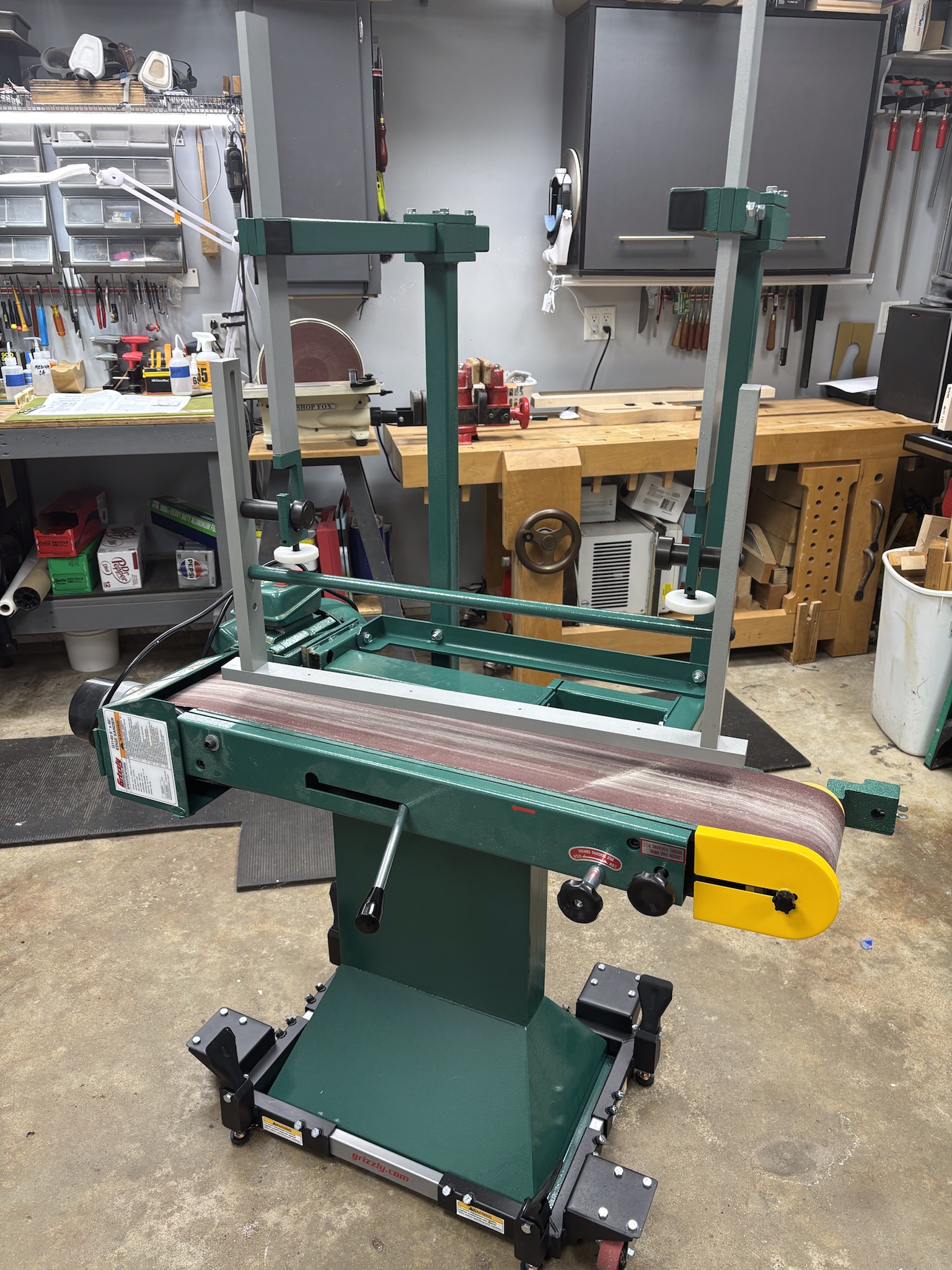
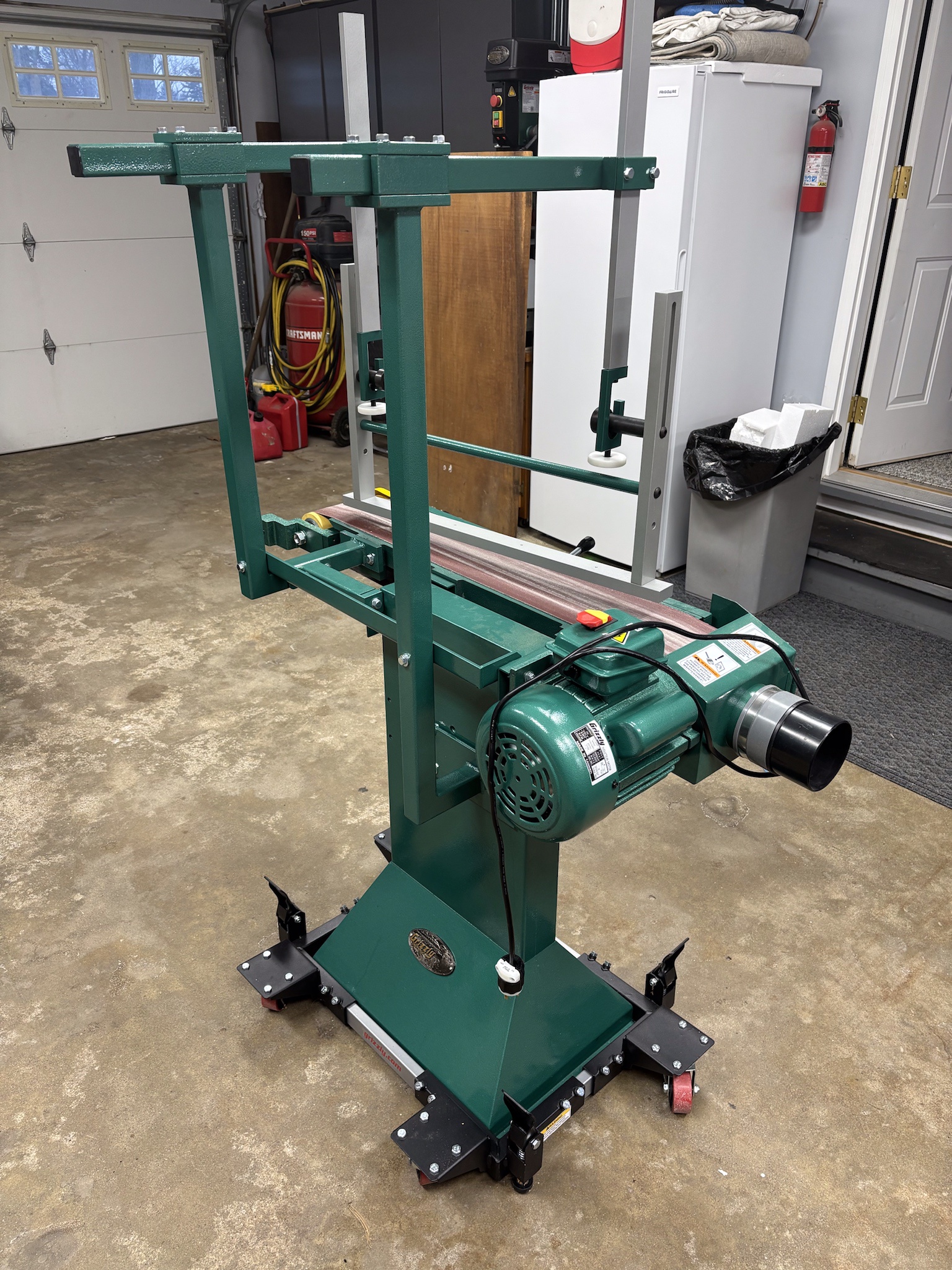
Last summer I bought a Grizzly edge sander, which has been a great addition to the shop. At the same time, I went ahead and bought the fretboard radius jig that attaches to that particular sander. The attachment has been sitting in a box since August. I figured I had procrastinated long enough, so this past weekend, I removed the worktables from the sander and attached the radius jig.

I wasn't too sure how involved it would be to change things back and forth as it would be nice to still use the sander in the vertical position with the table. I think it could be done in about 20 minutes or so. Having said that, I had also recently purchased their 12" disc sander, so the need to change back and forth is somewhat reduced.

At any rate, I can simply remove the swingarm portion and use the sander flat for operations that don't require a "fence" type of arrangement. Anyway, here it is, I haven't run any parts on it yet, but it seems fairly straightforward.

JfTXgkr.jpg


fxdMiAp.jpg


Is it overkill for building a few instruments a year? Yep, absolutely. Am I fed up with chasing solutions that tend to end up being a compromise? Yep. Do I love tools? Yeah, I may have a problem. :D

Anyway, I'm looking forward to running some test parts and maybe trying out some subtle compound radius setups. If I do decide that I need to use this more in a conventional edge sander (vertical) setup, I will try to run batches of fingerboards then switch back... or maybe just invest in some threaded stud knobs to make the changeover faster.
 
Last edited:

Latest posts