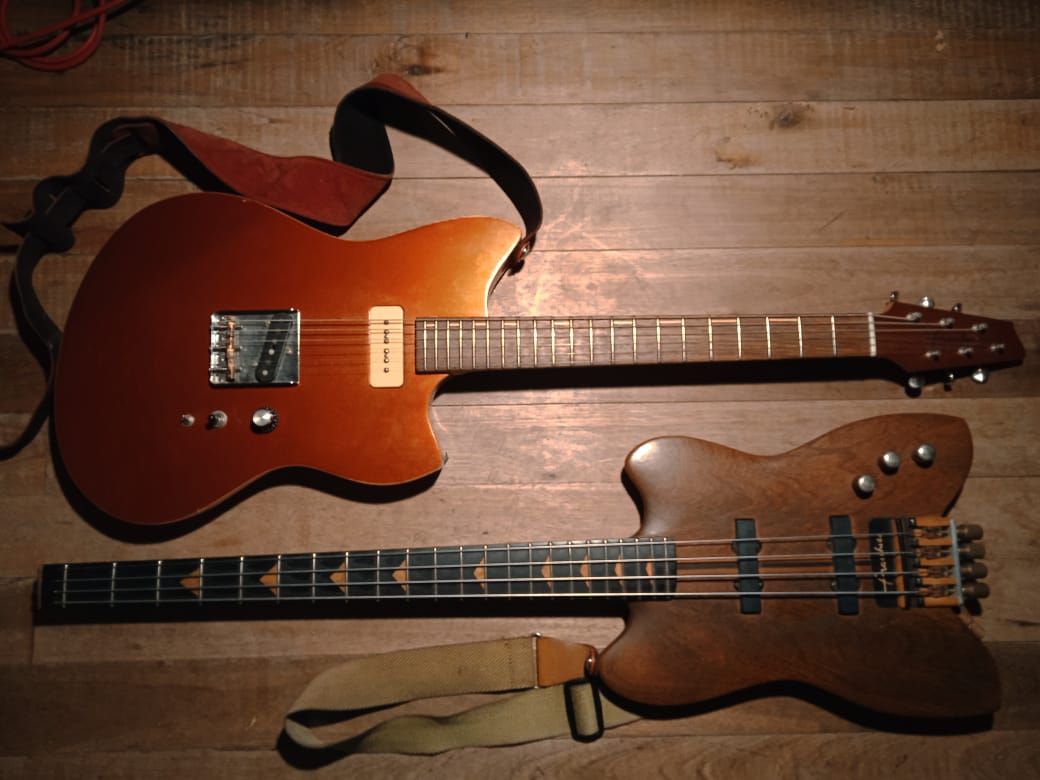
Yes, and the gig bags they are in have name tags. If I ever get to a gig, and my bass isn't working, I can call home and say "bring me Thunder", and I know what bass I'll get - I don' t have to educate my wife on what to look for when I ask for the bass with the Bubinga fretboard. She can read a tag, and that's enough to get me what I need. It's a convenience thing on that level. If I only had 2 basses, this wouldn't be necessary, but as I have a few more than 2, it's a proactive strategy to avoid confusion in that kind of situation. I'm an Engineer - I'm programmed to foresee problems, and implement solutions before they happen.
Other people have descriptors - 57P, 65 Jazz, etc that they can use to denote which bass they mean. As I build all my basses, I can't call them the "Fender" and the Ric", because they aren't that. The names are somewhat descriptive - "Thunder" is the one with the most low end, "Red" is.....red(ish). You find that a lot of touring artists do this, so their tech and they can communicate quickly - if Keith says "bring me Micawber", his tech knows exactly what to do (and you know which Keith I'm talking about as well). Pete Townshend had guitars with HUGE numbers painted on them at one time - it was undoubtedly part of how he, his tech, and FOH kept on the same page about what guitar he was playing. I've done FOH gigs where there were a couple of handheld wireless mics that folks going onstage could grab - having some visual indication of which was which (yellow gaff tape around the handle of one) made a huge difference - if one talker is too loud and the other too soft, and you don't know who's on what mic, it's a bad time for all. If you know, you fix it much more quickly, and once you know the talkers, you can anticipate, and avoid the issue altogether. Thinking about what could go wrong, or what has, and doing something about it before it happens it is always a good idea.