• TalkBass has been independent since 1998. Add your voice.
    Create a free account to reply to discussions, view embedded media, and browse with fewer display ads.
    Join freeLog in
    Want zero display ads or expanded classifieds tools? Compare plans.

Why aren't bi-amp heads more common?

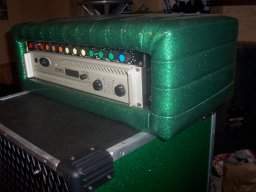
A few years ago I finally got myself a legitimate rig. After doing a little research I landed on two potential options, the Aguilar Tone Hammer 500 or a Gallien-Krueger 700rb mkii. I landed on the GK & paired it with a Neo 212 ii cab & have been very happy with it.

The 700rb mkii is a bi-amp head & states that it is 480 watts for the low end + 50 watts for the highs running into one or two 8 ohm cabs (which the Neo 212 ii is) or one 4 ohm cab.

I just purchased another Neo 212 ii cab & am picking it up tomorrow. Im excited to hear the full potential of the head with both cabs & it got me thinking more about the bi-amp system in general.

What are the advantages &/or disadvantages of the bi-amp system? Why isn't it more common to see this tech in amps & what type of system is currently most popular in amp heads?

*I apologize if this topic has been discussed in another thread or threads*
 
Last edited:
  • Like
Reactions: DJ Bebop
They’re not more common because bass amplification is a very small subset of the already very small instrument amplification market, it requires 2 separate cabs, one of which is not very common, and that 2nd, less commonly used speaker is already built into the cabinets of nearly every player who already wants one, and so is the crossover.
Back in the rack and big gear days it was more common but still not prevalent.
Unless you are playing without PA support it isn’t benefiting anyone but the player in front of the rig.

It’s cool, I’ve done it in the past. These days many cabs come with a high frequency speaker or horn and a built in crossover.

Experiment and rock the heck out of it.
 
Last edited:
IIRC, the GK Neo 212 ii cabinet was the last of the bi-ampable cabinets GK made. GK's set-up on the 700RB is for the horn, later versions you could bi-amp between two boxes.

In general these days, cabinet quality has improved to the point that bi-amping is no longer really beneficial in practice to 99.9% of players.

The first bass amp I designed was a bi-amped combo. Even at that time, it was becoming obvious that the days of bi-amped bass were coming to a close (IMO, and with the benefit of hindsight was correct).
 
We did it in the 70's and early 80's as their was just a 'wall' in output watts on most bass heads and their cabinets, in the 200-300w range, and often, those ratings were fairly bogus and the cabs and their drivers were often little more than guitar or PA speakers in sealed boxes for bass. SVT's were rare and expensive and this was in the dry spot between the original Ampeg company and their great revival later under SLM ownership.

A few heads had crossovers, or it was no great shakes to get a PA stereo amp and a preamp with a crossover, a separate PA crossover, or some stereo power amps would have an internal crossover between Ch A and Ch B.

I ran several rigs like this, and apart from a heavy rack and at least two cabinets, the problem was any and all bass cabinets were designed as standalone, full-range bins: They were not available in families of cabinets like sound reinforcement bins where you had subs, mid-range, and horns designed to work as a whole in a 3-way setup (or 2- or even 4-way cabinet families). So you'd have a full range 18 on the bottom, and a single 15, etc. on top, and where to cross them over was a wild guess. And of course they weren't time aligned, so in some places I'd hear the high pass a split second ahead of the subwoofer. Also, most all this gear was PA or recording spec, and it was very, very clean relative to bass amps, and this put off some guys, not enough artifacts to sound full to their ears.

Of course, even with these shortcomings, they were far louder and cleaner if need be than any bass rigs of their day, but they were patched up rigs. With the advent of SWR and Trace and GK, bass amps really began to come into their own, and it just got easier to leave all that bi-amp stuff behind. With the advent today of cigar box sized 800w or better amps and cabs built and tuned far more precisely that will handle the power, there's just not a big market for bi-amping: The fix it offered just isn't necessary today, and still no bass cabinet maker offers paired subwoofer/high pass cabinet pairs designed for bi-amping.
 
Last edited:
I used to have a GK700rb (not sure which version). Doesn't the biamp feature just give you a control for the tweeter volume on the face of the amp? Many modern cabs simply have a control on the back of the cab for the level of the tweeter so it's really not necessary IMO to have that on the face of the amp. Of course I might be completely wrong in how the biamp feature was working for me.
 
Many years ago when I first started playing out our band had a gig opening for a mid level band. The bass player in this band had a rig that was more like a PA system than what I considered to be a bass amp. He had cabs for lows, cabs for mids, two high frequency horns and several power amps. I was kind of jealous of his rig until I went out front to hear his band. Your couldn't really hear the bass, There was a kind of rumble but no definition. I felt better about my rig after that.
 
I used to have a GK700rb (not sure which version). Doesn't the biamp feature just give you a control for the tweeter volume on the face of the amp? Many modern cabs simply have a control on the back of the cab for the level of the tweeter so it's really not necessary IMO to have that on the face of the amp. Of course I might be completely wrong in how the biamp feature was working for me.

The bi-amp controls on my amp are boost, tweeter, tweeter hi-cut, woofer, & woofer hi-cut.

My understanding is that the bi-amp system splits the signal into two channels, low & high. My amp dedicates 480 watts to the lows & 50 watts to the highs & the cab has two 12" woofers for the lows & the highs go to a tweeter.

Not sure how this compares to other amps & cabs because this is the only rig Ive ever owned. I guess normally the full frequency range is sent through the speakers as opposed to being divided between dedicated woofers & tweeters?
 
Last edited:
I used to run 4x10 + 1x15 biamped until I realized all the sound I cared about came from the 4x10 and overpowered the 1x15 anyway. Switched to 2 4x10s (with tweeters) and never looked back. These days that 19 space rack with Trace Elliot pre and a giant PA power amp driving those 4x10s is totally out classed by a bergantino forte hp and 2 112 NXTs. I never though we’d see the day where speakers got smaller and lighter and better and louder, but here we are.
 
A few years ago I finally got myself a legitimate rig. After doing a little research I landed on two potential options, the Aguilar Tone Hammer 500 or a Gallien-Krueger 700rb mkii. I landed on the GK & paired it with a Neo 212 ii cab & have been very happy with it.

The 700rb mkii is a bi-amp head & states that it is 480 watts for the low end + 50 watts for the highs running into one or two 8 ohm cabs (which the Neo 212 ii is) or one 4 ohm cab.

I just purchased another Neo 212 ii cab & am picking it up tomorrow. Im excited to hear the full potential of the head with both cabs & it got me thinking more about the bi-amp system in general.

What are the advantages &/or disadvantages of the bi-amp system? Why isn't it more common to see this tech in amps & what type of system is currently most popular in amp heads?

*I apologize if this topic has been discussed in another thread or threads*
Not many bass players run two amps at once.
 
The bi-amp controls on my amp are boost, tweeter, tweeter hi-cut, woofer, & woofer hi-cut.

My understanding is that the bi-amp system splits the signal into two channels, low & high. My amp dedicates 480 watts to the lows & 50 watts to the highs & the cab has two 12" woofers for the lows & the highs go to a tweeter.

That is technically a bi-amp head, but it is not really a bi-amp setup in the traditional sense. The 800RB was a true bi-amp which could use 300w only for the lows and 100w for the mids/highs. GK sold cabinets specifically for use with that amp setup, a 115 for the lows and a 212, basically a guitar cab, for the mids/highs. Most people then and still today never use the 100w amp and just run the 300W amp full range. The 700/1001RB is full range with a small 50w amp only for the horn. The only reason the 700/1001RB has this is so you can overdrive the main amp to get the GK " and keep the horn clean. That is the one advantage over running a cabinet full range since distortion through a horn/tweeter usually sounds bad.
 
The last stab at a bass rig w/dedicated subwoofer (or maybe the first and last) were these:

roland_d-bass-1-jpg.2055385


The Roland DBass from some years back. This particular setup was a 210+horn combo on top of a powered single 15 that was switchable for either full range operation OR as a subwoofer to the 210. IIRC, Alain Caron used one of these rigs for a while. All the usual Roland bells and whistles, the FFP processing, built in effects, voice presets, etc. This also weighs close to 200 pounds. Roland offered the combo in either 210 or 115 options.

On paper, a brilliant idea. In the real world, expensive, heavy, and rarely seen or available in stores. And for most guys, an answer to a question few asked. Now if could have just scored that sub to park next to a Jazz Chorus 120 . . . .
 
  • Like
Reactions: DonaldR