• TalkBass has been independent since 1998. Add your voice.
    Create a free account to reply to discussions, view embedded media, and browse with fewer display ads.
    Join freeLog in
    Want zero display ads or expanded classifieds tools? Compare plans.

why do amp specs never show what is lowest note they can perform?

I put that example because I wanted to make a point... obviusly an 8 inch speaker wont perform those frequncies so well as a 15 inch.
Yet, they do show the db level (which is always recorded with a mic a meter away, amp at its maximum)

There is no frequency range shown on that page. We aren't talking about dB levels.....
 
since the biggest, most powerful concert subwoofer systems don't do that, i doubt you'll find one or really need it.
Well, yeah, it's perhaps an acquired taste, but when I string it for E0 tuning, it goes down to 20.6 hz, so yeah, I do have a signal that low that I'd like reproduced cleanly. A quixotic quest to be sure, but I haven't given up. :)
 
I don't want to generalize, but I think specs on components are of more value to the design engineers as they work through their special math recipes to create their brand of secret sauce. While specs do tell me some basic useful things, the acid test is how something sounds in the environment where I intend to use it, with the other equipment (bass, cabs, effects, etc.) I intend to use it with.

There are plenty of things I can reasonably infer about an amp from a frequency plot that shows a 24 dB/octave drop starting at 250HZ....there's a 99+% certainty it's not going to be a satisfying bass amp for me. However, if I'm looking at specs for two bass amps and one is a few more dB down at 40 HZ than the other, that single fact for that single test condition is all I know - and it tells me nothing useful about how those two amps will sound relative to each other.
The speaker experts here will tell you the math doesn't always work out in practice. Was just having such a conversation the other day in fact.
 
You're looking at the "signal to noise" spec....thinking it shows the frequency range of the cabinet. It does not....

I do know that, that is why started this thread.
The thing is, the way they put it ,kind of implies so (even when they are talking about floor noise compared to the sound of the amp)

I will quote my opening post:
I just wonder why no amps specs show what is the lowest note it can produce
E.g. A 10 watt amp can not produce sounds under 200 hz properly.

Physically, the bigger the speaker, the better it will "disturb" the air genarating this huge vibrations we call "low frequency sounds"

Studio monitors, headphones, even mics, show their frequency responce, but not the Amplifiers
 
What do you *think* it says?

You're apparently new here, so I'm going to offer a word of caution. Don't phrase statements like that in this forum. You know, as if you are challenging their competence on the subject. There are many regular members here who are owners and engineers of some of the big-name amp companies. They know what they are talking about and they can make you look real foolish real fast.

...Just sayin' tread carefully and be respectful.
 
You're apparently new here, so I'm going to offer a word of caution. Don't phrase statements like that in this forum. You know, as if you are challenging their competence on the subject. There are many regular members here who are owners and engineers of some of the big-name amp companies. They know what they are talking about and they can make you look real foolish real fast.

...Just sayin' tread carefully and be respectful.

I am not trying to offend anybody, English aint my native language. I am a foreign student, currently on MIT. And I play. So, when you go the lab every piece of equipment has manuals with very detailed info about its components and their behaviour. And it just drives me crazy that musical equipment do not follow those standards, because honestly It would make people's choices easier.

People not knowing how to read a graph does not seem a valid reason to not include that information.
 
I am not trying to offend anybody, I am a foreign student, currently on MIT. And I play. So, when you go the lab every piece of equipment has manuals with very detailed info. And it just drives me crazy when musical equipment do not.
f759652815d35bdefe92a0186317efdaeff16bf900db67e5be45159d88fce245.jpg

We drive people crazy, here.


I put that example because I wanted to make a point... obviusly an 8 inch speaker wont perform those frequncies so well as a 15 inch.
Yet, they do show the db level (which is always recorded with a mic a meter away, amp at its maximum)

Which 8" speaker and which 15" speaker, in which cabinets, and why is it obvious?
 
I'll link to a pair of EBS combos I'm interested in. Invalid Link Removed

The frequency response of each configuration is listed. The 15" speaker version says:
  • Frequency Response 30 - 20k Hz
The 210 version says
  • Frequency Response 50 - 20k Hz
Going by that alone you'd think the 210 couldn't handle a low E let alone a low B, but then you listen to demos and reviews and see it does with no problem.

Which speeks to a good reason for manufacturers to not publish such data. Psychoacoustics are a big factor in percieving low end. It's why telephones work and why you don't need a cab and amp that can produce 20Hz.
 
So, when you go the lab every piece of equipment has manuals with very detailed info. And it just drives me crazy when musical equipment do not.
Bass players are not usually lab technicians, researchers, or engineers so putting that sort of information in the manual is pretty pointless.

Most users would not understand it so the manufacturers do not include it. They cater for the majority and you, and a few others on TB, are in the minority.
 
Hehe. Hi monsterthompson.... lets say they both can vibrate 41 times per second (the frequency of low E)
But the Amplitude (aka Volume) depends on HOW MUCH air they can move...
just like hand fan, the more air you move the better

The diameter only allows you to calculate the area. It ignores the excursion, which will allow you to calculate the displacement. It also tells you nothing about the efficiency of the motor to convert the signal into a decibels, nor the frequency response of the speaker itself. Without knowing those variables, cone diameter tells you only that.

Ignoring the cabinet design is also dangerous. Tuning, porting, and various other characteristics will have an impact on the end performance.
 
Last edited:
I am not trying to offend anybody, English aint my native language. I am a foreign student, currently on MIT. And I play. So, when you go the lab every piece of equipment has manuals with very detailed info about its components and their behaviour. And it just drives me crazy that musical equipment do not follow those standards, because honestly It would make people's choices easier.

People not knowing how to read a graph does not seem a valid reason to not include that information.

I, for one, welcome you to TalkBass. Keep asking questions, and keep people on their toes!

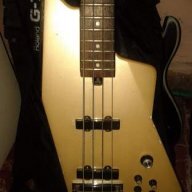
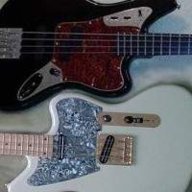
Also, post a pic of your bass.
 
@StringGirl , don't assume that speaker size determines the speakers performance. There are plenty of 10's that will go deeper than 15's. And plenty of 15's that will have more mids and highs than 10's. All speaker diameter really tells you is the size of the hole in the box and the relative size of the box itself. A speaker's Thiele/Small parameters, construction (cone materiel and suspension), and motor determine a speaker's performance. As well as the cab type (sealed or ported) and size. You may want to check out the stickies at the top of the "Amps and Cabs" forum. And, most important, welcome to TB!
 
@StringGirl , don't assume that speaker size determines the speakers performance. There are plenty of 10's that will go deeper than 15's. And plenty of 15's that will have more mids and highs than 10's. All speaker diameter really tells you is the size of the hole in the box and the relative size of the box itself. A speaker's Thiele/Small parameters, construction (cone materiel and suspension), and motor determine a speaker's performance. As well as the cab type (sealed or ported) and size. You may want to check out the stickies at the top of the "Amps and Cabs" forum. And, most important, welcome to TB!

Acme cabs are a great example.
 
  • Like
Reactions: wcriley

Latest posts