As an engineer, I think you've hit on a good point. I wouldn't think much of an engineer who put Shures on everything. What kind of douche, engineer or producer (hereby known as "Queen Douche") would insist on one model of bass guitar for everything?I equate it to the same mentality that believes there's no other reason to own any other live mic but an SM58. Just because it's prevalent doesn't mean it should be the be all/end all.

Enjoy the benefits of a premium membership!
Upgrade Account
-
TalkBass has been independent since 1998. Add your voice.
Create a free account to reply to discussions, view embedded media, and browse with fewer display ads.
Join free Log in
Want zero display ads or expanded classifieds tools? Compare plans.
You are using an out of date browser. It may not display this or other websites correctly.
You should upgrade or use an alternative browser.
You should upgrade or use an alternative browser.
Why do the session legends all use P basses? (SBL Video Discussion)
- Thread starter citizenchris099
- Start date
More options
Who Replied?
The average listener doesn't even know what a bass guitar is.Most of the 20 + million recordings that have sold that I play(ed) on were released between 2001 - 2009. Christina Aguilara, Alicia Keys, Pink, James Blunt, etc,... 95% of those recordings were doen with old P Basses (mine and producer's "faves") with flatwound strings - Why? Most of the recorded popular music legacy that precedes us now and in any moment since the '50's has included a P Bass - a P Bass sits best in the mix, mastering engineers LOVE them, and the listeners' ears are most accustomed to them...that means producers, artists, and most importantly, THE FANS, THE MUSIC LOVERS know this sound and are quite comfortable with it...
peace and love!!!
Only because he was hired to play on other folks' albums, not just U2 - Robbie Robertson, Daniel Lanois, Mission Impossible soundtrack, etc.
I agree with you to an extent -- however, the term session player usually involves a person to show up at a studio with no rehearsal (or limited) - is given charts/numbers - levels set - Go ...in a minimum amount of time because Union blocks are four hours at a time (at least, they used to be)....Its possible Clayton may have showed up at a studio and was given charts and he played - I dont know - but that is often a different skill set than a person that has mostly played in one or few original band(s) all their life. Its possible Clayton was sent the tracks early in advance to come up with a part or to learn something previously composed or he rehearsed it before tracking (especially if recorded in a private studio). I have heard this referred to as a guest player rather than a session player.....I think its important for folks to remember that just because a guy is a famous musician doesn't mean that they are as competent/complete player than other less famous working-stiff players (some of these guys cant even show up at a blues jam and play a simple I - IV - V because theyve never been exposed to it)
VSTi instruments are so much easier and less hassle these days, anyway

Last edited:

Maybe you should check the discographies for Marcus and Nathan. Marcus was one of the first call session bassists in New York along with Franciso Cetano and Will Lee in the '70s and '80s and has recorded with Luther Vandross, Lonnie Liston Smith, Lenny White, and Aretha Franklin to name a few. Nathan got his start with Barry White and has recorded with Phil Collins, Eric Clapton, Anita Baker, Daft Punk and many others.
Marcus with Luther Vandross:
Nathan East with Daft Punk:
They weren't hired just for their virtuosity.
Aren’t you actually making my point, though? Especially with that Daft Punk song, I remember a few years back hearing it in the car and I was like, man that sounds like Nile Rodgers and Nathan East. And sure enough.
Dude, Nathan East was playing all over Cream songs when Eric was playing them live. He wasn’t there to channel Jack Bruce. He’s hitting a low C on “White Room” and then hitting some serious high notes when most of this forum would be afraid to even show up with anything but a Gibson EB to play that song. Nobody told him to play those parts. They just said, Nathan East, you be Nathan East. People hire players like him for their signature tone, their vibe, their style, their virtuosity.
The cult of personality extends to the bass. You hire famous people to sound like famous people. Everyone else you hire to sound like a P-bass...
There - distilled the entire thread to one line.
Sadly, all of this is just a blip on the history of music. Regular instruments have been replaced by VSTs, songs are gridded, and for a lot of sessions there isn't more than one musician in the room at a time. The era of the studio musician came and went with a few exceptions. Odds are soon we'll be back to the days of the court musician.
The documentary on the Wrecking Crew is a great watch.
There - distilled the entire thread to one line.
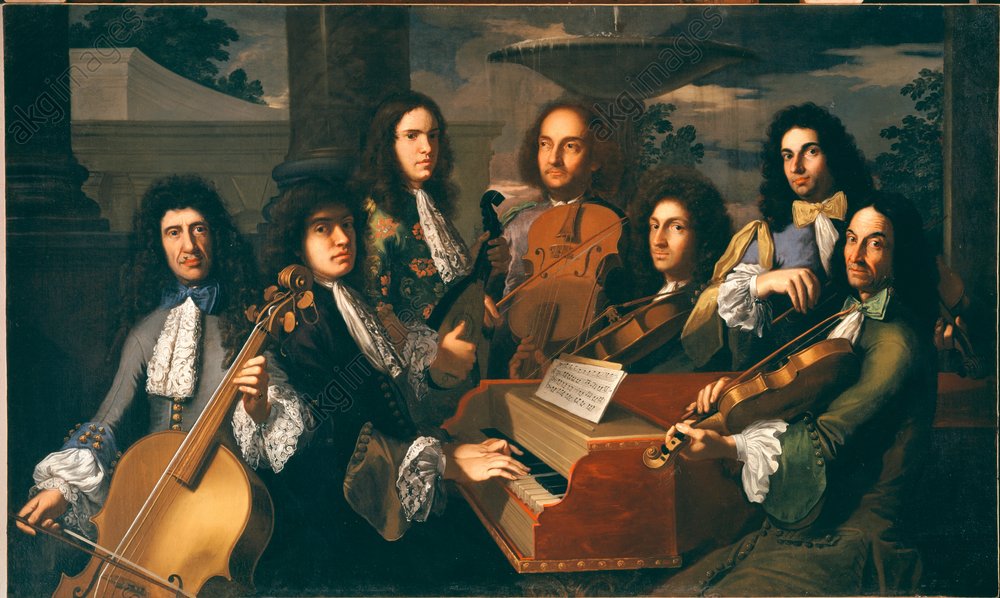
Sadly, all of this is just a blip on the history of music. Regular instruments have been replaced by VSTs, songs are gridded, and for a lot of sessions there isn't more than one musician in the room at a time. The era of the studio musician came and went with a few exceptions. Odds are soon we'll be back to the days of the court musician.
The documentary on the Wrecking Crew is a great watch.
Sadly, all of this is just a blip on the history of music. Regular instruments have been replaced by VSTs, songs are gridded, and for a lot of sessions there isn't more than one musician in the room at a time. The era of the studio musician came and went with a few exceptions. Odds are soon we'll be back to the days of the court musician.
^ This...Ive said this kinda throughout the thread...If youve read through the thread, the two studios I go to currently (when that work appears) are owned by guys that want to capture live sound as part of their personal mission statement. They don't have to, for sure. I'm hoping that this isnt confined to a fluke in my little podunk area and, instead, a trend that continues throughout the global musical community at large -- maybe throwing live players a lifeline in the huge independent scene for a decade or more. The internet certainly has leveled the playing field for everyone, where listeners dont have to be fed whatever corporate music wants to put out....Im hoping that there will always be a market somewhere for live players in various genres and a demand for that product


Not true, and even if it was, so what?The average listener doesn't even know what a bass guitar is.

Bad dog Black tooth, bad dog
View attachment 3270165 Soupy He don't care what bass you use, I have a P bass with flat wounds, a Jazz bass with flat wounds, a 3TBS Lakland with flat wounds, A fretless P bass with flat wounds. And again the old Peavey T-40 was used to record with.
^ This...Ive said this kinda throughout the thread...If youve read through the thread, the two studios I go to currently (when that work appears) are owned by guys that want to capture live sound as part of their personal mission statement. They don't have to, for sure. I'm hoping that this isnt confined to a fluke in my little podunk area and, instead, a trend that continues throughout the global musical community at large -- maybe throwing live players a lifeline in the huge independent scene for a decade or more. The internet certainly has leveled the playing field for everyone, where listeners dont have to be fed whatever corporate music wants to put out....Im hoping that there will always be a market somewhere for live players in various genres and a demand for that product
There are still active studios in LA, but they seem to mostly be booked by people who have day jobs and are recording "for fun." The ability to self-produce, self-promote, and self-distribute certainly has been a boon for some, and the era of the big labels/big studios/big budgets was an anomaly as far as I can tell.
Back when I was still a music major in college, my advisor (an organic chemist - long story) said to me, "you can do chemistry for a living and music for fun, but not the other way around." Putting aside the Breaking Bad option, at the heart of that is the power (and stigma) of "amateur."
The root of the word amateur is "for the love of". It has gotten a negative connotation, but compelling and meaningful work can come from amateurs. In some ways it is better not to be at the mercy of "the industry", and I don't really regret changing my major back in '85.
Yep. The other session guys used to make fun of it, in a friendly way. Did Abe care? He wasn’t short of gigs, producers loved him!This is the bass Abe started his recording career in LA with, a Goya Panther II.
View attachment 3269992
He also has/had a mid 60s P bass. Heavily modified. He has heaps of basses...
A BL thought my Roscoe Beck V was a P bass. “Cool, I love Fender Precision’s,” he said.The average listener doesn't even know what a bass guitar is.
the era of the big labels/big studios/big budgets was an anomaly as far as I can tell.
I like to call the end of that era "the great corporate backfire": another attempt to switch formats and monopolize the industry...I bought Pink Floyd's "The Wall" on four different formats (8-Track, cassette, vinyl, and CD) over time...there was a period in the very early 90s where Sony held the patents on the CD, CD player, and a lot of the mastering ware - They basically had a window of monopoly on everything.....Then, in the late 90s, the industry - ready to change formats again - got with a failing computer company (Apple) to come up with a consumer player for a new downloadable format that would exorcise the middle-man distributor of physical product (I remember how inexpensive Apple stock was back then...hindsight and all)........Of course, not seeing the forest because the trees are in the way, they didnt realize that the new format was very easy to duplicate and pirate.... kinda shot themselves in the foot while Apple soared
Big difference between using a bass because it's all you can afford and just being dicky about it.Yep. The other session guys used to make fun of it, in a friendly way. Did Abe care? He wasn’t short of gigs, producers loved him!
He also has/had a mid 60s P bass. Heavily modified. He has heaps of basses...

I like to call the end of that era "the great corporate backfire": another attempt to switch formats and monopolize the industry...I bought Pink Floyd's "The Wall" on four different formats (8-Track, cassette, vinyl, and CD) over time...there was a period in the very early 90s where Sony held the patents on the CD, CD player, and a lot of the mastering ware - They basically had a window of monopoly on everything.....Then, in the late 90s, the industry - ready to change formats again - got with a failing computer company (Apple) to come up with a consumer player for a new downloadable format that would exorcise the middle-man distributor of physical product (I remember how inexpensive Apple stock was back then...hindsight and all)........Of course, not seeing the forest because the trees are in the way, they didnt realize that the new format was very easy to duplicate and pirate.... kinda shot themselves in the foot while Apple soared
Good piece that recalls how music helped fuel the rise of Apple out of the dot-com crash
https://gizmodo.com/what-happened-the-last-time-apple-had-a-panic-this-bad-1831455815
As an engineer, I think you've hit on a good point. I wouldn't think much of an engineer who put Shures on everything. What kind of douche, engineer or producer (hereby known as "Queen Douche") would insist on one model of bass guitar for everything?
As an engineer and bassist, I think this argument falls short on many levels. Microphones (and preamps, signal processing, tape formulations, digital formats, etc etc.) are not musical instruments. I think the subject is dealing with the inherent tone and how a particular instrument lends itself to sitting in the track. Basses haven't really changed all that much since the P. You mainly get faster actions and tonal shaping options with pickups and electronics.
From the engineering side, any time I had something other than a P bass, or maybe a good Jazz, I had to do all manner of equalization, dynamics (normal and multi-band), automation and what not to bring some consistency into the part. Still had to battle disappearing bass syndrome. Never happens with the P bass. Just a touch of compression and you are good to go.
Maybe that's one of the reasons they still get lots of love on modern day sessions.
From the engineering side, any time I had something other than a P bass, or maybe a good Jazz, I had to do all manner of equalization, dynamics (normal and multi-band), automation and what not to bring some consistency into the part. Still had to battle disappearing bass syndrome. Never happens with the P bass. Just a touch of compression and you are good to go.
Maybe that's one of the reasons they still get lots of love on modern day sessions.
I thought that's what the Reddi DI that everyone raves about was built around...the sound of a P-bass and the warm natural compression of a slightly over driven tube amp like the B-15. A holy grail of tone.
Turnaround
Commercial User
That's one way to define a session player. In 1969 I was asked by an internationally famous artist to sit in on bass on a recording session he was doing. It was my first exposure to the world of "session" players. Not even any charts. We made it all up on the fly.I agree with you to an extent -- however, the term session player usually involves a person to show up at a studio with no rehearsal (or limited) - is given charts/numbers - levels set - Go ...in a minimum amount of time because Union blocks are four hours at a time (at least, they used to be)\
But I have been asked to record on other projects where I was not a part of a band, but was asked to record the bass part on a project. I was given charts in advance, but no rehearsals. Did that make me a session player? FWIW in all of the recordings I never used a P-bass. I was never asked to use a P-bass by an artist, an engineer or a producer. The only specification that was made was on one session where the artist asked if I would use my double bass and once when the artist wanted a Jaco-style but left the choice of bass to me.
So the original post asked "Why do the session legends all use P basses?" The answer is "They don't, not all of them". But maybe there is a problem with the term "session legends" in that we need to be clear about what we me by "session" and "legends". We are having enough trouble defining what a session player is, and there have been a lot of suggestions about famous freelance bass recording personnel that are known for using basses other than P-type. The very question is bait for disagreement and, judging from the number and nature of the responses, it has been a highly attractive bait.


