Sounds like people are afraid of change despite the objective benefits.
Subjective benefit. Again, it's a solution in search of a problem.

TalkBass has been independent since 1998. Add your voice.
Create a free account to reply to discussions, view embedded media, and browse with fewer display ads.
Join free Log in
Want zero display ads or expanded classifieds tools? Compare plans.
Sounds like people are afraid of change despite the objective benefits.
It's like people arguing against noiseless pickups.
Are they required? No. Are they awesome? uh...yeah.
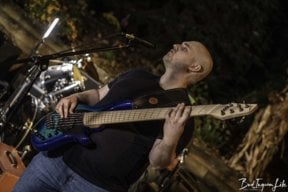
The differences become much more clear witI think that fanned frets are a little bit of a gimmick. They help a bit but not as much as certain marques would kid you. I can hear very little difference between a 36" scale low B and a good 34", sure it feels better but there is so little discernible audio difference.
IDK what you guys are talking about...as the owner of an SRFF806 I can definitively say the B low string saddle does not hang off the body of the bass.The B-string overhanging saddle is even more pronounced on the 6-string.
As for the unfinished section below the neck...why they would do such a thing is beyond me.
Sounds like people are afraid of change despite the objective benefits.


Must just be the photo.The differences become much more clear wit
IDK what you guys are talking about...as the owner of an SRFF806 I can definitively say the B low string saddle does not hang off the body of the bass.
I think the $$$ for fanned fret basses exists, and currently Dingwall is the only company cashing in on it. The popularity and rising prevalence of the Dingwall NG-2 is proof of this.I sometimes revisit the OP's original statement / comment / question and come to a different conclusion than my first reply, but not this time.
Why don't more builders use fanned frets / multi-scale?
Dollars, nothing but dollars. If a Jaco, Flea, Trujillo, Sting, etc comes along and is playing a fanned fret bass, builders might move that way, but they aren't going to until it makes $$$.
With string making technology solving the floppy B string problem for most, it's even less likely for builders to make the change to a fan fret model now than it was in the past.
It's not at all uncommon for the first solution to a problem to be a decent solution, but maybe not the most economical solution. Economics usually wins in the end, so the string solution to a floppy B is the most widely implemented solution. Is a fanned fret bass better than a straight fret bass with balanced strings? I have no idea, but I can try balanced strings much easier and cheaper than a new bass, and if it solves what I thought was a problem, I'm no longer looking for a solution.
Problems: inbalanced string tension, ergonomics, scale length for low de-tuning...Subjective benefit. Again, it's a solution in search of a problem.
Must just be the photo.
I really like this bass, though, and would love to try one out.
Problems: inbalanced string tension, ergonomics, scale length for low de-tuning...
These problems have existed for a long time. Multi-scale isn't the only solution for these problems, but currently it's one of the best solutions.

Sounds like people are afraid of change despite the objective benefits.
I like my fretboard the way it is. However, I do use a small electric fan when I play gigs.
The first fanned feet ibever saw was Charlie hunter's Novax

Problems: inbalanced string tension, ergonomics, scale length for low de-tuning...
These problems have existed for a long time. Multi-scale isn't the only solution for these problems, but currently it's one of the best solutions.

Problems: inbalanced string tension, ergonomics, scale length for low de-tuning...
These problems have existed for a long time. Multi-scale isn't the only solution for these problems, but currently it's one of the best solutions.
Esp has a few in their B series.
Products - B Series Basses - The ESP Guitar Company
They are at the $1400 price range (probably $1000 in a shop).
Some of the cost is most likely due to extra work on the fret board, making cuts at all those angles has got to be harder than make a bunch of 90* cuts.
Then again, this day and age a CNC probably does all the work so...
I've never played one but I'd like to. Only then can I decide if it's right or wrong FOR ME.
I don't know, if it works for this guy (can't recall his name) there should be no argument against it on this board, amirite?

Esp has a few in their B series.
Products - B Series Basses - The ESP Guitar Company
They are at the $1400 price range (probably $1000 in a shop).
Some of the cost is most likely due to extra work on the fret board, making cuts at all those angles has got to be harder than make a bunch of 90* cuts.
Then again, this day and age a CNC probably does all the work so...
I've never played one but I'd like to. Only then can I decide if it's right or wrong FOR ME.
I don't know, if it works for this guy (can't recall his name) there should be no argument against it on this board, amirite?