• TalkBass has been independent since 1998. Add your voice.
    Create a free account to reply to discussions, view embedded media, and browse with fewer display ads.
    Join freeLog in
    Want zero display ads or expanded classifieds tools? Compare plans.

Why have a nice rig just to be run direct?

Status
Not open for further replies.
As always, but at least if you have the tools that you like going into the board, you stand a fighting chance of getting a sound you like in the PA.

Which is why I de-emphasize the roll of an amp in "my" sound. The bass, the player, the DI. If all that's good, I can get a decent sound out of any amp (the little I use an amp) and the house sound is at the mercy of the sound person anyway.
 
I've done it with an SVT and a Radial JDV before.

My fault because I did not bear in mind the following.

Radial JDV Mk3 Owner’s Manual

-30dB Parallel Speaker Pad

Sometimes, it may be desirable to tap the signal from the speaker cabinet to get the sound of the instrument after the amplifier (post effect). The JDV is equipped to do so by inserting a -30dB input pad into the circuit..

Using a speaker-tapped signal can be fun however it should be noted that the signal from the guitar amp is designed to drive 12” and 15” instrument speakers which mask high frequencies (no tweeters). Because of the extreme fidelity of the JDV, it is possible that residual noise content from the amp and the speaker 'hang-over' effect will be audible. Try using the JDV’s high-frequency roll-off (HI-CUT filter) or adjust EQ to suit.

To activate the -30dB pad, depress the recessed ‘PAD-30dB’ switch using a pen or small screwdriver, then connect the signal from the speaker cabinet or the amplifier’s second speaker output using a regular speaker cable.

Failure to connect a speaker or load box in parallel to the JDV may cause severe damage to the JDV and/or the amplifier which would not becovered under warranty.
 
My fault because I did not bear in mind the following.

Radial JDV Mk3 Owner’s Manual

-30dB Parallel Speaker Pad

Sometimes, it may be desirable to tap the signal from the speaker cabinet to get the sound of the instrument after the amplifier (post effect). The JDV is equipped to do so by inserting a -30dB input pad into the circuit..

Using a speaker-tapped signal can be fun however it should be noted that the signal from the guitar amp is designed to drive 12” and 15” instrument speakers which mask high frequencies (no tweeters). Because of the extreme fidelity of the JDV, it is possible that residual noise content from the amp and the speaker 'hang-over' effect will be audible. Try using the JDV’s high-frequency roll-off (HI-CUT filter) or adjust EQ to suit.

To activate the -30dB pad, depress the recessed ‘PAD-30dB’ switch using a pen or small screwdriver, then connect the signal from the speaker cabinet or the amplifier’s second speaker output using a regular speaker cable.

Failure to connect a speaker or load box in parallel to the JDV may cause severe damage to the JDV and/or the amplifier which would not becovered under warranty.

The JDV does have this feature but the J48 (inexplicably) does not.

I don't see any scenario where not connecting a speaker in parallel would actually damage the JDV though. The signal it sees from the amplifier's speaker output is essentially the same whether there's a load connected or not.
 
Well it'll definitely damage a tube amp or SS amp with an output transformer (of which the Warwick Hellborg power amps are the only ones I know of), so not recommended at any rate.
 
it's about versatility.. various places have various sound ppl, PAs, some no PAs.. or what if their gear breaks.. it happens.. I've been thankful I've had cabs in clubs with house sound because several times the soundmen took me OUT of the mix and told me to TURN UP because their subs had blown.. so during those times, my amp and cabinets saved me.
 
I saw a guy carrying his own mic and then blend it with his amp DI in a mini mixer which was then sent to FOH as one signal, worked perfectly and the sound guy was cool with it too. I actually think this is THE solution because you might wanna choose that mic yourself anyway, right? ;-)
 
The JDV does have this feature but the J48 (inexplicably) does not.

I don't see any scenario where not connecting a speaker in parallel would actually damage the JDV though. The signal it sees from the amplifier's speaker output is essentially the same whether there's a load connected or not.

Although not explicit mentioned but I'm pretty sure this warning regards to tube power amps.
 
I saw a guy carrying his own mic and then blend it with his amp DI in a mini mixer which was then sent to FOH as one signal, worked perfectly and the sound guy was cool with it too. I actually think this is THE solution because you might wanna choose that mic yourself anyway, right? ;-)
That's a good idea. A lot of stuff to carry, but if you're finicky about getting the sound you want, a good way to go, especially when you get the old "We only have one line for bass" rap.
 
The Radial Engineering JDI does the job as well, but adds a confirmed 12" speaker simulation to this feature.
All other actice Radial DIs probably don't fit a requirement for linking to a 300 Watt at 4 Ohm power amp out.
These DI provide only -15dB attenuation at the input plug which is probably too less attenuation for sufficient performance of the input stage.

Yeah, I've used a JDI for speaker level DI sends, and it worked really well...


- georgestrings
 
I bought my G30 wireless specifically for this, I don't need it on stage but I do need it during soundcheck.

I didn't go to wireless specifically for that reason, but I've certainly used it to check things out front... Any good soundman I've ever worked with has had no problem with me being next to him at the board while dialing in my bass sound - and things seem to go faster that way...


- georgestrings
 
OVer here in germany, Mic'ing the bass is somewhat exotic.
Sad but true. Normally, the bass gets DI'ed before the signal hits the amp.
So, i've played lots of gigs with my sound on stage and the sound the PA guy thought cool in the hall.
Over the years i've discovered a few possibilities for that problem.
first and foremost, it can help greatly to talk to the soundguy before he rigs the stage with his stuff. And when doing so, never demand anything, but ask nicely wether that can be arranged or not. I know these guys have to deal with a lot of idiots on the four strings that want their crappy EQ settings that work for their broken amp in their rehearsal room where everything is set up wrong translated to the stage, resulting in
disaster.
Never get on the stage when all the setup's done and cry for a mic instead of that crappy DI.

Second, provide a solid, working solution all by your own. bring your own mic and/or DI.
Last time i tried to have my amp's DI (post EQ) used for the signal instead of the DI before the amp, the guy told me that if we do it that way, he'll try and make the PA sound like my amp does and i'll have to live with the consequences. I told him we'd give it a shot and if he thinks it's not working, we'll do it his way. Turned out great.
 
Quite frankly. sound guys are there to amplify your sound and not to actually (re)design it. I don't care what they think I should sound like, all the do is take my signal and make it work for the room. Can't be that hard, can it? I`ve already gone "down" to accept that DI is a necessity but using their DI boxes or having them alter my sound? NO. Not an option. Communicating that nicely is important though, I did sound a bit harsh up there^^
 
Quite frankly. sound guys are there to amplify your sound and not to actually (re)design it. I don't care what they think I should sound like, all the do is take my signal and make it work for the room. Can't be that hard, can it? I`ve already gone "down" to accept that DI is a necessity but using their DI boxes or having them alter my sound? NO. Not an option. Communicating that nicely is important though, I did sound a bit harsh up there^^

:rollno:

You got it man.. just volume up and down.
 
I have never depended on my amp as a major factor of my tone. My sound is my bass and me. My amp and DI are both quite clean - Genz Benz SS head and JDI DI.

I recently recorded some tracks for an album. I had my rig mic'ed up and had a direct line from my head. The tracks are almost identical and the DI track actually sounds better. Honestly, I was shocked at this. I really thought the mic'ed track would blow away the DI track. I guess because of this I don't mind at all running direct out of my head at shows. I'm also inclined to believe that if you have to rely on your entire rig for the right sound you might be doing it "wrong". Just my thoughts.
 
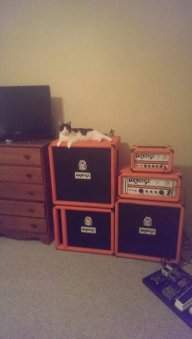
Alot of interesting perspectives. I play rock and roll, so ditching my amp and cabs in favor of a DI just isn't going to happen. It would be so odd to not have the booming warmth of my Orange behind me on stage. I picked up a beta 52 at a pawn shop and am going to use it until I can get one of the better mic's people referenced on this thread, and ask that all sound guys wanting to run me direct just plug into the mic and mic one of my 10's on the OBC 410.

I've noticed that the venues in town that have the best sound and biggest sound systems always mic the bass. Always.

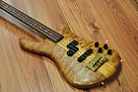
I know as bassists you guys must get the same vibe I do alot when it comes to live sound, and that is that the bass is the least important thing to the sound guy. I play in a three piece and we have a very black sabbath esque dynamic, where my punchy bass tone needs to both cut through and hold down the low end at the same time. IMO that sound is acheived through my amp, bass and cabs. My Spector is too treble heavy by itself and can be too twangy and not have enough bass when the signal is isolated for what we do, especially because I crank the bass, treble, and two pickup knobs to full then balance it out on my head. I don't have the luxury of being in a band where we get a 30 minute sound check hours before the show. We are usually 2 of 4 bands on a bill and have 15 minutes (if we are lucky) to set up and sound check. When that's the case, it makes it alot harder to work with a sound guy. At least thanks to this thread I am armed with some justification now.
 
Status
Not open for further replies.