
Enjoy the benefits of a premium membership!
Upgrade Account
-
TalkBass has been independent since 1998. Add your voice.
Create a free account to reply to discussions, view embedded media, and browse with fewer display ads.
Join free Log in
Want zero display ads or expanded classifieds tools? Compare plans.
You are using an out of date browser. It may not display this or other websites correctly.
You should upgrade or use an alternative browser.
You should upgrade or use an alternative browser.
Why Use Anything But Hipshot Ultralites?
- Thread starter Icculus
- Start date
More options
Who Replied?
Each tuner only required one hole on the bottom of the tuner. The frame of the tuner is compact enough that if you decide you want to retrofit the original tuners for any reason, the hole is covered.I haven't bought them because the screw holes don't line up with standard Fender or Schaller types. I don't want to drill a bunch of extra holes in the headstock.
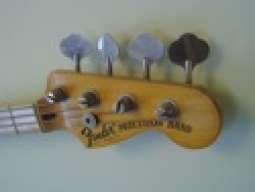

Have hipshots on most of my basses. On the lower priced ones [G&L Tribute, P Classic Vibe] went with there imported lower cost ones. You can get ultralights in shiny chrome and I am having a custom bass that has a nickel bridge.

Most of my basses have Gotoh GB350 tuners which are a bit lighter than the Hipshot Ultralights. I switched out the tuners on one bass that had Hipshots and I didn't notice a difference in sound with the Gotohs. I only switched out because I was switching to black hardware, and put the Hipshots on another bass.

Did you try adjusting the worm set screw for smoothness?I had hipshots on my Warmoth. They worked for neck balance and gave the Fender look but they were a bit rough in operation. I prefer the smooth action of gotoh GB7 tuners.
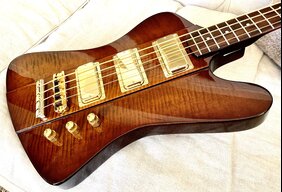
Actually I seem to remember that you can't get the Y key ultralights in complete chrome, the Y key remains satin even on the chrome body model. Why, I don't know.Have hipshots on most of my basses. On the lower priced ones [G&L Tribute, P Classic Vibe] went with there imported lower cost ones. You can get ultralights in shiny chrome and I am having a custom bass that has a nickel bridge.

I guess aside from having a neck that's already drilled for a different size, are there any known caveats to these?
The known caveat of which I aware is that lightweight tuners can stifle a bit of your sustain, relative to what full-weight conventional tuners typically deliver. Anything that decreases the relative mass of/on your headstock would tend toward the same effect. Tuners, of course, are just one of several factors to consider however.
Trade-offs, trade-offs. Always trade-offs...
MM

I've owned 5 basses with ultralites. I've never found them to be more precise than any other tuner (aside from a stripped set of Gotohs on my old Spector that I replaced).If you only have $35 instead of the retail price of Hipshots, I can see getting lesser expensive ones. Or do what I did: save up. They worth saving up for.
Some vintage instruments that have the traditional full sized tuners that have proven their worth I would leave alone. My Rickenbacker 4002 with factory stock Schaller minis fall into this category, as do rare Fenders with stock "Lollipop" tuners, early '70's Rickenbackers with wavy Grover tuners, and such. No, I'm not going to go putting Ultralites on a mint real '62 P-bass or similar.
For everything else, especially player instruments I earn gig money with, I systematically change out all my instruments to the Hipshot Ultralites. Not only are they lighter, but are smoother and more precise. Well worth the money, even on a $200 bass. A $100 bass? Unless it was a sleeper that is giggable, probably not, but you never know until you hear it on stage or in the studio.
The screw hole for mounting the Ultalite is in the same place as a GB7 and all the copies.
But I don't think Hipshot makes anything that looks like the Gotoh GB7 & I believe Gotoh might be replacing the GB7 series with the equally good looking (but lighter weight) G350's in the RES-O-LITE series...
EDIT - I originally meant "Gotoh GB707" - great looking machines!!! and now available in RES-O-LITE versions (I think)...
Last edited:

I dont mess with my tuners, just not a huge part of the equation for me. Even my EB 3 balances super well, so I'm not gonna fix a problem that isn't there

SirMjac28
Patiently Waiting For The Next British Invasion
I've never had a problem with any tuners I've ever used I must be lucky and if the instrument stays in tune I'm good.
You are right. For those who want a lightweight enclosed tuner, that is not something Hipshot offers. But I like the accessibility, the reversibility, and the adjustability of the Hipshots, which is the opposite of the Gotohs.But I don't think Hipshot makes anything that looks like the Gotoh GB7 & I believe Gotoh might be replacing the GB7 series with the equally good looking (but lighter weight) G350's in the RES-O-LITE series...
EDIT - I originally meant "Gotoh GB707" - great looking machines!!! and now available in RES-O-LITE versions (I think)...

Over time, I have found the standard-issue MIM tuners to be solid performers, and the tapered peg post makes a lot of practical sense. Having to re-plug abandoned screw holes is not appealing at all. The HB-7 drop-in replacements are a smidge lighter as a set, but not a must-have.
Last edited:

Did you try adjusting the worm set screw for smoothness?
You mean I could have fixed the issue with a simple adjustment? :-O
I didn't. All 4 tuners were just a bit gritty & rough. Also, when first turning them after not adjusting them for a hour or so they would stick just a bit as if they were set in place and needed to be broken free.

Why indeed!I have Hipshot 20650G's on both of my basses.
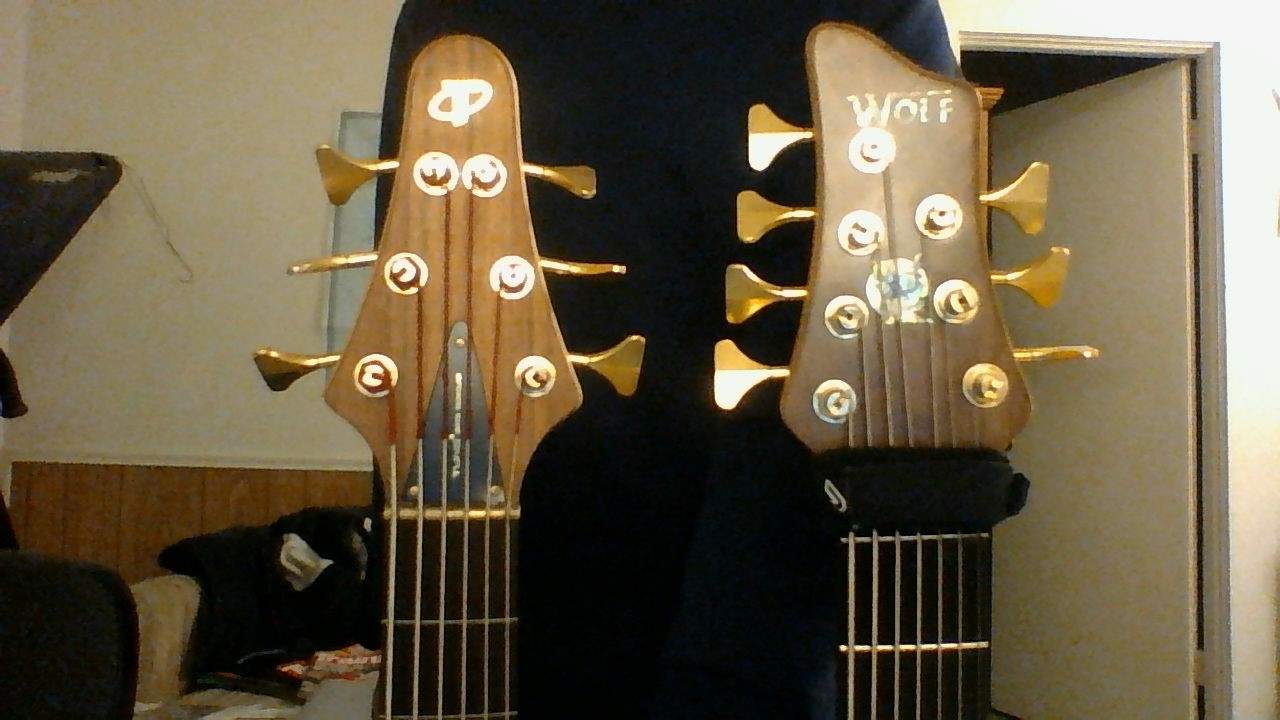 I originally ordered a set of Gotoh GB707G's for my six string fretless.Thinking they were Resolite.My mistake!
They weren't.
Gotoh didn't make the "Y"shape in gold Resolite.
So I sold them and went to Hipshot.TWICE!
They weren't.
Gotoh didn't make the "Y"shape in gold Resolite.
So I sold them and went to Hipshot.TWICE!
Last edited:

Actually I seem to remember that you can't get the Y key ultralights in complete chrome, the Y key remains satin even on the chrome body model. Why, I don't know.
Negative. I have set of all-chrome 3/8" Y Ultralites on my Pedulla. They actually refer to it as "shiny nickel" but has the true chrome appearance. The Hipshot chrome, from what I see on the website, has the duller aluminum matte to it.
Riis
Correct - Hipshot does not offer an all chrome version of the ultralight Y key tuner. They do offer a polished nickel version that looks similar to chrome but isn't chrome. So in fact you don't have a set of all chrome 3/8" Y Ultralites on your Pedulla. But what you do have is a set of equally nice looking polished nickel tuners that some would mistake for chrome until compared side by side to actual chrome. For the casual observer there's no real visual difference, for the purist its obvious.Negative. I have set of all-chrome 3/8" Y Ultralites on my Pedulla. They actually refer to it as "shiny nickel" but has the true chrome appearance. The Hipshot chrome, from what I see on the website, has the duller aluminum matte to it.
Riis
Yes. It is the same worm gear grub screw you take out to swap the worm to make it a right or left handed tuner. You adjust it until it has the tightness or looseness desired on the tuning.You mean I could have fixed the issue with a simple adjustment? :-O
I didn't. All 4 tuners were just a bit gritty & rough. Also, when first turning them after not adjusting them for a hour or so they would stick just a bit as if they were set in place and needed to be broken free.
For the casual observer there's no real visual difference, for the purist its obvious.
Yes, when compared side-by-side with true chrome cloverleafs on my G&L or a set of chrome GB7's, there is a discernible difference. It's less obvious, when solo'd, as all the tuner components actually match. Same holds true for the gold finish lic'd tuners I installed. They look really good but do not exactly match the gold GB7's removed or the Gotoh bridge that remains. Come to think of it, the matte gold finish Sperzels on my Carvin are nowhere near the gold Babicz bridge or control knobs. Seeing that they're separated by the distance of "one bass", it's a non-issue for me when weighing functionality vs cosmetics.
Riis


