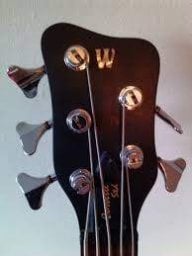
I know almost nothing about CF.But can't these CF rods be pre-formed so they provide some slight back bow already?
I just wanted to be part of the conversation and paid attention to.

TalkBass has been independent since 1998. Add your voice.
Create a free account to reply to discussions, view embedded media, and browse with fewer display ads.
Join free Log in
Want zero display ads or expanded classifieds tools? Compare plans.
I know almost nothing about CF.But can't these CF rods be pre-formed so they provide some slight back bow already?
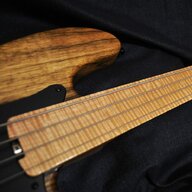


Wait! CF goes INSIDE the neck?
Crap, I think mines broken! View attachment 4493281
"We use a highly innovative method, following a deep and longtime research on physics."
I'm a big fan of design, architecture, structural and mechanical engineering, physics etc, etc. I find it all fascinating, as I'm sure most of us do and why we're all drawn to building things/instruments.
I'm not a big fan of marketing that sounds like a poorly written children's book and talks to me like I'm an impressionable idiot.
Yes, I'm a crabass.


I emphatically agree.I'm not a big fan of marketing that sounds like a poorly written children's book and talks to me like I'm an impressionable idiot.

I dunno, seems to me Heiko Hoepfinger is pretty well known. He writes an article for Premier Guitar for years and there was a flurry of interest in his work a few years back.There could be a several reasons this company is not well known. Marketing may be one of them.

I agree though that the ad copy should be more like "We use a highly innovative method to build guitars. Oh, I also happen to be a physicist." A little closer to the truth."We use a highly innovative method, following a deep and longtime research on physics."
I'm a big fan of design, architecture, structural and mechanical engineering, physics etc, etc. I find it all fascinating, as I'm sure most of us do and why we're all drawn to building things/instruments.
I'm not a big fan of marketing that sounds like a poorly written children's book and talks to me like I'm an impressionable idiot.
Yes, I'm a crabass.
It has a wood core and fretboardInteresting! CF applied to the outside would be like a monocoque (structural shell) design. If the fretboard is not also covered, then it would be incomplete and not have the same structural effect. A monocoque structure, if complete, would be very stiff. How would the stiffness affect truss rod adjustments?
Edited to add this link showing a monocoque bass! Its hollow.
BassLab – Basses & Guitars – BassLab is a manufacturer of lightweight, monocoque guitars and basses made from "tuneable composite".
I'm not sure what the ideal moisture content is. I'd guess that the ideal content varies slightly for different species.Wood is sitting at 12%
Ok to use or let it dry longer? I was told in another post to try to get it closer to 8%View attachment 4494076
What if wood is completely sealed with epoxy, polyester, polyurethane, etc?
If that greatly reduces or eliminates the movement of moisture in/out of the wood, my question would be, what's an acceptable % of MC to seal into the wood? 12, 10, 8%? 15?