My only proviso is that you play WHATEVER lets you be the best you musically, regardless of all the labels.
Having said that . . . . .
I never realized some cats had a hard-on about anything past a four-string.
After I lived in Nashville awhile, it became apparent there were two camps:
There were guys around town who played any and every style axe you can think of: 4, 5, 6, upright, you name it, interchangeably.
Then the other bunch played fours, period, and maybe doubled on a 4-string upright. In a few cases, some of these guys looked at the first group . . . . like they were from Mars.
Maybe it's this: A lot of guys, when they transitioned to a five in the 90's, would get on a gig, and wear out all the new low C's, D's, whatever way past well-done. I'll admit it's a temptation and fun for a little while, but the smart guys figure out quick that in a lot of cases, staying 'down there' can just set the song adrift, without top-shelf FOH to make those notes really work. Caused more than a few problems on gigs with the 'that's not a bass' crowd.
I got over the shiny-new-low-note-toy phase real fast, and just played the song. IF here and there the occasional 'lower-than-usual' note fit and worked, I'd use it. Otherwise I'd just forget about that sort of thing and play the tune. I knew I had gotten that correctly when playing a very traditional country cover gig, a well-respected guitarist and leader told me, 'man you did great, and you know, THAT BASS DOESN'T SOUND LIKE A FIVE-STRING.'
Well . . . . . . actually it did. I just learned not to depth-charge all the tunes with those uber-low notes. As with all things, any fool can play a bunch of notes, the good ones know what to leave out. I'm still working on that.
Having said that . . . . .
I never realized some cats had a hard-on about anything past a four-string.
After I lived in Nashville awhile, it became apparent there were two camps:
There were guys around town who played any and every style axe you can think of: 4, 5, 6, upright, you name it, interchangeably.
Then the other bunch played fours, period, and maybe doubled on a 4-string upright. In a few cases, some of these guys looked at the first group . . . . like they were from Mars.
Maybe it's this: A lot of guys, when they transitioned to a five in the 90's, would get on a gig, and wear out all the new low C's, D's, whatever way past well-done. I'll admit it's a temptation and fun for a little while, but the smart guys figure out quick that in a lot of cases, staying 'down there' can just set the song adrift, without top-shelf FOH to make those notes really work. Caused more than a few problems on gigs with the 'that's not a bass' crowd.
I got over the shiny-new-low-note-toy phase real fast, and just played the song. IF here and there the occasional 'lower-than-usual' note fit and worked, I'd use it. Otherwise I'd just forget about that sort of thing and play the tune. I knew I had gotten that correctly when playing a very traditional country cover gig, a well-respected guitarist and leader told me, 'man you did great, and you know, THAT BASS DOESN'T SOUND LIKE A FIVE-STRING.'
Well . . . . . . actually it did. I just learned not to depth-charge all the tunes with those uber-low notes. As with all things, any fool can play a bunch of notes, the good ones know what to leave out. I'm still working on that.


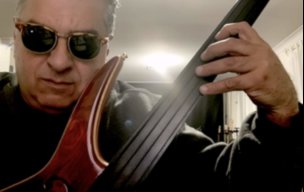
 No strings at all!
 But 4-string definitely dominates those charts, and there are certainly acts that frown on 5's and 6's. And I'm seeing that vibe creeping in pockets of other genres, too.

 .
.






 ? They will never know
  . We all had a good time, and I got paid
  .
.