
Enjoy the benefits of a premium membership!
Upgrade Account
-
TalkBass has been independent since 1998. Add your voice.
Create a free account to reply to discussions, view embedded media, and browse with fewer display ads.
Join free Log in
Want zero display ads or expanded classifieds tools? Compare plans.
You are using an out of date browser. It may not display this or other websites correctly.
You should upgrade or use an alternative browser.
You should upgrade or use an alternative browser.
active > passive
- Thread starter KipAshcraft
- Start date
More options
Who Replied?

Lowendtech
Happily trending in my own peculiar direction.
Anything below 8.5v gets swapped out.What is your acceptable voltage window?
At that point you can see the LED get dimmer if you stick the same battery in a Boss pedal. I have swapped them out with as much as 8.8 v as well. But I’ll save those for emergencies.
Last edited:

I'm very much a preamp man, but only the one which is connected directly to the power amp.... by the way, has anyone attempted to "pacify" an active Ibanez SR bass? How was the sound affected? I have an SRC6 which I am considering modifying....
Try this
Hey, I have a question that maybe doesn't need its own thread now that y'all are right here. I have owned two active basses. But it's my inclination to run them with their active EQ settings flat. Like, religiously. I do not move them, ever. So my question is: Is there any benefit to having an active bass if you never use the EQ? Does it give higher signal strength even if you leave it all flat? And what's the benefit of higher signal strength anyway?
Why am I better off with my Fender Jazz being active rather than passive? If I am...
Well, the answer should be no, however, some EQ's certainly have a character (aguilar comes to mind). If I had an 18v setup, then the bump in volume will be noticed if you can toggle between passive and active, even with the controls centered. 9v may not do that. Also, some preamps give a cleaner signal without audible grounding issues, IME. Still, I prefer passive.
I have to disagree (I haven't read this entire thread, so apologies if someone else has already pointed this out). Having the pre will allow you to push signal through long cables with less loss, most noticably in the high end. This also means that your tone is consistent through basically any cable length.
I have run pres flat vice turning them off myself. Some might say what I was hearing was a baked in high end, but the phenomenon I'm describing is backed up by the theory, the pre reduces your output impedance, which lets the signal be less affected by the cable impedance.
Yes, but that's because of the signal becoming low impedance, not because it gets 'hotter' (in most cases it really does not)

I think I know what you are saying. I put a Nordstrand pre in my Stingray at one point with a passive/active toggle. But the passive sound just sounded like the Stingray but a little duller (but I liked it). But it didn't really sound to me like a true passive bass. That said, that's a very limited example, and so much depends on the bass. I supposed a Stingray will always sound different than a P bass, no matter what electronics are in it.I truly don't feel like the active basses I've played that get thrown in passive sound as passive as a true passive bass...if that makes sense?
I use other people's amps a lot and I'd rather just set EQ on my basses when possible. Vive la difference! View attachment 3662561
indeed, for the most part I get my basic sound on the bass itself, and the amp ends up being simply my monitor. The desk gets my bass signal (DI, pre-EQ), I tweak the amp onstage to get a sound/volume I can work with... it's often not the nicest bass sound (I have to cut down low end a lot sometimes and push the mids so that I can hear what I'm doing without pushing the volume up onstage) but it sounds good out at the front.
Sometimes 'though, the right sound is easy to get on a passive bass.
I guess there's a lot to be said for getting the right bass to start with, whatever it is, and not trying to fix the wrong instrument by excessive processing.
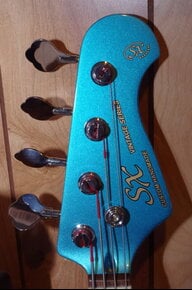
Yes, but that's because of the signal becoming low impedance, not because it gets 'hotter' (in most cases it really does not)
Not disagreeing at all, but that's why i said what I said in the last paragraph.
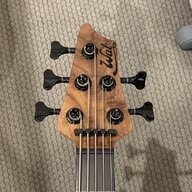

hi top guys, i am lurking for a very long time, and now i will post something.
i do not understand why to go for a passive bass today if you can have active and bypass to passive if that is better at the time. not so much more expensive and gives you something back. it seems the correct thing to do for a bass today. why passive??
Oh, several reasons...
- Some people - like me - have grown old playing passive basses, and simply see no need - and have no real use - for an active bass. The only reason I have one, is because it fills the "Active Bass" spot in my herd. Otherwise? Nope...
- Some people - like me - don't like paying for something (ie., all that extra stuff in the control cavity) that we aren't going to use;
 Some active basses - like my Alembic - can't be "turned off", and played passively. They're active - or they're dead;
- Some active basses simply aren't available to left handed people - like me;


 Some basses never came in an active version; and,
- Some of us just don't like sticking batteries in our basses...

Last edited:
Not disagreeing at all, but that's why i said what I said in the last paragraph.
indeed, it's true, apologies for only reading the first paragraph!

the talk of pushing the signal can be interpreted by some as simply being higher level... which is a common misconception, and it set me off
I think I know what you are saying. I put a Nordstrand pre in my Stingray at one point with a passive/active toggle. But the passive sound just sounded like the Stingray but a little duller (but I liked it). But it didn't really sound to me like a true passive bass. That said, that's a very limited example, and so much depends on the bass. I supposed a Stingray will always sound different than a P bass, no matter what electronics are in it.
Indeed it depends a lot on the bass.
I've found most basses not that great (for my taste) when the preamp was bypassed. The exception being the Sandberg VM4 (which I prefer passive) and the Stingray I have with a John East MMSR: I asked John to install a preamp bypass switch and it turns out my favourite sound is pretty much the same as with the preamp bypassed... but I still use it as I really like the semiparametric mids control. It's the only control I use on that bass really.
I truly don't feel like the active basses I've played that get thrown in passive sound as passive as a true passive bass...if that makes sense?
To directly compare, I've owned a Sadowsky metro and a Fender Elite and both of those in passive mode didn't sound as good as my American standard jazz bass.
I do agree that more options is a good thing, but on the gigs that don't require a ton of different things (98% of my electric stuff) then i'm good picking one bass and sticking with it.
Plus when I do use my active bass I never know what the knobs do and get stressed out so I play the whole thing flat....
Then it's user error, I'm sorry

Anything below 8.5v gets swapped out.
At that point you can see the LED get dimmer if you stick the same battery in a Boss pedal. I have swapped them out with as much as 8.8 v as well. But I’ll save those for emergencies.
I'm also a fan of the "Batt-o-Meter" tester. Ultimately, the choice of voltage threshold depends on what you hear on your preamp but FBass specs are 7.0V min and Sadowsky specs are 7.5V min - for consideration.
Because I don't need an onboard pre amp. lots of decent Pre/DI pedals out there. I'm using a Mesa subway DI pedal when i need a pre so my preamp is consistent and there is no need to learn and put much time on every single active Bass to make it's sound usable for a specific tone.

I prefer basses with an active preamp for two reasons. First, I simply like having the tonal flexibility. Having active EQ and two pickups on a bass gives me that flexibility.
Second, having that flexibility right on my bass means I can dial in the right settings on my amp for the room we're playing and then not touch it the rest of the night unless the venue owner or manager tells us to turn down or up (usually down). Then for those few songs where I do make adjustments, I have that ability right on my bass. For me, that's a lot quicker and a lot more convenient, not to mention a lot less risky, than it is to try quickly navigating through our lead guitarist, his gear, and the drums to get to my amp to make an adjustment there and then make way back to my mic for the next song. Given that our stage setups are usually pretty tight, having the ability to make adjustments right on the bass makes a lot of sense for me.
YMMV, of course.
Second, having that flexibility right on my bass means I can dial in the right settings on my amp for the room we're playing and then not touch it the rest of the night unless the venue owner or manager tells us to turn down or up (usually down
). Then for those few songs where I do make adjustments, I have that ability right on my bass. For me, that's a lot quicker and a lot more convenient, not to mention a lot less risky, than it is to try quickly navigating through our lead guitarist, his gear, and the drums to get to my amp to make an adjustment there and then make way back to my mic for the next song. Given that our stage setups are usually pretty tight, having the ability to make adjustments right on the bass makes a lot of sense for me. YMMV, of course.

Passive/active switch is a nice option (have it on one of my workhorse basses), but when you need to do some re-wiring or replacing parts an active preamp usually spells a pretty cramped workspace. You have more things that can get disconnect/bent and cause signal loss regardless.
The convenience of onboard EQ is nice, but for sheer flexibility the passive into EQ pedal or something of that nature is hard to beat as well. No right answer, just whatever people prefer. There is also the added cost of active electronics, which if you aren't going to use to begin with, is just a wasted expense. YMMV
The convenience of onboard EQ is nice, but for sheer flexibility the passive into EQ pedal or something of that nature is hard to beat as well. No right answer, just whatever people prefer. There is also the added cost of active electronics, which if you aren't going to use to begin with, is just a wasted expense. YMMV
Onboard pre's cannot be demoed before installation. Its buy before try. How do you know if you'll like it? I didn't really like the Aguilar OBP-3, the Audere preamp is kinda meh..... I wish I could have tried them before I bought and installed them. Pedals win. I also don't like that some people automatically think that a premium bass must have a preamp, or that a preamp insures that it is a tier above passive basses. Its simply not true. Anthony Jackson's 10,000$ Fodera is passive, with the pickup wired straight to the jack, works for him.
I'll only get an active bass if the preamp is a defining part of the bass' character (I'm thinking of stingrays, wals or alembics). If its a Jazz bass, then no. Outboard pre's have proven more useful to me for their versatility and ability to fix any frequency areas depending on the amp im using. I use a Q-Strip and VT Bass in my setup. The Q-Strip has sweepable mids that can help clean up problem frequencies. For example, through my ampegs, I need a bump around 700hz to highlight the tone of the bass and amp. Through my hartke rig I do need to dip around 300Hz to get rid of some honk. I don't know why, just differences in cabinets. IME, this method has been more effective than boosting preset frequencies in an onboard pre. The Q-Strip also sounds warmer and generally better than any onboard EQ's I record with (to me). The current availability and quality of pedal format preamps is awesome, and to me almost always sound better than the onboard pre's I've had.
A little anecdote: I was at the local bog box store and was listening to a saleperson trying to sell an active squier jazz to someone who said he was on a very tight budget and was just a beginner. When the sales guy walked away, I went up to the potential buyer and told him just to get a passive one (it was 150$ cheaper). I told him the preamps in those squiers are not that good and he would be better off with a passive. He seemed confused, why would he need an EQ onboard if he had one on his amp. I said "You don't, but it does have a bit more volume and flexibility. If your playing shows, and don't use an amp, the onboard pre can help with the DI sound. But you really don't need it." I told him, when he can afford it, buy a pedal preamp and all your basses can be active, without mods. He seemed to like that, and bought the passive bass. I think onboard pre's were probably really neat when they came out in the 70s, but these days there are so many good pedals.
I'll only get an active bass if the preamp is a defining part of the bass' character (I'm thinking of stingrays, wals or alembics). If its a Jazz bass, then no. Outboard pre's have proven more useful to me for their versatility and ability to fix any frequency areas depending on the amp im using. I use a Q-Strip and VT Bass in my setup. The Q-Strip has sweepable mids that can help clean up problem frequencies. For example, through my ampegs, I need a bump around 700hz to highlight the tone of the bass and amp. Through my hartke rig I do need to dip around 300Hz to get rid of some honk. I don't know why, just differences in cabinets. IME, this method has been more effective than boosting preset frequencies in an onboard pre. The Q-Strip also sounds warmer and generally better than any onboard EQ's I record with (to me). The current availability and quality of pedal format preamps is awesome, and to me almost always sound better than the onboard pre's I've had.
A little anecdote: I was at the local bog box store and was listening to a saleperson trying to sell an active squier jazz to someone who said he was on a very tight budget and was just a beginner. When the sales guy walked away, I went up to the potential buyer and told him just to get a passive one (it was 150$ cheaper). I told him the preamps in those squiers are not that good and he would be better off with a passive. He seemed confused, why would he need an EQ onboard if he had one on his amp. I said "You don't, but it does have a bit more volume and flexibility. If your playing shows, and don't use an amp, the onboard pre can help with the DI sound. But you really don't need it." I told him, when he can afford it, buy a pedal preamp and all your basses can be active, without mods. He seemed to like that, and bought the passive bass. I think onboard pre's were probably really neat when they came out in the 70s, but these days there are so many good pedals.
Last edited:
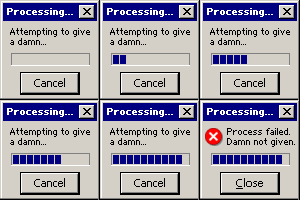
I have active, passive, and passive with preamp.
They're all basses, just different flavours of good, what's not to love about them!
They're all basses, just different flavours of good, what's not to love about them!

scottfeldstein
Roots and fifths and a little extra.
Here's one reason I don't like using an active EQ. If I cut something my signal is going to get too weak. If I boost something it's gonna get too strong. Like how am I supposed to set the input on my compressor with that situation?


