Just do whatever is comfortable and gets the job done well.

Enjoy the benefits of a premium membership!
Upgrade Account
-
TalkBass has been independent since 1998. Add your voice.
Create a free account to reply to discussions, view embedded media, and browse with fewer display ads.
Join free Log in
Want zero display ads or expanded classifieds tools? Compare plans.
You are using an out of date browser. It may not display this or other websites correctly.
You should upgrade or use an alternative browser.
You should upgrade or use an alternative browser.
Alternating fingers: Does it need to be perfect?
- Thread starter Hardbassjunkie
- Start date
More options
Who Replied?

Well, I don't agree with your teacher.
I agree to disagree. : D So that's what that really means!
I am a self taught bass player that has been taking lessons and it has helped me immensely. Things like flying fingers have improve quite a bit. My main teacher is a professional rock musician who has not taught before. I decided to try out a person that was classically trained and 3 times the price. He pointed out something to me. Although I DO alternate my fingers, its isnt perfect. Sometimes I will use my index twice in a row. He says that needs to be fixed. My rock teacher has not mentioned anything.
What does everyone think? Does it affect the sound at all?
It doesn't have to be perfect but if you want total fluidity, it has to be efficient, consistent and ingrained to the point of being totally unconscious. By efficient I mean that there may be some instances where for good reason it makes sense to pluck twice in succession with the same finger but almost always the alternating is more efficient and will allow you play smoother and faster.
Congrats on conquering the fly away pinky



... Although I DO alternate my fingers, its isnt perfect....


The pattern might/can change especially when you're jumping from string to string, and sometimes it can be logical to NOT alternate the fingers. Plucking w/ your index should sound identical to plucking w/ the middle, so it shouldn't affect the sound thus no one should notice.What does everyone think? Does it affect the sound at all?

Economy of movement is important if you want to play challenging music. Sloppy fingering affects timing and dynamics, and ultimately limits you as a player. Fix it.I am a self taught bass player that has been taking lessons and it has helped me immensely. Things like flying fingers have improve quite a bit. My main teacher is a professional rock musician who has not taught before. I decided to try out a person that was classically trained and 3 times the price. He pointed out something to me. Although I DO alternate my fingers, its isnt perfect. Sometimes I will use my index twice in a row. He says that needs to be fixed. My rock teacher has not mentioned anything.
What does everyone think? Does it affect the sound at all?

I am a self taught bass player that has been taking lessons and it has helped me immensely. Things like flying fingers have improve quite a bit. My main teacher is a professional rock musician who has not taught before. I decided to try out a person that was classically trained and 3 times the price. He pointed out something to me. Although I DO alternate my fingers, its isnt perfect. Sometimes I will use my index twice in a row. He says that needs to be fixed. My rock teacher has not mentioned anything.
What does everyone think? Does it affect the sound at all?
99% of the time I alternate. This is critical when switching from string to string smoothly, especially when three strings or more are involved.

But it DOES actively improve your playing. It improved mine bigtime when Dave LaRue insisted I only strictly alternate. First couple weeks, not so much. After I got adjusted to it, it was awesome.Of course even dynamics in alternation is a great thing: some kind of arbitrary adherence to constant alternation being absolutely
mandatory isn’t.
Unless it’s creating issues for the OP, it’s not a problem that needs fixing: to me it sounds like the teacher is finding ways for the OP to waste his time (and justify his absurd pay scale) instead of actively improve his playing.
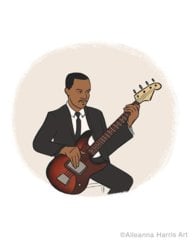
The electric bass guitar has more in common with a guitar than the upright. Classical fretting in the first few positions can go damage. I wanted to be a Segovia/Jaco/Fripp left hand player. I now use a hybrid open and closed fretting hand technique. Jaco did it, but way back in the day I didn't know it.There's no such thing as a "classically trained electric bass method." Classical acoustic guitar technique does not apply to electric bass! (In fact there is a risk of damaging your hands.) This teacher is BS'ing you to justify their 3x higher price.
My advice is to study with the professional rock musician, learn songs, join a band, get gigs (if that is your goal), and be happy.
Classical index/middle is one tool that can prevent injuries as the load is taken off one finger doing the work.
To the OP I say "let the perfect not be the enemy of the good enough".
However it is a good idea to gain more skill with alternation plucking. I practice odd-number string crossing drills with strict alternation. I can do it while I'm on the phone or doing something else with my other hand. Get the reps in and alternation will be more or less on automatic after some time.

I play a lot of fast stuff (prog metal) and alternating perfectly is great but not a deal breaker.
At faster tempos it is barely noticeable because if you’re playing something insane (string jump half steps at fast tempo) and you can either hit the damn note or worry whether or not your plucking alternates perfectly is no contest.
To put it in a metaphor, I’ve heard from those that know: “In a fight the first thing that goes is the battle plan.”
Same for challenging bass stuff - esp. me. I will, generally speaking, default to what is familiar technique-wise when the part gets challenging - it takes a lot of work to break that default setting, more dedication than I know. Still, you can get a lot of mileage from what you know.
At faster tempos it is barely noticeable because if you’re playing something insane (string jump half steps at fast tempo) and you can either hit the damn note or worry whether or not your plucking alternates perfectly is no contest.
To put it in a metaphor, I’ve heard from those that know: “In a fight the first thing that goes is the battle plan.”
Same for challenging bass stuff - esp. me. I will, generally speaking, default to what is familiar technique-wise when the part gets challenging - it takes a lot of work to break that default setting, more dedication than I know. Still, you can get a lot of mileage from what you know.
YMMV depending on scale length and the size of your hands. I can use classical guitar fretting technique without much issue on my Rickenbacker because the scale is slightly shorter, I have very long E.T. fingers, and I've been playing for 34 years, so my tendons have loosened up quite a lot.The electric bass guitar has more in common with a guitar than the upright. Classical fretting in the first few positions can go damage. I wanted to be a Segovia/Jaco/Fripp left hand player. I now use a hybrid open and closed fretting hand technique. Jaco did it, but way back in the day I didn't know it.
Classical index/middle is one tool that can prevent injuries as the load is taken off one finger doing the work.
To the OP I say "let the perfect not be the enemy of the good enough".
However it is a good idea to gain more skill with alternation plucking. I practice odd-number string crossing drills with strict alternation. I can do it while I'm on the phone or doing something else with my other hand. Get the reps in and alternation will be more or less on automatic after some time.
Still, this is sage advice. And as always: if it hurts, stop immediately.
As far as plucking goes: Practice alternating until you can do it perfectly at all tempos with varying numbers of notes per string, starting on different fingers. Then do it some more. Then some more. Then, when you've finally mastered it, do it some more. Now, you won't need to fudge it on fast stuff; it'll just be there.
Last edited:
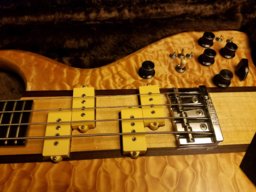
Jamerson played with one finger only, so IMHO his style is N/A to the discussion. Jaco, I will give you that, but even though he occasionally raked, he was very much a proponent of alternation.
I agree with your overall point, but would like to point out that James Jamerson Jr. mentioned his father would use the two finger technique as needed for certain rhythms. He said this on a instructional video called "Right Hand Technique"(Larry Graham, Louis Johnson, Chuck Rainey, etc). Yes, I know Jamerson is known mostly for "the hook", but I'll take his son's word on this.
To the OP, I voted no, but only because that's a loaded question.

I believe we should all be aware of the "correct" plucking hand technique, as it can be very effective in developing your chops, and it can feel very comfortable to me.
That said, I unknowingly use index finger only to play some faster runs at times, ignoring the second finger. I do it without even thinking.
But...when I was learning bass, I always forced myself to alternate between both fingers until I felt I mastered it. I even made myself start with the index finger when alternating. At some point I stopped being so conscious of my technique after I mastered it.
Bottomline is...learn it the "right" way then play it unconsciously when you have mastered it.
That said, I unknowingly use index finger only to play some faster runs at times, ignoring the second finger. I do it without even thinking.
But...when I was learning bass, I always forced myself to alternate between both fingers until I felt I mastered it. I even made myself start with the index finger when alternating. At some point I stopped being so conscious of my technique after I mastered it.
Bottomline is...learn it the "right" way then play it unconsciously when you have mastered it.

I generally alternate and I think it's a good idea. But I don't always alternate, and I don't stress about it. Sometimes I rake or just do a little one-off jumping around kind of thing if I find something awkward in a line. If I can make it sound good I don't much care about the particular technique.
Evenness just takes practice. There are some subtle hand position things that help with that, changing angles a bit, attempting to hit fairly close to the same spot on the string, etc. Downstrokes only with a pick can sound pretty damn even, and you'll look cool doing it.
"Perfect" you ask? I play loud rock for drunk people with a bunch of other hacks, perfect doesn't enter into it.
Evenness just takes practice. There are some subtle hand position things that help with that, changing angles a bit, attempting to hit fairly close to the same spot on the string, etc. Downstrokes only with a pick can sound pretty damn even, and you'll look cool doing it.
"Perfect" you ask? I play loud rock for drunk people with a bunch of other hacks, perfect doesn't enter into it.
Totally agree. And once you have the techniques down, you can play around with them to find the best tone and dynamic expression for a particular passage, i.e. Dazed and Confused sounds killer when you pluck the descending verse with just the index finger over top of the 20th fret, and then switch to 3 finger floating thumb just in front of the sweet spot for the rest.I believe we should all be aware of the "correct" plucking hand technique, as it can be very effective in developing your chops, and it can feel very comfortable to me.
That said, I unknowingly use index finger only to play some faster runs at times, ignoring the second finger. I do it without even thinking.
But...when I was learning bass, I always forced myself to alternate between both fingers until I felt I mastered it. I even made myself start with the index finger when alternating. At some point I stopped being so conscious of my technique after I mastered it.
Bottomline is...learn it the "right" way then play it unconsciously when you have mastered it.
I generally alternate and I think it's a good idea. But I don't always alternate, and I don't stress about it. Sometimes I rake or just do a little one-off jumping around kind of thing if I find something awkward in a line. If I can make it sound good I don't much care about the particular technique.
Evenness just takes practice. There are some subtle hand position things that help with that, changing angles a bit, attempting to hit fairly close to the same spot on the string, etc. Downstrokes only with a pick can sound pretty damn even, and you'll look cool doing it.
"Perfect" you ask? I play loud rock for drunk people with a bunch of other hacks, perfect doesn't enter into it.
Yeah, I forgot to mention that I rake quite a lot, too, unless I don't like the sound it produces.

MDBass
Supporting Member
- Nov 7, 2012
- 8,590
- 14,890
- Disclosures
- Endorsing Artist: Dingwall-Fender-Bergantino-Dunlop-Tech 21-Darkglass-Nordstrand
But it DOES actively improve your playing. It improved mine bigtime when Dave LaRue insisted I only strictly alternate. First couple weeks, not so much. After I got adjusted to it, it was awesome.
Strict alternating by definition means no raking, so due to the previous Jaco reference alone there’s no way I can agree that it’s absolutely mandatory 100% of the time as this teacher is indicating.
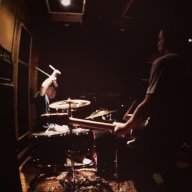
I happened to be watching Pino Palladino, an obvious master bassist. Both of his hands are so relaxed, he seems to alternate (or not) at will, he'll use any finger (or thumb), lead with any finger - often with his middle finger and when crossing or jumping strings. Wow I wish I could isolate, understand what he's doing there, but it just looks to me he's so beyond sticking to a strict pattern of alternating he just does it when it feels right. Hopefully your teacher was trying to provide you with a foundation, so you gain fluidity.
I'm self taught too, and play mostly with a pick than pizzicato and becoming better at it the less self-conscious I am about alternating. I say that because I began on guitar and learned with a pick and there were people telling me always up and down -- I spent just as much time practicing alternate up down picking as all down (listen to some metal like Randy Rhodes or Sabbath or Metallica) or by strumming acoustic, you learn from feel and practice when an up strum vs a down strum is more appropriate. Sane with palm muting... now I just pick. Not saying I'm the model of technique here, but practice alternating, practice one finger, practice three, get a pick, practice and then play from your heart brother. Peace
I'm self taught too, and play mostly with a pick than pizzicato and becoming better at it the less self-conscious I am about alternating. I say that because I began on guitar and learned with a pick and there were people telling me always up and down -- I spent just as much time practicing alternate up down picking as all down (listen to some metal like Randy Rhodes or Sabbath or Metallica) or by strumming acoustic, you learn from feel and practice when an up strum vs a down strum is more appropriate. Sane with palm muting... now I just pick. Not saying I'm the model of technique here, but practice alternating, practice one finger, practice three, get a pick, practice and then play from your heart brother. Peace

I think a good teacher should always set the goals high. A good student will do their damdist to achieve it and not look for the EZ way out. It may not be possible to achieve perfection but every step you get closer the better you will be. A ski instructor one told me if your not falling down a lot, your not pushing youself hard enough.But it DOES actively improve your playing. It improved mine bigtime when Dave LaRue insisted I only strictly alternate. First couple weeks, not so much. After I got adjusted to it, it was awesome.


