
I installed a Lusithand Double NFP preamp in my Ibanez BTB tonight. While I was at it I decided to go extra crazy and replace the locking output jack (which I've hated in every bass I've had that came with one) with an XLR jack. (And yes I know I'll be screwed if I'm ever out and have a cable malfunction because no one will have an XLR to 1/4" cable handy.)

Enjoy the benefits of a premium membership!
Upgrade Account
-
TalkBass has been independent since 1998. Add your voice.
Create a free account to reply to discussions, view embedded media, and browse with fewer display ads.
Join free Log in
Want zero display ads or expanded classifieds tools? Compare plans.
You are using an out of date browser. It may not display this or other websites correctly.
You should upgrade or use an alternative browser.
You should upgrade or use an alternative browser.
Ambient/Post-Rock/Textural bass playing thread
- Thread starter ttasselm
- Start date
More options
Who Replied?
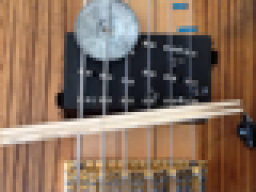
I installed a Lusithand Double NFP preamp in my Ibanez BTB tonight. While I was at it I decided to go extra crazy and replace the locking output jack (which I've hated in every bass I've had that came with one) with an XLR jack. (And yes I know I'll be screwed if I'm ever out and have a cable malfunction because no one will have an XLR to 1/4" cable handy.)
make a backup cable

For the Microfreaks in the room.
That's kind of clever. I wanted that for my Microbrute back when I had one because I didn't love the keyboard. I also wouldn't mind doing that with a Minibrute 2, although once in a while I do play mine (2S) with the pressure pads, and even more rarely, the sequencer. I'd rather have an 0-Ctrl driving it though.
OTOH, yeah, the keyboard on the Microfreak was definitely part of its charm and I always thought they should sell that separately as a MIDI/CV controller. Call it the Freakey or something.

The unsaid truth is that's likely most synth owners. I probably have a 10:1 ratio... I make 1 preset for about every 10 I use.I tweak the presets.
(Enters box of shame)

Damn, I wasn’t aware of how few actually sound designed……The unsaid truth is that's likely most synth owners. I probably have a 10:1 ratio... I make 1 preset for about every 10 I use.
I dig sampling the MicroFreak though
Last edited:
Well, I may not be aware, either. It's just anecdotal.Damn, I wasn’t aware of how few actually sound designed……
I dig sampling the MicroFreak though
You folks do know the story about the Yamaha DX7 right? The factory repair people discovered almost nobody changed any of the presets. The keyboardist in my dad rock band is such a player. Very technically skilled pianist who uses a single sound on my old DSI Mopho for solos.
That said, I’d be more interested in disconnecting a minifreak from its keyboard than a microfreak.
Also to close the thread after Saturday, my dad rock gig last night went swimmingly. It’s not music I love but the band is all friends and I basically do what I want within the musical framework they set up. It’s the only act where I play bass anymore. Exceptionally, I wound up at the front of the stage and hammed it up appropriately. (We are six so I’m usually behind the members who sing). During lockdown my touch guitar teacher really pushed me on not looking at my instrument while playing and that paid off unexpectedly last night on my “old” instrument when thrust in front of an audience. Anyway, we entertained about 75 people.
That said, I’d be more interested in disconnecting a minifreak from its keyboard than a microfreak.
Also to close the thread after Saturday, my dad rock gig last night went swimmingly. It’s not music I love but the band is all friends and I basically do what I want within the musical framework they set up. It’s the only act where I play bass anymore. Exceptionally, I wound up at the front of the stage and hammed it up appropriately. (We are six so I’m usually behind the members who sing). During lockdown my touch guitar teacher really pushed me on not looking at my instrument while playing and that paid off unexpectedly last night on my “old” instrument when thrust in front of an audience. Anyway, we entertained about 75 people.
Last edited:

After learning the origin of Clint Eastwood by Gorillaz I got a lot less concerned about using presets.
May I ask why did your teacher ask “not” to look at your I instrument while playing?You folks do know the story about the Yamaha DX7 right? The factory repair people discovered almost nobody changed any of the presets. The keyboardist in my dad rock band is such a player. Very technically skilled pianist who uses a single sound on my old DSI Mopho for solos.
That said, I’d be more interested in disconnecting a minifreak from its keyboard than a microfreak.
Also to close the thread after Saturday, my dad rock gig last night went swimmingly. It’s not music I love but the band is all friends and I basically do what I want within the musical framework they set up. It’s the only act where I play bass anymore. Exceptionally, I wound up at the front of the stage and hammed it up appropriately. (We are six so I’m usually behind the members who sing). During lockdown my touch guitar teacher really pushed me on not looking at my instrument while playing and that paid off unexpectedly last night on my “old” instrument when thrust in front of an audience. Anyway, we entertained about 75 people.
Sincere question from an ex bass teacher. If I ever teach again please kick me in the b@llz, so little pay for so much work.
ime, imo etc…..
a few things:
i stand corrected on the microfreak keyboard thing!
back in the day i would buy cartridges of third-party presets for different synths i owned. some of that was due to my ignorance and some cause i just ended up using string/brass/woods sounds. getting an ipad, with a larger view of synth parameters helped me learn programming. also, more robust mod matrixes really got me where i wanted to go with it.
if you ever tried to program an original dx7 with just the faceplate controls, you know why most people just used the presets. the tiny little screen was an abomination for programming (see ipad comment above).
when i first started playing, on my own i set out to look at the fingerboard as little as possible. i memorized note placement on the neck and test myself. just seemed like a good idea at the time (probably from watching people i admired?). imo, it’s paid dividends for me—particularly with fretless playing, i think.
i stand corrected on the microfreak keyboard thing!
back in the day i would buy cartridges of third-party presets for different synths i owned. some of that was due to my ignorance and some cause i just ended up using string/brass/woods sounds. getting an ipad, with a larger view of synth parameters helped me learn programming. also, more robust mod matrixes really got me where i wanted to go with it.
if you ever tried to program an original dx7 with just the faceplate controls, you know why most people just used the presets. the tiny little screen was an abomination for programming (see ipad comment above).
when i first started playing, on my own i set out to look at the fingerboard as little as possible. i memorized note placement on the neck and test myself. just seemed like a good idea at the time (probably from watching people i admired?). imo, it’s paid dividends for me—particularly with fretless playing, i think.
That's because something like 3 or 4 people actually were good at programming them, one of which was some dude named Brian Eno who I think was famous or something.You folks do know the story about the Yamaha DX7 right? The factory repair people discovered almost nobody changed any of the presets.
make a backup cable
Oh I definitely will.
Because we’ve talked about them in the thread before. This is exciting news.



high risk improv gigs ...[snip]... Any advice on recovering from one that doesn't go your way?
You've already received a lot of good advice and well-deserved encouragement in this thread, but, as another veteran of several decades of high-risk improv gigs, the bolded part caught my eye.
The realization that gave me the courage, conviction, inspiration, and (frankly) sheer hubris to continue pursuing those sorts of performances was that, regardless of what sounds are coming out of my instrument, it's going "my way" ...because that's me making those sounds. Regardless of how many other collaborators are onstage, there's no one else I can blame for the sounds I'm making. And as a creative improvisor, one of the things in my skillset that I need to rely on is the ability to react to my own output, to control what the music sounds like here, now, out there in the room, not just in my imagination or in some idealized environment.
So if I don't like the way it sounds, I need to do something different. And the sound of live music evolving in real-time in order to more closely achieve something I hoped it might sound like...that is "my way"
May I ask why did your teacher ask “not” to look at your I instrument while playing?
Sincere question from an ex bass teacher. If I ever teach again please kick me in the b@llz, so little pay for so much work.
ime, imo etc…..
Well, it was touch guitar lessons, not bass lessons. The way you hold the instrument, if you're looking at the fingerboard you're twisting your head around the neck (you can see Tony Levin do this sometimes with the stick). So it's not ergonomic to be looking constantly. I don't think it was a performance thing for him. Of course you can look for position switches or whenever you really need. The point is not to do it CONSTANTLY. But it is great for performance because then there's more time to make eye contact with the audience or other performers. Which is fun. And it's actually even easier for me on bass because I've been playing it for so much longer.
So if I don't like the way it sounds, I need to do something different. And the sound of live music evolving in real-time in order to more closely achieve something I hoped it might sound like...that is "my way"
Yeah, thanks. My basic takeaway from all the support from here and from my friends locally is to woodshed and then try again. I made a couple rookie mistakes because in some ways I am a rookie--this was my first time using feedback techniques and going full free improv at high volume.
In case it's helpful to anyone else, my list of things to do for the next time around:
at least do one practice in my space at high volume so I am prepared for the environmental effects of that much sound bouncing around (as opposed to as in headphones or quietly at home)
use a groove or ostinato to maintain interest while I'm shaging around, or even fixing things.
have a recording or background drone in case of gear failure (didn't need this but was reminded of it because I did have a module freeze on me)
if I'm doing anything with feedback bring a limiter so I can get away with a bit more. These kinds of gigs are not usually at places with fancy systems.

Yes, that's the one. Thank you both for reminding me of it. I'd forgotten about the Soma probably because the samples I had heard from it were about 90% noise and only 10% interesting. The Demon Box sounds much more useful from their little video. I imagine that it will be much more expensive though and at this point its just vaporware.
if you ever tried to program an original dx7 with just the faceplate controls, you know why most people just used the presets. the tiny little screen was an abomination for programming
It was the perfect storm of horrible interface, complicated and unfamiliar new synthesis method, weirdly designed unintuitive envelopes, but several presets that worked great for a lot of keyboardists... the right combination of conventional and novel I think.
I had a DX100, which was 4OP and a bit simpler overall but still not exactly a joy to program. Then I got a Korg DS8 which simplified it to a single algorithm, disguised ratio/index as "waveform" and "spectrum" and used ADSR envelopes. Plus it had a built-in delay/chorus/flanger which I thought was a super cool feature in 1989. But it was still a two-line LCD, slider and buttons sort of interface.

I have programmed my Volca FM, which is a scaled-down version of the DX-7, using a web-based interface and a MIDI cable that makes it a lot easier to edit the parameters than screwing around with the panel controls.
Even then it is no joke, because it is so unintuitive compared to an analog monosynth. I did get one patch completed that I have used on a few tunes, and I'm pretty proud of myself for getting that far. One of these days maybe I'll make another one or two.
Even then it is no joke, because it is so unintuitive compared to an analog monosynth. I did get one patch completed that I have used on a few tunes, and I'm pretty proud of myself for getting that far. One of these days maybe I'll make another one or two.
the thing that got me to click with the dx fm model was actually a really small and early iphone app: dx something or other. better graphics (i.e., you could see them) and you could see why a change made a sound become different—the light went on then. modular has also been good for me to understand fm (you just need enough oscillators to get comlex "algorithms").
all that being said, creating a "life-like" sound would be way beyond my capabilities—luckily it's not something i want to do.
all that being said, creating a "life-like" sound would be way beyond my capabilities—luckily it's not something i want to do.


