

Enjoy the benefits of a premium membership!
Upgrade Account
-
TalkBass has been independent since 1998. Add your voice.
Create a free account to reply to discussions, view embedded media, and browse with fewer display ads.
Join free Log in
Want zero display ads or expanded classifieds tools? Compare plans.
You are using an out of date browser. It may not display this or other websites correctly.
You should upgrade or use an alternative browser.
You should upgrade or use an alternative browser.
Amp Guts Photos - Official Thread - Lets see those pics
- Thread starter svtb15
- Start date
More options
Who Replied?
Since we are showing builds. Here is an Egnater Boutikit 20W (6V6) I put together recently.


Mr. Foxen
Commercial User
Its the vibration from sitting on a cab being played that gets the leads on loose stuff.

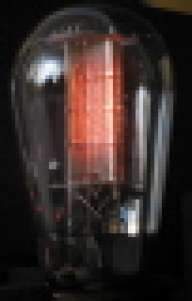
Link Removed
This is a fabulous photo.
Here is an amp I built for a buddy, I call it the buzzbomb. I have built 3 of them so far.
7591 power tubes and it's built into a 60's era Cordovox chassis using the Cordovox transformers.
High gain, super touch sensitive and great power tube breakup. It's about 25 watts in theory but I have not measured the power output.
View attachment 3549279 View attachment 3549280 View attachment 3549281 View attachment 3549282
Since we are showing builds. Here is an Egnater Boutikit 20W (6V6) I put together recently.
View attachment 3551618
Very nice looking build. Loving all the DIY stuff in here.
These are nice and clean looking.

Mr. Foxen
Commercial User
This is a fabulous photo.
Credit to Antony Cook Photography who did a photoshoot for my band and snapped other stuff laying about my house.
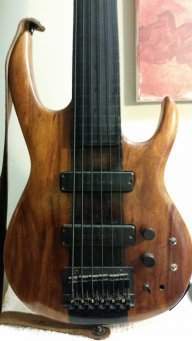
Warwick Quadruplet PreampView attachment 3551596
Tiny resistors, tubes mounted to circuit board, and ribbon cable. Abhorent things found in most mass produced amps that contribute to failure.

Tiny resistors, tubes mounted to circuit board, and ribbon cable. Abhorent things found in most mass produced amps that contribute to failure.
Are you sure about that? most failures are due to failing solder joint, dry solder, failing caps and connectors.
This design is pretty clean and tight.
Yeah, I'm sure. I have repaired many amps with these as failure points. Many other causes also as you mention, but these for sure. Now that you mention failing caps, I also dislike electrolytics in builds. Metal films!

These are not the reasons for failures in a Invalid Link Removed. It is my favourite preamp for a long time and I used it a lot of times. But there are two defects, which many other quadruples also have. The rectifier for the heating isnt the best one. Also the rotary switch for the "Quadrumatrix" is scrap.Tiny resistors, tubes mounted to circuit board, and ribbon cable. Abhorent things found in most mass produced amps that contribute to failure.

Peavey AlphaBass { new to me !! ]
6 - 6L6 power tubes
3 - 12AX7 preamp tubes
1 - 12AT7 preamp tube
click on pics ...


6 - 6L6 power tubes
3 - 12AX7 preamp tubes
1 - 12AT7 preamp tube
click on pics ...

- Feb 12, 2006
- 61,053
- 5
- 221,028
- Disclosures
- Development Engineer-Mesa Boogie, Development Engineer-Genzler (pedals), Product Support-Genz Benz
Tiny resistors, tubes mounted to circuit board, and ribbon cable. Abhorent things found in most mass produced amps that contribute to failure.
Yeah, I'm sure. I have repaired many amps with these as failure points. Many other causes also as you mention, but these for sure. Now that you mention failing caps, I also dislike electrolytics in builds. Metal films!
Interesting perspective, but how would you then explain how quality solid state or tube products of all typed can like long, productive and trouble-free lives using such parts and assembly methods?
As a single example, the Yamaha M-406 rack mount mixer can still be found operating 24/7 in commercial environments such as airports and theme parks after almost 40 years. They use "ribbon cables", "tiny resistors", circuit boards, no tubes, and electrolytic caps. I also have a shop amp that drives our shop speakers, it has over 30k hours on it by now without a bit of trouble. It also has all of the parts listed above.
There are of course many examples of such products all over the world, primarily in the more commercial and industrial sectors, that support our phone systems, manufacturing infrastructure, aviationics and pretty much everything post WW2. There are also examples in the tube circuitry world, especially in commercial and military communications applications, where a 30,000 - 50,000 hour lifespan (with maintenance) is not uncommon.
It's fine to generalize as long but you should acknowledge that it's an opinion not supported by factual examples all around us in the real world. There are plenty of tube amps that have dismal reliability records too, every design (and manufacturing) needs to stand on its own merit.

Stop talking horse sense Andy I’m wearing out my ‘Like’ button! 
Interesting perspective, but how would you then explain how quality solid state or tube products of all typed can like long, productive and trouble-free lives using such parts and assembly methods?
As a single example, the Yamaha M-406 rack mount mixer can still be found operating 24/7 in commercial environments such as airports and theme parks after almost 40 years. They use "ribbon cables", "tiny resistors", circuit boards, no tubes, and electrolytic caps. I also have a shop amp that drives our shop speakers, it has over 30k hours on it by now without a bit of trouble. It also has all of the parts listed above.
There are of course many examples of such products all over the world, primarily in the more commercial and industrial sectors, that support our phone systems, manufacturing infrastructure, aviationics and pretty much everything post WW2. There are also examples in the tube circuitry world, especially in commercial and military communications applications, where a 30,000 - 50,000 hour lifespan (with maintenance) is not uncommon.
It's fine to generalize as long but you should acknowledge that it's an opinion not supported by factual examples all around us in the real world. There are plenty of tube amps that have dismal reliability records too, every design (and manufacturing) needs to stand on its own merit.
As you stated "quality" amps and equipment. As we know, E-caps can last a long time under voltage, and the fixed equipment you list is rarely turned off so longer life is expected.
In your example, a rack mount mixer in a commercial environment, I would expect a long trouble free life, as it carries low voltage, low current signals and is never moved. The same holds true for most of the equipment you mentioned in fixed stations and phone line amp racks.
I'm specifically talking of gigging guitar amps.
Their life has harsher conditions that exacerbate the issues with the items I mentioned that make them more trouble free in fixed equipment. The mechanical shock of load in/loadout, heat, questionable club voltage and grounding issues. None of these exist in fixed station equipment, which are stationary, and have cooling and power engineered in the room design.
I worked in avionics on tube and sandy state transceivers, radars, IFF, ADF, etc. for eleven years. They used forced cooling and/or large heatsinks to shed heat, the cable connectors were substantial using larger gauge gold pins, and were screwed together and sealed against vibration. There was also use of paper and foil hermetically sealed oil caps. I still have some. Yes, poorly designed tube amps are out there also. Bad design is trouble, glass or plastic.
I do prefer tube amps over silicon, and make no bones about it. So, yes I am opinionated. I have heard some solid state amps that sound good, but few with the feel I prefer. I have had bad amps rolling through the shop for thirty years and have seen these failures repeatedly. That evidence informs and supports my preferences. That's the critical evidence that's supported by factual examples related to real M.I. amp use and conditions, not the vast numbers of commercial equipment that surround us in the real world that lives a cushy life. Apples and oranges I'm afraid.
- Feb 12, 2006
- 61,053
- 5
- 221,028
- Disclosures
- Development Engineer-Mesa Boogie, Development Engineer-Genzler (pedals), Product Support-Genz Benz
Talking about touring conditions, something that I lived for 35 years, there are many examples of consoles, processing and power amps with literally millions of miles of "brutal" touring on them with less trouble than the average non-toured guitar amp.
I have 24 QSC PLX-3402 amps that have close to 20 years of such use, lots of tiny parts, electrolytic caps, PCBs, and (oh goodness) switchmode power supplies and I have yet to have a single failure. I have several large format Yamaha consoles, about the same age, used under the same conditions without failure, no failures of the power supplies that lived in touring racks, no problems with the processing either. All this gear has lasted through at least 2 and maybe 3 trucks.
Just putting in perspective some real world reliability in the interest of representing technology accurately. I'm not talking about junk, because junk is junk no matter what it's made of or if it has tubes or is solid state.
I have 24 QSC PLX-3402 amps that have close to 20 years of such use, lots of tiny parts, electrolytic caps, PCBs, and (oh goodness) switchmode power supplies and I have yet to have a single failure. I have several large format Yamaha consoles, about the same age, used under the same conditions without failure, no failures of the power supplies that lived in touring racks, no problems with the processing either. All this gear has lasted through at least 2 and maybe 3 trucks.
Just putting in perspective some real world reliability in the interest of representing technology accurately. I'm not talking about junk, because junk is junk no matter what it's made of or if it has tubes or is solid state.
Agedhorse, I was giving examples of parts that fails most of the time in equipment not just in audio, it is just my experience talking and i'm not giving any lifetime or conditions of use.
All runs down to how an equipment is designed and what type of components are used.
Now, people are comparing new amps with cheap design and cheap parts to older gear which are much more expensive than many new amps.
Cheaper = greater chance to fail? Depends on the design used, i guess.
All runs down to how an equipment is designed and what type of components are used.
Now, people are comparing new amps with cheap design and cheap parts to older gear which are much more expensive than many new amps.
Cheaper = greater chance to fail? Depends on the design used, i guess.
- Feb 12, 2006
- 61,053
- 5
- 221,028
- Disclosures
- Development Engineer-Mesa Boogie, Development Engineer-Genzler (pedals), Product Support-Genz Benz
Everything depends on the design, the quality of assembly and the choices made. Of course it's possible to design a product with obvious weaknesses that will affect reliability. This is true for both solid state as well as tube based products.
Mr. Foxen
Commercial User
most failures are due to failing solder joint, dry solder, failing caps and connectors.
Most failures are due to operator error.


