
The magical thinking of not looking at the board at all is funny. From 0.30... I guess he's "never spent enough practice time to truly be one with the instrument..."

Enjoy the benefits of a premium membership!
Upgrade Account
-
TalkBass has been independent since 1998. Add your voice.
Create a free account to reply to discussions, view embedded media, and browse with fewer display ads.
Join free Log in
Want zero display ads or expanded classifieds tools? Compare plans.
You are using an out of date browser. It may not display this or other websites correctly.
You should upgrade or use an alternative browser.
You should upgrade or use an alternative browser.
More options
Who Replied?
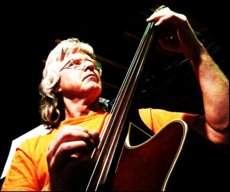
At 2:42, an entire section of orchestral upright bass players NOT looking at the fingerboard, yet hitting their pitches with precision.Of course it does... They are different scales for a start. I guess you didn't notice with the blindfold and all...
It’s preposterous to pretend that the electric bassist cannot obtain a similar skill. As you noted, the violin’s position relative to the player is different than that of the cellist. Yet they both manage this feat.... the electric fretless bassist can, if he dedicates himself, do likewise.
Sorry, but I don’t like excuses. It’s about choice.
At 2:42, an entire section of orchestral upright bass players NOT looking at the fingerboard, yet hitting their pitches with precision.
It’s preposterous to pretend that the electric bassist cannot obtain a similar skill. As you noted, the violin’s position relative to the player is different than that of the cellist. Yet they both manage this feat.... the electric fretless bassist can, if he dedicates himself, do likewise.
Sorry, but I don’t like excuses. It’s about choice.
Upright is a different instrument played with different position indicators due to the way it is played. It's a different thing... Show me an electric fretless bassist that plays like Willis, Jaco or Birelli, who does not look at the board on electric bass. Or have they not spent long enough on the instrument...
The magical thinking of not looking at the board at all is funny. From 0.30... I guess he's "never spent enough practice time to truly be one with the instrument..."
Have you ever played darts?
Those getting familiar with the game spend a fair amount of time looking at the dart. And at their hand. Trying to replicate the grip they used when they hit that triple 18 last time, trying to visualize the wrist position on follow-through.... the master simply looks at the target. Same with football. The QB is not looking at the ball as he throws! He’s looking at the spot downfield where a well-thrown ball will intersect with the route the receiver was supposed to run.
Don’t get me wrong here. I’m not knocking the great fretless player who is looking at the fingerboard. Jaco looked at the fingerboard a lot. But I think that’s because the choice of fretless electric is often not made until later in life compared to, say, an orchestral player.
Btw, here’s Charles Mingus NOT looking at the fingerboard as he improvises.
Have you ever played darts?
Those getting familiar with the game spend a fair amount of time looking at the dart. And at their hand. Trying to replicate the grip they used when they hit that triple 18 last time, trying to visualize the wrist position on follow-through.... the master simply looks at the target. Same with football. The QB is not looking at the ball as he throws! He’s looking at the spot downfield where a well-thrown ball will intersect with the route the receiver was supposed to run.
Don’t get me wrong here. I’m not knocking the great fretless player who is looking at the fingerboard. Jaco looked at the fingerboard a lot. But I think that’s because the choice of fretless electric is often not made until later in life compared to, say, an orchestral player.
Btw, here’s Charles Mingus NOT looking at the fingerboard as he improvises.
Double bass again... I've already discussed this difference... It is a different thing.

JeezyMcNuggles
Inactive
- Feb 23, 2018
- 14,723
- 20,970
- Disclosures
- I suck, but nobody really notices
Approaching fretless:Would like some advice to switching to a Fretless. Thanks in advance.
Never adjust your bridge saddles, you'll never be on the 12th fret perfectly enough to do so anyway.
Get a tuner, leave it on.
Buy some fender flats, they rock
Learn to transition notes by sliding with pressure on the strings (fretlless=phenomenal slides)
Get used to having a weird twangy mid range, or try your best to eq it out
Slap the heck out it. It's just more fun without frets.
Buy a fretless with lines, and rule out the first few of these suggestions. Those are really the only ones that matter.

The magical thinking of not looking at the board at all is funny. From 0.30... I guess he's "never spent enough practice time to truly be one with the instrument..."
Never heard of the dude. Which is why I am TB. To learn.
But this guy clearly doesn't let convention, or other peoples opinion, stand in the way of the music.
Smoking!
Never heard of the dude. Which is why I am TB. To learn.
But this guy clearly doesn't let convention, or other peoples opinion, stand in the way of the music.
Smoking!
It's a tribute to Jaco gig, Birelli is predominantly a guitarist, he and Jaco played together back in the day. He plays violin too.
Bireli Lagrene 14 old - YouTube
Here’s a guy sight reading on 7 string fretless. He does occasionally look at the fingerboard, but he often goes many bars without so doing.Upright is a different instrument played with different position indicators due to the way it is played. It's a different thing... Show me an electric fretless bassist that plays like Willis, Jaco or Birelli, who does not look at the board on electric bass. Or have they not spent long enough on the instrument...
Here’s a guy sight reading on 7 string fretless. He does occasionally look at the fingerboard, but he often goes many bars without so doing.
Occasionally... He's checking himself most of the time, it's a very simple piece and there is a load of chorus on it...

At 2:42, an entire section of orchestral upright bass players NOT looking at the fingerboard, yet hitting their pitches with precision.
It’s preposterous to pretend that the electric bassist cannot obtain a similar skill. As you noted, the violin’s position relative to the player is different than that of the cellist. Yet they both manage this feat.... the electric fretless bassist can, if he dedicates himself, do likewise.
Sorry, but I don’t like excuses. It’s about choice.
I have played in orchestras all my life and taught viola violin cello and Doublebass and in every case the fingerboard is NEVER out of your field of vision except the part of the Neck the extends behind the bassist/cellist when he is in proper position and even then it requires only a side glance. You don't have to be looking right at it to be using visual cues. They are an essential part of the process and I don't know of any classical teacher worth his or her salt that would disagree. Now having said that, sight is only part of the process. I am not sure where you are getting your information >> but study with any and I mean ANY classical teacher and one of the first things they will do is put you in front of a mirror to help you see where you are making mistakes with both right AND left hands. Every lesson I had at Eastman was in front of a mirror. Every lesson I had with a major Classical player in a major orchestra was in front of a mirror. Every lesson my friends at Julliard had was in front of a mirror.
Last edited:

I was just reading this, at playbassonline.com, and, suddenly, the irony in the address bar gave me a proper start. As a consequence, I got spooked, immediately pulled the pin, removed the thinking cap, and I remain stolidly in the dark on this (and quite contentedly too, I might add
 ). "… my eyes are dim, I cannot see. I have not brought my specs with me. I have. not. brought. my. specs. with. me." — but I can manage without them.
Keeping that in mind, a happy medium, seeking the best of both worlds, may be the most sensible focus hear, the most sound method, for obvious reasons (Don't be afraid of the dark, see. Walk on. Walk on, with hope in your heart. And … Sorry. Mustn't get carried away).
All those in favor say eye. … Listen … I feel hear the eyes have it. Division required? OK. Ears to making heavenly music, one way or the other, whichever way you look at it
 Ring the bells. …
Last edited:

I agree with you on this. I played upright in an orchestral setting early on (not so much lately) and one of the things my teachers impressed upon me is positioning. If you look at the cellists and upright players in that clip, they are not moving their instruments out of a stationary position very often, unless it is to reach a physically difficult extension. It’s much easier to be predictable and accurate in your fingering if the positioning variable removed. Most electric bassists are used to walking around and their live performance expectations are very different compared with classical musicians.
The line of sight point point is valid too.
The line of sight point point is valid too.
I have played in orchestras all my life and taught viola violin cello and Doublebass and in every case the fingerboard is NEVER out of your field of vision except the part of the Neck the extends behind the bassist/cellist when he is in proper position and even then it requires only a side glance. You don't have to be looking right at it to be using visual cues. They are an essential part of the process and I don't know of any classical teacher worth his or her salt that would disagree. Now having said that, sight is only part of the process. I am not sure where you are getting your information >> but study with any and I mean ANY classical teacher and one of the first things they will do is put you in front of a mirror to help you see where you are making mistakes with both right AND left hands. Every lesson I had at Eastman was in front of a mirror. Every lesson I had with a major Classical player in a major orchestra was in front of a mirror. Every lesson my friends at Julliard had was in front of a mirror.
The magical thinking of not looking at the board at all is funny. From 0.30... I guess he's "never spent enough practice time to truly be one with the instrument..."
There is something special about guitar players: they do watch their left hand most of the time (they seem to be wired that way), though they don't need to watch their hands any more than pianists, cellists or violonists (I played a lot of classical guitar in my teen's). But the fact is that if your eyes are not busy with looking at the sheet music, the conductor, your band mates, or the girl seated in the first row in the audience, the left hand is what you see right before your eyes: you would have to turn your head in order to avoid seeing your left hand. Therefore guitar players watch their left hand a lot.
Bass guitar players play in a similar posture and thus watch their left hand for the same reason, even when they don't need that at all. So when they pick up a fretless they continue to watch their left hand (I do watch it quite a lot too). But, if for some reason, they cannot hear themselves clearly, there is no way they can play in tune solely by watching their left hand: the visual information is simply not accurate enough to play in tune, due to the softness and fatness of the finger pads. Visual cues help a lot for orientation on the fingerboard, but the fine tuning has to be taken care of by the ear.
Now concerning Birelli: he is a guitar player (arguably one of the very best living guitar players), the bass is only a secondary instrument for him. His playing in the video is stunning, but it is quite certain that he has not remotely spent as much time practicing it as the average violin or cello orchestra player has done on his/her instrument.
Last edited:
Visual cues help a lot for orientation on the fingerboard, but the fine tuning has to be taken care of by the ear.
How much time does Birelli have for pitch correction in that video? Or Willis in his? We are watching the same thing yes? There is no time for pitch correction in most of what they are playing, in the fast sections, there is none. Find me one name pro fretless player, who advises not looking at the board.
Exactly as much time as any violin player in an orchestra: almost zero, correction takes place on the fly, continuously.How much time does Birelli have for pitch correction in that video? Or Willis in his? We are watching the same thing yes? There is no time for pitch correction in most of what they are playing, in the fast sections, there is none. Find me one name pro fretless player, who advises not looking at the board.
It is not like: play, oops wrong note, think, correct, smile awkwardly!
Hearing the previous notes (together with the musical context as played by the other musicians) informs the muscle memory about where to play the next notes. A note of very short duration that occasionally happens to be not exactly in tune will typically not be corrected, but the correction will take place on the subsequent notes. A note of longer duration that is not exactly in tune can be corrected instantanously by a slight roll of the finger, that is complelety invisible visually. Your eyes cannot tell you how to play in tune. This is how violin, cello, double bass players play in tune. The ear and finger training takes years, but it works.
It is true that this process is more difficult on a fretless BG due to the length of the neck and the playing posture, and this is why watching helps a lot, but, ultimately, the ears play the key role.
No one here is advising not to watch. Saying that it is absolutely possible to play in tune without watching a lot, and that it is a skill that is worth training, is quite different.Find me one name pro fretless player, who advises not looking at the board.
Last edited:
That’s practice and lessons. Isn’t it. Do orchestral players play in front of a mirror when playing for an audience?I have played in orchestras all my life and taught viola violin cello and Doublebass and in every case the fingerboard is NEVER out of your field of vision except the part of the Neck the extends behind the bassist/cellist when he is in proper position and even then it requires only a side glance. You don't have to be looking right at it to be using visual cues. They are an essential part of the process and I don't know of any classical teacher worth his or her salt that would disagree. Now having said that, sight is only part of the process. I am not sure where you are getting your information >> but study with any and I mean ANY classical teacher and one of the first things they will do is put you in front of a mirror to help you see where you are making mistakes with both right AND left hands. Every lesson I had at Eastman was in front of a mirror. Every lesson I had with a major Classical player in a major orchestra was in front of a mirror. Every lesson my friends at Julliard had was in front of a mirror.
You are correct that the fingerboard is in the peripheral vision. I’m NOT saying to never ever use visual cues, and I never claimed that the technique corrections one obtains in a mirror are not valuable. In fact, in another thread recently I spoke of how leftys should be taught lefty, and one of the valuable things about it is that they can ‘mirror’ a righty instructor.
What I AM saying that when you are looking at the music and at the conductor, you cannot count on any ability to look at the fingerboard.... and part of my training on these instruments was that, once your technique is correct, you rely on your muscle memory and your ear for intonation. The viol family (viola gamba aside) obviously don’t have position markers, so even looking at the fingerboard does not yield much information.
I’m not good enough on fretless to be able to not occasionally glance at the fingerboard. But I’m working on it. Using the 6-string fretless, I’m practicing knowing some positions. I don’t need the first four, as there is virtually no material written that calls for notes below E. So I’m focusing on memorizing, based on the instrument’s location relative to my body, 5th 9th and 12th position**. That’s E1 thru D#4, which covers most everything that is or will be written for bass. If I can memorize those positions (and I’m getting there slowly lol) I won’t have to look at the fingerboard. Which mine (Portamento) is unlined, having only faint side markers.
**Why those positions? Because it puts the most frequently used tonics in jazz and pop under my middle finger.
Your eyes cannot tell you how to play in tune. This is how violin, cello, double bass players play in tune. The ear and finger training takes years, but it works.
It is true that this process is more difficult on a fretless BG due to the length of the neck and the playing posture, and this is why watching helps a lot, but, ultimately, the ears play the key role.
"Your eyes cannot tell you how to play in tune"
Then how are Jaco, Willis and a myriad of other top-line fretless bassists, playing those fast sections at those BPM's with absolutely no time for pitch correction playing in tune?
And please, I have mentioned numerous times that double bass, violin, cello, are very different instruments, positions and playing scales. If you look at the video of Birelli as a 14 year old back in the thread, when he stands up to play double bass, he doesn't look at the neck. If you look at the video before when he plays electric bass, he hardly takes his eyes off the neck.


