
Enjoy the benefits of a premium membership!
Upgrade Account
-
TalkBass has been independent since 1998. Add your voice.
Create a free account to reply to discussions, view embedded media, and browse with fewer display ads.
Join free Log in
Want zero display ads or expanded classifieds tools? Compare plans.
You are using an out of date browser. It may not display this or other websites correctly.
You should upgrade or use an alternative browser.
You should upgrade or use an alternative browser.
Club Clement (Part 7: Post your basses here)
- Thread starter Bryan R. Tyler
- Start date
-
- Tags
- club
More options
Who Replied?
Interesting you say that. When looking at his site, I had settled on a single-cut but then saw this top. I knew it was the right one, and yet it was only available in this shape. I'm glad I went with it regardless. Thanks for your kind words!Not normally a Fender shape fan, but this is exceptional. Beautiful wood combo choice!


Been rehearsing quite extensively the last week for an upcoming event tonight. I was asked by my girlfriend to play bass in a band for a concert put together by the users at her day care centre. We're a three-piece band, and then various singers and musicians contributing on different songs. The guitar player and the drummer are great, and we click nicely 
Bringing my Ebony Lady and the Tundra III - my 6-string ebony-topped Darlene fretted and swamp ash Jon 6-string fretless - see the photo below. I'm running them both through my Genz Benz Shuttle 6.0, with the standard 2x10" cabinet, and I have an extra 1x12" cabinet from TKS Engineering underneath.
This is just a killer setup!
Link Removed
Here's a snapshot from Tuesday's rehearsal. Tonight's the big night, but my two Clements will see me through, I have no doubt.
[Invalid or Expired Link Removed]
Bringing my Ebony Lady and the Tundra III - my 6-string ebony-topped Darlene fretted and swamp ash Jon 6-string fretless - see the photo below. I'm running them both through my Genz Benz Shuttle 6.0, with the standard 2x10" cabinet, and I have an extra 1x12" cabinet from TKS Engineering underneath.
This is just a killer setup!
Link Removed
Here's a snapshot from Tuesday's rehearsal. Tonight's the big night, but my two Clements will see me through, I have no doubt.
[Invalid or Expired Link Removed]

She arrived yesterday. The neck profile is killer, the fingerboard (Ipe) is amazingly hard, the 16" radius is SIIIIIICK, and I LOVE THIS THING.
A few good points beyond that stuff....
First, check this out:
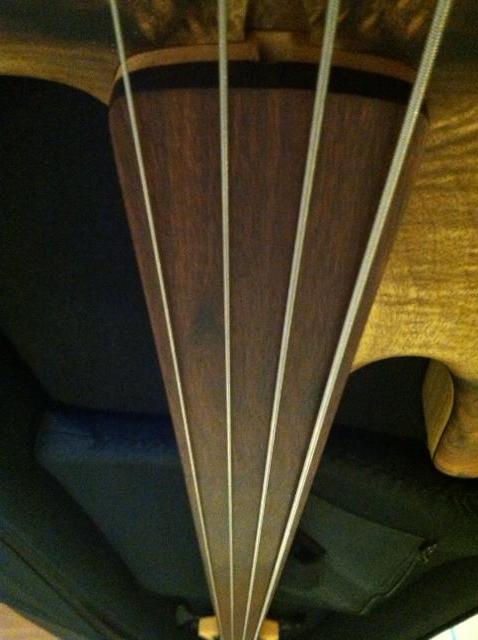
Look at how thick the fingerboard is, and what a large percentage of the neck thickness it is. I LOVE THIS:
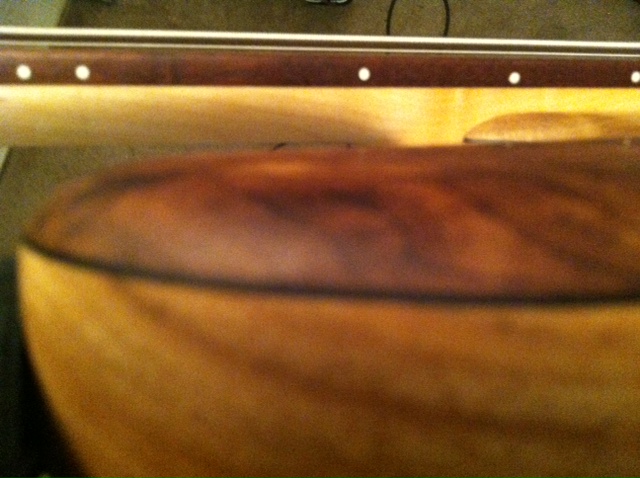
Meanwhile, awesome wood grain:
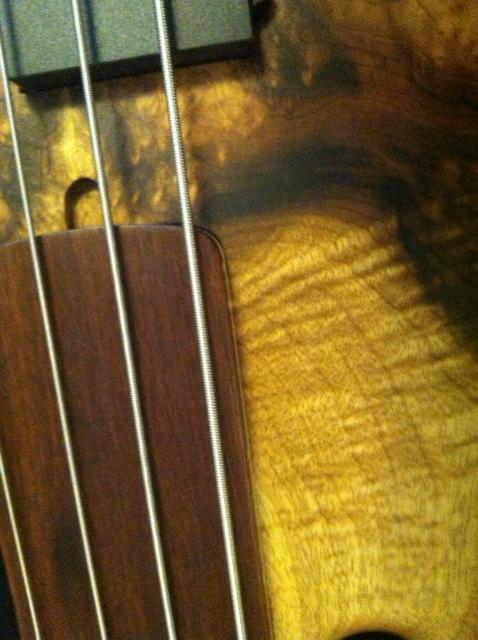
...and a little more:
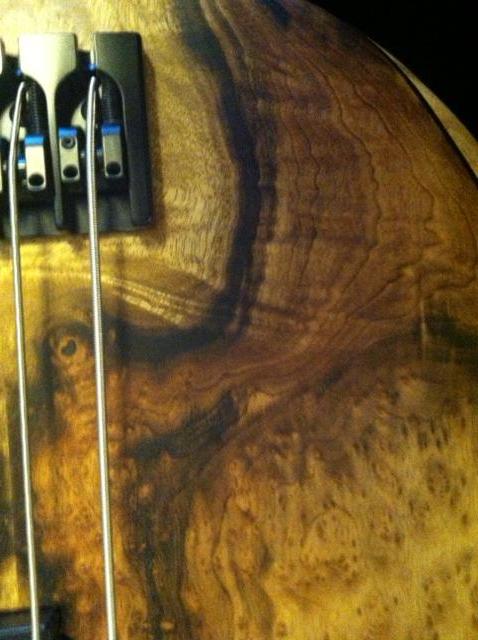
I am a VERY HAPPY camper.
A few good points beyond that stuff....
First, check this out:
Look at how thick the fingerboard is, and what a large percentage of the neck thickness it is. I LOVE THIS:
Meanwhile, awesome wood grain:
...and a little more:
I am a VERY HAPPY camper.

- Jun 6, 2004
- 6,353
- 544
- 66
- Disclosures
- Owner and builder Clementbass
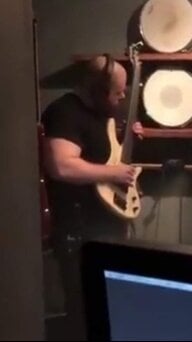
Tom I'm so happy with this last one, I'm going to be putting the 5's up for sale. This 6 is the ultra-Clement!
To any interested in a 5 string fretless Clement, let me know. These are just collecting dust and I need to get them into some player's hands!
To any interested in a 5 string fretless Clement, let me know. These are just collecting dust and I need to get them into some player's hands!
A little bit of exciting news today!
Tom's new web site went live today! The content is more or less the same as before, but it's now updated to new and more modern layout and design!
Pay Tom a visit today!
Stay tuned, there might be more news in the coming two weeks.... saying no more
http://www.clementbass.com/
PS! If you still get the black redirect page, clear your web browser's cache!
Tom's new web site went live today! The content is more or less the same as before, but it's now updated to new and more modern layout and design!
Pay Tom a visit today!
Stay tuned, there might be more news in the coming two weeks.... saying no more
http://www.clementbass.com/
PS! If you still get the black redirect page, clear your web browser's cache!

Happened upon this in a trade. It has the exact look, specs, and dimensions I'm looking for. But it has been abused and neglected. It's gonna take a little work to restore it, but I'm confident that this will become my go-to modern 5-er.


I'll take a club number, if you all do that!
I'll take a club number, if you all do that!
- Jun 6, 2004
- 6,353
- 544
- 66
- Disclosures
- Owner and builder Clementbass
I hate to hear they have been abused. What happened? Enjoy it!
Tom, I sent you a detailed PM. It looks like an amateur tried to make it their "project." Fortunately, it doesn't look damaged in ways that matter. I'll post back when it's restored. It's a work of art and should be kept in top shape.
Hey guys.
So in my quest to diversify while streamlining I traded a Jazz V deluxe for this Clement. I didn't want to have to be married to the twangy jazz sound when playing a 5, and this bass fit the specs, wood, dimensions, and look that I was after.

This is how it looked when I got it. Sorry for the crappy quality pics.
Someone before me made this their "project," and I decided to try my hand at restoring her. I'm super impressed with the results. I did this and am posting it with Tom's gracious advice and blessing. I also got some tips from my good friend Scott Smail at Grove Guitars. Here is a detailed account of what I did.
Disclaimers: I am not speaking judgment about the work of anyone previous to me. I'm a huge fan of Tom Clement and I love this instrument. I am not even close to being considering a luthier, and this was an ambitious project for me. Much of what I did was about personal preference, and I owe my success to Tom and others who know way more than I do.
Someone put gold hardware on it. It looks pretty cool, but didn't quite work for me. The disc style retainer (was screwed in crooked and not all the way), the Babicz bridge (way cool design, I'm just partial to Hipshot, which Tom built it with originally), and Ernie Ball straplocks all came off.
I removed the neck, and

worked on that first.
To my eye, the E string didn't have a deep enough nut slot to get a good angle over the zero fret to hold it down enough. The nut fell free anyway, so I used 600 grit sandpaper wrapped around a .090 string to get it slightly deeper, even with the others by naked eye. I set it back in there with a small dab of superglue. Someone traced the contour of the body on the flat neck pocket part of the neck in PEN! And from the tool marks, it looked like they intended to sand the neck contour all the way to the pen line. But they quickly gave up. Even sanding and 0000 steel wool smoothed it back out. And I "Planed" the flat part until the pen mark was gone. I re-finished that part with the oil Tom used on the whole bass. And it blended wonderfully. You can see where the "new wood" on the flat part of the neck is a little lighter. From what I understand, as that wood ages, it should blend back in.
Someone filed the fret ends, and actually the frets themselves are pretty outstanding. But there were tool marks digging into the Ebony right next to the frets. I was unable to get very good pics of this with the iPhone camera. But I took the steel wool and rolled the edges and was careful to go with the grain and really push to the edges of the frets. I got it smooth as butter and most of the tool marks are gone. I'm a fan of rolled edges anyway, and I was impressed. I finished it off with a Hipshot 3-string retainer, for the middle 3 strings, which barely fit between the tuners. This was the only drilling I had to do.

And it ALMOST covers the original string retainer's hole. Functionally it works great!
So for the body:
Along the top of the "waist" of the bass, there was a rough spot where the pores of the body wood are. I thought it was just open grain, but a closer look through magnifying glasses revealed that there was some sort of finish (not like the original) or filler that was sticking OUT of the pores and hardened like little fingers. Of all the parts of a bass, besides the neck, the top where the wrist contour is, is the area I'm most anal about. It was obvious I needed to take sandpaper to the body and refinish some of it. While I was at it, I re-shaped the forearm contour edge and the contour tie-ins to be more rounded and soft. This was purely an OCD, personal preference thing. The sharper radius edges looked really nice, but I prefer a more rounded feel. I went all the way to 600 grit sandpaper and put 2 coats of the oil finish on it. You can see where the wood is lighter along the edges. I also dig the middle part of the tummy contour out a little deeper. Also personal preference.


I put on the new black Dunlop straplocks (which makes it compatible with all my straps) and black felt, and went to work putting a Hipshot bridge on. Now, the gold bridge was obviously put on where the original bridge was, using the original 3 holes, and adding 2 more in that row. That out the saddles too far forward, so another row was drilled about 3/4" farther back. The Hipshot BARELY covered those up, so I didn't bother filling them in. The middle hole entered the battery box (Grrrr...), so they snipped the screw in half and used it. Thank Goodness that larger footprint bridge didn't dig an outline into the body. Would have been no problem, except the Babicz screws are bigger than the Hipshot screws. So I used a scrap of Mahogany and made 3 dowels to fill the 3 holes I needed. Pushed them down all the way and tapped them flush with a wood block. I did a dry fit of the bridge with the screws, then removed it and put a drop of superglue in each open hole, being careful to no get any on the outside of the body. Once dry, I installed the bridge and it's nice and tight. Still fine-tuning the setup, but it didn't need much to begin with. Oh yeah, before I put strings on it, I added a little more foam under the pickups for a tighter fit. I was surprised how little time it took to get it close to how I like the setup. I'm OCD about setup, so I'm sure I'll be doing a lot of tweaking in the weeks to come.

Again, sorry for the crappy phone picture quality.
The jury is out on the electronics, but that's all personal preference. I used the bass in morning mass, and I was shocked at how clear and focused it was in the mix. I thought it would have more sustain than it did, but it with GHS boomers, so it could be strings. I like thump and attack, so maybe it's not so bad. What really surprised me was the thick organic singing quality of the middle and upper registers. Not at all thin, but not overly "high-bassy." Just strong, balanced bass, and rich mids without being honky. Very clear and tight, and full without popping out like my P-bass can easily do in that room. I will try a few different string sets and tweak the setup more before I mess with the electronics. But this bass is now totally a winner.
Thanks to Tom for his advice and blessing, and for creating this beauty.
So in my quest to diversify while streamlining I traded a Jazz V deluxe for this Clement. I didn't want to have to be married to the twangy jazz sound when playing a 5, and this bass fit the specs, wood, dimensions, and look that I was after.
This is how it looked when I got it. Sorry for the crappy quality pics.
Someone before me made this their "project," and I decided to try my hand at restoring her. I'm super impressed with the results. I did this and am posting it with Tom's gracious advice and blessing. I also got some tips from my good friend Scott Smail at Grove Guitars. Here is a detailed account of what I did.
Disclaimers: I am not speaking judgment about the work of anyone previous to me. I'm a huge fan of Tom Clement and I love this instrument. I am not even close to being considering a luthier, and this was an ambitious project for me. Much of what I did was about personal preference, and I owe my success to Tom and others who know way more than I do.
Someone put gold hardware on it. It looks pretty cool, but didn't quite work for me. The disc style retainer (was screwed in crooked and not all the way), the Babicz bridge (way cool design, I'm just partial to Hipshot, which Tom built it with originally), and Ernie Ball straplocks all came off.
I removed the neck, and
worked on that first.
To my eye, the E string didn't have a deep enough nut slot to get a good angle over the zero fret to hold it down enough. The nut fell free anyway, so I used 600 grit sandpaper wrapped around a .090 string to get it slightly deeper, even with the others by naked eye. I set it back in there with a small dab of superglue. Someone traced the contour of the body on the flat neck pocket part of the neck in PEN! And from the tool marks, it looked like they intended to sand the neck contour all the way to the pen line. But they quickly gave up. Even sanding and 0000 steel wool smoothed it back out. And I "Planed" the flat part until the pen mark was gone. I re-finished that part with the oil Tom used on the whole bass. And it blended wonderfully. You can see where the "new wood" on the flat part of the neck is a little lighter. From what I understand, as that wood ages, it should blend back in.
Someone filed the fret ends, and actually the frets themselves are pretty outstanding. But there were tool marks digging into the Ebony right next to the frets. I was unable to get very good pics of this with the iPhone camera. But I took the steel wool and rolled the edges and was careful to go with the grain and really push to the edges of the frets. I got it smooth as butter and most of the tool marks are gone. I'm a fan of rolled edges anyway, and I was impressed. I finished it off with a Hipshot 3-string retainer, for the middle 3 strings, which barely fit between the tuners. This was the only drilling I had to do.
And it ALMOST covers the original string retainer's hole. Functionally it works great!
So for the body:
Along the top of the "waist" of the bass, there was a rough spot where the pores of the body wood are. I thought it was just open grain, but a closer look through magnifying glasses revealed that there was some sort of finish (not like the original) or filler that was sticking OUT of the pores and hardened like little fingers. Of all the parts of a bass, besides the neck, the top where the wrist contour is, is the area I'm most anal about. It was obvious I needed to take sandpaper to the body and refinish some of it. While I was at it, I re-shaped the forearm contour edge and the contour tie-ins to be more rounded and soft. This was purely an OCD, personal preference thing. The sharper radius edges looked really nice, but I prefer a more rounded feel. I went all the way to 600 grit sandpaper and put 2 coats of the oil finish on it. You can see where the wood is lighter along the edges. I also dig the middle part of the tummy contour out a little deeper. Also personal preference.
I put on the new black Dunlop straplocks (which makes it compatible with all my straps) and black felt, and went to work putting a Hipshot bridge on. Now, the gold bridge was obviously put on where the original bridge was, using the original 3 holes, and adding 2 more in that row. That out the saddles too far forward, so another row was drilled about 3/4" farther back. The Hipshot BARELY covered those up, so I didn't bother filling them in. The middle hole entered the battery box (Grrrr...), so they snipped the screw in half and used it. Thank Goodness that larger footprint bridge didn't dig an outline into the body. Would have been no problem, except the Babicz screws are bigger than the Hipshot screws. So I used a scrap of Mahogany and made 3 dowels to fill the 3 holes I needed. Pushed them down all the way and tapped them flush with a wood block. I did a dry fit of the bridge with the screws, then removed it and put a drop of superglue in each open hole, being careful to no get any on the outside of the body. Once dry, I installed the bridge and it's nice and tight. Still fine-tuning the setup, but it didn't need much to begin with. Oh yeah, before I put strings on it, I added a little more foam under the pickups for a tighter fit. I was surprised how little time it took to get it close to how I like the setup. I'm OCD about setup, so I'm sure I'll be doing a lot of tweaking in the weeks to come.
Again, sorry for the crappy phone picture quality.
The jury is out on the electronics, but that's all personal preference. I used the bass in morning mass, and I was shocked at how clear and focused it was in the mix. I thought it would have more sustain than it did, but it with GHS boomers, so it could be strings. I like thump and attack, so maybe it's not so bad. What really surprised me was the thick organic singing quality of the middle and upper registers. Not at all thin, but not overly "high-bassy." Just strong, balanced bass, and rich mids without being honky. Very clear and tight, and full without popping out like my P-bass can easily do in that room. I will try a few different string sets and tweak the setup more before I mess with the electronics. But this bass is now totally a winner.
Thanks to Tom for his advice and blessing, and for creating this beauty.
Last edited:
Tom built a beautiful bass as usual, and you did a great job restoring it to a new set of specs. WONDERFUL and thanks for sharing.
24-hour update:
Reference the above amateur restoration,
I have been able to get a pretty sweet medium-low action with no buzz. This bass is pretty sensitive to setup tweaks, as far as sound goes. I think I got the pickups in the right spot. Every millimeter of height adjustment makes a world of difference. The new strings are settling in and getting focused, and it's hard to put it down. Crispy, full, modern, warm, and clear. Set flat, I like the sound. I like the more transient, warmer passive sound too. I'm not yet sold on the preamp, so I'll spend a couple weekends working with it in a live band context and see how it does. It does sound great set flat though. I play 99% finger style, and I idolize Jamerson and Pino. I found myself generally rolling off a tiny treble and low mids on my amp, and boosting a tiny bit of high mids. On the bass if I move the EQ bands more than a hair, the overall volume seems to change too much. Thinking about a Pope or east Pre replacement.
All in all, it has not taken long to get it to settle in pretty nicely. I scored nicely on this one.
Reference the above amateur restoration,
I have been able to get a pretty sweet medium-low action with no buzz. This bass is pretty sensitive to setup tweaks, as far as sound goes. I think I got the pickups in the right spot. Every millimeter of height adjustment makes a world of difference. The new strings are settling in and getting focused, and it's hard to put it down. Crispy, full, modern, warm, and clear. Set flat, I like the sound. I like the more transient, warmer passive sound too. I'm not yet sold on the preamp, so I'll spend a couple weekends working with it in a live band context and see how it does. It does sound great set flat though. I play 99% finger style, and I idolize Jamerson and Pino. I found myself generally rolling off a tiny treble and low mids on my amp, and boosting a tiny bit of high mids. On the bass if I move the EQ bands more than a hair, the overall volume seems to change too much. Thinking about a Pope or east Pre replacement.
All in all, it has not taken long to get it to settle in pretty nicely. I scored nicely on this one.

- Apr 3, 2003
- 35,516
- 19,952
- Disclosures
- Editor-in-Chief, Bass Gear Magazine
I had an opportunity to play my Clement fretless at our gig yesterday. It was a Halloween party (I previously had a mullet wig on earlier - you can see it on the hay bale in front of me). The Clement sounded great through the Ampeg rig I have in for review:
Link Removed
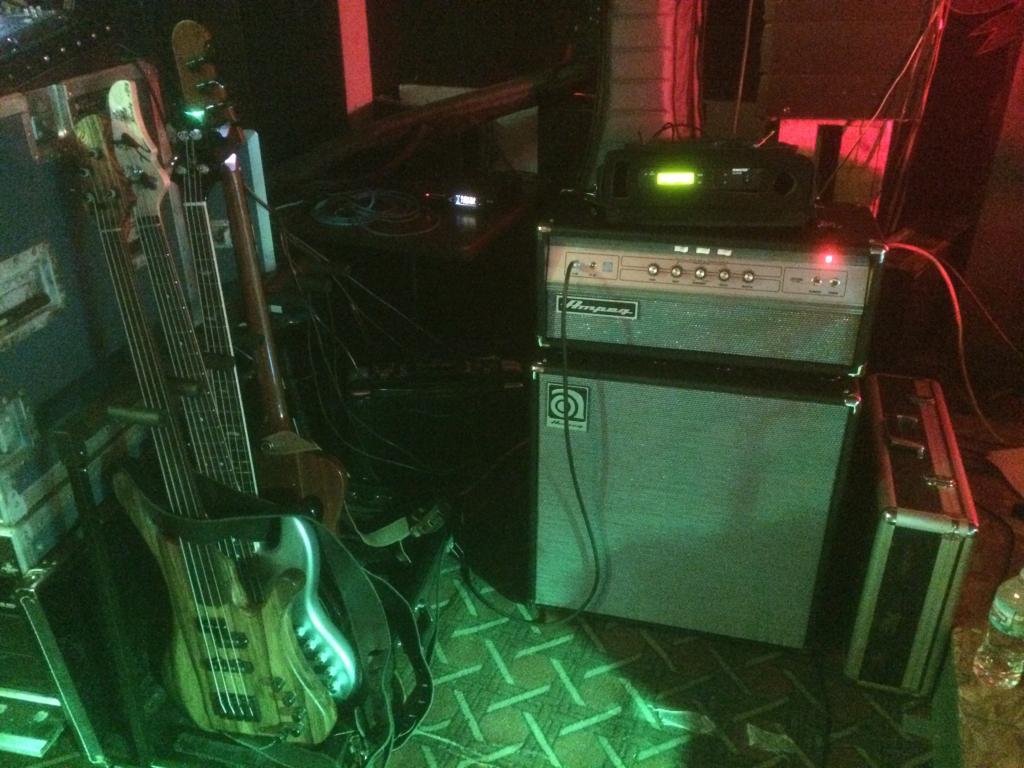
Link Removed
- Jun 6, 2004
- 6,353
- 544
- 66
- Disclosures
- Owner and builder Clementbass
Is the pickup in the standard P bass position? It looks like it's a little closer to the neck than usual, but I might be getting thrown off by the 24 positions.
I am told this split pu IS in the traditional position, and yes, it looks different due to the 24 stops.
Update on the web site!
There's a new Clement bass out!!!
Go check out the Angel!
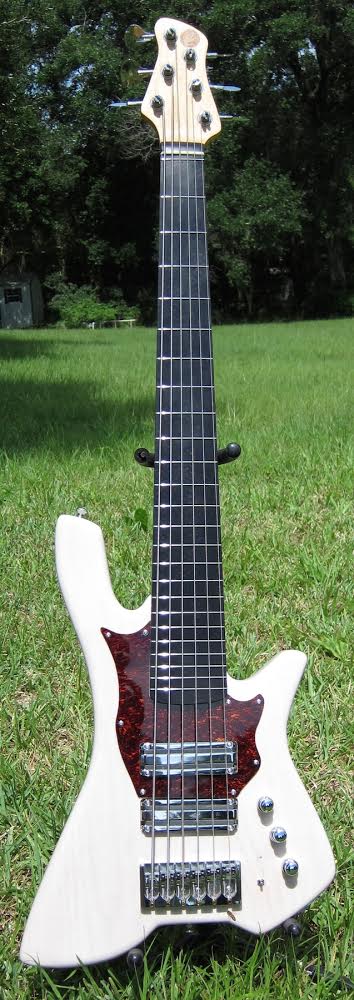
There's a new Clement bass out!!!
Go check out the Angel!


