

Enjoy the benefits of a premium membership!
Upgrade Account
-
TalkBass has been independent since 1998. Add your voice.
Create a free account to reply to discussions, view embedded media, and browse with fewer display ads.
Join free Log in
Want zero display ads or expanded classifieds tools? Compare plans.
You are using an out of date browser. It may not display this or other websites correctly.
You should upgrade or use an alternative browser.
You should upgrade or use an alternative browser.
Dingwall Owners Club
- Thread starter FroggyOne2
- Start date
More options
Who Replied?
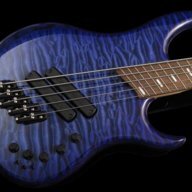
Awesome bass played one like it at Axe in Calgary. Very nice...
Same one
Flying with Dingwall?
I'm trying to figure out how to fly with my bass.
Qatar Airways says that oversize instruments are OK but the maximum length is 47 1/4". I've shopped for cases that are that short and can't find any. Dingwalls are 46" long, so there's barely room for a case...
Any thoughts or options appreciated.
Are custom cases a thing? Can I afford one? I'd rather not need one.
I'm trying to figure out how to fly with my bass.
Qatar Airways says that oversize instruments are OK but the maximum length is 47 1/4". I've shopped for cases that are that short and can't find any. Dingwalls are 46" long, so there's barely room for a case...
Any thoughts or options appreciated.
Are custom cases a thing? Can I afford one? I'd rather not need one.
Flying with Dingwall?
I'm trying to figure out how to fly with my bass.
Qatar Airways says that oversize instruments are OK but the maximum length is 47 1/4". I've shopped for cases that are that short and can't find any. Dingwalls are 46" long, so there's barely room for a case...
Any thoughts or options appreciated.
Are custom cases a thing? Can I afford one? I'd rather not need one.
Do like @TheEmptyCell did and buy a seat for it and keep it right next to you.


DiabolusInMusic
Functionless Art is Merely Tolerated Vandalism
Yes, buying a seat is an option. But I plan to make this flight twice a year forever, so that's $2,000 per year just so I can play. This is why a custom case is maybe worth it.
I can't really change airlines, either.
It is a bolt-on, just take a set of tools with you.

Yes, buying a seat is an option. But I plan to make this flight twice a year forever, so that's $2,000 per year just so I can play. This is why a custom case is maybe worth it.
I can't really change airlines, either.
When I was in the USAF band, I had several cases made by A&S Case Co (now Encore, it appears). They were built like tanks. I traveled all over with my bass and never worried about it...bass was in the belly of many planes, on pallets with tons of other gear stacked on top, in the back of box tracks, etc. It was pricey, but well worth the cost.
Have you considered just buying a bass at the destination location and leaving it there to use when you are there?Yes, buying a seat is an option. But I plan to make this flight twice a year forever, so that's $2,000 per year just so I can play. This is why a custom case is maybe worth it.
I can't really change airlines, either.
Another option is to fly with a $300 bass in a cheap unpadded gig bag and carry it on the plane with you. It will be very easy for them to stand it up in the flight attendants' coat closet, or you can lay it on top of suitcases in the overhead bin.
There are some mighty nice $300 basses out there these days. For example:
Ibanez Roadstar II Bass Series 1980's Black | Mike's Music
Yamaha BB300 Bsss Guitae 80s 90s Red | Guitar2thestars
Sure, they're not your Dingwall. But they are fine instruments that you can really enjoy playing and you won't have to worry about them when you are out enjoying the beach or a night club and have left your bass behind somewhere unattended.
Those cases look great. Thanks.
Taking the neck off is shockingly obvious. I've just never taken a bass apart before. It wouldn't hurt the bass to be disassembled and reassembled repeatedly?
Taking the neck off is shockingly obvious. I've just never taken a bass apart before. It wouldn't hurt the bass to be disassembled and reassembled repeatedly?

Pretty sure all the necks are all bolts like this (mine certainly all are) Link Removed so you're not going to damage anything like you would with screws straight into the wood.
I would like to hear what Dingwall says with respect to whether one should take all the tension off the truss rod if the neck is removed for a period of time. Since the tension on the truss rod counteracts the tension on the strings, it would seem to me that the neck would bow quite a bit if left alone with no strings and the truss rod fully tightened.Those cases look great. Thanks.
Taking the neck off is shockingly obvious. I've just never taken a bass apart before. It wouldn't hurt the bass to be disassembled and reassembled repeatedly?
I recently removed the strings from a non-Dingwall bass to take it in for repair, and saw that happening right away within minutes, so I fully loosened the truss rod. While putting the strings back on, I gradually tightened to the truss rod to match the string tension, and all is well.
It might work to strap the neck into a rig that keeps it straight. Still, taking the neck off opens a can of worms, I think.
DiabolusInMusic
Functionless Art is Merely Tolerated Vandalism
Those cases look great. Thanks.
Taking the neck off is shockingly obvious. I've just never taken a bass apart before. It wouldn't hurt the bass to be disassembled and reassembled repeatedly?
No, there is no harm in taking a bass apart and putting it back together. Dingwall uses neck bolts, not screws. You won't wear out the neck holes.
You will spend, at most, 36 hours in travel. The neck will be fine without loosening the rod. You only need to back the tension off if you are leaving it off for a week or more. You will probably need to setup the bass in the new region anyway so loosening the rod adds a few minutes to the job, if you are really worried about it.

^^^ That NG3 in Mopar Purple
My wife bought me a NG2/4 in Mopar Purple. I didn't think I would like it as all the rest of mine are all black. It really pops under some stage lighting. I dig it.
Yes, buying a seat is an option. But I plan to make this flight twice a year forever, so that's $2,000 per year just so I can play. This is why a custom case is maybe worth it.
I can't really change airlines, either.
Yeah. That would be unfavourable.
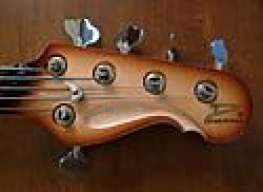
My wife bought me a NG2/4 in Mopar Purple. I didn't think I would like it as all the rest of mine are all black. It really pops under some stage lighting. I dig it.
She sounds like a keeper! I can't think of a more excellent gift for a bass player.

She sounds like a keeper! I can't think of a more excellent gift for a bass player.
Yeah, she definitely knocked that one out of the park.
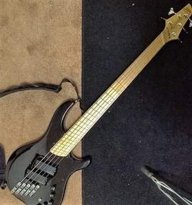
The wife sounds like a keeper too!She sounds like a keeper! I can't think of a more excellent gift for a bass player.

fyi, my issue with flying is solved. The Invalid Link Removed me is poorly worded and it only applies to cellos and such. They charge oversize and overweight fees of about $200 but that's it.

