Personally I have not. I use an Omni Cab Sim and I am happy enough with that. And I am technically challenged when it comes to combining computers with music stuff. So although I was impressed with the feature being in there, I have never even attempted to use it.Have you played around with the cab sims in the Darkglass suite software? I ran through the options and ended up loading the Nolly sim.

Enjoy the benefits of a premium membership!
Upgrade Account
-
TalkBass has been independent since 1998. Add your voice.
Create a free account to reply to discussions, view embedded media, and browse with fewer display ads.
Join free Log in
Want zero display ads or expanded classifieds tools? Compare plans.
You are using an out of date browser. It may not display this or other websites correctly.
You should upgrade or use an alternative browser.
You should upgrade or use an alternative browser.
Dingwall Owners Club
- Thread starter FroggyOne2
- Start date
More options
Who Replied?

I’m not a computer wiz myself, so believe me when I say it’s easy and smooth. You do need to have unit powered up. Darkglass has about a dozen sims to choose from. There should be more to come.
I’m so used to my Zoom B3, which is powered by the USB connection when you plug it in. I expected the AOU to fire up when I plugged in the USB.
The Beat Buddy was also easy once I figured out how the SD card slot on my Mac works. The virtual beat buddy that the beat buddy manager gives me was a very cool surprise.
Of all these music gear/ computer boogaloos, I find Line 6 is the least cooperative and intuitive. I spend a good bit of time YouTubing Line 6 help.
Midi remains a mystery.
I’m so used to my Zoom B3, which is powered by the USB connection when you plug it in. I expected the AOU to fire up when I plugged in the USB.
The Beat Buddy was also easy once I figured out how the SD card slot on my Mac works. The virtual beat buddy that the beat buddy manager gives me was a very cool surprise.
Of all these music gear/ computer boogaloos, I find Line 6 is the least cooperative and intuitive. I spend a good bit of time YouTubing Line 6 help.
Midi remains a mystery.
Once you wrap your head around the basic concepts, it's not so bad.
The trouble is there's a fair bit of jargon, so it's easy to get lost in the terminology. eg: multiple types of messages that can be sent (MIDI Notes, On/Off messages, Continue Control/Control Change (CC), Program Change (PC)), all of which can do different things depending on how the MIDI device interprets them. Then you have different channels to differentiate which device should act on which MIDI messages etc etc.
This helped me: Link Removed
The trouble is there's a fair bit of jargon, so it's easy to get lost in the terminology. eg: multiple types of messages that can be sent (MIDI Notes, On/Off messages, Continue Control/Control Change (CC), Program Change (PC)), all of which can do different things depending on how the MIDI device interprets them. Then you have different channels to differentiate which device should act on which MIDI messages etc etc.
This helped me: Link Removed
My heart’s desire would be to get my Line6 pod HD500x looper to lock up with my beat buddy. I’ve heard tales of internal clocks and stuff like that.
Both have jacks labeled midi, how hard can it be?
The Zoom looper and beats work well together, so there must be some quantitizing going on. My RC300 had a similar setup with an internal drum machine.
Both have jacks labeled midi, how hard can it be?
The Zoom looper and beats work well together, so there must be some quantitizing going on. My RC300 had a similar setup with an internal drum machine.

- Sep 3, 2006
- 4,358
- 6,117
- Disclosures
- Authorized dealer for Dingwall, Genzler, Phil Jones Bass, Cort, Traynor, Yorkville Sound
Heads up, if you need recording software (no, I do not sell this software) Presonus has some really good deals on Studio One, I just upgraded from studio one 2 to version 4. Now I have to re-learn it.

Uhmm...I think you are in the wrong threadAnyone have one for trade ?

Lol! Just looking to see if any had a dingwall for tradeUhmm...I think you are in the wrong thread

Lol! Just looking to see if any had a dingwall for trade
Hello,
Details and such are helpful. What are you looking for?
What are you looking to trade?
How much cash are you going to add?
Heck I just traded one today!
Anyone have one for trade ?
If you are wondering whether anyone here is willing to trade a Dingwall for something else that is not a Dingwall, I would say good luck.
It is certainly worth asking, just in case. But the chances of that happening are somewhat low, since once you have played a Dingwall, it would take an extremely special non-Dingwall instrument to tempt you.
There is a Wanted section in the Classifieds, so you should create a listing there, describing which Dingwall model you would like to get and what instrument or instruments you are offering on trade. You never know, you just might luck out.

Yup. I use Dave's 410 preset. The other ones are either too clean or too wooly for my taste. I hear there are free ones to get on the DG site. I need to try those out.Have you played around with the cab sims in the Darkglass suite software? I ran through the options and ended up loading the Nolly sim.


My apologies if this was mentioned in the thread, I haven't been reading here much. I'm not linked to the sale in any way, just sharing
Purple Sklar:
Dingwall Leland Sklar Signature 5 string 2014 Purple Burst
Purple Sklar:
Dingwall Leland Sklar Signature 5 string 2014 Purple Burst
just a heads up, that due to incurable GAS, I have re-listed my NG3 purple people eater.
For Sale - Dingwall NG3 2018 Mopar Purple gloss
For Sale - Dingwall NG3 2018 Mopar Purple gloss
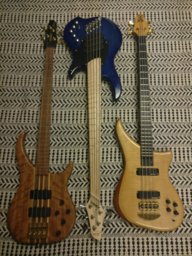
I bought my Dingwall without having ever played a fanned fret. I was a bit nervous, but all the comments I ever read said it was an easy transition. I've been playing it for several months now, and I think the frets have made me a better bass player. My fret hand no longer seems locked in one position w/ just those 4 frets. It's like my occasional need to slide for a few fret stretch has forced me to be more fluid in general. Anyone else felt like that with their transition to fanned fret?
I sometimes still accidentally slip off a fret or fret to far away, but all this "only" involves the first three frets on the E and A string. Not in the shed, but when playing without looking at the fretboard at all, at small jams or rehearsal. My muscle memory still has the regular scale imprinted. I have the same issue with my short scale JMJ Mustang, but the other way 'round of course. Sometimes I play a note too high... but I usually notice that early enough to compensate.
That Dingwall feels so like home its unreal. Almost all the time, I don't notice the fanned frets at all while playing. It just happens correctly. But those lower notes... I'm sure this is a matter of a few more months, then it will be gone. I am slow in unlearning automated stuff
That Dingwall feels so like home its unreal. Almost all the time, I don't notice the fanned frets at all while playing. It just happens correctly. But those lower notes... I'm sure this is a matter of a few more months, then it will be gone. I am slow in unlearning automated stuff
And therein lies one of the major advantages of playing a 5-string. You almost never need those first few frets.I sometimes still accidentally slip off a fret or fret to far away, but all this "only" involves the first three frets on the E and A string. Not in the shed, but when playing without looking at the fretboard at all, at small jams or rehearsal. My muscle memory still has the regular scale imprinted.
And you can train yourself that when you do need to go down there on the B string, you just pay extra close attention.
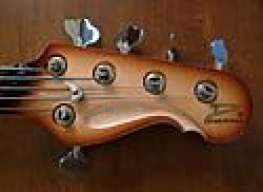
I bought my Dingwall without having ever played a fanned fret. I was a bit nervous, but all the comments I ever read said it was an easy transition. I've been playing it for several months now, and I think the frets have made me a better bass player. My fret hand no longer seems locked in one position w/ just those 4 frets. It's like my occasional need to slide for a few fret stretch has forced me to be more fluid in general. Anyone else felt like that with their transition to fanned fret?
My first Dingwall purchase in 2007 was also a leap of faith, a beautiful Indigoburst AB-1. Similar experience in adjustment. The only place I had to watch myself was near the nut on the B string. I heartily agree that Dingwall basses 'force' one to play better. The clarity and presence in the mix also reveal mistakes quite well.
 Just a thought... it may help your situation to have a recessed strap lock button mounted on the back of your bass which will decrease your 'reach' when playing near the nut.


