Speaking of basses arriving. This was oddly like 'new Dingwall day' for a bass I've owned for a year and even played out here and there.
In...safe and sound from shipping. I did sent it in my Gator ATA case, but always a bit nerve wracking. From the outside it won't look too different from stock.
Neck with Luminlay lines, markers and side dots. The last inlay job, the lines were not high enough contrast for my liking in dim lighting situations. This should help. One of my requests from Mo was to get the action as far down as possible. This Combustion even from its earliest days didn't have a really low action (I remember when the original owner got it and he and I did some troubleshooting). Mo worked to get the neck as straight and flat as possible. I'd gotten it down to 'playable but not pleasurable' on the first round. Now its way closer to 'Dingwall-action.'
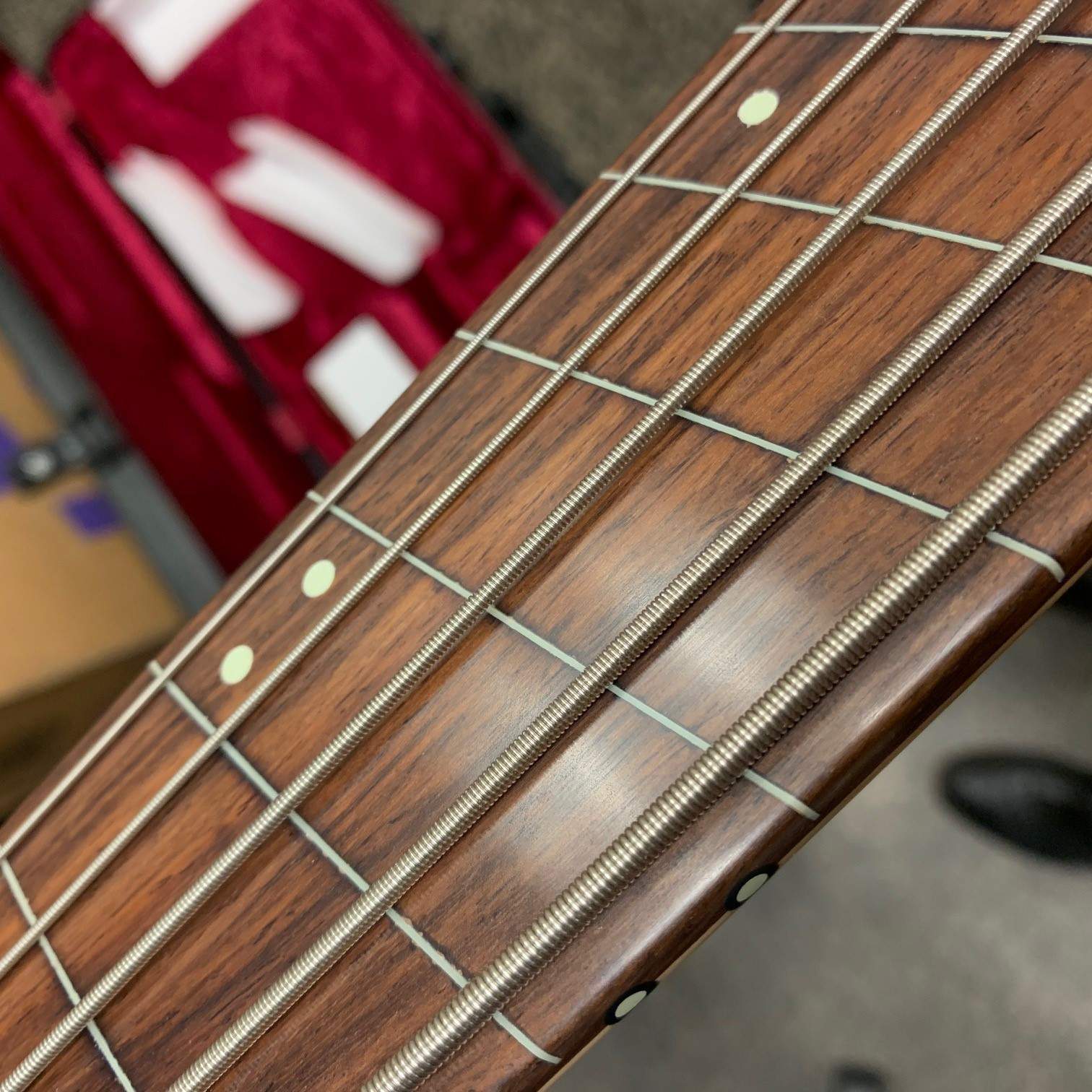
You can now see here that the neck has been refinished too. The last time it was 'treated' with a C/A job, but this is a full on urethane satin neck finish. Seriously looks so nice and is so smooth and nice feeling. You can see that Mo worked hard at cleaning up where the frets had been removed. Some had been over-heated and discolored a bit, and with any stuff like this you do get some tear-out. Really nice job of minimizing.
Look at these fatties! I've really come to like the dual-contrast luminlay side dots and these are the big honkers...thick black wide diameter. Beautifully installed. I've found within the past few months of Luminlay side dots; they work brilliantly. You can always see just enough to know where you are. They're not LED bright but they don't need to be, and the black/white do a great job in even low light settings.
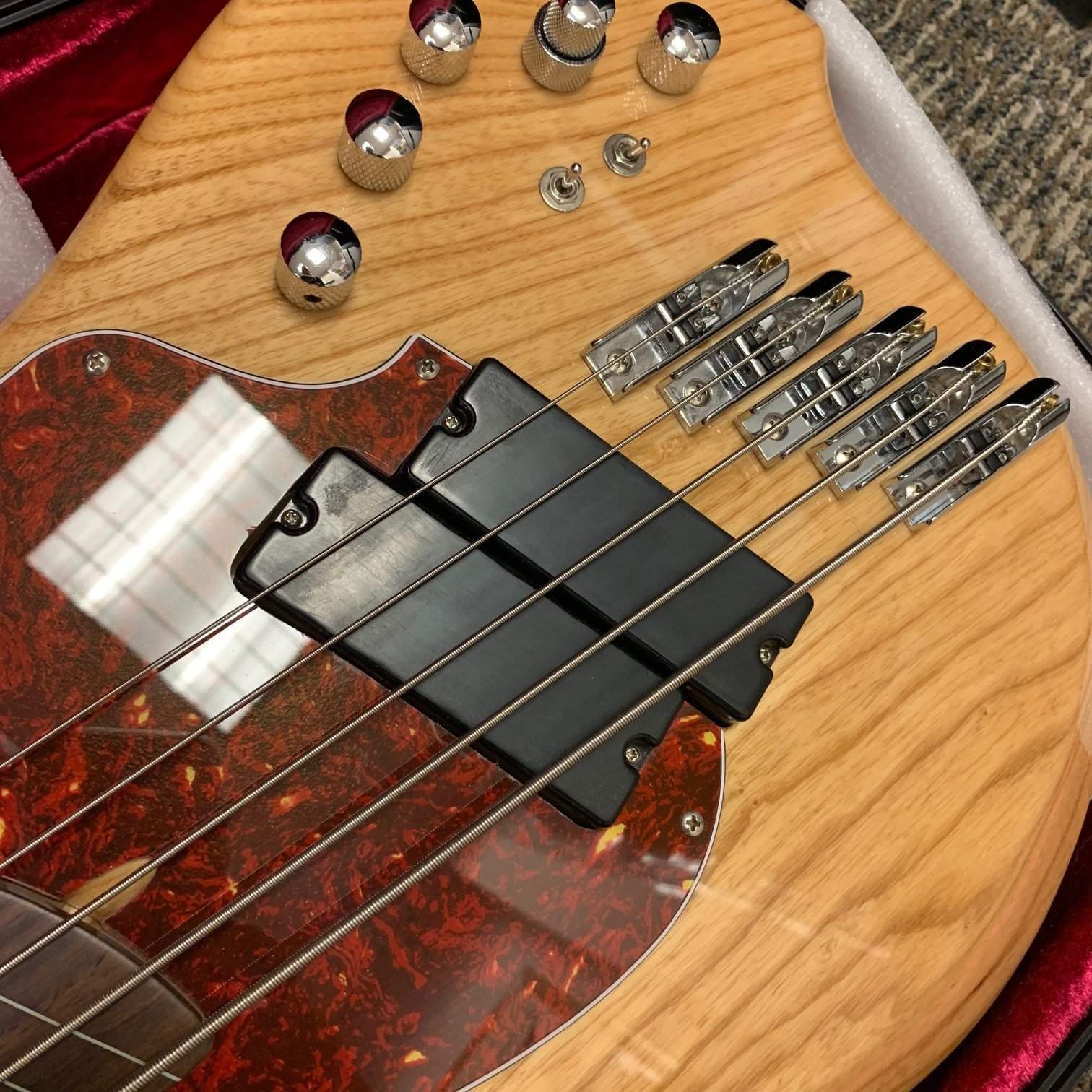
Forgive the ratty looking pickup shells. I need to sand/polish them a bit more. You can't see the untold hours of work to modify this bridge. The Graphtech saddles needed some alteration to fit correctly. The metal 'sleds' that hold those saddles are drilled out so the piezo wires will pass through, then the actual base pieces are also not only drilled but have oblong openings for the wires to pass but also so you can adjust the intonation and the wiring doesn't pinch or hamper adjustment. Then under each piece, the wood is drilled out to a common 'tunnel' that runs underneath for all the wires to make it to the control cavity. All invisible and seamless. It took a few tries. Turns out there's a high failure rate on Graphtech piezo saddles...and we found out the hard way on the final assembly.
Electronics have the same footprint except for the added switch...It still has a DG-TC installed, the standard volume/4-way and Bass/low-mid/high-mid. The mids are now stacked and the treble is push/pull for the DG bypass switch.
The old 'high mid' knob is now a piezo preamp/bridge volume with a push/pull piezo tone shift.
The two switches...the first is a 3-way that gives you magnetic setup (just like a standard Dingwall) or piezo setup (bridge only with associated preamp); and the middle position is both systems...which with the second volume means you can bring in the piezo underneath the magnetic or bring the magnetic up underneath the piezo. The other switch is a true bypass for both preamps. It allows the bass to go completely passive and not need any battery to function.







 So glad that you actually got your bass!


