Electrical engineer here. The way to do this would be with a spectrum analyzer (quite expensive piece of lab equipment) and some way to generate an impulse response from your bass (which might mean whacking it really hard and fast.) In short, it's pretty hard to get at a surgically precise frequency response, but you can get an idea with a cheaper oscilloscope, playing the bass across the neck with a consistent picking pattern, measuring the response at each fret, changing pick ups, repeat.I'm just trying to quantify their differences so when I need to fit the bass into a specific mix, I'll know down to surgical accuracy what pickup configuration I need to use to sound good in that context.

Enjoy the benefits of a premium membership!
Upgrade Account
-
TalkBass has been independent since 1998. Add your voice.
Create a free account to reply to discussions, view embedded media, and browse with fewer display ads.
Join free Log in
Want zero display ads or expanded classifieds tools? Compare plans.
You are using an out of date browser. It may not display this or other websites correctly.
You should upgrade or use an alternative browser.
You should upgrade or use an alternative browser.
Dingwall Owners Club
- Thread starter FroggyOne2
- Start date
More options
Who Replied?
But even the Canadian custom models are matte finish only though
Only the ABZs...

Electrical engineer here. The way to do this would be with a spectrum analyzer (quite expensive piece of lab equipment) and some way to generate an impulse response from your bass (which might mean whacking it really hard and fast.) In short, it's pretty hard to get at a surgically precise frequency response, but you can get an idea with a cheaper oscilloscope, playing the bass across the neck with a consistent picking pattern, measuring the response at each fret, changing pick ups, repeat.
Thanks for the tip. It's probably more work than I'm willing to put into the effort. Would my proposed method get me in the ballpark by simply recording the bass playing a few chords or short passages with each pickup, then tweaking the EQ to match them?

Damn, I was just going to post that.
mmm mayo.
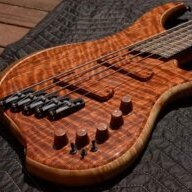
My tastes, I like whacked out wood, not flamed or otherwise symmetrical, but random and crazy.
View attachment 3551122 View attachment 3551125 That is my Dingwall before it reached my mitts and before the 3X upgrade. But love this thing's dramatic grain, look 10X better in person.
I loved the Ash combustions with color. Some of them had some really nice grain that is for sure. I am also a figured maple lover so it is tough to choose...
Does anyone know how to quantify the actual frequency response changes in the different pickup configurations settings of the NX-2? Like for example, in bridge, neck, parallel, and series, which frequencies get boosted or cut and by how much? I always wanted to know if the manufacturers even know this.
I suppose I could try doing some tests, such as play the same chord in the different pickup settings and then tweak the EQ in a DAW and try to match them to each other, and then look at which frequencies I tweaked and by how much. But if this data is readily available, it'll save me a lot of time.
Electrical engineer here. The way to do this would be with a spectrum analyzer (quite expensive piece of lab equipment) and some way to generate an impulse response from your bass (which might mean whacking it really hard and fast.) In short, it's pretty hard to get at a surgically precise frequency response, but you can get an idea with a cheaper oscilloscope, playing the bass across the neck with a consistent picking pattern, measuring the response at each fret, changing pick ups, repeat.
Most recording software has some kind of spectrum analyzer built in or available as a VST plugin or something. It has been over 14 years since I've opened up a DAW, but I remember Cubase, Nuendo, and Logic having some pretty decent plugins for this. Many "Mastering" plugins should include this as well.
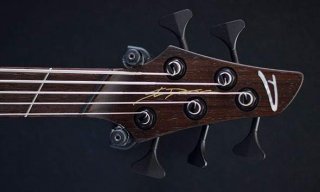
A lot of companies have been doing "tops" like that lately... I call them veneers.
This raises an interesting point though : how deep should a top be ?
And for which reason(s) ?
The tops I've seen on MTDs were thicker than those on Dingwalls.
Though if the top is some kind of burl it's probably better if it's thinner


Way I see it- putting on a veneer makes sense if you're already happy with the core wood tone but you want to add something else/prettier on top.
Doing a thick cap can serve the same purpose while also changing the core sound: you get less of the core wood and more of a different wood that will add its own timbre. Maybe you dislike the way swamp ash dampens the midrange and so a cap of a wood that has less of that characteristic into the mix.
I recall an interview with Sheldon reg. the veneers on the combustion where he said they opted for them because tonally it wouldn't make a difference if they were thicker. I'll see if I can find it.
BAD_EDIT: it's the WNAMM vid:
"Quilted maple doesn't have a tone to speak of, that'd you'd want on a bass, in my opinion"
well he's a luthier and I'm not, so I'll take his word for it
Doing a thick cap can serve the same purpose while also changing the core sound: you get less of the core wood and more of a different wood that will add its own timbre. Maybe you dislike the way swamp ash dampens the midrange and so a cap of a wood that has less of that characteristic into the mix.
I recall an interview with Sheldon reg. the veneers on the combustion where he said they opted for them because tonally it wouldn't make a difference if they were thicker. I'll see if I can find it.
BAD_EDIT: it's the WNAMM vid:
"Quilted maple doesn't have a tone to speak of, that'd you'd want on a bass, in my opinion"
well he's a luthier and I'm not, so I'll take his word for it
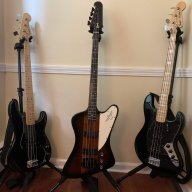
holy cats, 31k posts and counting. I saw a Nolly Getgood playthrough and took notice, recently. Definitely on my list of stuff to at least try out once, sounded amazing.
That would not work because you would only be putting out a handful of frequencies at a time. It would only work if you could have a full spectrum signal with a uniform amplitude across the range. If there was a way to have the pickups be picking up a white noise signal, that would be the best.Thanks for the tip. It's probably more work than I'm willing to put into the effort. Would my proposed method get me in the ballpark by simply recording the bass playing a few chords or short passages with each pickup, then tweaking the EQ to match them?
In lieu of that, if you have software that can record a high water mark at the maximum level at any given frequency (peak hold feature), then you could play every possible note as loud as you can possibly play it on every string and retain all of those high water marks, it would approximate this effect reasonably well.
The difference in the high-water marks from one pickup setting to another would be the figure you are looking for.
Last edited:

- Sep 3, 2006
- 4,358
- 6,117
- Disclosures
- Authorized dealer for Dingwall, Genzler, Phil Jones Bass, Cort, Traynor, Yorkville Sound
Not sure you would get what you are looking for in a desired result even if using a spectrum analyzer. Do you not get a tone you are looking for going through the switch positions and adjusting EQ? I have found that no matter how many measurements I do, it always boils down to: Do I like the tone, or not? I also found that my theoretical frequency ideas never absolutely matched with what I was hearing. I do think, however, that psycho-acoustics plays a big part in sound and sometimes measurement can be the balance. I have owned several spectrum analyzers in the past but do not currently have one.Thanks for the tip. It's probably more work than I'm willing to put into the effort. Would my proposed method get me in the ballpark by simply recording the bass playing a few chords or short passages with each pickup, then tweaking the EQ to match them?

IvanBassist
Commercial User
- Jun 8, 2008
- 3,744
- 11,127
- Disclosures
- Content Manager at Darkglass Electronics, Dingwall Guitars Artist
Close up of the Hellboy bass. Got a vid of Rob & Sheldon showing the bass and a separate interview with Sheldon coming up 

BurningSkies
CRAZY BALDHEAD
- Feb 20, 2005
- 27,956
- 20,348
- Disclosures
- Endorsing artist: Dingwall Guitars
The reason I'd convert any stage bass to luminlay... This is a clip that someone posted from last night...this is about as bright as it got on stage. Note that I'm right behind our singer, you just can't see me in the darkness.
IvanBassist
Commercial User
- Jun 8, 2008
- 3,744
- 11,127
- Disclosures
- Content Manager at Darkglass Electronics, Dingwall Guitars Artist
Completely agree. Because there's no way to have an impulse response (whacking the instrument). Even white noise won't work because true white noise is not physically achievable and will always be filtered. But doing it one fret at a time while changing pickups, assuming a uniform attack, can atleast partially quantify frequency changes due to the pickups, with compensating for volume changesThat would not work because you would only be putting out a handful of frequencies at a time. It would only work if you could have a full spectrum signal with a uniform amplitude across the range. If there was a way to have the pickups be picking up a white noise signal, that would be the best.
In lieu of that, if you have software that can record a high water mark at the maximum level at any given frequency, then you could play every possible note as loud as you can possibly play it on every string and retain all of those high water marks, it would approximate this effect reasonably well.
The difference in the high-water marks from one pickup setting to another would be the figure you are looking for.
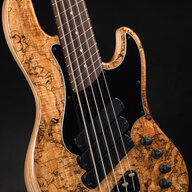
Wasn't someone looking for a faded burst blue Z3?
For Sale - Dingwall Z3 5-String Bass Faded Blue Jean Burst - Mint and Barely Played
For Sale - Dingwall Z3 5-String Bass Faded Blue Jean Burst - Mint and Barely Played
The reason I'd convert any stage bass to luminlay... This is a clip that someone posted from last night...this is about as bright as it got on stage. Note that I'm right behind our singer, you just can't see me in the darkness.
Yeah - not much front light on that one. That would make me want luminlay, and to practice extra.
BurningSkies
CRAZY BALDHEAD
- Feb 20, 2005
- 27,956
- 20,348
- Disclosures
- Endorsing artist: Dingwall Guitars
Yeah - not much front light on that one. That would make me want luminlay, and to practice extra.
The whole night was a cluster...and the lighting was better than the sound.

johnsonabq
Watch out where the huskies go...
The reason I'd convert any stage bass to luminlay... This is a clip that someone posted from last night...this is about as bright as it got on stage. Note that I'm right behind our singer, you just can't see me in the darkness.
Too bad. They're missing the whole point of stage lighting... To light up what's on stage and enhance the band's show. Not be the show. smhThe whole night was a cluster...and the lighting was better than the sound.
johnsonabq
Watch out where the huskies go...
This is going back to my band 30 years ago and we didn't have LED lights and the other cool stuff they have now, but the whole band is lit and the audience was suitably impressed.
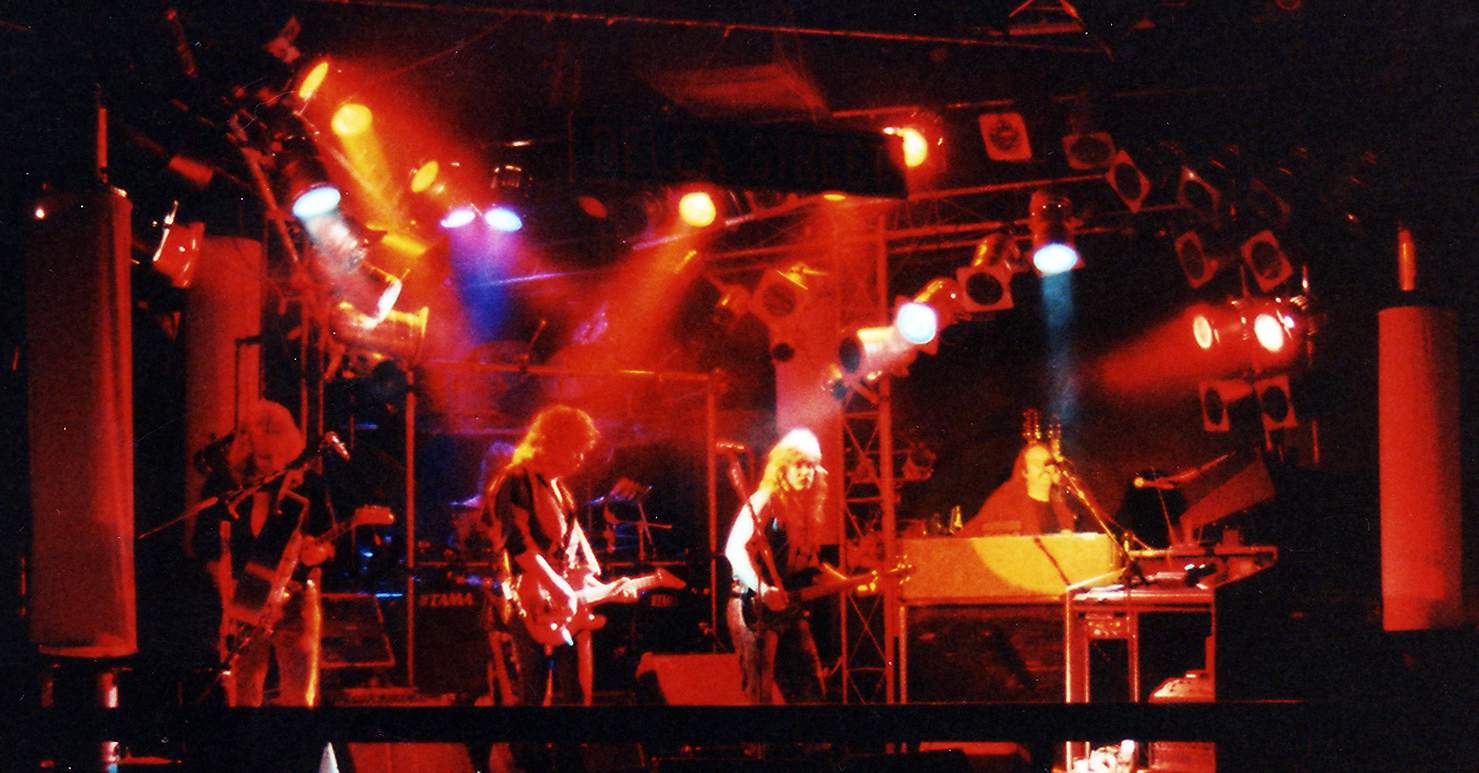
But I get @BurningSkies point. That's why my incoming AB1 has the full luminlay treatment. Side dots and speedo bars.
But I get @BurningSkies point. That's why my incoming AB1 has the full luminlay treatment. Side dots and speedo bars.

Probably felt like a rotisserie chicken.This is going back to my band 30 years ago and we didn't have LED lights and the other cool stuff they have now, but the whole band is lit and the audience was suitably impressed.
View attachment 3551952
But I get @BurningSkies point. That's why my incoming AB1 has the full luminlay treatment. Side dots and speedo bars.


