I might have got it wrong way around, but the P Tone is definitely split different than my FD3s and other pickups.On my P-Tone bass, the B and E are the same coil, opposite of my FDV equipped bass.
View attachment 5142273
View attachment 5142275

TalkBass has been independent since 1998. Add your voice.
Create a free account to reply to discussions, view embedded media, and browse with fewer display ads.
Join free Log in
Want zero display ads or expanded classifieds tools? Compare plans.
I might have got it wrong way around, but the P Tone is definitely split different than my FD3s and other pickups.On my P-Tone bass, the B and E are the same coil, opposite of my FDV equipped bass.
View attachment 5142273
View attachment 5142275

I might have got it wrong way around, but the P Tone is definitely split different than my FD3s and other pickups.

On my P-Tone bass, the B and E are the same coil, opposite of my FDV equipped bass.
View attachment 5142273
View attachment 5142275
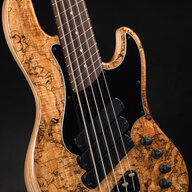
After playing both factory default and modified configurations of the D-Roc 4-position pickup switch, which one did you prefer?I previously did the wiring mod posted on July 6th and it sounded great but made the switching counterintuitive. (Position 1 was the neck solo, just didn’t seem right). So I went back to the stock wiring (which is series btw) and tried flipping the neck and middle pickups as you mentioned. Sounds equally great* and is much more intuitive (position 1 for bridge, then 2 for B+N, 3 for neck, and 4 all in). At first I was a bit concerned because the Dingwall site notes that the middle pickup magnetic field is opposite the bridge pickup so it’s dissimilar and I assume eliminates any phase cancellation. But to be honest I didn’t notice any before or after the change so all is good.
*the added benefit that I noted is now all four settings are much more balanced in volume levels. The original wiring left position four (all on) drastically louder than the other three settings.

Looking good! Dumb question but what does the Z give you over the AB that you feel you're lacking?My Dingwall AB in action at a winery in beautiful Northern California. Patiently waiting for my custom Z.
View attachment 5142756
I bought the AB second hand. I get to choose all the specs on the Z, including the woods,which I am very particular about. Also has design features I like, such as the sunken bridge piece which adds to the sustain and punch, and a slightly thinner neck.Looking good! Dumb question but what does the Z give you over the AB that you feel you're lacking?
BUT! That slightly thinner neck feels massively different!!!I bought the AB second hand. I get to choose all the specs on the Z, including the woods,which I am very particular about. Also has design features I like, such as the sunken bridge piece which adds to the sustain and punch, and a slightly thinner neck.
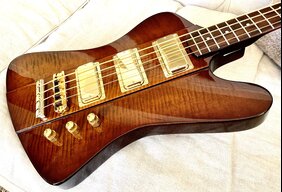
Kind of a mixed bag - of the three layout methods (stock, rewire, middle flip) each has its pros and cons.After playing both factory default and modified configurations of the D-Roc 4-position pickup switch, which one did you prefer?

Oh lordt, fanned frets, more than 4 strings, sticker on the bass, pedals, and wearing shorts on stage?! This man clearly does not subscribe to TalkBass standards. Burn him at the stake.My Dingwall AB in action at a winery in beautiful Northern California. Patiently waiting for my custom Z.
View attachment 5142756
I think your ideal switch would be a custom built. Like you, I don't think I'd use the solo bridge much but think the bridge+neck would be more useful for less edgy music than bridge+middle. The neck solo would have a bit rounder tone than mid solo but does it still have good focus and punch through? I'd think that Pos 4 with bridge/neck parallel in series with middle pickup would be really full and balanced.Kind of a mixed bag - of the three layout methods (stock, rewire, middle flip) each has its pros and cons.
Stock method pros and cons
Pro - very intuitive switching
Pro - mid pickup solo was a nice option
Con - personally not much use for a bridge solo sound
Con - no option to solo the neck pickup
Con - huge volume jump in position four (all on) even with pickup heights adjusted for output
Rewire method pros and cons
Pro - neck solo option
Pro - middle solo option
Con - counter intuitive switch layout (position 1 for neck solo)
Con - still a big jump in volume in position 4 (all on)
Middle/Neck pickup flip pros and cons
Pro - very intuitive switching
Pro - neck solo option
Pro - bridge+neck switch position is a good option to have
Pro - much more balanced volume output across all switching positions, no volume jump on four
Con - would rather have middle solo than bridge solo
I’m thinking the ideal four position switch layout for my playing would be…
Pos 1 - bridge + neck
Pos 2 - mid solo
Pos 3 - neck solo
Pos 4 - all on
I assume that would have to be a custom built switch.
Agree on the one piece bridge, seems like a nicer design. As for a Wenge neck/fretboard, that’s my favorite combo on any bass. So much so that I’m currently building myself a thunderbird bass with a bolt on wenge/Wenge neck…I think your ideal switch would be a custom built. Like you, I don't think I'd use the solo bridge much but think the bridge+neck would be more useful for less edgy music than bridge+middle. The neck solo would have a bit rounder tone than mid solo but does it still have good focus and punch through? I'd think that Pos 4 with bridge/neck parallel in series with middle pickup would be really full and balanced.
I'm waiting to hear back from Dingwall sales or John Fox Bass on the price and wait time for a D-Roc Custom 5 with wenge neck/FB, ellipse markers, and luminlay side dots in burgundy metallic mist. The standards have an attractive price but I'd much prefer the one piece bridge and at least a wenge FB.


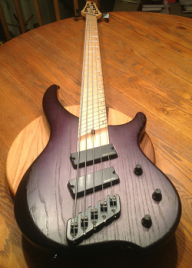
Kind of a mixed bag - of the three layout methods (stock, rewire, middle flip) each has its pros and cons.
Stock method pros and cons
Pro - very intuitive switching
Pro - mid pickup solo was a nice option
Con - personally not much use for a bridge solo sound
Con - no option to solo the neck pickup
Con - huge volume jump in position four (all on) even with pickup heights adjusted for output
Rewire method pros and cons
Pro - neck solo option
Pro - middle solo option
Con - counter intuitive switch layout (position 1 for neck solo)
Con - still a big jump in volume in position 4 (all on)
Middle/Neck pickup flip pros and cons
Pro - very intuitive switching
Pro - neck solo option
Pro - bridge+neck switch position is a good option to have
Pro - much more balanced volume output across all switching positions, no volume jump on four
Con - would rather have middle solo than bridge solo
I’m thinking the ideal four position switch layout for my playing would be…
Pos 1 - bridge + neck
Pos 2 - mid solo
Pos 3 - neck solo
Pos 4 - all on
I assume that would have to be a custom built switch.

Kind of a mixed bag - of the three layout methods (stock, rewire, middle flip) each has its pros and cons.
Stock method pros and cons
Pro - very intuitive switching
Pro - mid pickup solo was a nice option
Con - personally not much use for a bridge solo sound
Con - no option to solo the neck pickup
Con - huge volume jump in position four (all on) even with pickup heights adjusted for output
Rewire method pros and cons
Pro - neck solo option
Pro - middle solo option
Con - counter intuitive switch layout (position 1 for neck solo)
Con - still a big jump in volume in position 4 (all on)
Middle/Neck pickup flip pros and cons
Pro - very intuitive switching
Pro - neck solo option
Pro - bridge+neck switch position is a good option to have
Pro - much more balanced volume output across all switching positions, no volume jump on four
Con - would rather have middle solo than bridge solo
I’m thinking the ideal four position switch layout for my playing would be…
Pos 1 - bridge + neck
Pos 2 - mid solo
Pos 3 - neck solo
Pos 4 - all on
I assume that would have to be a custom built switch.
There is another option I considered - moving beyond the confines of the 4 or 6 position switch (which for similar limiting reasons I’ve never really liked on any of my strats) to a three stacked knob passive layout with each knob being a volume/tone stack. That gives infinite control options and doesn’t require any physical changes to the bass (outside of the current pots and selector switch). I designed and built that type of control circuit for the three pickup bass in my avatar and it works great. Each pickup can even have its own value tone cap and pot value to further maximize the tone shaping options. The only real down side is dialing in a tone change on the fly isn’t as quick as the four position switch.Yeah -- if you get your custom switch built, please post your impressions.
Your ideal four position switch layout intrigues me.
I’m kinda on the fence with the “all on” setting. I need to get more experience with it in the mix. It can be a pretty overpowering sound if not EQd carefully.After having had 5, I would like:
Neck, middle, bridge-middle series, bridge-neck series. I assume this is feasible?
IMO, and most here it appears, bridge solo'd is pointless. And I didn't care for all on.