• TalkBass has been independent since 1998. Add your voice.
    Create a free account to reply to discussions, view embedded media, and browse with fewer display ads.
    Join freeLog in
    Want zero display ads or expanded classifieds tools? Compare plans.

Do Stingrays have the infamous dead spot??

I said around 138 Hz. And I say that I will mostly lways be MAPLE + EADG tuned bass that WILL have dead notes WITHIN the playables ones on that combo. This is not false imho. But whatever. I don't really believe people who have a EADG 34" maple neck bass that doesn't have dead spot. Either they cannot 'feel' the dead spot, which is excusable, or they're just lying cause they pay 5 grand for their instrument. :')

Or they've simply learned to play each stringed instrument well.

I've always had instruments that didn't have exactly the same timbre or volume from note to note. It's what makes strings different from electronic keyboards. Even pianos have differences.
 
Do Stingrays have a dead spot at the 5/6 fret on the G string (or anywhere else for that matter?) like most Precision style basses?? Or does the smaller headstock move it elsewhere?? Or.....???

Thanks for any insight.

I'm 53. I have never owned a bass with the dreaded "dead spot". Never played one either.

So I have no clue what you are talking about.
 
TLDR, too many posts to read.

Every bolt on neck bass I’ve ever plucked a string on had some area of significant resonance loss on the neck, usually a higher frequency note like a C or D on the G string, and the same notes higher up the D string.

Neck thrus don’t seem to suffer from this as much, but there are still areas of reduced resonance.

A decent compressor with a small amount of gain dialed in will all but make it disappear unless you expect that note to ring out for a few measures.
 
image.jpg
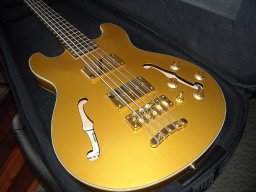
I currently own 3 Specials 5s ,1H fretted, 1HH fretted, and 1 H fretless and none of them have “dead spots” anywhere on any of them.
 
Last edited:
I bought a brand new in the box Neptune blue SR4 about five years ago- absolutely gorgeous bass. I wasn’t aware of the weak G syndrome but it’s real; I remember discovering it when I took it to a rehearsal and I couldn’t hear the notes on the G through my IEM’s- it was a huge issue. Once I found out it was a common thing it went back.
My Tony Franklin Fl had a slight dead spot in the usual location, but that bass absolutely sings with tons of sustain;
 
  • Like
Reactions: pingvuiini
Thing is, the Fender deadspot isn't a mystery. In fact, this deadspot is simply caused by a vibrational resonance in the neck/body assembly.

Well, it turns out if you make that neck/body assembly approximately the same length and the same shape out of the same material every time, that resonance is going to be present at approximately the same frequency and amplitude every time too. That's why it's so common on Fenders and other FSO's.
Not the neck/body but the neck/headstock. This acts like half of a suspension bridge, where the string tension, mass and inherent damping of the headstock, it's dimensions and the frequency of excitation all add up to producing a resonant subsection, ie the headstock, that at the noted frequencies produces some out of phase resonance that cancels some of the note being played.

The only 34" scale bass I've ever played that didn't have any deadspots at all was a Steinberger XL2. It had no headstock and the neck and body was all one piece of super strong composite....
It is certainly in part due to the inherent rigidity of the CF monocoque construction, but it's mainly down to having no resonant headstock. None of my Woodbergers have deadspots either.

Maple resonnates at 138 Hz approximately, what did you expect?
Nope. It's going to depend on the piece of wood, it's inherent rigidity, mass, damping etc.

All your basses with MAPLE suffer from dead spot. It's not dependant of the size of the headstock and such... Maple will always resonate at approximately the same frequency, between 130 & 140 Hz, and it's within the range of the playable notes on a EADG bass guitar.
All of my Woodbergers are maple NTs and none have deadspots. Nor do several conventional basses that have smaller lighter headstocks and tuners, especially those with angled headstocks. A smaller, lighter piece of material is easier to damp, whether through some external mechanism or through the inherent damping of the material it's constructed out of, than a larger heavier one is. Basic physics.

A cantilevered beam is a good first approximation to a bass guitar’s neck.
Thanks. That was the term I knew but couldn't recall. I knew it was half of a suspension bridge, but the term eluded me; but it's been a long time since I studied mech eng.
 
My experience differs markedly from yours and I've owned a huge number of basses. If maple always resonates at approx 138Hz, why do I have no deadspot there in the 7 I have here at the moment?

I know; physics doesn't care for your opinion, and it's correct. Perhaps you should learn some.
 
My experience differs markedly from yours and I've owned a huge number of basses. If maple always resonates at approx 138Hz, why do I have no deadspot there in the 7 I have here at the moment?

I know; physics doesn't care for your opinion, and it's correct. Perhaps you should learn some.

If that's the case, make a video recordings of you playing these basses with clear audio and video? Thanks
 
  • Like
Reactions: pingvuiini
Of course my jack cable starting dying in the middle of recording, but as I didn't have my headphones placed on my ears (for ease of recording and grabbing basses...), I didn't hear the grounding buzzz comming up. All my basses are well shielded, but recording on a laptop, if your jack cable is bad, laptops generally don't have great grounding.

Anyway, I know it's gonna bring some controversies, but I don't care, here is video of myself playing 4 basses:

- '92 EBMM Stingray (2-piece maple neck)
- '97 Squier Jazz Bass
- '12 Squier Precision Bass with add. humbucker pickup and '13 Squier neck
- '18 Fender Player Precision with '14 Squier neck (1-piece maple)

All of them have different strings with different aging state.
All of them are ringing all the notes correctly, expect the C#3.

If you can't hear the issue, be happy you can't. But don't say there's no deadspot. Cheers

 
Regarding materials and headstocks: the worst dead spot I have ever encountered was on a headless graphite necked bass.

Of course my jack cable starting dying in the middle of recording, but as I didn't have my headphones placed on my ears (for ease of recording and grabbing basses...), I didn't hear the grounding buzzz comming up. All my basses are well shielded, but recording on a laptop, if your jack cable is bad, laptops generally don't have great grounding.

Anyway, I know it's gonna bring some controversies, but I don't care, here is video of myself playing 4 basses:

- '92 EBMM Stingray (2-piece maple neck)
- '97 Squier Jazz Bass
- '12 Squier Precision Bass with add. humbucker pickup and '13 Squier neck
- '18 Fender Player Precision with '14 Squier neck (1-piece maple)

All of them have different strings with different aging state.
All of them are ringing all the notes correctly, expect the C#3.

If you can't hear the issue, be happy you can't. But don't say there's no deadspot. Cheers


Thanks for the video.

Interesting to hear different degrees of dead spot. #2 doesn't sound so bad, #1 & 3 sound the same, #4 is probably the worst of the four, but still not all that bad. I've had much worse.

I always post this vid of James Jamerson isolated bass as an example of the classic dead spot @ 0:31, 0:59 & 2:19:
 
Last edited:
Thanks for the video.

Interesting to hear different degrees of dead spot. #2 doesn't sound so bad, #1 & 3 sound the same, #4 is probably the worst of the four, but still not all that bad. I've had much worse.

I always post this vid of James Jamerson isolated bass as an example of the classic dead spot @ 0:31, 0:59 & 2:19:


You're welcome. Indeed 4th is the worst, most aged strings of the 4 basses.

And about your video:

Again, C#3 @ approx. 138 Hz. Yet people will disagree with me on the frequency.
 
Last edited:
  • Like
Reactions: pingvuiini
Of course my jack cable starting dying in the middle of recording, but as I didn't have my headphones placed on my ears (for ease of recording and grabbing basses...), I didn't hear the grounding buzzz comming up. All my basses are well shielded, but recording on a laptop, if your jack cable is bad, laptops generally don't have great grounding.

Anyway, I know it's gonna bring some controversies, but I don't care, here is video of myself playing 4 basses:

- '92 EBMM Stingray (2-piece maple neck)
- '97 Squier Jazz Bass
- '12 Squier Precision Bass with add. humbucker pickup and '13 Squier neck
- '18 Fender Player Precision with '14 Squier neck (1-piece maple)

All of them have different strings with different aging state.
All of them are ringing all the notes correctly, expect the C#3.

If you can't hear the issue, be happy you can't. But don't say there's no deadspot. Cheers


I think some people think a dead note is an obvious lack of sustain, but a lot of times, and as it sounds like on your videos, the fundamental dies quicker while the harmonic continues to ring.