4580Which model of Gauss just curious?

Enjoy the benefits of a premium membership!
Upgrade Account
-
TalkBass has been independent since 1998. Add your voice.
Create a free account to reply to discussions, view embedded media, and browse with fewer display ads.
Join free Log in
Want zero display ads or expanded classifieds tools? Compare plans.
You are using an out of date browser. It may not display this or other websites correctly.
You should upgrade or use an alternative browser.
You should upgrade or use an alternative browser.
Drivers - Rear vs Front Mount
- Thread starter 83_Silberpfeil
- Start date
More options
Who Replied?
Another interesting idea you have here. Though I would not feel confident w the 25 lb driver being clamped as shown on the amazon pic. Looks like that set up is to secure the grill.
I'll look into grinding edge of t nut
I'll look into grinding edge of t nut
I see, either grind off an edge of the T-nut, use a cut-off wheel with a dremel or use a clamp system like below.

Amazon.com: Penn-Elcom G0780KIT Large Speaker Grill Clamp Kit: Electronics
As an Amazon Associate, TalkBass may receive commissions from qualifying purchases made via links on this site.

Passinwind
I know nothing.
- Dec 3, 2003
- 23,042
- 45,890
- Disclosures
- Designer/Toaster Tech @ Passinwind Electronics
Another interesting idea you have here. Though I would not feel confident w the 25 lb driver being clamped as shown on the amazon pic. Looks like that set up is to secure the grill.
Nope, pro sound cabs have used that method for decades:
pic from Classic Kicks
Done right, it's totally bomber.

Doug Parent
Supporting Member
nononononono no. The aluminum blocks holding those drivers in are solid and shaped to hold down the frame of the driver. The wimpy thin pressed steel L-bracket thing shown above is ONLY intended to hold the grill down. Don't confuse the two. I've had those same cabinets in the 80's and the clamps are not the same.
Passinwind
I know nothing.
- Dec 3, 2003
- 23,042
- 45,890
- Disclosures
- Designer/Toaster Tech @ Passinwind Electronics
nononononono no. The aluminum blocks holding those drivers in are solid and shaped to hold down the frame of the driver. The wimpy thin pressed steel L-bracket thing shown above is ONLY intended to hold the grill down. Don't confuse the two. I've had those same cabinets in the 80's and the clamps are not the same.
The steel ones as pictured work just fine, in my experience.
Doug Parent
Supporting Member
The steel ones as pictured work just fine, in my experience.
I wouldn't use them but thats anyones choice.
Another interesting idea you have here. Though I would not feel confident w the 25 lb driver being clamped as shown on the amazon pic. Looks like that set up is to secure the grill.
I'll look into grinding edge of t nut
I have had several 11kg / 22 lb 15" speakers secured in this way. Absolutely no problem.

Eh if you don't think a steel clamp with a 1/4"-20 bolt could support 6.25 lbs each, make the hole a snug fit or use eight of them. They only need to hold the speaker to the sound board, not suspend it.
I wouldn't use them but thats anyones choice.
If given the choice I would prefer the machined clamps as well, to be honest I have used both and gave up early maybe looking for the machined ones. Feel free to continue the search and post a link!
Passinwind
I know nothing.
- Dec 3, 2003
- 23,042
- 45,890
- Disclosures
- Designer/Toaster Tech @ Passinwind Electronics
I wouldn't use them but thats anyones choice.
But of course. Link Removed Worked fine for me with a 31 pound 4883A driver for a number of years though, FWIW.
If given the choice I would prefer the machined clamps as well
Sure, me too.

I learned a technique several years ago that I will share. To avoid having the T nuts break out at the edge of the cut-out I cut the driver hole with my hand held jig saw set to cut at 5 to 10 degrees away from vertical and cut so the finished driver cut-out hole is smaller on the inside of the box (front load only) I start by marking the correct cut-out diameter on the front of the baffle board. Then after drilling a starter hole for the blade at about a 5 to 10 degree angle aiming towards the center of the cut-out. Now cut in one direction only all the way around with the end of the blade angled towards the center of the hole. This provides a finished hole that is the correct diameter at the front to facilitate mounting but with the hole slightly smaller at the back side of the baffle there is more wood for the T nuts to be held by and are less likely to break out or split the hole they are in. I must admit to learning this from BFM from his speaker box plans.
Edit: sorry for the troll post... Front load all the way for me.
Edit: sorry for the troll post... Front load all the way for me.
Last edited:
 .
.
I just put a 15" JBL D140F into 3/4" MDF using T-bolts. Had the same kind of issue where the bottom of the T-Nut projected into the cutout for the driver. Didn't need to grind them down as the speaker basket sloped away enough to be out of the way. MDF has zero holding power so I had to glue the T-Nuts in. There was enough slop in the T-Nuts so that even if they weren't perfectly perpendicular to the front of the baffle I had no problem getting all eight bolts to screw in.
If I were to give one bit of advice, it would be to find your center then mark your lines before you make your cut out. I also drilled a smaller hole for the screw than for the T-Nut. I think you want to drill the larger hole for the T-Nut first (from the back of the baffle), then, using the center of that hole, drill the rest of the way through for the screws with the smaller bit. Just be careful not to blow through the front of the baffle or it will look amateurish.
If I were to give one bit of advice, it would be to find your center then mark your lines before you make your cut out. I also drilled a smaller hole for the screw than for the T-Nut. I think you want to drill the larger hole for the T-Nut first (from the back of the baffle), then, using the center of that hole, drill the rest of the way through for the screws with the smaller bit. Just be careful not to blow through the front of the baffle or it will look amateurish.
Last edited:
The steel ones as pictured work just fine, in my experience.
I will admit that the ones I have used, while not machined to the edges of the speaker were somewhat heavier duty than the one pictured. Definitely would not flex when tightened by any normal means.
So did I, you use that technique when the speaker is rear mounted, so the hole is smaller on the outside of the baffle. As I recall he specified a 30 to 45 degree angle. That gives plenty of wood to hold the tnuts but the cone still won't hit the baffle. He's moved on from that, now he uses reinforcing blocks and screws, no tnuts at all, they strip out way too easy.To avoid having the T nuts break out at the edge of the cut-out I cut the driver hole with my hand held jig saw set to cut at 5 to 10 degrees away from vertical and cut so the finished driver cut-out hole is smaller on the inside of the box (front load only). I must admit to learning this from BFM from his speaker box plans.

- Feb 12, 2006
- 60,951
- 5
- 220,592
- Disclosures
- Development Engineer-Mesa Boogie, Development Engineer-Genzler (pedals), Product Support-Genz Benz
When using that style of clamp, the driver needs to fit the hole pretty close or it will slide around.

Another interesting idea you have here. Though I would not feel confident w the 25 lb driver being clamped as shown on the amazon pic. Looks like that set up is to secure the grill.
I'll look into grinding edge of t nut
Don't forget that with the clamping system you are not limited by the mounting holes in the driver chassis - if you think 4 will not be enough, add some more...
Very well --- I'm totally convinced. Now take a look at my fotos. There is not much space between inside edge of the bolt hole to the edge of the speaker hole (on the plywood). Enough?


That chassis looks like it is designed for rear-mounting - I bet there is a lot more width on the front, possibly with a foam isolation ring? I have an EV driver that has a similar chassis - rear-mount only with just enough room on the back for the nuts. On the front, the holes come through in the middle of the frame.

BurningSkies
CRAZY BALDHEAD
- Feb 20, 2005
- 27,956
- 20,348
- Disclosures
- Endorsing artist: Dingwall Guitars
Nope, pro sound cabs have used that method for decades:
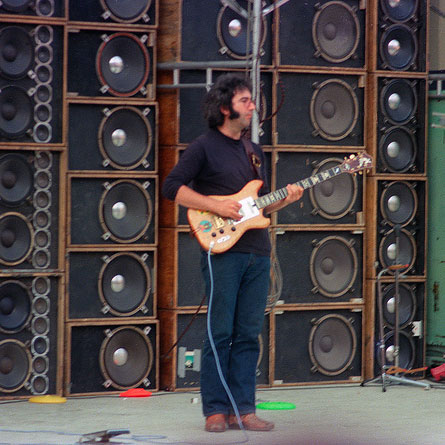
pic from Classic Kicks
Done right, it's totally bomber.
That hack? What would he know about speakers. Probably less than he knows about barbers.

I have an old Sunn Sorado that is rear mount. There must be 100 wood screws holding the back in place that have to be removed to access the speakers. Front mount them and use the T mount and machine screws as posted earlier. Don't go cheap like Hartke does and use wood screws as they will eventually strip out.


