I have no idea.How was the BBG5S mistaken for a Lakland?
(nice bass, by the way!)

Enjoy the benefits of a premium membership!
Upgrade Account
-
TalkBass has been independent since 1998. Add your voice.
Create a free account to reply to discussions, view embedded media, and browse with fewer display ads.
Join free Log in
Want zero display ads or expanded classifieds tools? Compare plans.
You are using an out of date browser. It may not display this or other websites correctly.
You should upgrade or use an alternative browser.
You should upgrade or use an alternative browser.
More options
Who Replied?

I tend to think that there is an assumption that an "entry level" bassist is young and small.
(unless you are a tall lanky kid)
And a short scale may be what they need to get started.
When you have grown up you tend to out grow your "entry level" bass.
They assume you are ready to graduate to a long scale.
hmmm.. so I guess kids should start out on shortscale pianos, shortscale clarinets, shortscale recorders, shortscale trumpets, shortscale violins.....and of course, shortscale drums.


hmmm.. so I guess kids should start out on shortscale pianos, shortscale clarinets, shortscale recorders, shortscale trumpets, shortscale violins.....and of course, shortscale drums.
Don't forget short-scale trombones.
When my son started playing trombone, the instrument was literally bigger than he was. Hasn't stopped him from mastering it, or from picking up a completely different instrument (bass guitar) a few years later.
I was playing bass for several years before buying my first short-scale bass - a '69 Gibson Les Paul Bass - and never really understood why some people viewed SS basses as "starter" instruments, unless one were teaching a *really* young child...
And a kart will outcorner a Miata, and an RC will outcorner a kart, ad infinitum. Different horses for different courses.You’re speaking my language but the hole in this statement is that a miata could beat a ferrari on a track with short straights. A miata will outcorner that ferrari all day!
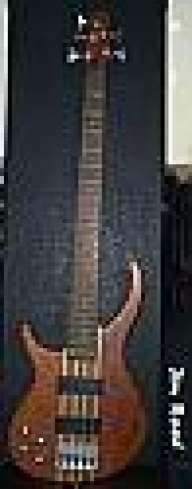
Yes, it's exquisitely made, but it was mostly made by hand, by several highly paid people who had their hands on it - a LOT. And it's that key word - people - that made it cost that much....
You're right there (same with the post about the expense of the people employed in the stores, although a good player doesn't necessarily make a good seller). A friend of mine endorses Warman pickups and I was repairing an OLP Sting 5 (see below). I have some Ernie Ball pups in my parts bin but I thought I'd give the Warman a go. It sounded excellent, no need to get a router and put the EB in but, initially, I was not happy with the wax potting and the tinning of the wires so I spent some time sorting that. I wrote to the importer - these inexpensive pups are great, why don't you do the simple stuff with the potting and tinning? He came back quickly; the design is good, the machinery puts it together well but, if they paid for a "me" to hand-finish the last bits, the price would double. And that doesn't mean $25 becomes $50 because the retailer, the tax people, everyone starts piling in for their slice. Took his point. From my point of view, a bit of my time saved a lot of money AND I could use the usual rout that 5-string MM copies have rather than hack the wood around for an EB to go in.
It's a bit unfortunate for people starting out, but in one way, I have no sympathy. When I'm busy, or I might ruin something with one mistake, I know a brilliant guy in the outskirts of Manchester. His labour might cost enough that I'd never get it back on resale but the bass is now exactly how I want it (and cheaper than, or non-existent off the shelf). A lot of people think a $200 bass should be made perfect for <$100 and I'm afraid that doesn't happen without putting a shift in yourself.
Actually, no Tom. The Sports Utility Bass (never physically tried one) is an entry-level from Ernie Ball. Officially Licensed Product goes back in time. After (quite long after) Fender had success with Squier and Gibson using Epiphone to brand instruments made with lower labour costs, Ernie Ball came up with OLP. Never did a lefty AFAIK but the passive right hand 5 string I bought for my son gave me good wood (snigger). Seymour Duncan's 3-band EQ doesn't squeeze in without a chisel (it doesn't on the Vintage copy, either) but EMG's BTC dropped in easily. Upgrade parts or used, working bits from pricier basses do come up with heavy reductions quite often. Nice hobby as long as you want a Ferrari engine, brakes and suspension in a Miata for your own pleasure and don't expect someone else to pay for your eccentric tastes.I believe that is the SUB Ray. I am planning to take a look at one as a matter of fact.

hmmm.. so I guess kids should start out on shortscale pianos, shortscale clarinets, shortscale recorders, shortscale trumpets, shortscale violins.....and of course, shortscale drums.
Here's a video of my new "entry level" bass.

My suggestion would be to buy your second bass as your first, buy it used, play multiple examples and select the one that speaks to you. I don't own any gear (except for a Prophet Rev2 keyboard) that I didn't buy used. Let someone else take the depriciation hit and there are soooo many great instruments out there that someone is trying to get rid of for whatever reason. Now is a great time to be a buyer.

Actually, no Tom. The Sports Utility Bass (never physically tried one) is an entry-level from Ernie Ball. Officially Licensed Product goes back in time. After (quite long after) Fender had success with Squier and Gibson using Epiphone to brand instruments made with lower labour costs, Ernie Ball came up with OLP. Never did a lefty AFAIK but the passive right hand 5 string I bought for my son gave me good wood (snigger). Seymour Duncan's 3-band EQ doesn't squeeze in without a chisel (it doesn't on the Vintage copy, either) but EMG's BTC dropped in easily. Upgrade parts or used, working bits from pricier basses do come up with heavy reductions quite often. Nice hobby as long as you want a Ferrari engine, brakes and suspension in a Miata for your own pleasure and don't expect someone else to pay for your eccentric tastes.
As a bit of an OLP and Stingray fan, I thought I'd add a bit here:
The SUB was originally (2003) an Ernie Ball MusicMan (EBMM) instrument, made in USA, made to a price. They were arguing that they could make a cheaper instrument without outsourcing and still of great quality. And boy, were they right!
The bodies used different wood, and often multiple pieces (less pretty), and covered in a simple very rough finish that required next to no work after application, saving tons of time/money. The necks again did not use the prettiest woods, saving costs there too, but the wood was still good of course, and were finished in a black coating... so no wood visible.
Electronics were identical to their other instruments: same preamp and pickups (although it seems the Stingray ones were wired in series initially before reverting to their usual parallel configuration). Hardware was not stamped "Music Man" (probably used some cheaper softer metal... but they are still good quality)... Oh and the bodies did not have contours, just a slab body, so another place to save time... and that's about it. A very limited range of colours, and only rosewood fingerboards. Excellent instruments.
In 2006 they were discontinued.
Fast forward, and a new company called Sterling by Music Man (SBMM) started making similar instruments, under licence, aiming at the mid range of the market. Their Stingray version was caller Ray34 / Ray35... etc. They eventually introduced a lower priced range and they unfortunately called it SUB... causing all sorts of confusion between the older SUBs and these. I guess because calling the new company Sterling, which is the name of a bass model made my EBMM, wasn't confusing enough

OLP... OLP was yet another company that reached an agreement with EBMM to produce lookalike instruments for the low end of the market. These were easily recognised as they did not bother to copy the designs exactly: pickguards for example had a slightly less round shape. The OLP MM2 was their Stingray 4 string model. They went through various incarnations, probably as they switched factories from time to time. Some were real dogs. However, many were pretty nice, and a few were fantastic instruments.
And I'll stop boring you now.


No.hmmm.. so I guess kids should start out on shortscale pianos, shortscale clarinets, shortscale recorders, shortscale trumpets, shortscale violins.....and of course, shortscale drums.
All those instruments have one size.
And don't require an arm stretched out to play.
Except for drums.
They can be moved closer to reach.
Def not bored, McNach, really interesting. Lucky I got a good OLP as it was sent over from CA with just a couple of photos. I remember the early 2000s SUBs (again, I never saw a lefty). They had really quirky horns didn't they? I dropped out a lot recently so I didn't know the full skinny on Sterling (Ernie's son - does he still run EB? dur, Google, sorry).
Funnily, there is a lefty Sterling for sale and the ad makes much of it being a proper EB. Good price, too. Tempting, along with a lefty 77P. I'm in Spain, trying to rationalize (i.e., painfully get rid of) my UK stuff and two desirable lefties at great prices come up. Typical.
Funnily, there is a lefty Sterling for sale and the ad makes much of it being a proper EB. Good price, too. Tempting, along with a lefty 77P. I'm in Spain, trying to rationalize (i.e., painfully get rid of) my UK stuff and two desirable lefties at great prices come up. Typical.
Ah no, I'm thinking of Bongo, not SUB. Apols.
oh yeah, those are very quirky indeed... some call them "toilet seat basses", but I think that's mean
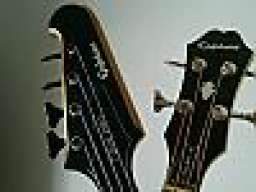
Its all subjective perspective! I have a birdsong short bass, this is birdsongs entry level bass. It just happens to be the highest quality build i have ever owned!
I find it interesting that you list what I would consider the "entry level" Warwick in your list of nonentry level equipment.Entry level to me is code for "cheap". I understand not many of us have a Warwick Corvette...

As a bit of an OLP and Stingray fan, I thought I'd add a bit here:
Fast forward, and a new company called Sterling by Music Man (SBMM) started making similar instruments, under licence, aiming at the mid range of the market. Their Stingray version was caller Ray34 / Ray35... etc. They eventually introduced a lower priced range and they unfortunately called it SUB... causing all sorts of confusion between the older SUBs and these. I guess because calling the new company Sterling, which is the name of a bass model made my EBMM, wasn't confusing enough
Good read and no kidding. EBMM SUB and SBMM SUB is confusing for a number of bassists, you can imagine the confusion in pricing it may cause at pawn stores or sellers.
I replied to an ad I saw on CL for a "SUB bass"...for the $160 price, I thought it was going to be an inexpensive made in Indonesia SBMM which I used to own previously and missed having. There was no picture in the CL ad, just the description. Seller was using it for Rocksmith and was done with it. Well....despite having number stickers on it and wear on the paint on the neck.. turns out it was the older MIA SUB model I was buying. There's definitely a noticeable difference in quality between the SUBs.

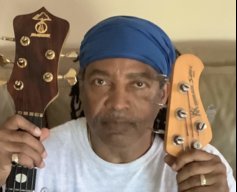
I guess I see things differently than most. I do not equate the terms “entry level” and “beginner”. An entry level bass is not necessarily a beginner bass. It is the entry level to the brand, not the instrument.
An entry level Alembic (Epic or Orion) is not a beginner bass. It is simply the lowest priced instrument in their portfolio. An SX short scale might be a better example of a beginner bass. Likewise, a Ken Smith Burner or a Sadowsky Metro might be entry level for those brands, but are definitely not beginner basses.
A Porsche Cayman is an entry level Porsche. Definitely not a car for a new driver to learn on. As long as we take the position of entry level = beginner, the idea of cheap, low quality will trail along to mis-categorize the perception of “entry level” instruments.
An entry level Alembic (Epic or Orion) is not a beginner bass. It is simply the lowest priced instrument in their portfolio. An SX short scale might be a better example of a beginner bass. Likewise, a Ken Smith Burner or a Sadowsky Metro might be entry level for those brands, but are definitely not beginner basses.
A Porsche Cayman is an entry level Porsche. Definitely not a car for a new driver to learn on. As long as we take the position of entry level = beginner, the idea of cheap, low quality will trail along to mis-categorize the perception of “entry level” instruments.
Good read and no kidding. EBMM SUB and SBMM SUB is confusing for a number of bassists, you can imagine the confusion in pricing it may cause at pawn stores or sellers.
I replied to an ad I saw on CL for a "SUB bass"...for the $160 price, I thought it was going to be an inexpensive made in Indonesia SBMM which I used to own previously and missed having. There was no picture in the CL ad, just the description. Seller was using it for Rocksmith and was done with it. Well....despite having number stickers on it and wear on the paint on the neck.. turns out it was the older MIA SUB model I was buying. There's definitely a noticeable difference in quality between the SUBs.
View attachment 2860417
amazing deal!!! $160 for a USA SUB!


I guess I see things differently than most. I do not equate the terms “entry level” and “beginner”. An entry level bass is not necessarily a beginner bass. It is the entry level to the brand, not the instrument.
An entry level Alembic (Epic or Orion) is not a beginner bass. It is simply the lowest priced instrument in their portfolio. An SX short scale might be a better example of a beginner bass. Likewise, a Ken Smith Burner or a Sadowsky Metro might be entry level for those brands, but are definitely not beginner basses.
A Porsche Cayman is an entry level Porsche. Definitely not a car for a new driver to learn on. As long as we take the position of entry level = beginner, the idea of cheap, low quality will trail along to mis-categorize the perception of “entry level” instruments.
You make a great point. Some brands are definitely seen as high end, and are not marketed to beginners. I’m pretty sure Alembic will never market a starter pack with a bass and a 10w amp.
 In my own mind, I would the least expensive of boutique bass as a “base level” instrument, but entry level is an accurate term too.
This was short clip of me and the last Affinity J5 I owned. To my ears, the tone was pure Jazz, and the playability was fine too.
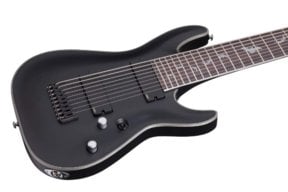
I guess I see things differently than most. I do not equate the terms “entry level” and “beginner”. An entry level bass is not necessarily a beginner bass. It is the entry level to the brand, not the instrument.
An entry level Alembic (Epic or Orion) is not a beginner bass. It is simply the lowest priced instrument in their portfolio. An SX short scale might be a better example of a beginner bass. Likewise, a Ken Smith Burner or a Sadowsky Metro might be entry level for those brands, but are definitely not beginner basses.
A Porsche Cayman is an entry level Porsche. Definitely not a car for a new driver to learn on. As long as we take the position of entry level = beginner, the idea of cheap, low quality will trail along to mis-categorize the perception of “entry level” instruments.
Those aren't really good analogies, as a car and a bass could not be more different. I've seen plenty of players choose a boutique bass or Ibanez Prestige as their very first bass, and they turned out fine. A bassist can start out on literally any bass, as they all function the same (and you can't crash it like you can to a car!)


