• TalkBass has been independent since 1998. Add your voice.
    Create a free account to reply to discussions, view embedded media, and browse with fewer display ads.
    Join freeLog in
    Want zero display ads or expanded classifieds tools? Compare plans.

Fender Rumble Club

I have wondered for some time why some folks don’t remove the large showroom/ marketing stickers from the top or front grille of their Rumbles.
Some of us are still proud of our new stuff even after it's no longer new!
I guess that big ol' top cover WOULD make a nice drink coaster!
I never took off the sticker from my Precision bass. That's just how I roll. I left the stickers on my Rickenbacker basses as well.

New Family photo:
Fender Rumble 500C with two Lakland 55-02's.

View attachment 7364830

Yay, mixer! Is that a recent pic with your 2-year-old-ish R500c with the top marketing card still on it? 😉
 
I have that logo on my Rumbles 15, 100, and 200. If you were to come up with any Fender logo about the same size and mail it to me, I would mail you the one off my Rumble 15 and put the one you get on my amp. I'm not concerned with it being the right one on that amp at all. Just one option if you can't find one that matches.
Just following up on this.

Since I had a R100 give up the ghost on me, I stripped it for parts, and now have a spare plastic logo for one of my Rumbles if one were to break.

I do appreciate the offer! Thanks!
 
Last edited:
Posting this photo reminded me...

I have been thinking about adding some damping material to the back side of my R100.

I would like to use a sheet of the same type of material Fender uses to line the backs of the R200, R500, etc.
Just a nice, thick sheet of polyester fiber lining, sturdy but "fluffy".
The material fender uses is about 1-1/2 inches thick

I can't find a source for the stuff ANYWHERE, at a decent price! :banghead:

I've tried the craft/fabric stores (Hobby Lobby, Michael's, etc.), speaker building suppliers (Parts Express) and various online fabric and upholstery sites, and I can't find just simple sheets/rolls of lightweight polyester fiber of the proper thickness.

I don't want stuffing, and I don't need damping/vibration suppression, and I'm not interested in heavy-duty sound absorption. And not recycled denim or carpet padding.
I Just want to use a sheet of the stuff Fender uses at the factory.

The ONLY sources I've found are eBay and Amazon, which both offer the exact same size and quantity of the material from multiple vendors,

"Speaker Absorbing Polyester Fiber 100x50x5CM Sound Absorber Acoustic Insulation Material"​

which every vendor is selling for $20.00!!!

Amazon.com: CCeCCe Speaker Absorbing Polyester Fiber 100x50x5CM Sound Absorber Acoustic Insulation Material Subwoofer Damping HiFi DIY Repair Audio Interior Replacement : Musical Instruments

It is nice and thick, looks like this:

View attachment 7364084

This is EXACTLY what I'm looking for, but I'm NOT paying that outrageous price for a sheet of fluffy padding!
It MUST be hard to find, or else folks wouldn't be buying from these guys...

So, anyway, does anyone know of a source for this material at a reasonable price?
Thanks!
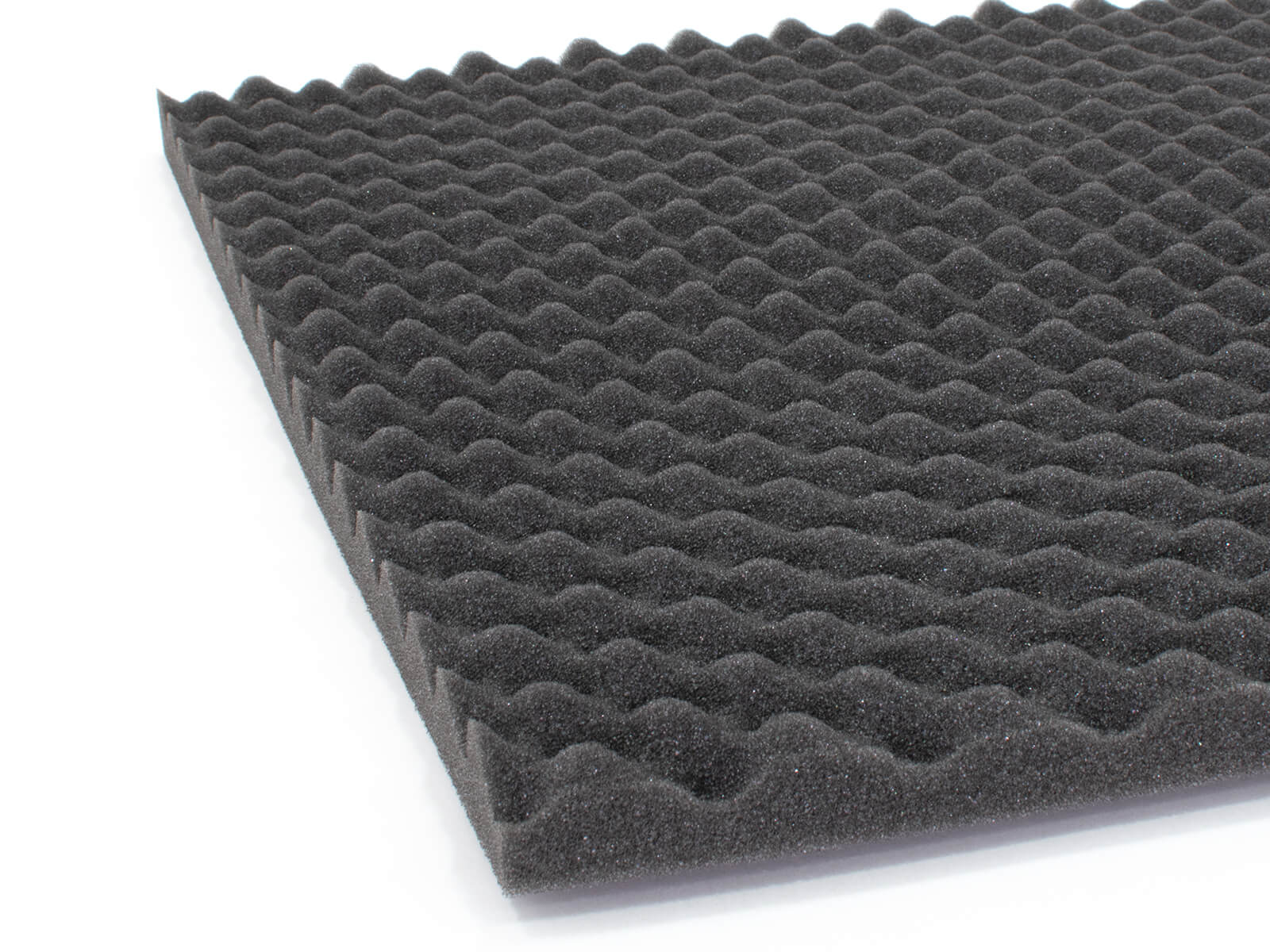
I used this stuff sold as sound dampening foam/material:

230030_a.jpg


It's an inch thick (2.5cm) and did not cost a fortune for a sheet of 1 x 0.5 meters sheet. (<10USD in my country)
There is an almost double thick version (4.5cm) for around 12 USD which I tought was overkill for the purpose.

Should be cheap as hell TBH, but cutting, managing inventory, storing, selling, packing and shipping them does add cost. :(
 
Last edited:
As an Amazon Associate, TalkBass may receive commissions from qualifying purchases made via links on this site.
I'm not an acoustic engineer, but I would think covering like 50% to 60% of each interior surface, alternating so that, as much as possible, no adjoining surfaces have the same treatment - alternating bare surfaces and damping material.

That should break up standing wave resonance, without choking the tone (which too much damping can do).

Next time I open my R100c, I'm going to try that - previous owner covered almost all interior surfaces.

Although, I don't think my modified unit sounds choked at all, but I won't know for sure if it will improve the tone unless I try it.
 
I'm not an acoustic engineer, but I would think covering like 50% to 60% of each interior surface, alternating so that, as much as possible, no adjoining surfaces have the same treatment - alternating bare surfaces and damping material.

That should break up standing wave resonance, without choking the tone (which too much damping can do).

Next time I open my R100c, I'm going to try that - previous owner covered almost all interior surfaces.

Although, I don't think my modified unit sounds choked at all, but I won't know for sure if it will improve the tone unless I try it.
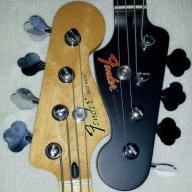
I also experimented with plug/unplug ports 0/1/2 last rehearsal, and it makes a noticable difference at that volume level (light pop/rock set gig volume, as an r100 is kinf of perfect for that application). Despite sealed is the "tightest" lowend, it drops the low-mid/bass volume significantly, aka: less rumble. Not that I couldn't get a good tone anyways with EQ, but You always learn something. :) Stock I liked both ports plugged more andp push master, with the Basslite so far 1 port plugged was the sweet spot to me with brand new Steve Harris flatwounds on a P bass.

 
Last edited:
I also experimented with plug/unplug ports 0/1/2 last rehearsal, and it makes a noticable difference at that volume level (light pop/rock set gig volume, as an r100 is kinf of perfect for that application). Despite sealed is the "tightest" lowend, it drops the low-mid/bass volume significantly, aka: less rumble. Not that I couldn't get a good tone anyways with EQ, but You always learn something. :) Stock I liked both ports plugged more andp push master, with the Basslite so far 1 port plugged was the sweet spot to me with brand new Steve Harris flatwounds on a P bass.
Interesting!
 
  • Like
Reactions: Miles_ONeal
Hi all. I just purchased my first Rumble bass amp. A Rumble 500. I needed something with a lot of punch for playing gigs. I haven’t received it yet but I am looking forward to it. I am hoping I really like the vintage setting. Can anyone tell me how the amp sounds on this setting? I wanted the Stage 800 but didn’t have quite enough cash for it after also buying a new Fender Player II P Bass. I am hoping it sounds good for R&B, jazz, gospel, Motown and of course Memphis Soul. Even though my avatar show Dee Dee Ramone I don’t really play punk except for my own enjoyment.
 
Hi all. I just purchased my first Rumble bass amp. A Rumble 500. I needed something with a lot of punch for playing gigs. I haven’t received it yet but I am looking forward to it. I am hoping I really like the vintage setting. Can anyone tell me how the amp sounds on this setting? I wanted the Stage 800 but didn’t have quite enough cash for it after also buying a new Fender Player II P Bass. I am hoping it sounds good for R&B, jazz, gospel, Motown and of course Memphis Soul. Even though my avatar show Dee Dee Ramone I don’t really play punk except for my own enjoyment.
This could give You a hint what EQ curves preset buttons set and what frequencies knobs control: rumble wiki
Also the https://www.talkbass.com/wiki/fender-rumble-500-frequencies/'s "tone pool" contains some user-posted settings as starting points:
Just not to get confused, this is how "we" rumblers reference knob positions: https://www.talkbass.com/wiki/clock-knob-reading/
 
Hi all. I just purchased my first Rumble bass amp. A Rumble 500. I needed something with a lot of punch for playing gigs. I haven’t received it yet but I am looking forward to it. I am hoping I really like the vintage setting. Can anyone tell me how the amp sounds on this setting? I wanted the Stage 800 but didn’t have quite enough cash for it after also buying a new Fender Player II P Bass. I am hoping it sounds good for R&B, jazz, gospel, Motown and of course Memphis Soul. Even though my avatar show Dee Dee Ramone I don’t really play punk except for my own enjoyment.

Hola, Soul-man! @Memphis Soul, you are now member #1881 in the Fender Rumble Club. Congratulations and welcome. Please put that number in your TalkBass Signature for safe keeping. Then make yourself at home here and on your Rumble Club Wiki page, the repository of all Rumbling wisdom and knowledge.

The Vintage voicing will tend to give you a great Motown sound, Memphy! A nice phat tone with punch. Enjoy!

How about telling us a bit more about yourself, such as your bass experience in general and your Rumble journey in particular? You'll fit right in here since we have all kinds. But we all love to ... ... ...

Rumble On!
 
  • Like
Reactions: SharpCat
Hi all. I just purchased my first Rumble bass amp. A Rumble 500. I needed something with a lot of punch for playing gigs. I haven’t received it yet but I am looking forward to it. I am hoping I really like the vintage setting. Can anyone tell me how the amp sounds on this setting? I wanted the Stage 800 but didn’t have quite enough cash for it after also buying a new Fender Player II P Bass. I am hoping it sounds good for R&B, jazz, gospel, Motown and of course Memphis Soul. Even though my avatar show Dee Dee Ramone I don’t really play punk except for my own enjoyment.
Welcome to the club, Mr Soul.
Once I was testing all sorts of tone combinations with my then new 500 head/210 cab. It really got stupid, combinations most people, not insane, would even consider using. HA HA, lot of fun. Reset the knobs and stop playing around.
Well in the days that followed I thought the amp sounded unusually good. I guess I did the human thing where you invent all sorts of unreasoned reasons why it sounded so good. Reasons like, 'I just needed to crank it up, blow the carbon out', so to speak.
Well, later I discovered that I hadn't disengaged the Vintage button from that crazy session. Sounded great. Not so much 'solo' but while playing along with recordings.
What it did was let me see how versatile this little amp is (I have since given the 500 to my brother and upgraded to the 800.) Sound-wise I think they are incredibly similar.
 
Hi all. I just purchased my first Rumble bass amp. A Rumble 500. I needed something with a lot of punch for playing gigs. I haven’t received it yet but I am looking forward to it. I am hoping I really like the vintage setting. Can anyone tell me how the amp sounds on this setting? I wanted the Stage 800 but didn’t have quite enough cash for it after also buying a new Fender Player II P Bass. I am hoping it sounds good for R&B, jazz, gospel, Motown and of course Memphis Soul. Even though my avatar show Dee Dee Ramone I don’t really play punk except for my own enjoyment.
The Vintage setting really kicks in the lows. The amp will be great for what you're doing. Old Motown in particular just begs for the Vintage setting. So do early Allman Brothers tunes, FWIW.
 
I'm not an acoustic engineer, but I would think covering like 50% to 60% of each interior surface, alternating so that, as much as possible, no adjoining surfaces have the same treatment - alternating bare surfaces and damping material.

That should break up standing wave resonance, without choking the tone (which too much damping can do).

Next time I open my R100c, I'm going to try that - previous owner covered almost all interior surfaces.

Although, I don't think my modified unit sounds choked at all, but I won't know for sure if it will improve the tone unless I try it.
Standing waves are notoriously difficult to control. Mid to high frequency standing waves are not a problem because the wavelengths are so short that they are easy to absorb or diffuse and even a tiny variation in sound source position (tweeter surface), atmospheric pressure (that can be changed by pressure mode propagation of low frequency sound waves), temperature or even wall vibration makes them constantly changing. Couple that with the fact that they're largely impossible to hear (because irregular ear surface will break them up) and they're irrelevant.

Low frequency standing waves are a different matter. They're not broken up by variations mentioned above, they travel as pressure modes in a room and they arrive with largely the same pressure at the ear, so there's no material for your brain to work out the proper sound, and it will arrive as boomy and overpowering at certain frequencies and positions (peaks) or thin and impossible to make out (nulls).

Absorbing a low frequency wave would require an absorber at least as thick as a quarter wavelength. Faster local speed of sound makes the requisite depth thinner, and some aerogels are a promising avenue of research, but foams are a wash — some have slower speed of sound, some have faster. And you have to consider the boundary layer since the greater the difference, the more sound will be reflected rather than absorbed.

Suffice to say that the second harmonic of low E string is 82 Hz, which is 4.18 meters long in air. Quarter wave is 1.05 m. Suppose there was a foam that had half the speed of sound in air, then quarter wave is 0.53 m. Still a lot for an absorber in a room.

Let alone in a cab... There's not a lot you can do. Best that is done is putting bracing inside the cabinet which breaks up some standing waves, and an alternative would be to use rubber wedges that would make inside surfaces non-parallel so that standing waves are limited to only certain lines, maybe planes, rather than entire volume between two parallel walls.
 
Standing waves are notoriously difficult to control. Mid to high frequency standing waves are not a problem because the wavelengths are so short that they are easy to absorb or diffuse and even a tiny variation in sound source position (tweeter surface), atmospheric pressure (that can be changed by pressure mode propagation of low frequency sound waves), temperature or even wall vibration makes them constantly changing. Couple that with the fact that they're largely impossible to hear (because irregular ear surface will break them up) and they're irrelevant.

Low frequency standing waves are a different matter. They're not broken up by variations mentioned above, they travel as pressure modes in a room and they arrive with largely the same pressure at the ear, so there's no material for your brain to work out the proper sound, and it will arrive as boomy and overpowering at certain frequencies and positions (peaks) or thin and impossible to make out (nulls).

Absorbing a low frequency wave would require an absorber at least as thick as a quarter wavelength. Faster local speed of sound makes the requisite depth thinner, and some aerogels are a promising avenue of research, but foams are a wash — some have slower speed of sound, some have faster. And you have to consider the boundary layer since the greater the difference, the more sound will be reflected rather than absorbed.

Suffice to say that the second harmonic of low E string is 82 Hz, which is 4.18 meters long in air. Quarter wave is 1.05 m. Suppose there was a foam that had half the speed of sound in air, then quarter wave is 0.53 m. Still a lot for an absorber in a room.

Let alone in a cab... There's not a lot you can do. Best that is done is putting bracing inside the cabinet which breaks up some standing waves, and an alternative would be to use rubber wedges that would make inside surfaces non-parallel so that standing waves are limited to only certain lines, maybe planes, rather than entire volume between two parallel walls.

Great explanation, @toughluck Thank you.

And, it gave me a nostalgic smile.

My intro to technology and engineering came in high school in the late 60s when I got my first ham radio license. All about frequencies and the resultant wavelength calculations. Fun memory. Thanks!
 
  • Like
Reactions: Miles_ONeal
Standing waves are notoriously difficult to control. Mid to high frequency standing waves are not a problem because the wavelengths are so short that they are easy to absorb or diffuse and even a tiny variation in sound source position (tweeter surface), atmospheric pressure (that can be changed by pressure mode propagation of low frequency sound waves), temperature or even wall vibration makes them constantly changing. Couple that with the fact that they're largely impossible to hear (because irregular ear surface will break them up) and they're irrelevant.

Low frequency standing waves are a different matter. They're not broken up by variations mentioned above, they travel as pressure modes in a room and they arrive with largely the same pressure at the ear, so there's no material for your brain to work out the proper sound, and it will arrive as boomy and overpowering at certain frequencies and positions (peaks) or thin and impossible to make out (nulls).

Absorbing a low frequency wave would require an absorber at least as thick as a quarter wavelength. Faster local speed of sound makes the requisite depth thinner, and some aerogels are a promising avenue of research, but foams are a wash — some have slower speed of sound, some have faster. And you have to consider the boundary layer since the greater the difference, the more sound will be reflected rather than absorbed.

Suffice to say that the second harmonic of low E string is 82 Hz, which is 4.18 meters long in air. Quarter wave is 1.05 m. Suppose there was a foam that had half the speed of sound in air, then quarter wave is 0.53 m. Still a lot for an absorber in a room.

Let alone in a cab... There's not a lot you can do. Best that is done is putting bracing inside the cabinet which breaks up some standing waves, and an alternative would be to use rubber wedges that would make inside surfaces non-parallel so that standing waves are limited to only certain lines, maybe planes, rather than entire volume between two parallel walls.
I think I should have just said "resonance" instead of "standing wave resonance".

As soon as I posted that comment, I felt like something was off.

There is a reason (most of the time) for using some acoustically dampening material and there is a reason (most of the time) for not using too much dampening material.

What I am suggesting is a "possible" way to find a happy medium for almost any speaker enclosure (of course, I could still be full of bovine pucks).

I was also looking at something like these Bass Traps Acoustic Foam Corner that are 12 pieces of 12"x3"x3" stair-stepped foam - which might be all you would need.
 
As an Amazon Associate, TalkBass may receive commissions from qualifying purchases made via links on this site.
  • Like
Reactions: Miles_ONeal
I think I should have just said "resonance" instead of "standing wave resonance".

As soon as I posted that comment, I felt like something was off.

There is a reason (most of the time) for using some acoustically dampening material and there is a reason (most of the time) for not using too much dampening material.

What I am suggesting is a "possible" way to find a happy medium for almost any speaker enclosure (of course, I could still be full of bovine pucks).

I was also looking at something like these Bass Traps Acoustic Foam Corner that are 12 pieces of 12"x3"x3" stair-stepped foam - which might be all you would need.
Stuffing can also make cabs "virtually" "act" bigger.

But for ported cabs (like rumbles) You should be careful not to overdo it, so it does not mess up port tuning.
Overstuffing a ported enclosure can impede airflow and alter the carefully calculated tuning frequency of the port, which can significantly reduce the intended bass output.
Can also reduce sound volume (more reflecions/absorbs inside until sound can finally come out), hence for the same amount of "rumble" the speaker/amp has to work harder. (converting a rumble to a sealed box does similar, as I mentioned in an earlier comment when testing plugging 0/1/2 ports here)

So for theese "low power" amps like rumble 100 and smaller, it actually makes sense to not line/stuff/seal them. (not just a cost saving move, as people tend to say)

Google AI summarizes it quite well:
Stuffing a speaker cabinet with acoustic damping material (like poly-fill, fiberglass, or acoustic foam) serves two primary purposes:
improving sound quality by controlling internal reflections and resonances, and in sealed enclosures, making the speaker behave as if it is in a larger box.


Primary Functions

  • Sound Absorption and Resonance Reduction: When a speaker cone moves, it produces sound waves in two directions: forward (which you hear) and backward into the enclosure. The backward-traveling waves bounce off the rigid interior walls, creating internal reflections and standing waves at specific frequencies. These can pass back through the speaker cone or out a port, interfering with the primary sound and causing a muddy, "boxy," or distorted sound. Stuffing absorbs this excess energy, preventing these unwanted resonances and resulting in cleaner, more natural sound reproduction.
  • "Virtual Volume" Increase (in Sealed Boxes): In sealed speaker cabinets, the air inside acts like a spring. Damping materials slow down the sound waves by converting their acoustic energy into a small amount of heat, making the air behave as though the enclosure volume is larger than it actually is. This "apparent" increase in volume can result in a lower resonant frequency and a tighter, deeper, and smoother bass response without requiring a physically larger box.

Key Considerations

  • Enclosure Type Matters:
    • Sealed Boxes: These typically benefit greatly from being loosely stuffed or fully filled to maximize the virtual volume effect and control resonances.
    • Ported (Bass-Reflex) Boxes: For these, the stuffing is usually only used to line the internal walls to prevent reflections from exiting the port, not to fill the entire volume. Overstuffing a ported enclosure can impede airflow and alter the carefully calculated tuning frequency of the port, which can significantly reduce the intended bass output.
  • Optimal Quantity: The amount of material used is crucial. Too little may not be effective at controlling reflections, while too much can over-damp the driver, reduce efficiency, and make the sound "dead," "dry," or overly constrained. Experimentation is often necessary to find the optimal balance for a specific speaker and cabinet design.
  • Material Selection: Materials like polyester fiberfill (polyfill), fiberglass, and acoustic foam are commonly used due to their sound-absorbing properties. The material should be fire-retardant and non-toxic.
In essence, stuffing a speaker cabinet is an acoustic engineering technique used to fine-tune the speaker's performance, resulting in a more balanced, clear, and higher-fidelity audio experience.
 
Last edited:
As an Amazon Associate, TalkBass may receive commissions from qualifying purchases made via links on this site.
  • Like
Reactions: John D Harris
NAD! R100

Long story short: I sold all my amps except my v1 R30. It’s a nice little amp, but I’ve been ramping up bass playing again so I was thinking about a v3R40 or something similar so I can get the line out feature.

Well, my local shop had this minty, tags-still-on “used” R100 priced at $250. Throw in a $50 gift card I had, I walked out with this bad boy for $200! Should be all the amp I’ll need for the foreseeable future, I’m a happy camper!
image.jpg