Here's a nice pro tip: bring a Fender for the audition but slowly sneak other basses in later. Say something like "Oh, I just dropped THOUSANDS of dollars on this new Fodera a week ago, it'd be a shame for me not to play it with you guys..."

Enjoy the benefits of a premium membership!
Upgrade Account
-
TalkBass has been independent since 1998. Add your voice.
Create a free account to reply to discussions, view embedded media, and browse with fewer display ads.
Join free Log in
Want zero display ads or expanded classifieds tools? Compare plans.
You are using an out of date browser. It may not display this or other websites correctly.
You should upgrade or use an alternative browser.
You should upgrade or use an alternative browser.
- Status
- Not open for further replies.
More options
Who Replied?
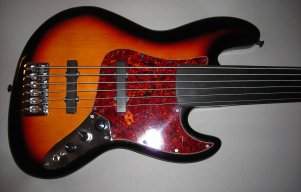
dunno dude, lost plenty of work because i don't have a 4-string fender.
people hear with their eyes.
That is crazy.
I have played my "weird" boutique-y basses on almost all of my gigs over the last bunch of years. My band may think I am a bit nutty, but oh well.
I DO own 4 string Fenders and still like playing them from time to time. If I am hired for a freelance gig and the bandleader asks me to play a Fender and isn't an ass about it, I will likely bring a Fender.
I can see a blues or country MD not wanting me to play a pointy BC Rich or double neck RIC, but to specify Fender only is kinda petty IMO.
Here's a nice pro tip: bring a Fender for the audition but slowly sneak other basses in later. Say something like "Oh, I just dropped THOUSANDS of dollars on this new Fodera a week ago, it'd be a shame for me not to play it with you guys..."
That is brilliant. Now all that I need is a more standard Fender and a Fodera!
ya know, it's really not a big issue with me as i pretty much opted out of the commercial music scene *years* ago.
in other words, i'm kind of a d*ick and i just don't give a f*ck at times ;-)
that being said, i'm doing a little alt-rock tour this summer and the guy who hired me doesn't seem to care. apparently he cares about how i'll play the music.
strange, no?
in other words, i'm kind of a d*ick and i just don't give a f*ck at times ;-)
that being said, i'm doing a little alt-rock tour this summer and the guy who hired me doesn't seem to care. apparently he cares about how i'll play the music.
strange, no?
that being said, i'm doing a little alt-rock tour this summer and the guy who hired me doesn't seem to care. apparently he cares about how i'll play the music.
strange, no?
What a novel concept!

Damian Coccio
Supporting Member
We actually took delivery of our first CNC machine in the summer of 2010 and our second last year in early 2012. The first is what people typically associate with a CNC machine in guitar manufacture -- one that is set up to do repetitive tasks like cutting the basic shape of body blanks and necks.
The second is the Plek machine which we have set up to do fret work and some leveling of FB's. Actually, the butterflies are NOT cut out by CNC -- at least not by us. We have the pieces of the butterflies cut for us y our shell supplier and then each needs to be hand-matched (mostly by my wife these days) so that they look like all four wings are from the same butterfly.
We have chosen to use our CNC's to replace some of the mundane, basic and repetitive tasks that very skilled luthiers like Vinny and Vadym used to have to take their time doing that added no value to the final instrument. Vinny has cut out the shape of a Monarch 4 many hundreds of times in his life and doing so again adds nothing to the final instrument when a machine can do the initial cuts.
Obviously we have a staggering amount of permutations for possible shapes. 33", 34", 35", 36" scales, 16.5mm, 17.5mm and 19.0mm bridge spacing, 4-string, 5-string and 6-string, three different neck constructions, 10+ regularly used models...so right there we're at well over 360 permutations -- without even contemplating the nearly limitless set of customizations we allow (at no additional charge) for neck shapes, body shapes and thicknesses, etc. This makes it completely impractical to program a CNC for anything other than 20 or so most frequently requested shapes. The past four Monarchs that I have purchased (34" scale, 4-strings with 24 frets) have all had various parts of their shaping done on the CNC.
However, and what we believe is key, is where you decide to STOP using the CNC and employ real, highly-skilled labor. We use the CNC for rough carving and then leave plenty of latitude (i.e. extra wood) for the gang to finish the shaping so that the result is a very much handmade instrument. By way of example, every neck blank starts out as a rectangle. You can use the CNC to turn that rectangular piece of wood into something that resembles the final shape of a neck while still allowing the last, most critical work to be completely done by hand. Or, as some companies choose to do, you can cut every neck exactly the same, limit yourself to 5-10 models and become an assembly line. Same tool, very different ethos and results.
So, even the Standards which are all the same shape (within each model) have an incredible amount of hand time in them. Yes, we can allow the CNC to do the rough shaping of them to tighter tolerances than on some custom instruments because there is no customization allowed, but every instrument is still very much finished completely by hand.
As a perfectionist AND a guy who owns and plays Foderas from every era, the quality of the work coming out of the shop today is both at the highest and most consistent level it has ever been and in addition to better management of process, some of this has very much to do with the skilled hands being able to lavish all of their time and attention on what really matters.
Thus far has the venture into using CNC's saved a lot of time and money? Not that much really. What it has done is reduced the wear and tear on people's bodies and minds by not having to continually do things that machines are better at. It has also freed up enough of Vinny and Vadym's time that they are now actively able to teach and develop the next generation of exceptional luthiers so that we can continue on the path of ensuring that our grandchildren will have access to Foderas of the same quality that we presently have.
I hope that this all makes good sense.
Kindest regards,
Jason
Thanks for the comprehensive answer as usual Jason. And yes it makes good sense; that's how I'd approach it if it were my business. Looking at side by side comparisons of my '08 to my 2013, they are very close, but to my eye the 2013 was made with tighter tolerances. So, whatever you guys are doing, it's a good thing, and adds value from my perspective.
@ Jason (Just Thumpin') -This is a fantastic explanation of why a certain degree of automation is a benefit to hand builders..And as a one time Fodera owner (way back in the 90's) I love hearing about these developments..I could never decide what model to get though to replace my initial purchase..Now after 15 years, I may be closer 
Janek's a neighbor here in LA, and I thought his latest bass was just fantastic...
Anyway, must stop by next NAMM and say hi to ya..
So many stunning instruments on these pages..
Janek's a neighbor here in LA, and I thought his latest bass was just fantastic...
Anyway, must stop by next NAMM and say hi to ya..
So many stunning instruments on these pages..

TimothyGroovy
Commercial User
- Aug 3, 2000
- 2,376
- 2,110
- Disclosures
- Owner: Uni•Sound Endorsing Artist: Sadowsky Guitars, Olinto Bass, LaBella Strings
Luckily, I don't face this here in Hong Kong as long as I show up studio/venue with my bass saying "Sadowsky" on it but basically any good J or P is fine for recording session.
TimothyGroovy
Commercial User
- Aug 3, 2000
- 2,376
- 2,110
- Disclosures
- Owner: Uni•Sound Endorsing Artist: Sadowsky Guitars, Olinto Bass, LaBella Strings
The whole studio "do you have a Fender" thing is VERY real and even today still VERY common. Some of it is fairly well grounded in established proven recording knowledge and not risking a recording or spending expensive recording time on the unknown, or an engineer's inability to extract as good of a tone from a non-Fender vs a Fender, and some of it is just plain old ignorance and die-hard narrow-mindedness. But regardless... it's a reality, and if you want to make the biz your profession, you have to have ALL the tools you'll be required to have... regardless of what tools you feel best about.
Can't agree more...you just have to get all the tools ready (bass, effectors even different amp / DI) ready for the jobs....you cant predict what kind of stuff that MD asked to play sometimes...
Thus far has the venture into using CNC's saved a lot of time and money? Not that much really. What it has done is reduced the wear and tear on people's bodies and minds by not having to continually do things that machines are better at. It has also freed up enough of Vinny and Vadym's time that they are now actively able to teach and develop the next generation of exceptional luthiers so that we can continue on the path of ensuring that our grandchildren will have access to Foderas of the same quality that we presently have.
I hope that this all makes good sense.
Kindest regards,
Jason
Obviously what is needed here is a good updated version of the John Henry folksong.... Vinny and Vadym vs the CNC!
sorry.

- Jan 7, 2008
- 2,196
- 224
- 39
- Disclosures
- Endorsing Artist: Olinto, La Bella, JuleAmps, Epifani
The whole studio "do you have a Fender" thing is VERY real and even today still VERY common. Some of it is fairly well grounded in established proven recording knowledge and not risking a recording or spending expensive recording time on the unknown, or an engineer's inability to extract as good of a tone from a non-Fender vs a Fender, and some of it is just plain old ignorance and die-hard narrow-mindedness. But regardless... it's a reality, and if you want to make the biz your profession, you have to have ALL the tools you'll be required to have... regardless of what tools you feel best about.
+1! In the studio situation, I think it DEFINITELY has to do with engineers (talented or not) just not caring to spend the time tweaking a bass they're not familiar with. IMO, there are enough Fender style instruments out there with their own "thing" going on, that it can't hurt to own at LEAST one to satisfy those paying the bills. I grab for my Fodera 99% of the time, but I still keep a vintage P and a couple Fender style basses chillin at home....all about those tools!

It is but it's reality. Music Business 101, the music business is just as much fashion as it is music and that includes the instruments we play. Every audition in NYC I have been asked "so do you play a Fender?" As bass players, I think we have the most BS stigmas no matter what genre we're in.
EXAMPLES
Do you play a Fender?
Electric bass is just a toy, play a real (upright) bass like a man
Why do you need more than 4-strings?
Playing fretless makes you a Jaco poser
Don't play a Fender, it makes you look like everyone else
Perhaps the music business is predominately about fashion? Hopefully, no one will ever request that the player have their bass hanging around their ankles...
i do live in l.a. . . .
i've known people to hire guys who have a p-bass and slap on oldies tunes rather than hire me with a fodera 6-string with flats who plays the parts.
i'm used to it by now.
You're probably better off.
The whole studio "do you have a Fender" thing is VERY real and even today still VERY common. Some of it is fairly well grounded in established proven recording knowledge and not risking a recording or spending expensive recording time on the unknown, or an engineer's inability to extract as good of a tone from a non-Fender vs a Fender, and some of it is just plain old ignorance and die-hard narrow-mindedness. But regardless... it's a reality, and if you want to make the biz your profession, you have to have ALL the tools you'll be required to have... regardless of what tools you feel best about.
I hear what your saying Vic, it's just that cookie-cutter mindset that gets to me.
Perhaps the music business is predominately about fashion?
hahahahaha.
ya think?
;-)
i won't even call it the music biz. it used to be the record biz, but now i think it's just another part of the entertainment combine (assuming it was ever any different).

IMHO "the" most important factor in Fodera's case for the purchase of a CNC.
Thus far has the venture into using CNC's saved a lot of time and money? Not that much really. What it has done is reduced the wear and tear on people's bodies and minds by not having to continually do things that machines are better at. It has also freed up enough of Vinny and Vadym's time that they are now actively able to teach and develop the next generation of exceptional luthiers so that we can continue on the path of ensuring that our grandchildren will have access to Foderas of the same quality that we presently have.
I hope that this all makes good sense.
Kindest regards,
Jason

I use to work in the top-hight-end watches Switzerland businnes, and the CNC point was also very commented by collectors.
In my point of view, not using CNC is like asking Vinny to cut the trees by himself, or asking to the watchmaker to go digg in the mine to look for steel.
Makes no sense...
In my point of view, not using CNC is like asking Vinny to cut the trees by himself, or asking to the watchmaker to go digg in the mine to look for steel.
Makes no sense...
IMHO "the" most important factor in Fodera's case for the purchase of a CNC.
- Aug 21, 2008
- 1,168
- 33
- Disclosures
- Endorsing Artist : Fodera Guitars , Harvest fine leather bags & straps
here's a little Bass-Solo on my Viceroy from last week - hope you like it
Bass was played through my Sadwosky preamp and a MXR M82 auto wah
Bass was played through my Sadwosky preamp and a MXR M82 auto wah
Very good !
Nice playing, good ideas and nice sounds !
and lot of female's fans in the audience !
Lucky you are !
Nice playing, good ideas and nice sounds !
and lot of female's fans in the audience !
Lucky you are !
here's a little Bass-Solo on my Viceroy from last week - hope you like it
Bass was played through my Sadwosky preamp and a MXR M82 auto wah
I use to work in the top-hight-end watches Switzerland businnes, and the CNC point was also very commented by collectors.
In my point of view, not using CNC is like asking Vinny to cut the trees by himself, or asking to the watchmaker to go digg in the mine to look for steel.
Makes no sense...
+1

- Jun 3, 2009
- 3,330
- 399
- Disclosures
- Bassgearu, Music Industry Consulting and Sales. Tech 21, NBE Corp, Sonosphere.
Thanks Vic for basically agreeing with my point and thank you Jason for the best explanation to the TB crowd of the use of a CNC in high end guitar production.
As for the studio thong most " sound engineers" today are really glorified interns. They normally only see Fendery basses and have no clue how to really work with basses or active instruments (not too many active guitars out there). I have rarely recorded with Fenders but always lug a Fender like instrument to calm them down. But show up to many sessions and yes they expect P or J. Never gonna change unfortunately.
Best is to record for the sound retards with Fender and play live what you want.
As for the studio thong most " sound engineers" today are really glorified interns. They normally only see Fendery basses and have no clue how to really work with basses or active instruments (not too many active guitars out there). I have rarely recorded with Fenders but always lug a Fender like instrument to calm them down. But show up to many sessions and yes they expect P or J. Never gonna change unfortunately.
Best is to record for the sound retards with Fender and play live what you want.
- Status
- Not open for further replies.


