• TalkBass has been independent since 1998. Add your voice.
    Create a free account to reply to discussions, view embedded media, and browse with fewer display ads.
    Join freeLog in
    Want zero display ads or expanded classifieds tools? Compare plans.

Get off my LAWN! "Grumpy Old Farts"

Status
Not open for further replies.
Sigh, wife works an hour late tonight, so unless they can get me on after 1900 or guarantee a 1700 take off, it's a no go. Only costs about one new amp for a half hour. Ken, we had tubes in the TACAN in TA-4J's and SH-3G's. Never broke in the whop whops, but the T birds broke whenever they did touch and go's. Luckily we only had two, oops (crash and burn) one of those. The rest of the A-4's were genuine solid state. A-4E's. I worked on that system in school, where they told us we would never see it in the fleet. Squadron disbanded in the early 90's after Mt. Pinatubo covered Cubi Pt. in ash and the base closed soon after. There is some youtube footage of post wake up Mt. Pinatubo taken from our H-3's. So there were tube systems in the fleet and in the air until then.

Last time I was around a running radial engine was also in the 80's PAF's Trojan squadron that I worked beside in Palawan and later Cebu. Their pilots had coconuts for their unmentionables.
 
For me it would be to ride in a Lancaster. My dad flew in them from their introduction in 1941 to the end of hostilities in 1945. He survived 17 major crashes one of which he was the only one who did! I guess I’m lucky too, having been born in January 1946!!

We do have a flying Lancaster near us. Couldn’t get a ride but my sister and I were allowed to sit inside. :)
 
Lucky indeed, Sir Paul, the lucky. My great grandfather fought in the very bloody battle of Pleasant Hill in the deep South. Go much deeper and you get into salt water. He wrote in his battalion book, in the back by the names of all who fell, this man was to my left and a few pagesw later this man was to my right. So I too am very luck... missed him by a couple of feet I guess. Cival war.

Since standard mil aviation cargo pallets, will mount in any direction, one may ask why they put the damned seats in backwards on a C-2. The answer is simple. They don't want you to know you are about to die. That's classified information until your next of kin is notified. Even if everyone on board has the clearance, they still fail the need to know test.

I was actually happy to have real seats. Almost always got the stinkin' paratrooper seats down the sides with a nice pallet just past my knees. Everyone was always drunk or hung over and wanted to sleep, so they would tip over on you. Another man's head on your shoulder was justification for a hard and heavy open palm on the side of their head. Maybe that's why I have neck problems.
 
one may ask why they put the damned seats in backwards on a C-2.
The other possibility is that a trap on a carrier is pretty much the equivalent of a controlled crash. The rear facing configuration works better for supporting passengers (i.e. not full time air crew and aviators) who may not be used to bracing for such situations. A cat shot is a touch smoother/less violent and predictable...with smoother/less violent being a relative term within the context of shipboard air operations. So while being pulled against the restraints during the shot may feel uncomfortable, IMO it's not quite as severe as the forces when you trap.

As a data point for consideration, we typically see aircraft life limits/inspections expressed in traps, and I'm not aware of the Navy routinely being concerned about long term air-frame life or fatigue issues associated with launches. And yes there have been some launch related situations in terms of potential structural failures, however, they were quickly addressed, and once corrected not the typical pacing metric for long term safe aircraft life limits.
 
  • Like
Reactions: BadExample
The other possibility is that a trap on a carrier is pretty much the equivalent of a controlled crash. The rear facing configuration works better for supporting passengers (i.e. not full time air crew and aviators) who may not be used to bracing for such situations. A cat shot is a touch smoother/less violent and predictable...with smoother/less violent being a relative term within the context of shipboard air operations. So while being pulled against the restraints during the shot may feel uncomfortable, IMO it's not quite as severe as the forces when you trap.

As a data point for consideration, we typically see aircraft life limits/inspections expressed in traps, and I'm not aware of the Navy routinely being concerned about long term air-frame life or fatigue issues associated with launches. And yes there have been some launch related situations in terms of potential structural failures, however, they were quickly addressed, and once corrected not the typical pacing metric for long term safe aircraft life limits.

We were the first to run both an A4 and an H3 to the end of the maintenance shedule. Took months for the nav to decide what to do. The whopwhop went to depot, never to be seen again and the A4 they told us to just start over. It was a good one until it sat for months awaiting indecision. We never got H3's back from depot. The real fleet got those and the recipient would send us their rattiest pos. In fact whenever we got two in good enough shape for SAR/nights/IFR they would take one away. We usually had 3 of our 4, one bay queen, one usually up and one almost always ready for SAR. Doppler was hell on those and the most common long term down SAR. Took months to get parts as opposed to the usual hours for parts. We were essencially mini depot for underway westpac H3's, AST's and ALQ167's.

A4's always came back from depot, looked good, smelled good, nightmare from bad rewiring. We made the things falling off aircraft report because they didn't know what a torque wrench was and had us come get it with a stripped out radar altimeter bolt. I hope it hit someone.
 
  • Like
Reactions: agedhorse
We were the first to run both an A4 and an H3 to the end of the maintenance shedule. Took months for the nav to decide what to do. The whopwhop went to depot, never to be seen again and the A4 they told us to just start over. It was a good one until it sat for months awaiting indecision. We never got H3's back from depot. The real fleet got those and the recipient would send us their rattiest pos. In fact whenever we got two in good enough shape for SAR/nights/IFR they would take one away. We usually had 3 of our 4, one bay queen, one usually up and one almost always ready for SAR. Doppler was hell on those and the most common long term down SAR. Took months to get parts as opposed to the usual hours for parts. We were essencially mini depot for underway westpac H3's, AST's and ALQ167's.

A4's always came back from depot, looked good, smelled good, nightmare from bad rewiring. We made the things falling off aircraft report because they didn't know what a torque wrench was and had us come get it with a stripped out radar altimeter bolt. I hope it hit someone.
I haven't heard anyone mention TFOA reporting in years, but I do recall it being a huge deal back in the 70's and 80's. Of course with Navy and Marine Corps aircraft it was usually inspection panels, drop tanks/pods, etc. Now the Air Force on the other hand has actually lost entire engines off their B-52's.
 
  • Like
Reactions: agedhorse
For me it would be to ride in a Lancaster. My dad flew in them from their introduction in 1941 to the end of hostilities in 1945. He survived 17 major crashes one of which he was the only one who did! I guess I’m lucky too, having been born in January 1946!!

We do have a flying Lancaster near us. Couldn’t get a ride but my sister and I were allowed to sit inside. :)

$3,500 will get you a 60 minute flight, in a Lancaster, out of the Warplane museum at Hamilton.

Invalid Link Removed


:)
 
I'm grumpy. I have a bunch of shingles that won't put them selves on my baby barn shed. I got 1/3 done yesterday, the parts I can reach. I feel sorry for anyone who tries to peel that roof off. I found PL glue for roofs and nails for my nailer were half price yesterday. That roof is not going anywhere from straight line winds. 6 angles and have to glue them down in the heat of the day or they l will lift. I'm also up to the first angle. 4 day weekend coming up, and I would not like to be roofing, so I'm pushing it as hard as I can. And I can't stand up on the roof at all or I get light headed and I'll fall off and end up back int he shop for repairs. Off I go now...
 
  • Like
Reactions: agedhorse
Sorry for a derail here, but I think there's bound to be someone in this thread that can answer a question I've been unable to.

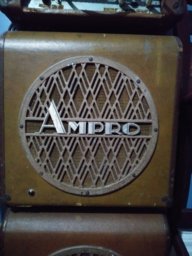
Is there anyone that can pin down a more narrow date on my Ampro tube amp than "maybe 50's or 60's" ?

I know for sure the speaker that was in the box it came out of was an original. It was a Jensen PM-12N (not P12-N, which makes me think it is older than 60's). The other two boxes were "P" not "PM" models. Anyway, the original tag on it has it as a "Powered Speaker for Compact or Stylist, model 690".

I get lots of date inquiries about it when people see it, but I really don't know much of anything about it. I do know that Ampro was A/V stuff, usually sold to schools and churches and the like, but that's about it. I've included a pic. It won't help much, since the amp is in a head box that I fashioned from a speaker box. It was originally mounted backwards in the (now) top speaker. Notice the jewel light cover in the bottom corner of it. Any suggestions, links, or foggy memories are greatly appreciated..
.
C__Data_Users_DefApps_AppData_INTERNETEXPLORER_Temp_Saved Images_amprosmall_zpse614999c.png
 
Sorry for a derail here, but I think there's bound to be someone in this thread that can answer a question I've been unable to.

Is there anyone that can pin down a more narrow date on my Ampro tube amp than "maybe 50's or 60's" ?

I know for sure the speaker that was in the box it came out of was an original. It was a Jensen PM-12N (not P12-N, which makes me think it is older than 60's). The other two boxes were "P" not "PM" models. Anyway, the original tag on it has it as a "Powered Speaker for Compact or Stylist, model 690".

I used similar speakers in the 60's, they could have been Ampro. Same suitcase type of configuration. They came with a high end record player. In later years, some were used by harp players. I've seen examples that date back to the 40's that were bundled with film projectors.

Look for a code on the speaker frame that starts with 220 (Jensen), it is followed by a single year digit and two digit week of the year code.

The "PM" was highlighted on the Jensen labels after the field coil type speakers. Sometimes variations in the model number were used when there was a contract for another label or another manufacturer built them. This could explain the PM-12N. Western Electric for example used Jensen speakers at one point in their cinema cabinets. These had a different designation for the model number. Another example is RSC in Canada - Radio Speakers of Canada. They were identical to Jensens Concert series except for the label. Both Fender and Ampeg (in 1963) used Concert series speakers. The Jensen model number for the Concert 15" speaker was EM1500, the RSC speaker's model number was EMC1500. The PM-12N designation for a P-12N that Ampro used could have been their model number.
 
Last edited:
  • Like
Reactions: 40Hz and basscooker
Thank you. So more likely 50's than 60's. With the number of these cabinets that I've seen around throughout the years before and since I've had mine, it's obvious they are anything BUT rare. I have only seen one other amp, though, and it did not have its box or speaker. A fellow TBer had the chassis and was going to do the 5e3(? Champ) build with it.
The Jensens are long gone. The one that was with the amp was rubbing horribly, and the other two were both rubbing and had deterioration and thick debris buildup on their surrounds. I sold them to a guy who wanted to try to recone them. (and recouped the price I paid for the amp one, too).

Anyway thanks again for helping out. Reverb or eBay didn't really even cross my mind as a resource to look for info about these, and that's where they came from, haha.

The one linked is definitely in better shape than any of mine were, but holy smokes I got mine for under $100. Even the one with a working tube amp!
 
Last edited:
  • Like
Reactions: beans-on-toast
Not having the speakers will make dating the cabinet difficult. Sometimes other hardware has a hidden date codes but I doubt that it applies in this case. Having the amp can help, there are often date codes on potentiometers transformers, capacitors, resistors, even original tubes.

From one site (Reel to Reel Tape Recorder Manufacturers - Ampro Corporation - Museum of Magnetic Sound Recording):

Ampro Corporation was founded by Axel Monson who was born in Sweden in 1883. He arrived in the U.S. in 1902 and was employed by International Harvester. In 1924 he began to study the motion picture industry and by 1929 had perfected a new 16mm. silent projector, known under the trade name AMPRO, a name coined from Axel Monson Products. The business grew to such proportions that it employed 700 people. In the early to late 1950's Ampro also produced a line of consumer reel tape recorders. At some point it was acquired by the General Precision Equipment Corporation (a name that may be seen on the 1954 ads). The General Precision Equipment Corporation was a major manufacturing company involved in the defense and space industries as well as educational products and control devices for consumer goods. General Precision, Inc. was the principal operating subsidiary of General Precision Equipment Corp. headquartered in Tarrytown, New York. In 1956 the Corporation also acquired the Graflix company and the Ampro film equipment production was moved to the Graflix plant in Rochester, NY. In 1968 the General Precision Equipment Co. was purchased by Singer. We could find no ads nor mention of Ampro tape recorders after 1957.

If you have the label under the handle and it says Chicago, this could mean that it is pre 1956. Although having production in Rochester would not necessarily mean that they changed the label. But they were bought by General Precision in 1954, your think that the label would have reflected that.
 
  • Like
Reactions: Al Kraft
It does indeed list it as being manufactured in Chicago, as well as the bell housings on the Jensens did. So, narrowing down even further to pre-1956 on the amp. Wow. This amp is working beautifully for being 60 + with no signs of being altered or serviced. (yeah, I know... Caps, grounded plug should be done). As far as the tubes, I'm definitely unsure of their age, but remember them being very dusty. A wipe with a dry chamois ended up removing all remaining print, but they are all GE. One 12ax7, two 6v6GT, and a 5y3gt. IDK much about tube life, but I'd imagine they couldn't be original. When I first got it, there was an intermittent connection to the speaker, so often while being played (before I got it) there was basically a toggling load between 0 and 16 ohms. I'm sure that couldn't have been good, but it soldiers on!
 
  • Like
Reactions: beans-on-toast
Based on the tube lineup, I can see why they were using the chassis to build a 5E3 deluxe.

The 6V6GT and 5Y3 go back to the 1930's, the 12AX7 dates back to around 1947. RCA 12AX7A data sheets seem to date from 1960. Although if the tube was replaced they might have used an "A". In the 1950's octal tubes were more popular, but tubes like the 12A?7 family became more popular in the late 1950's. Finding an Ampro schematic would help.

The tubes might be original. Tubes can last a long time, especially if it is a conservative design or if they are not being used.

I have a hammond organ that dates back to the 1930's. Except for the power cord, all original, including the tubes. The thing gets a lot of use. The Leslie cabinets don't do so well. The Mallory can caps are pushed hard and it doesn't take too many years (5-7 years) before a 60Hz hum sets in and they have to be changed.

If your amp isn't humming, the electrolytic caps could be fine. If the amp is not in regular use, it is important to operate the amp every 6-12 months to reform these caps.
 
Last edited:
Status
Not open for further replies.