

Enjoy the benefits of a premium membership!
Upgrade Account
-
TalkBass has been independent since 1998. Add your voice.
Create a free account to reply to discussions, view embedded media, and browse with fewer display ads.
Join free Log in
Want zero display ads or expanded classifieds tools? Compare plans.
You are using an out of date browser. It may not display this or other websites correctly.
You should upgrade or use an alternative browser.
You should upgrade or use an alternative browser.
Get off my LAWN! "Grumpy Old Farts"
- Thread starter B-string
- Start date
- Status
- Not open for further replies.
More options
Who Replied?

To quote Shakespeare at dinner time, rice or noodles, that is the question.
Invalid Link Removed
Are we talking rice noodles?
Spaetzel,mmmmmmmm

[Invalid or Expired Link Removed]Whoever invents a quantum leap in battery technology is going to be wealth beyond the dreams of avarice.
A Quantum Leap in Battery Design
Digital quantum batteries could exceed lithium-ion performance by orders of magnitude.
- by David Talbot
- December 21, 2009
The concept calls for billions of nanoscale capacitors and would rely on quantum effects–the weird phenomena that occur at atomic size scales–to boost energy storage. Conventional capacitors consist of one pair of macroscale conducting plates, or electrodes, separated by an insulating material. Applying a voltage creates an electric field in the insulating material, storing energy. But all such devices can only hold so much charge, beyond which arcing occurs between the electrodes, wasting the stored power.
If capacitors were instead built as nanoscale arrays–crucially, with electrodes spaced at about 10 nanometers (or 100 atoms) apart–quantum effects ought to suppress such arcing. For years researchers have recognized that nanoscale capacitors exhibit unusually large electric fields, suggesting that the tiny scale of the devices was responsible for preventing energy loss. But “people didn’t realize that a large electric field means a large energy density, and could be used for energy storage that would far surpass anything we have today,” says Alfred Hubler, the Illinois physicist and lead author of a Link Removed outlining the concept, to be published in the journal Invalid Link Removed.
Hubler claims the resulting power density (the speed at which energy can be stored or released) could be orders of magnitude greater, and the energy density (the amount of energy that can be stored) two to 10 times greater than possible with today’s best lithium-ion and other battery technologies.
What’s more, digital quantum batteries could be fabricated using existing lithographic chip-manufacturing technologies using cheap, nontoxic materials, such as iron and tungsten, atop a silicon substrate, he says. The resulting devices would, in principal, waste little or no energy as they absorbed and released electrons. Hubler says it may be possible to build a benchtop prototype in one year.
Today, however, digital quantum batteries are merely a patent-pending research concept. Hubler has applied for Defense Advanced Research Projects Agency funding to develop such a prototype, but the concept presents significant challenges. It’s not clear that the nanofabricated materials wouldn’t break down once loaded with energy, says Link Removed, a professor of electrical engineering at MIT.
av·a·rice
ˈavərəs/
noun
- extreme greed for wealth or material gain.
synonyms: greed, greediness, acquisitiveness, cupidity, covetousness, rapacity, materialism, mercenariness;
rarepleonexia;
informalmoney-grubbing, affluenza
"the job had become less about integrity and more about avarice"
[Invalid or Expired Link Removed]
A Quantum Leap in Battery Design
Digital quantum batteries could exceed lithium-ion performance by orders of magnitude.
A “digital quantum battery” concept proposed by a physicist at the University of Illinois at Urbana-Champaign could provide a dramatic boost in energy storage capacity–if it meets its theoretical potential once built.
- by David Talbot
- December 21, 2009
The concept calls for billions of nanoscale capacitors and would rely on quantum effects–the weird phenomena that occur at atomic size scales–to boost energy storage. Conventional capacitors consist of one pair of macroscale conducting plates, or electrodes, separated by an insulating material. Applying a voltage creates an electric field in the insulating material, storing energy. But all such devices can only hold so much charge, beyond which arcing occurs between the electrodes, wasting the stored power.
If capacitors were instead built as nanoscale arrays–crucially, with electrodes spaced at about 10 nanometers (or 100 atoms) apart–quantum effects ought to suppress such arcing. For years researchers have recognized that nanoscale capacitors exhibit unusually large electric fields, suggesting that the tiny scale of the devices was responsible for preventing energy loss. But “people didn’t realize that a large electric field means a large energy density, and could be used for energy storage that would far surpass anything we have today,” says Alfred Hubler, the Illinois physicist and lead author of a Link Removed outlining the concept, to be published in the journal Invalid Link Removed.
Hubler claims the resulting power density (the speed at which energy can be stored or released) could be orders of magnitude greater, and the energy density (the amount of energy that can be stored) two to 10 times greater than possible with today’s best lithium-ion and other battery technologies.
What’s more, digital quantum batteries could be fabricated using existing lithographic chip-manufacturing technologies using cheap, nontoxic materials, such as iron and tungsten, atop a silicon substrate, he says. The resulting devices would, in principal, waste little or no energy as they absorbed and released electrons. Hubler says it may be possible to build a benchtop prototype in one year.
Today, however, digital quantum batteries are merely a patent-pending research concept. Hubler has applied for Defense Advanced Research Projects Agency funding to develop such a prototype, but the concept presents significant challenges. It’s not clear that the nanofabricated materials wouldn’t break down once loaded with energy, says Link Removed, a professor of electrical engineering at MIT.
av·a·rice
ˈavərəs/
noun
- extreme greed for wealth or material gain.
synonyms: greed, greediness, acquisitiveness, cupidity, covetousness, rapacity, materialism, mercenariness;
rarepleonexia;
informalmoney-grubbing, affluenza
"the job had become less about integrity and more about avarice"
Promising technology isn’t it. The problem is getting enough current out of those nano capacitors.
Extending the life of the batteries in satellites alone would make a huge difference. Ni-cad and li-ion battery failure in these satallites is costly. This is the weak link in space.
Last edited:
Another form of renewable energy...

Whoever invents a quantum leap in battery technology is going to be wealth beyond the dreams of avarice.
WELL.............. I just bought Blu Ray copies of the complete Quantum Leap series. Scott Bakula is brilliant in this series.

Avarice?
No thanks, I’d rather ava noodles
Sadly it took three readings of your post to clue in!

As we are talking food here, hows that for a segue? There was I quietly minding my own business and peeling the potatoes for home made Chish and Fips when suddenly all the lights went out!
We are destined for a hot Canada Day week end so I guess, just like me, that folk switched their air on. It’s back on now but we used to have such a reliable system. Power cuts were very rare. <Sigh>. Since I retired the whole system is going to hell.
We are destined for a hot Canada Day week end so I guess, just like me, that folk switched their air on. It’s back on now but we used to have such a reliable system. Power cuts were very rare. <Sigh>. Since I retired the whole system is going to hell.
Last edited:

- Feb 12, 2006
- 61,047
- 5
- 221,002
- Disclosures
- Development Engineer-Mesa Boogie, Development Engineer-Genzler (pedals), Product Support-Genz Benz
I have generator back-up so that in the event of a major issue, at least we can get water from the well and run the more necessary stuff.
I’ve had my eye on one. Generac products are very popular. Generac Power Systems Inc.
Do you have issues with radon gas in your well water?
Do you have issues with radon gas in your well water?
Chish and Fips
Was or the fish cod or was it bought from the store?
- Feb 12, 2006
- 61,047
- 5
- 221,002
- Disclosures
- Development Engineer-Mesa Boogie, Development Engineer-Genzler (pedals), Product Support-Genz Benz
I’ve had my eye on one. Generac products are very popular. Generac Power Systems Inc.
Do you have issues with radon gas in your well water?
No radon here!
1. Cod I borrow you for five minutes?Was or the fish cod or was it bought from the store?
2. Yes I will dolphinitely have those reports with you by the end of the day.
3. Whale, to be honest, there's a decent chance I'm going to miss that meeting, can we reschedule?
4. We've a big opportunaty coming up to expand our output.

We don't talk about the f word in polite company....oh, no worries here, I see!
Music? As long as there's a melody and room for plenty of harmony, I'm good.
Music? As long as there's a melody and room for plenty of harmony, I'm good.

Al Kraft
Supporting Member
- May 2, 2016
- 10,776
- 40,459
- Disclosures
- Mesa Boogie beta product tester and player support
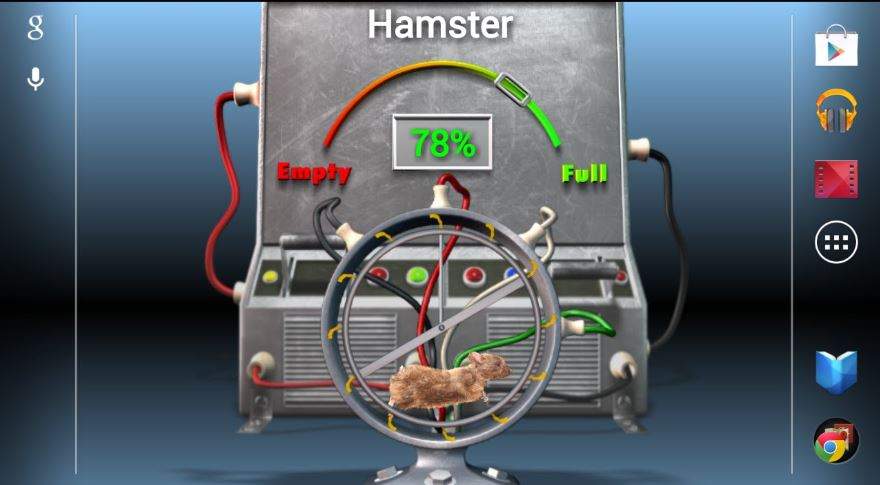
...although not so much from the hamster's perspective.
What kind of bass do you play? Music style? Oh by the way welcome!We don't talk about the f word in polite company....oh, no worries here, I see!
Music? As long as there's a melody and room for plenty of harmony, I'm good.
Most of us don't feel the need to be profane in the GOF's. But we do fart.

Not quite like the campfire scene in "Blazing Saddles", though.What kind of bass do you play? Music style? Oh by the way welcome!
Most of us don't feel the need to be profane in the GOF's. But we do fart.

Not quite like the campfire scene in "Blazing Saddles", though.


The first Nissan Leaf had a range of 75 miles. The 2019 will have a range of 225Whoever invents a quantum leap in battery technology is going to be wealth beyond the dreams of avarice.
 .
.- Status
- Not open for further replies.


