- Oct 22, 2015
- 21,164
- 256,801
- Disclosures
- I am an affiliate for Ari Cap.
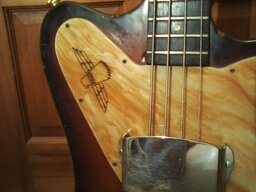
Coming in for a pickup. An amazing bit of stealth aeronautical design.
Invalid Link Removed
View attachment 3429349
from the linked article: "Storks as models for big jets"

TalkBass has been independent since 1998. Add your voice.
Create a free account to reply to discussions, view embedded media, and browse with fewer display ads.
Join free Log in
Want zero display ads or expanded classifieds tools? Compare plans.
Coming in for a pickup. An amazing bit of stealth aeronautical design.
Invalid Link Removed
View attachment 3429349

Very well done on the meds.
An engineering example of adopting biological queues is computer vision. Camera images are used in assembly line inspection, identifying people and reading license plates, tracking objects in space, the air, camera autofocus, reconstructing 3D images from thin depth of field 2D slices, even cell identification and tracking in medical diagnostic testing.
Understanding how we see and how our brains process visual information can help with developing computer algorithms to solve these problems.

I haven't been taking many pics since my daughter grew up(POS phone shots notwithstanding), but my go-to lens for my Minolta[RIP]was a 28-200mm. One lens for everything.Thankee sai re: fewer prescriptions.
Autofocus. Nikon is of course the Fender for photojournalists back when cameras are all analog. Good lenses, not great lenses, but very good lenses. Very serviceable. There's no "zing" in your eye like with a Leitz lens but it's the same feeling when you've got the focus dialed in perfectly. And there's the light to consider, all these things .... sure a computer can do it better but the very thing that makes a photograph human is gone.
And this from one who hauled a pair of cameras (one 35mm lens, one 90 mm lens covers everything) and now relies on all sorts of engineering that fits in my back pocket better than a Trace Elliot Elf. So I use it, but gonna say just like the computer chess champion, I'd rather have some imperfection that is mine.
Photo by Henri Cartier-Bresson

I haven't been taking many pics since my daughter grew up(POS phone shots notwithstanding), but my go-to lens for my Minolta[RIP]was a 28-200mm. One lens for everything.
Thankee sai re: fewer prescriptions.
Autofocus. Nikon is of course the Fender for photojournalists back when cameras are all analog. Good lenses, not great lenses, but very good lenses. Very serviceable. There's no "zing" in your eye like with a Leitz lens but it's the same feeling when you've got the focus dialed in perfectly. And there's the light to consider, all these things .... sure a computer can do it better but the very thing that makes a photograph human is gone.
And this from one who hauled a pair of cameras (one 35mm lens, one 90 mm lens covers everything) and now relies on all sorts of engineering that fits in my back pocket better than a Trace Elliot Elf. So I use it, but gonna say just like the computer chess champion, I'd rather have some imperfection that is mine.
Photo by Henri Cartier-Bresson
Yeah, it wasn't light, but being able to not hafta carry others made up for it., My understanding is that I could get a digital SLR body to use it on but it's a low priority-for now.That lens must have weighed as much as the camera. I have an 80-200 Nikor that I used with my Nikon F3. Another heavy setup.

When studying problems in engineering, it pays to look to nature for cues. What evolution has accomplished in biological systems is staggering. We've only scratched the surface in trying to understand them. It's truly humbling.
For sure. My old fisheries research gig was a real eye opener that way. In one project we were looking at fish ears and how well adapted they were to predator cues. The ear spacing in American shad parses to the wavelength of dolphin echolocation clicks, for instance. Proposition: people with beachball heads are all about the bass.

That lens must have weighed as much as the camera. I have an 80-200 Nikor that I used with my Nikon F3. Another heavy setup.
There's a lady who took her masters in atomic chemistry (think that's right?) at the Sorbonne some pretty sophisticated stuff that I never made any attempt to understand. She does (did? it's been a few decades since we crossed paths) work with the molecular structures of glass. When I say Leitz and Zeiss she says woah, American lens manufacture is far beyond that. She's talking, um, not consumer grade lenses ....
Miles Davis was in on that, who but a Company Man would dress that way? Not for nothing that one of his biggest hits was Someday My Prints Will Come. You still have that decoder ring, eh?

Saw a pharmacy a couple years back in Weed, California that still had a sign up for film to prints in an hour.

Weed will sometimes do that time warp thing to you, or so I'm told.

M

Um, er (clears throat.........)Yeah the Nikon F3 was THE camera to own.
 L-Series zoom lenses, although I keep thinking about getting a few TS-E lenses ($$$$$$$$$$).