
Enjoy the benefits of a premium membership!
Upgrade Account
-
TalkBass has been independent since 1998. Add your voice.
Create a free account to reply to discussions, view embedded media, and browse with fewer display ads.
Join free Log in
Want zero display ads or expanded classifieds tools? Compare plans.
You are using an out of date browser. It may not display this or other websites correctly.
You should upgrade or use an alternative browser.
You should upgrade or use an alternative browser.
Harrison inspired 4001 ric build
- Thread starter Verner
- Start date
More options
Who Replied?
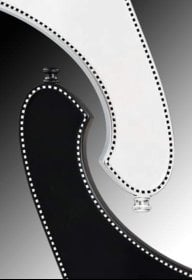
I have a doweling jig, but it’s easy enough to make a simple one out of scrap if you have a dill press. Just an “L” shaped piece of 2x wood with a hole drilled on one side of the “L”, to fall 1/2 through your body thickness. Slide it along the bottom edge of the body and neck beam, and drill at carefully marked points, Bobs you Uncle. Register to the bottom of neck beam and body wings, cause the neck beam changes thickness. You could just use finish nails, but the dowels strengthens the whole joint, particularly either side of the neck pup route, where most of the neck thickness is hogged out for the pup. I did use finish brads drilled down through the fret slots to register the fingerboard during glueup, worked really well. I didn’t do that on the HF1, tried to use some aluminum rod as pins, but it was fussy and didn’t work any better than a couple of tiny nails clipped off.

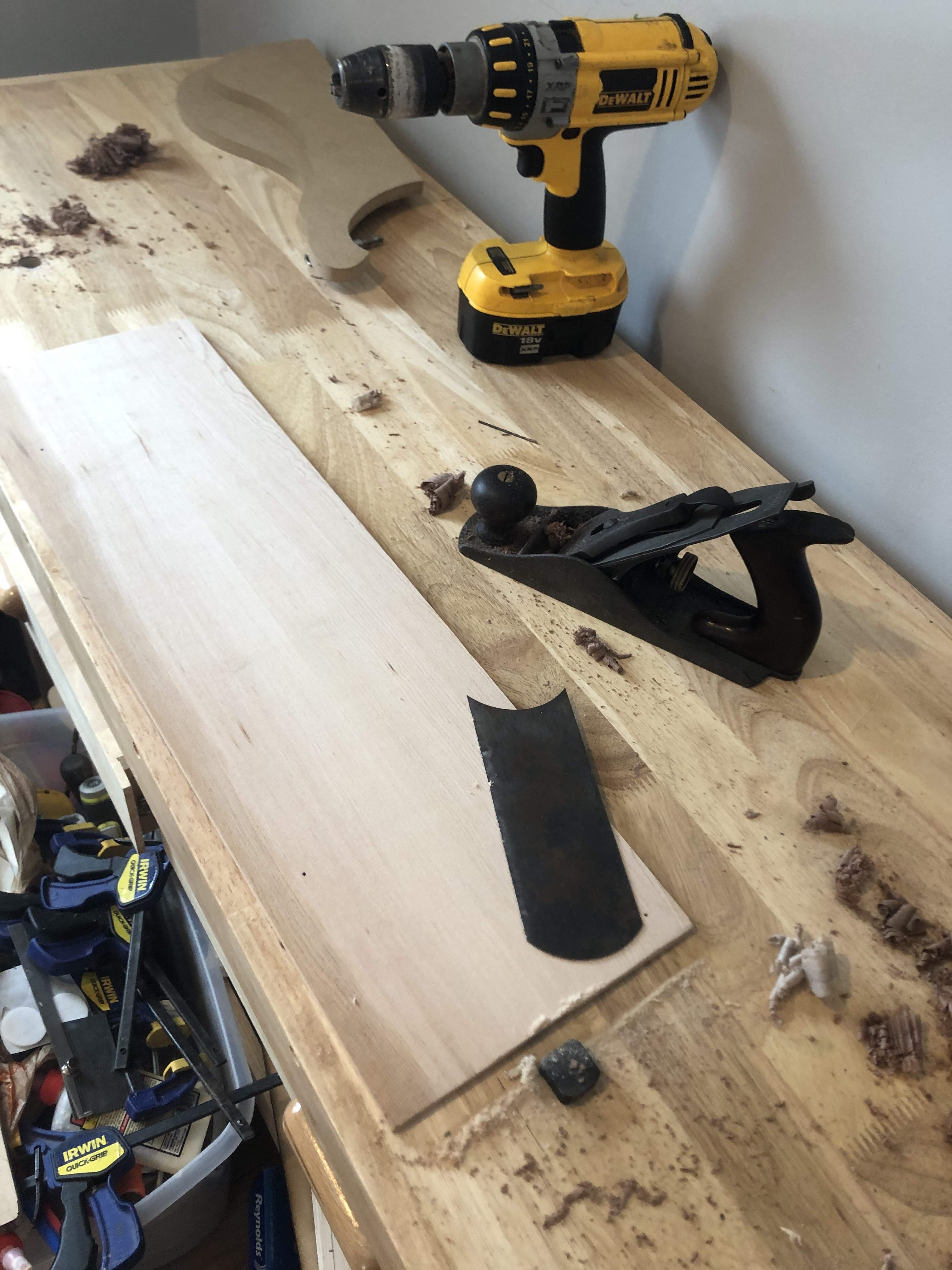
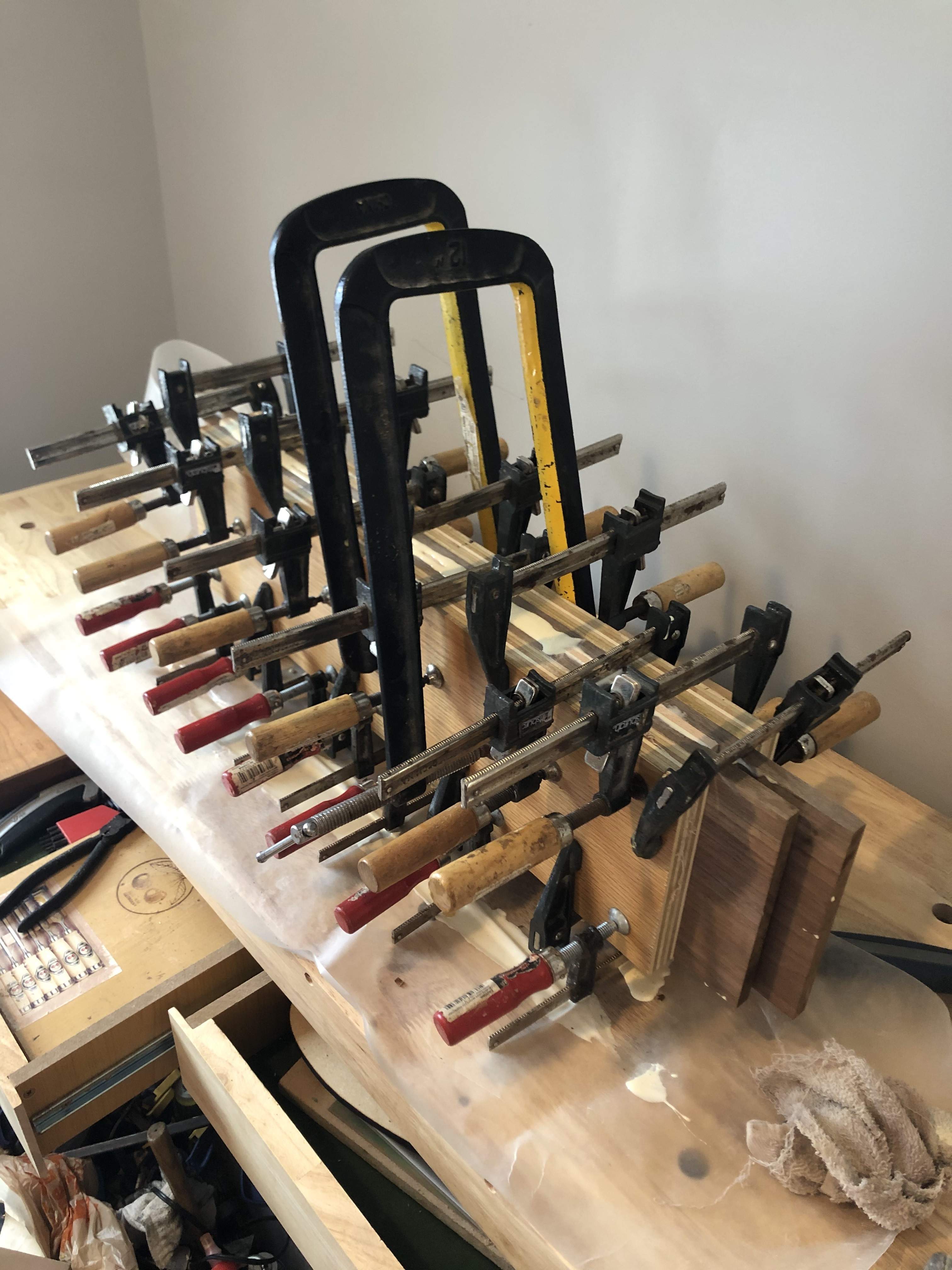
Now that the dimensioning is done, I am a lot more free to fit tasks in my little 10 minute windows. It is exciting to see all my final blanks shape up, because now I can cut away everything that isn't a bass. Probably my favorite part, seeing everything start to take shape. I neglected to show this before, but I drilled a few locator pin holes in the laminate wood so it wouldn't slip around, using finish nails. I used my #4 to take down any high spots the drum sander left, and a scraper to clean the surface up. Second wing is glued up.
And here is one of the challenges of working with three small children running around. They seem to have kidnapped my headstock template. Good thing I caught that before I needed it! Now, I feel I must protect my turf and retaliate, so I am thinking I may have to pull off one of their doll's heads and leave it in my vise....
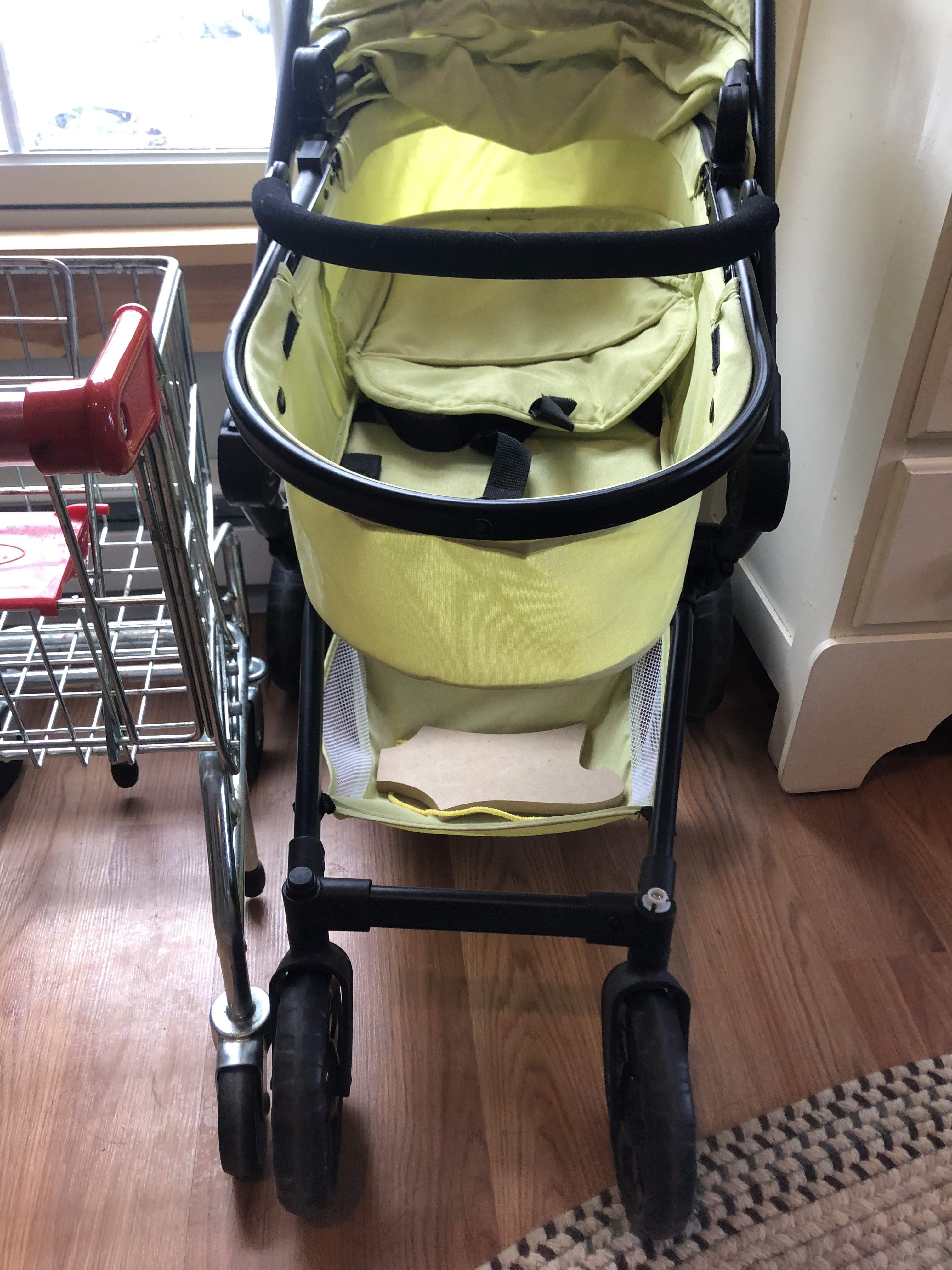
And here is one of the challenges of working with three small children running around. They seem to have kidnapped my headstock template. Good thing I caught that before I needed it! Now, I feel I must protect my turf and retaliate, so I am thinking I may have to pull off one of their doll's heads and leave it in my vise....
I did use finish brads drilled down through the fret slots to register the fingerboard during glueup, worked really well.
What I do for fretboard indexing is drill holes in the fret slots with tiny bits in a pin vice, then I just wax the actual drill bits and use them as alignment pins. The wax allows them to be removed easily afterwards and you don't have to leave any metal embedded in the instrument.
@dwizum that is a clever solution, I believe I will pinch it for this build.
Wing blanks completed, stay tuned for grain orientation selection!
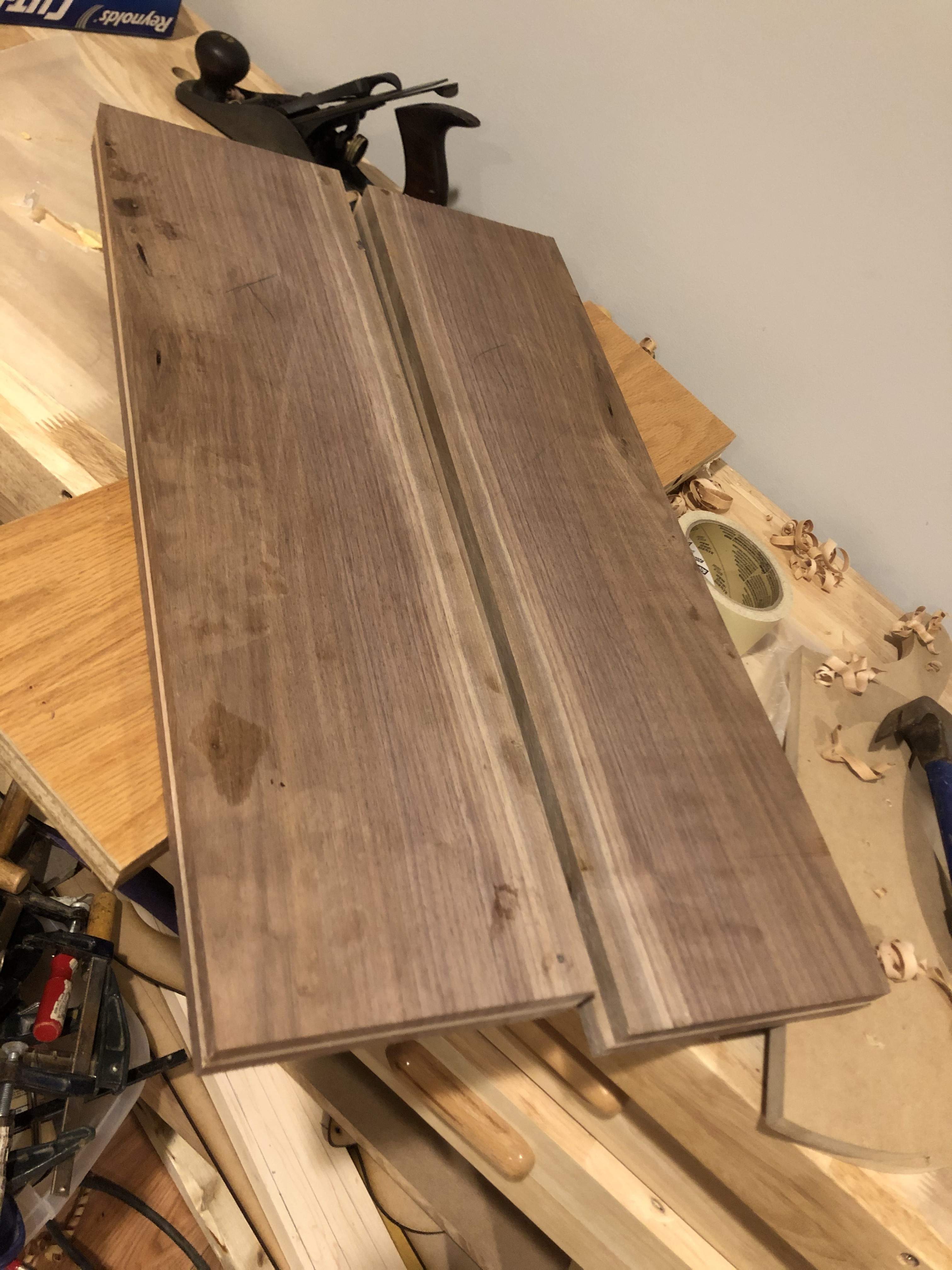
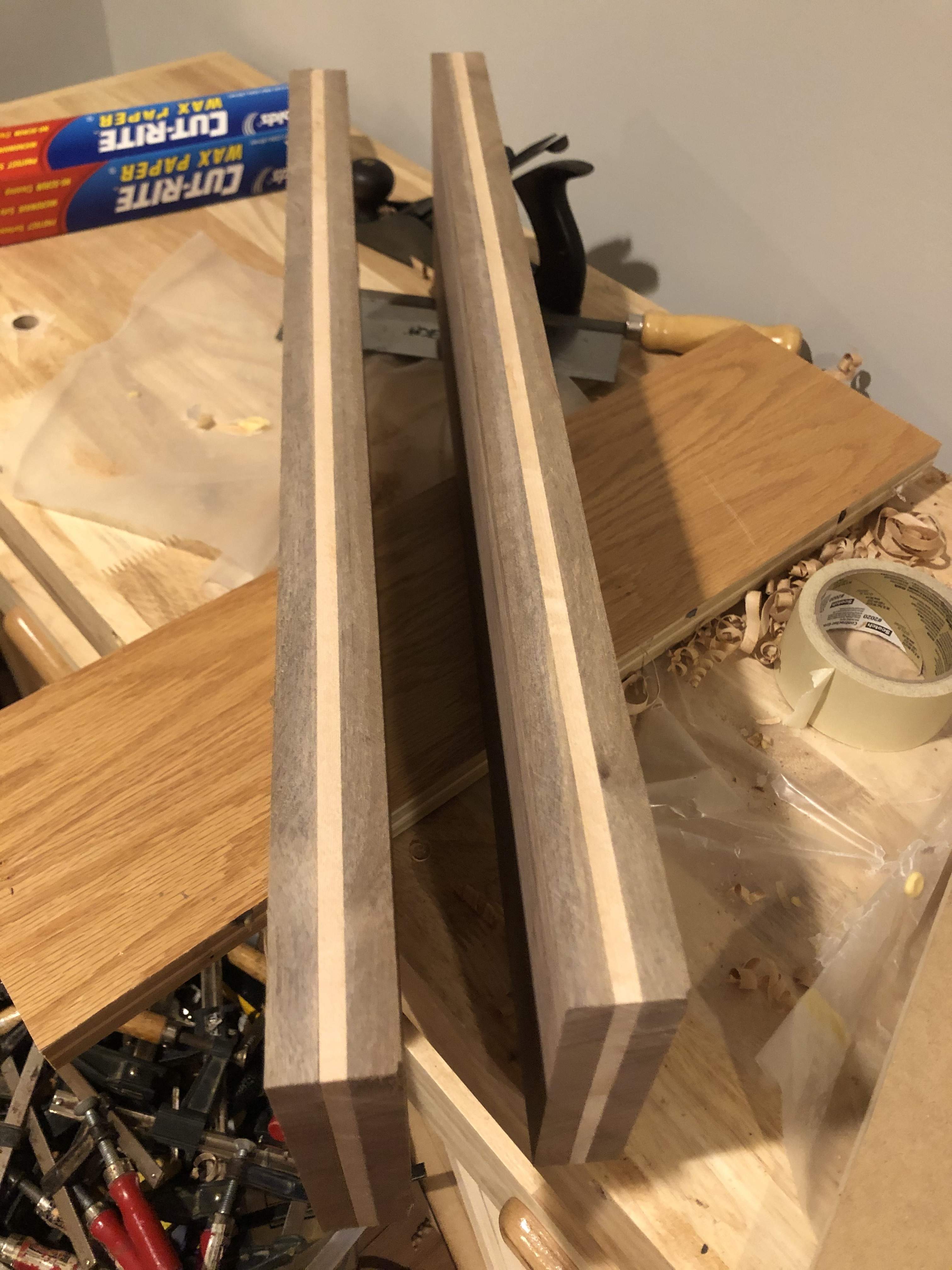
For your consideration, here are my grain possibilities. There aren't any startling differences I can see, but I am curious what your eyes may be more drawn to. My 8 year old generously donated her talents to cutting and tracing the template, and asked if she could help with the woodworking stuff. That would be fun, maybe something we could share through the years.
Back 1:

Back 2:

Front 1:
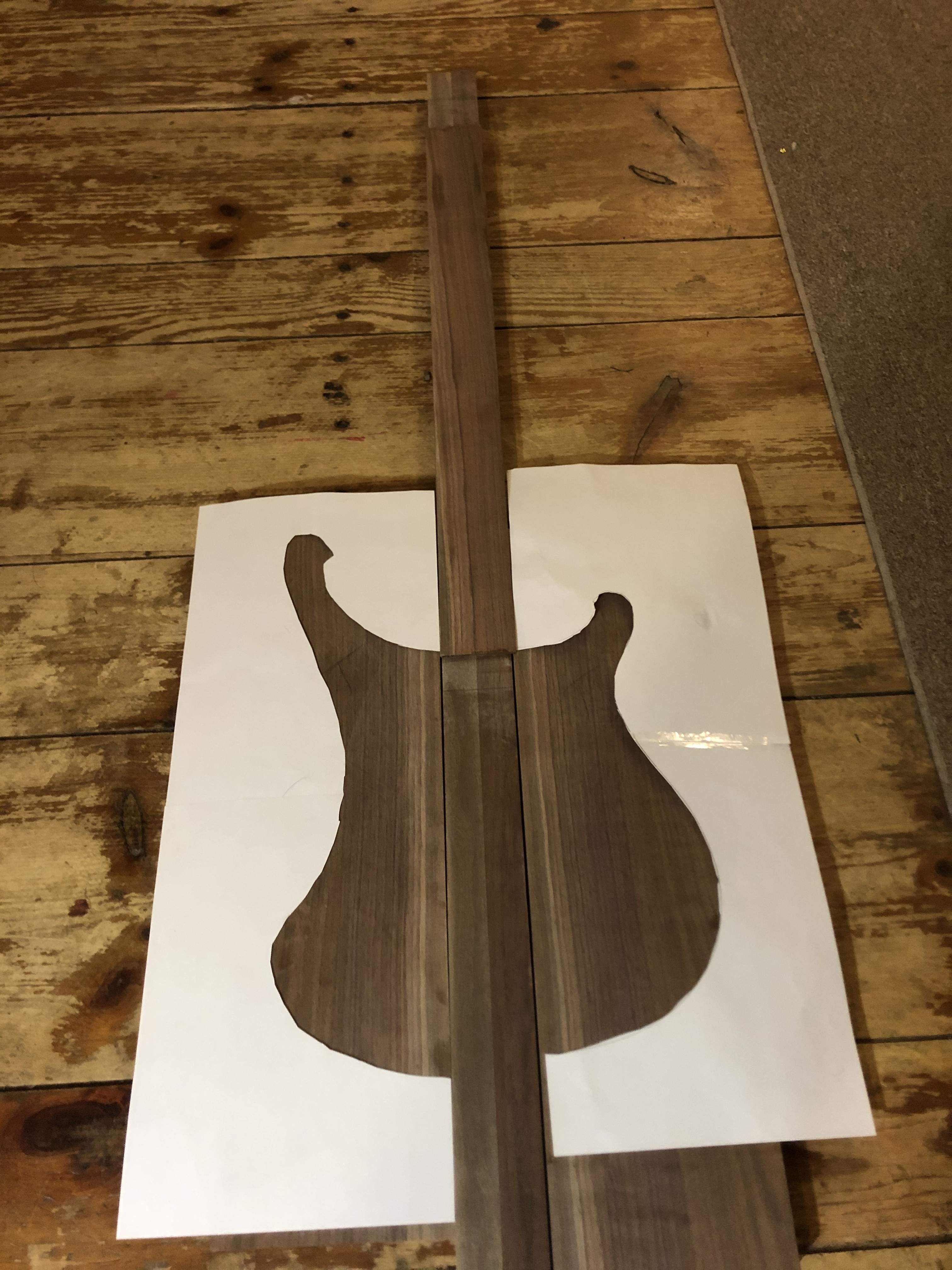
Front 2:
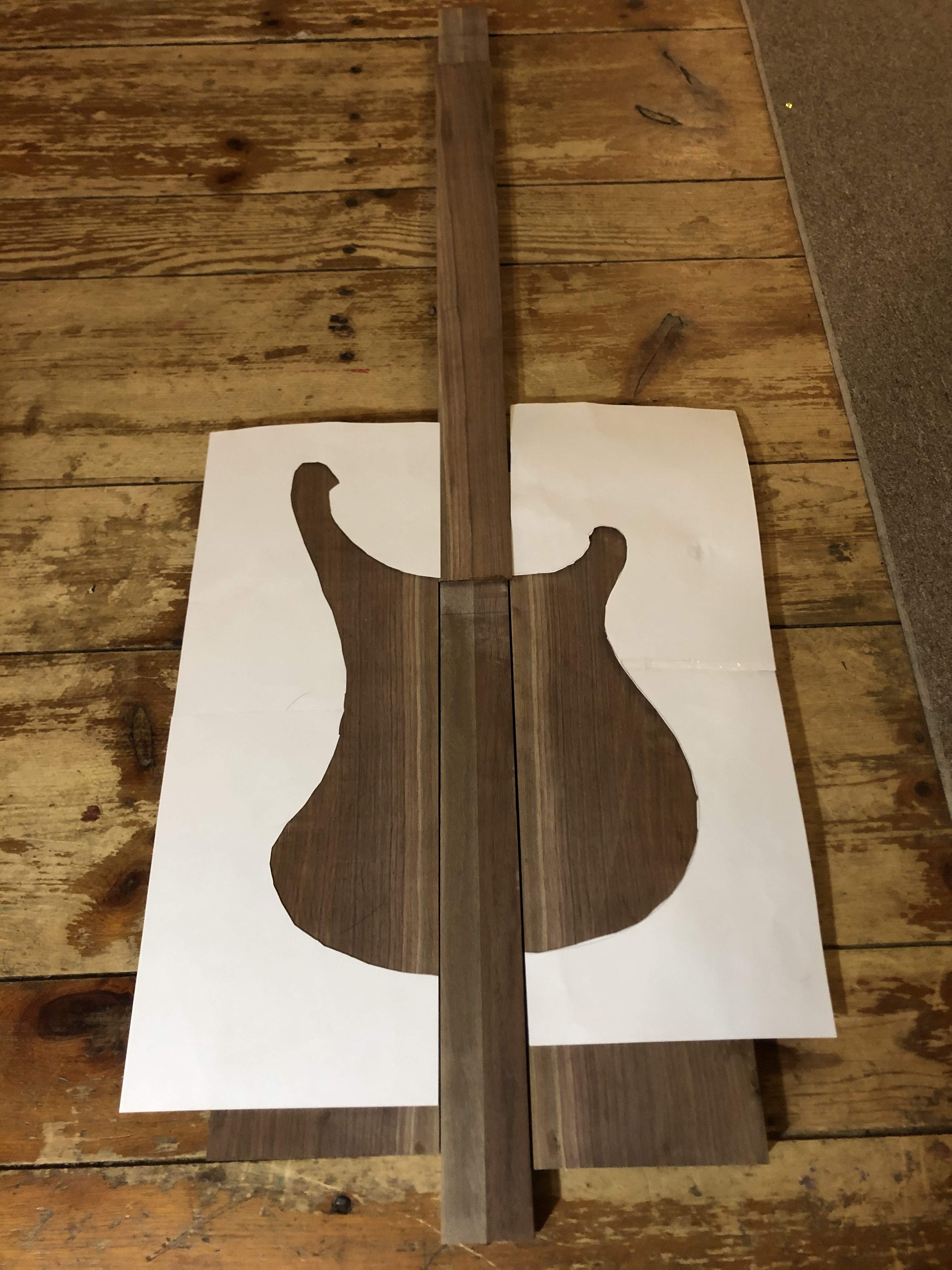
It has to be either both 1 or both 2
Back 1:
Back 2:
Front 1:
Front 2:
It has to be either both 1 or both 2
@dwizum that is a clever solution, I believe I will pinch it for this build.
I can't take full credit, I was inspired by LMI's drill and pin set that's sold for this purpose at the steep price of $26. I started looking for something to use as pins to go with the bits that came with the $8 pin vise I'd bought on amazon, and I found myself thinking that there didn't seem to be an obvious reason why you actually needed the solid pins when you could just use the bits as pins.
I like 2For your consideration, here are my grain possibilities. There aren't any startling differences I can see, but I am curious what your eyes may be more drawn to. My 8 year old generously donated her talents to cutting and tracing the template, and asked if she could help with the woodworking stuff. That would be fun, maybe something we could share through the years.
Back 1:View attachment 3684473
Back 2:View attachment 3684476
Front 1:View attachment 3684478
Front 2:View attachment 3684479
It has to be either both 1 or both 2

I think I like 1, 2 almost looks like extra maple stripes, 1 is more diffuse, looks more like natural grain. That would be cool if your daughter could help somehow. Maybe during oil finish?
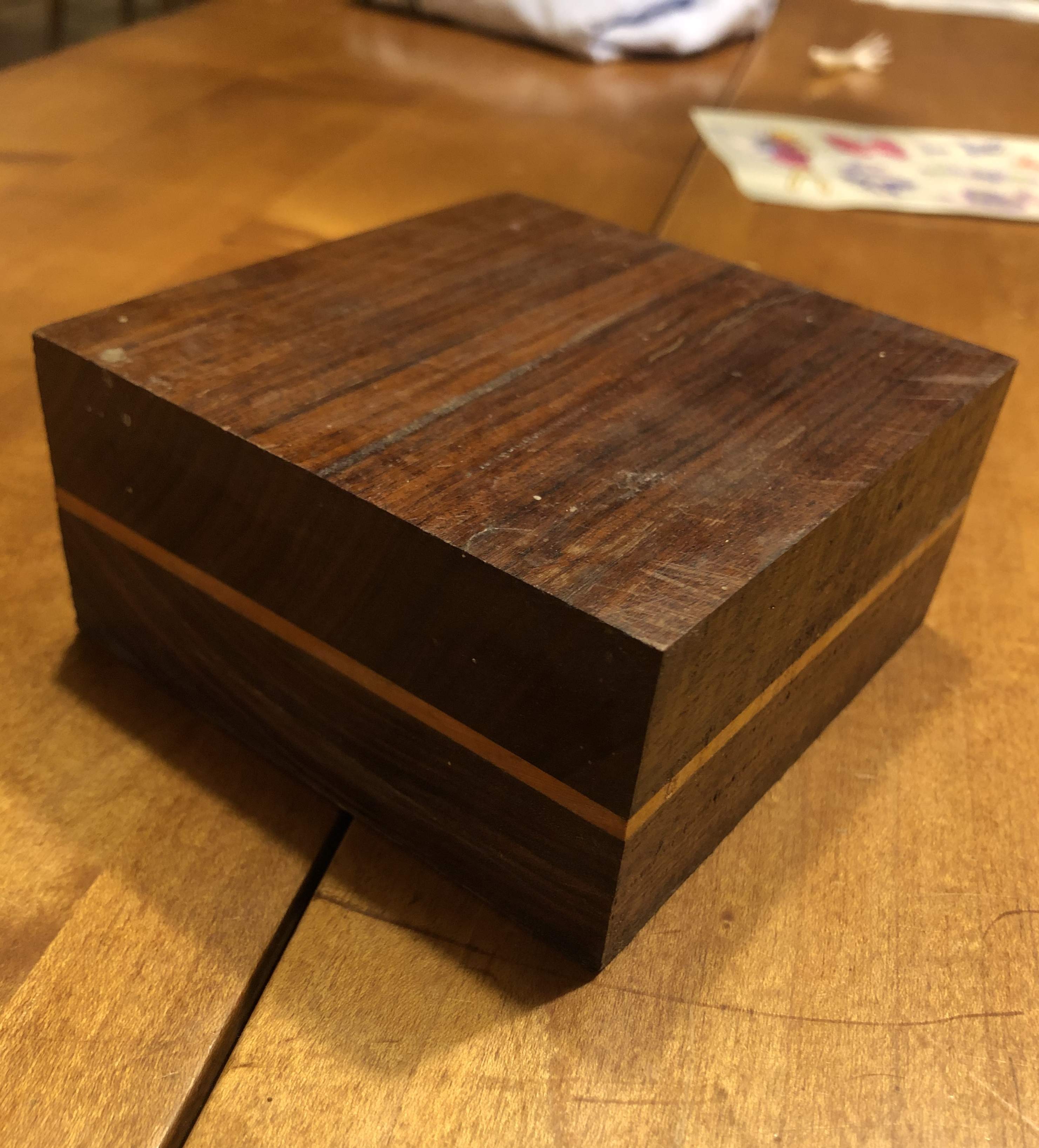
Ah the finish question, I am back and forth on a few things regarding that. Oil would bring out the grain nicely and it is very forgiving in application, so that is definitely on the table. For my rosewood tele build all those years ago, I did an amber shellac, followed by clear dewaxed shellac and nitro clear coats. I actually kept a chunk that I used to test the shellac finish, just a nice paperweight. I really liked the way the amber shellac tinted the maple, which seems to match the Harrison tele better based on the pics I could find at the time. It didn't look like it was raw maple, although side views are tough to find. I almost suspect they gave it a shot of neck amber to warm it up. So I may go for a french polish, amber then clear, which also has the benefit of non-lethal fumes if I use everclear.
The other issue is the fingerboard, as rics have that clear coat over everything. I am not sure what to do about that. My gut says since I am taking Fender design cues, I should leave it raw and oil it like I would with any other fretboard. However, it is also a ric, so maybe I should shoot the whole thing with clear. I don't really want to do that though, for a few reasons. One being grain filling a fretboard seems like it would be a real PITA. I tend to wear through nitro and I feel like it would go away pretty quickly on a fretboard.
I will test all this out on my offcuts, they will probably tell the tale best.
The other issue is the fingerboard, as rics have that clear coat over everything. I am not sure what to do about that. My gut says since I am taking Fender design cues, I should leave it raw and oil it like I would with any other fretboard. However, it is also a ric, so maybe I should shoot the whole thing with clear. I don't really want to do that though, for a few reasons. One being grain filling a fretboard seems like it would be a real PITA. I tend to wear through nitro and I feel like it would go away pretty quickly on a fretboard.
I will test all this out on my offcuts, they will probably tell the tale best.
Last edited:

- Apr 18, 2008
- 16,007
- 1
- 31,705
- Disclosures
- I'm highly opinionated and extremely self-assured
If you’re building it to be played, I would definitely not fool with shooting clear over the fretboard. Just a couple of coats of Formby’s Tung Oil to add a bit of protection and bring out the color.
I ended up using the Stewmac fingerboard oil, which I thought was a good compromise. I think it’s some kind of tung oil concoction with driers. The board drank it up like water first couple coats, and it hardens in the grain. It dries completely in a few hours, I think I did 2 coats a day, 8 coats total, then just hand buffed it. It popped the grain nicely, and stays looking like a freshly oiled board more or less indefinitely, without that “dipped in plastic” look Ric boards have. I used Tru-Oil on the body, which was stupid easy, but it takes forever to get it to build up to any real thickness. Finishing is not my strong suit, by any means, harder than carpentry, that’s for sure.
I just started using the stewmac oil product for fretboards and I really like it. It's very thin and practically disappears - so you don't get that plasticy-clear-coat look, but it does leave a nice buff-able finish that protects the wood and keeps it looking and feeling like actual wood. I haven't had this product on any instruments long enough to talk about wear or repair, but it strikes me as something that will break in nicely and be easy to repair down the road if you were inclined to do so.
I agree that it would not be best to shoot clearcoat over the fretboard, it'll just look bad once it's worn in and there would be nothing you could do about it. I think maple is really the only fretboard material that should get a conventional clearcoat finish.
I agree that it would not be best to shoot clearcoat over the fretboard, it'll just look bad once it's worn in and there would be nothing you could do about it. I think maple is really the only fretboard material that should get a conventional clearcoat finish.
Look at any older Ric, and you’ll see whitish lines along the fret edges, which is clearcoat separating from the frets. Metal frets/wood board do not expand and contract at the same rate, so that’s inevitable on any laquered board, you just see it better on dark boards. The laquer meniscus walks up the sides of the frets, so Ric just files the fret tops flat, they don’t crown them because that would cut into the laquer. Meh.
@Gilmourisgod @dwizum that sounds like a good lead, I will check that product out. I am curious to see how the walnut fretboard holds up. Walnut seems relatively soft compared to rosewood and ebony, or even hard maple.
So as soon as I wrote that last sentence I looked it up:
East Indian Rosewood: 2440
Hard Maple: 1450
Walnut: 1010
Amazing times we live in, all the world's knowledge at your fingertips, and no downsides whatsoever!
So it is quite a bit softer. I could toy around with wood hardeners I suppose, although my gut tells me that I am probably overthinking this. The awe-inspiring power of my fingers to scallop fretboards by simply playing is most likely my imagination running wild.
So as soon as I wrote that last sentence I looked it up:
East Indian Rosewood: 2440
Hard Maple: 1450
Walnut: 1010
Amazing times we live in, all the world's knowledge at your fingertips, and no downsides whatsoever!
So it is quite a bit softer. I could toy around with wood hardeners I suppose, although my gut tells me that I am probably overthinking this. The awe-inspiring power of my fingers to scallop fretboards by simply playing is most likely my imagination running wild.
Yeah, I’d worry a little about walnut on a fretless with rounds after years of playing, but fretted? Not so much. The Stewmac stuff definitely hardens it too, but you could leave it raw and not wear it appreciably in your lifetime. Are you going standard nickel silver frets, or stainless? I was gonna do stainless, but chickened out after hearing it was a lot harder to work with.
@Gilmourisgod probably just looking at standard fretwire. I tried out flamed maple for the first time this year on a neck blank, thinking that everything I heard couldn't be that bad. I mean, Stradivari was hacking away at figured maple by lamplight a few hundred years back, seems to have worked out.
But everything they said was true. My planes would not plane and everything with a blade tore chunks out regardless of direction. So I will save the stainless for another day!
But everything they said was true. My planes would not plane and everything with a blade tore chunks out regardless of direction. So I will save the stainless for another day!

Hey @Gilmourisgod I remember reading your post regarding this stuff and vowed to order a bottle and give it a try. But now I can't find your post. Would you be so kind as to repost with your remarks for the entire class? I'm not trying to be a thread disrupter here but perhaps others would benefit from a refresher as well. Thanks in advance.The Stewmac stuff ...


