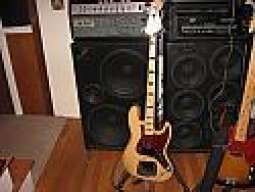
If money were no object, I'd go Barefaced. In fact, if I ever spend another penny on a cab, it'll be a Barefaced.

TalkBass has been independent since 1998. Add your voice.
Create a free account to reply to discussions, view embedded media, and browse with fewer display ads.
Join free Log in
Want zero display ads or expanded classifieds tools? Compare plans.
I did, like 4 posts above you.Nobody has stated the obvious best choice yet...
AudioKinesis Hathor 212.

hahaha I'm a sucker for those Genz-Benz ports.^ Look at all those ports, bet it could lift a skirt at 20 feet! @HamOnTheCob



Yeah! How do they do that? I get eight speakers adding up to 4 Ohms, but six? What's the magic? Always been curious about that.
It's called "nominal impedance." Nominal impedance - Wikipedia
Cabs aren't exactly 4 ohms, or exactly 8 ohms, at all frequencies.
When a manufacturer markets a cabinet as "4 ohms" or "8 ohms" basically it is for amp-safety purposes. An "8 ohm cabinet" isn't exactly 8 ohms at all frequencies, but it is generally safe to use with an amp head that can push 8 ohms.
Another example is the Barefaced Six10 and Eight10. They are both marketed as "4 ohms" but since they use the exact same drivers, but have different numbers of them, it's impossible that they could both be exactly 4 ohms. But they should both be safe to use with an amp head that can handle a 4 ohm load.
That's my layman's understanding, anyway. There are probably some additional subtleties that are over my head.


I AM talking about nominal impedance rating, not dynamic.It's called "nominal impedance." Nominal impedance - Wikipedia
Cabs aren't exactly 4 ohms, or exactly 8 ohms, at all frequencies.
When a manufacturer markets a cabinet as "4 ohms" or "8 ohms" basically it is for amp-safety purposes. An "8 ohm cabinet" isn't exactly 8 ohms at all frequencies, but it is generally safe to use with an amp head that can push 8 ohms.
Another example is the Barefaced Six10 and Eight10. They are both marketed as "4 ohms" but since they use the exact same drivers, but have different numbers of them, it's impossible that they could both be exactly 4 ohms. But they should both be safe to use with an amp head that can handle a 4 ohm load.
That's my layman's understanding, anyway. There are probably some additional subtleties that are over my head.

My very Favorite 4 Ohm Cab handles a lot more than 500 watts. The Barefaced SuperTwin(Lower Left). Actually all 3 of these are 4 Ohms. The Avatar 210 handles 600 Watts and sounds like a million bucks.View attachment 3145637
Get an Ampeg 8x10 and worry no more about such things!
My Traynor YBA-300 can run two of them and My Hartke Lh-1000 can run 4 x 4 Ohm Cabs.you prefer running single cabs then or what considering those are all 4 ohm cabs?
Instance 1. 2 Ohms. Same power to both cabsjust curious what would happen if I ran a pair of 4 ohm cabs with my peavey minimax, or how about a pair with 1 4 ohm and 1 8 ohm cabs?