• TalkBass has been independent since 1998. Add your voice.
    Create a free account to reply to discussions, view embedded media, and browse with fewer display ads.
    Join freeLog in
    Want zero display ads or expanded classifieds tools? Compare plans.

Jeff Berlin discussing music education part 3

Status
Not open for further replies.
This is my joke for guys who actually offer content to the majority of musicians. I've long ago concluded that many bass players don't want good musical content, or, at least, may not aware of what it is, and so, it'll sell dozens.

I also made up a joke that goes, "My son came to me and told me wanted to be a doctor. I told him that he should also take up metal guitar playing so that he would have something to fall back on in case this doctor thing didn't work out.

Sort of like your joke at Muriel Anderson's All Star Guitar Night:
"In 1973 a car cost $2500, a house cost $35,000 and a Jazz Gig paid 50 bucks. In 2010 a car costs $35,000, a house costs $250,000 and a Jazz Gig pays....50 bucks!"
If it weren't so Tragic it would be Funny, and if it weren't so Funny it would be Tragic. Does that make it "Fragic" or "Trunny"? :D
 
People are no better than other people. But, oh Yes! Some bass players are better than you just as there are chefs who are way better than me. But, the trick of this is to inspire you to join their elitist club, and to do this, you have some work to get to. Absolutely, there is a reality about ability up to that point that art becomes the subective term to describe it. Is Dave Holland a better upright bass player than the guy who played with Elvis? You are darned right he is!

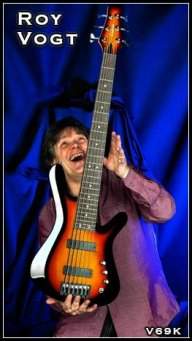
I'm sorry, Jeff, but I guess we'll have to agree to disagree on this topic. I don't believe the arts should be a competitive endeavor, simply because of its subjective nature. Is Rembrandt better than Picasso? It's in the eye of the beholder. Is Dave Holland a better upright bassist than the guy who played with Elvis (Bill Black)? It's in the ear of the beholder. Is Jeff Berlin a better bassist than stratovani? The good people at Mary Queen of the Rosary Catholic Church here in Spencer might not think so. The arts are not sports. Team Canada was better than Team USA at the Winter Olympics by one goal. The New Orleans Saints were better than the Indianapolis Colts on the Super Bowl. Sports is quantifiable, the arts are not. That's why I think that while Roy Vogt and yourself are far more knowledgable and far more accomplished players and musicians than I am, or might ever be, I don't think you're necessarily "better" than me or anyone else. I certainly do hold both you and Mr. Vogt in the highest esteem and I (as well as everyone else here) am very grateful for the teachings you provide here. I just feel I'm getting too old for all that "I'm better than you" or "you're better than me" stuff, that's all.
 
Sort of like your joke at Muriel Anderson's All Star Guitar Night:
"In 1973 a car cost $2500, a house cost $35,000 and a Jazz Gig paid 50 bucks. In 2010 a car costs $35,000, a house costs $250,000 and a Jazz Gig pays....50 bucks!"
If it weren't so Tragic it would be Funny, and if it weren't so Funny it would be Tragic. Does that make it "Fragic" or "Trunny"? :D

What's the difference between a musician and a pizza?

The pizza can feed a family of four.
 
Time is nothing in music education, there is no boats missed, chances blown, etc. These "missed" things are performance opportunities, being in the right place at the right time, playing gigs, travelling etc.
These are the other side of music the performance side and that has its own set of learning within music. The basics of a music "academics" can be learned in three years, that a foundation, the rest of it is the application of that knowledge and learning new things.
I can say i feel no different in attitude now at 50 as i was when i was 13, and i guess that will be the same if i reach 90.
The idea that "you have missed " or "passed by" opportunities is not about learning, its about a path that may or may not have worked. The idea that 3 years of you life to get a foundation is not long, all the older players here should recognise this as fact. Think what were you doing 3 years ago?...5 years ago?

Its the old saying of "everyday put off, is another day longer to get to were you think you should be".:)
 
The arts are not sports.

There was a cheesy movie made back in the 80's (that I actually liked) called Crossroads that ended in a big "head cutting" guitar playing duel featuring Steve Vai. To me, it's every bit as good as the end to Rudy, Hoosiers, Invincible, or other sports movies.

Playing an instrument takes a different kind of athleticism, but you are an athlete none the less. You can have all the knowledge in the world, but can your fingers do what your mind tells them. I know the game of basketball better than Jeff knows music, but that doesn't mean I'm any good at it. I physically can't do the things a Kobe Bryant can do or a LeBron James. It's physically impossible for me.

What I've not seen mentioned in this thread much is talent and ability. In the academic world, we see this all the time. As a student, I could read something once and get an A or a B on the test where my wife would have to study for hours to get the same grade. I have a friend who has a photographic memory. He's amazing. He can read something once and recite it back. He's like a human encyclopedia.

Academic study of music is not for the slow minded. You have to be a pretty smart cookie to get it. It's not easy. Couple that with the fact that you have to have fine motor control and muscle memory that a surgeon would be jealous of, and you start to understand how difficult it is to be a "great" musician.

There is no doubt that anyone can pick up an instrument and learn to play some songs. I think my 5yo could do that. But there is a small group of players who have such an understanding of their instrument that they can do things most people can't, and could never do without dedicating countless hours trying to emulate one or two "licks" from a prolific player.

Here's the scene from the movie Crossroads:


Watch it, and see what you think. In my opinion, Steve Via wins hands down as he's nearly able to play a classical piece on the spot, without practice, that took Ralph Macchio studying at Julliard to learn (in the beginning of the movie, Ralph Macchio's character is studying at Julliard).

That's the scary thing. There are players out there with not a shred of musical academic knowledge who can play anything, on the spot. To me, those people are great. Anyone can practice something, but to play something right out of the air is what's amazing to me.
 
I'm sorry, Jeff, but I guess we'll have to agree to disagree on this topic. I don't believe the arts should be a competitive endeavor, simply because of its subjective nature. Is Rembrandt better than Picasso? It's in the eye of the beholder. Is Dave Holland a better upright bassist than the guy who played with Elvis (Bill Black)? It's in the ear of the beholder. Is Jeff Berlin a better bassist than stratovani? The good people at Mary Queen of the Rosary Catholic Church here in Spencer might not think so. The arts are not sports. Team Canada was better than Team USA at the Winter Olympics by one goal. The New Orleans Saints were better than the Indianapolis Colts on the Super Bowl. Sports is quantifiable, the arts are not. That's why I think that while Roy Vogt and yourself are far more knowledgable and far more accomplished players and musicians than I am, or might ever be, I don't think you're necessarily "better" than me or anyone else. I certainly do hold both you and Mr. Vogt in the highest esteem and I (as well as everyone else here) am very grateful for the teachings you provide here. I just feel I'm getting too old for all that "I'm better than you" or "you're better than me" stuff, that's all.

Interesting points. But I don't believe that I said that the arts should be a competitive endeavor. But, yes, in music, Roy Vogt and I are probably much better than you are.

Let's look at the word "better". Dictionary.com derfines the word as "1. of superior quality or excellence: a better coat; a better speech.

As a musician, I fill the definition of a "better" musician than others do, according to Dictionary.com's definition. In other subjects, other people fill their areas of capability better than me. What is wrong with this?

Regarding your comment asking if Rembrandt was supposedly better than Picasso, it doesn't apply because they are both highly skilled innovative artists and have unanimously passed that point where they are measured against each other as to who is better. Who is better, Stanley Clarke or Dave Holland? It doesn't apply because they both have passed that point where their talent is explained with terms such as "better". But, interestingly, if you compare these two players' arco abilities to, say, Frederick Zimmermann, Zimmermann was a way better player than either Clarke or Holland.

We are not all the same! We are not equal except under the law or in the eyes of God. That's it! Other aspects of our lives are not automatically given equal status and some are way better than others in the same field. I don't see why we can't accept the inequality of us all and use this inequality to inspires us to do something about it to close the gap.
 
--^^^^---

Wow, really good, heartfelt sentiments in these last several postings. I also am a "late bloomer" at bass, played other instruments all my life, but always admired a good bassline. Picked up the bass at age 44, and I'm now 46, loving the new "mistress" and wondering where she will take me. Don't want to be a star, but want to have self-respect at the end of the day. Don't we all want some of that?

To get respect, one sometimes has to earn it. Start practicing "The Good Stuff" and earn some respect from other players. Good luck!
 
Hi Fella's,

I'm forty and been playing 3 years and I live for it. It fills me with a sense of meaning like no other and helps me escape to somewhere totally private. My playing is (I think) pretty good and I'm progressing by the day.

I'd love to learn theory inside out but my arch enemy - time - prevents me from getting much past the basics. This leaves me with a sense of not having done things properly. This, in turn, hurts because playing is so important to me and having a good ear isn't always a blessing as I can work out in reasonably good time what I need to know at surface level. A good problem too have perhaps but a problem all the same as there is no depth to my knowledge.

Jeff speaks nothing but common sense but I can't shake that feeling of time slipping through my fingers. I 'd ask for help but I'm not sure I'd be in a position to take it.

But here goes...someone?

As a general suggestion, I might forgo the theory part of music and just stick with great bass lessons. I am not endorsing doing away with theory, but if your interest is to play, then if you take meaningful lessons, theory should be a part of what you practice. It is included in great material which is why you need a great teacher.
 
I found three links to syllabuses for Berklee Music Theory Classes 101, 201 & 301. The exact order of what you would learn & when. Do you think this may be a good way for a young student to have a clue of what to look for in teacher or school? A chronological list of sorts.

Could be. If lessons are organized, it should mean that you would touch upon them at some point. But I know that people learn slower or faster or the same. These three criteria for learning needs to be included in lessons. For me, if a guy comes to a Players School 10 week course, they might finish up with only 8 weeks of work or possibly 13 weeks of work. Some guys learn slower or faster than other guys.

I have never cared if somebody didn't get 10 weeks of lessons, just that they practiced the lessons that they were given so that they could either move on, or take more time to practice them. It isn't important that someobody gets through the syllabus on schedule. It is just important that they get into the syllabus and do their best with it! See the difference?
 
Can you name them?

Yep, I can.

My brother is one of them. Never had a music class in his life. Took a six months of banjo lessons and the teacher said, "You're better than I am". When guys like Bela Fleck say you're good, you're pretty dang good. Yet my brother can't tell you how he plays. He is incapable of giving even his own son lessons. Has no clue how he knows what he knows. Credits slowing down records and learning to play songs. I've seen him asleep playing, and never miss a note. Total subconscious level of playing. Never thinks about it.

Just about any musician who grew up poor (especially if it was decades ago and they were black) never had access to any music education (or education of any kind in some instances). Yet there are prolific players from those decades. Even Louis Armstrong called playing gigs on a riverboat, "going to the university". It's WAS his education. Huddie "Leadbelly" Leadbetter played the twelve string guitar, and could also play the piano, mandolin, harmonica, violin, concertina, and accordion, yet spent much of his life in prison. He certainly never attended a university.

Those people learn in different ways than I learn. They are "born" with something I don't have. I NEED to know the academic principle behind something. For example, I was really struggling learning the scale modes my teacher gave me until I researched scale modes and what they were. Once I understood them, I could play them without any problems or having to refer back to a chart. My speed is not good, but it will come. I'm very logical, so the academic side helps me quite a bit.

There are people who have an exceptional ear, a good memory, and can learn an instrument based on what it sounds like. They don't know the "why" but they know the "how", if that makes any sense.

It's kids like this, who have never had a lesson, yet can play anything, that amaze me:

 
What's the reasoning behind this Jeff? I've tried to work out why for myself before asking, but come up empty handed:)

Drummers do this to bring down the level of band intensity behind the bass solo. This is a carry over from when the upright bass players took a solo, and the drummer would drop his level of volume and busy playing style to allow the upright's notes to be heard.

But I function with ampliers and can compete easily with a drummers volume and intensity output. I just don't like it when soloists in a band gets a certain intensity level of playing behind their solos, but then they drop low for me to play. I actually love it when those guys are boiling along and then I have a solo that joins their intensity. I really dislike it when drummers go to the high-hat during my solo for that reason.
 
What's the reasoning behind this Jeff? I've tried to work out why for myself before asking, but come up empty handed:)

+1 on wanting to know why you don't want the drummer playing the hi-hat during your solo. That that stylist purism? Is it 'inappropriate' for the drummer to be on the hat during a bass solo in a particular style? Or is that a personal preference on your part in your projects?

[EDIT] - removed and asked in new post...
 
+1 on wanting to know why you don't want the drummer playing the hi-hat during your solo. That that stylist purism? Is it 'inappropriate' for the drummer to be on the hat during a bass solo in a particular style? Or is that a personal preference on your part in your projects?

I just prefer the ringing of cymbals through my solos. Read above for more clarification. Thanks for asking.
 
OK - I see your answer above. Thanks for the insight.

Not trying to be provocative here, but I need to ask...

Don't you feel that's sort of a broad rule to apply? If the directive is to not purposefully drop intensity for the sake of the bass, can't that be the directive unto itself? "Don't drop in intensity to 'help me'"? It feels a little micro-manager-ish to be so specific as to tell the drummer how to play his part.
 
OK - I see your answer above. Thanks for the insight.

Not trying to be provocative here, but I need to ask...

Don't you feel that's sort of a broad rule to apply? If the directive is to not purposefully drop intensity for the sake of the bass, can't that be the directive unto itself? "Don't drop in intensity to 'help me'"? It feels a little micro-manager-ish to be so specific as to tell the drummer how to play his part.

Ask anything that you wish! In my case, it is what I want when I solo. Anybody who plays with me will accomodate me during my few moments to play, as I would accomodate what they would need if they asked for it.
 
Status
Not open for further replies.