• TalkBass has been independent since 1998. Add your voice.
    Create a free account to reply to discussions, view embedded media, and browse with fewer display ads.
    Join freeLog in
    Want zero display ads or expanded classifieds tools? Compare plans.

JULE Amps M 2500:: 2500w/3200w(peak) Amplifier

I found this to be interesting and surprising (from Sweetwater Sound's website)...

"When matching a power amp to a speaker, a good rule of thumb is to pick an amplifier that can deliver power equal to twice the speaker’s program rating. This means a speaker with a nominal impedance of 8 ohms and a program power rating of 350 watts will require an amplifier that can produce 700 watts into an 8-ohm load. In some applications, such as critical listening in a studio environment, it is important to maintain peak transient capability. For these applications, use an amplifier that can deliver two- to four-times more power than the speaker’s program power rating."

I didn't see it but assume the power rating of the Jule is at 4 ohms and that it's closer to 1000 watts at 8 ohms. That might be just right for an 8 ohm cab rated at 500 watts.

Power Amp Buying Guide

IMO, this is in general VERY bad advice for the average (and even above average) player. I also suspect that there's a mistake within their statement as well, based on typical PRO AUDIO applications.

In the pro audio world, there is a continuous power rating that's based on the RMS voltage (hence the designation of "RMS"), and the industry has by itself created a rating of "program power" which is defined as 2x the continuous power. It was often recommended that this was the "safest" maximum power a speaker could handle for the short term provided the signal was not compressed or distorted, and was liberally high passed. The recommendation of 2X the PROGRAM power would be 4X the "RMS" power which is beyond the safe mechanical level for just about every speaker that I am aware of. I think they ment 2X the CONTINUOUS power not PROGRAM power. The reason the 2X is extrapolated is from the AES power test standards that use a 6dB crest factor which requires an amp 2x the continuous power level to reproduce. Now note that there is a mistake (actually several) in the attached article stating that a signal with a 6dB crest factor is 4x the continuous power, but they forgot that a sine wave has a crest factor of 3dB already, then add another 3dB which doubles the power not quadruples.

So note that this rule of thumb is based on 3 important criteria... that the signal is not compressed, that it's not distorted, contains a maximum crest factor of 6, and that it's adequately high passed. My experience in many PA applications and just about all bass guitar applications this is not true, therefore 2x the continuous power is generally not terribly a safe assumption, and certainly 4x the continuous power would be unsafe for just about every speaker used in the bass guitar world (including the high powered pro audio based drivers).

Also, did you guys know that the most common power rating scheme (AES2-1984) only require that the driver be able to survive only 2 hours, and that it's ok if there is damage as long as it doesn't represent a catastrophic shift in performance (meaning that it will still make noise, but is unlikely to come even close to its original design parameters)??? Is this a good thing to do with a speaker?

Now there is an AES2-2012 standard that uses a crest factor of 12dB, if this is followed faithfully, it will result in a much lower continuous power handling since it places more mechanical stress on the speaker, and the speaker has to last for 100 hours. In order to limit the power to safe mechanical levels, the average level would need to be reduced corresponding to the 12dB versus 6dB crest factors.

Invalid Link Removed

Incidentally, JBL did address this in the 1960's with their derating guide to loudspeakers used for MI applications. I will try to find a copy to post.
 
Also, did you guys know that the most common power rating scheme (AES2-1984) only require that the driver be able to survive only 2 hours, and that it's ok if there is damage as long as it doesn't represent a catastrophic shift in performance (meaning that it will still make noise, but is unlikely to come even close to its original design parameters)??? Is this a good thing to do with a speaker?

No I did not. I suspect that majority of us here did not, either. Something else to keep in mind as I battle with the guitarist for volume supremacy on the gig tonight.
 
IMO, this is in general VERY bad advice for the average (and even above average) player. I also suspect that there's a mistake within their statement as well, based on typical PRO AUDIO applications.

In the pro audio world, there is a continuous power rating that's based on the RMS voltage (hence the designation of "RMS"), and the industry has by itself created a rating of "program power" which is defined as 2x the continuous power. It was often recommended that this was the "safest" maximum power a speaker could handle for the short term provided the signal was not compressed or distorted, and was liberally high passed. The recommendation of 2X the PROGRAM power would be 4X the "RMS" power which is beyond the safe mechanical level for just about every speaker that I am aware of. I think they ment 2X the CONTINUOUS power not PROGRAM power. The reason the 2X is extrapolated is from the AES power test standards that use a 6dB crest factor which requires an amp 2x the continuous power level to reproduce. Now note that there is a mistake (actually several) in the attached article stating that a signal with a 6dB crest factor is 4x the continuous power, but they forgot that a sine wave has a crest factor of 3dB already, then add another 3dB which doubles the power not quadruples.

So note that this rule of thumb is based on 3 important criteria... that the signal is not compressed, that it's not distorted, contains a maximum crest factor of 6, and that it's adequately high passed. My experience in many PA applications and just about all bass guitar applications this is not true, therefore 2x the continuous power is generally not terribly a safe assumption, and certainly 4x the continuous power would be unsafe for just about every speaker used in the bass guitar world (including the high powered pro audio based drivers).

Also, did you guys know that the most common power rating scheme (AES2-1984) only require that the driver be able to survive only 2 hours, and that it's ok if there is damage as long as it doesn't represent a catastrophic shift in performance (meaning that it will still make noise, but is unlikely to come even close to its original design parameters)??? Is this a good thing to do with a speaker?

Now there is an AES2-2012 standard that uses a crest factor of 12dB, if this is followed faithfully, it will result in a much lower continuous power handling since it places more mechanical stress on the speaker, and the speaker has to last for 100 hours. In order to limit the power to safe mechanical levels, the average level would need to be reduced corresponding to the 12dB versus 6dB crest factors.

Invalid Link Removed

Incidentally, JBL did address this in the 1960's with their derating guide to loudspeakers used for MI applications. I will try to find a copy to post.

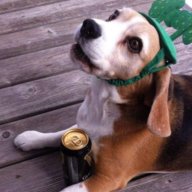
This is an example of what I love about talkbass - so much can be learned from good folks like Mr. Horse.
 
  • Like
Reactions: so tuff and wcriley
I'm a bit late to this conversation, but I'd like to add my $0.02.

For about 18 months I was running a Monique into the return of a bridged stereo Walter Woods and then through one Fearless F112 (about 700 watts into 8 ohms) or two F112's (about 1000 watts into 4). I very rarely have FOH support, usually play small to medium rooms, sometimes outside, and my approach is to ensure that the *audiophile* at the back of the room (if there happens to be one :)) hears every nuance of what I'm playing.
For reasons that have nothing to do with the performance of my beloved WW I decided to part with it and try using a Jule Amp M700 with this rig. I just received it a week ago, used it in a local jam session with a medium volume band in a small room, running into one F112, and observed the following:

The sound and responsiveness of the amplifier were excellent, and the volume/loudness/tone etc. was just fine. But the difference in perceived headroom (admittedly a very subjective thing) was marked. I just felt much closer to the top of what the amp would be able to do if I needed to really step on it, as compared with the WW. I realize this is an apples/oranges comparison--the M700 putting 440 watts into the 900-watt rated F112 as opposed to the WW putting in 700--but for me it meant that the M700 was not going to give me what I wanted: a sense of virtually unlimited headroom whether I am playing one or two cabinets. for 50 people or 5,000. Frankly, I am not concerned about an M2500 overburdening the F112's; I know how to turn a volume knob counterclockwise and in over 40 years of gigging I've never damaged a speaker.

Long story short, I have an M2500 on the way. I play with a light touch and need to have amplification that will accommodate a very wide dynamic range of playing. I believe it will give me that.
 
I guess I should know more about electronics than I seem to .. realizing this as I face this question:

At what point (watts of amp output capability) does one need to move up to 220/240V? ("220, 221, whatever it takes.")

For example, somewhere around 1500 to 1700 watts is about all you are going to get out of a 15 or 20 amp 120V outlet. That is, if you are a hair dryer. But I'm not sure how this translates to an MI amp output rating. I do realize a bass amp does not experience the same duty cycle as a hair dryer. Depending on the band you are in, I suppose.

To state my question another way, can you have a 2500 watt MI amp with a 120V power cord?
 
Yes, 2500 watts x 80% efficiency would draw ~3000 watts but then you need to multiply this by the duty cycle. Safety agency rating protocols use 1/8 power 12.5% duty cycle) but even at 1/4 power (25% duty cycle), which is pretty demanding (at this power especially for speakers) so 3000 watts x 0.25 (%) is 750 watts or about 6.5 amps for those of us on 120 volt power. Half of that for those of you on 230 volt power.
 
So who has one and how are you using it?

Probably could cook a hot dog if you connected speaker cables to it (and probably cook the amp in the process).
I will have one in a few days. I'll be running a Monique through the M2500 into one or two Fearless F112's on 220-240V circuits (I live and play in Germany). I usually play small or medium rooms (one cab), once in a while large rooms or outdoors with no FOH support (two cabs). The F112's are each rated conservatively at 900 watts.

I'll post comments on how the system performs for me after I've had a chance to do a couple of gigs with it.
 
Snake oil implies that a product is somehow disingenuous or 'not as advertised'. This is a great sounding loud as heck poweramp. There's nothing snake oil-ish about it.

He is advertising a power amp that does 2500 watts rms/3200 peak and providing no spec sheet, 300watts RMS is as you put it "loud as heck", more than enough for most gigs. 2500watts RMS at what freq? Good for you guys if you'll spend that much cash just taking someones word for it, however with no real proof I call BS. Prove that amp is really that powerful. Sorry I'm not as trusting as you guys are with manufactures but IME if something seems too good to be true, it usually is
 
He is advertising a power amp that does 2500 watts rms/3200 peak and providing no spec sheet, 300watts RMS is as you put it "loud as heck", more than enough for most gigs. 2500watts RMS at what freq? Good for you guys if you'll spend that much cash just taking someones word for it, however with no real proof I call BS. Prove that amp is really that powerful. Sorry I'm not as trusting as you guys are with manufactures but IME if something seems too good to be true, it usually is

He uses Hypex modules. You can look them up. the only reason I'm taking issue is that you're saying negative things about a friend without doing the homework. You could always have emailed Jule for more info or a spec sheet, but instead you called BS/snake oil on a public forum. That is bad form, IMO and unnecessary given the fact that Jule would be happy to take your call and discuss your concerns
 
He is advertising a power amp that does 2500 watts rms/3200 peak and providing no spec sheet, 300watts RMS is as you put it "loud as heck", more than enough for most gigs. 2500watts RMS at what freq? Good for you guys if you'll spend that much cash just taking someones word for it, however with no real proof I call BS. Prove that amp is really that powerful. Sorry I'm not as trusting as you guys are with manufactures but IME if something seems too good to be true, it usually is

Skeptical when the amp is coming from some vendor on Alibaba, sure. From Jule? Nope - it'll do what he says it will. He knows more about electronics than 99.9% of the people on TB, having worked on "serious systems", not just slapping an ICE module in a box and calling it an amp. Plus he's a great guy.

No BS, no snake oil. If you don't want it or can't afford it, then don't buy it.
 
He uses Hypex modules. You can look them up. the only reason I'm taking issue is that you're saying negative things about a friend without doing the homework. You could always have emailed Jule for more info or a spec sheet, but instead you called BS/snake oil on a public forum. That is bad form, IMO and unnecessary given the fact that Jule would be happy to take your call and discuss your concerns

I shouldn't have to ask for a spec sheet, should be clearly displayed on his site, if you ask me thats "bad form"