• TalkBass has been independent since 1998. Add your voice.
    Create a free account to reply to discussions, view embedded media, and browse with fewer display ads.
    Join freeLog in
    Want zero display ads or expanded classifieds tools? Compare plans.

Lakland Owners Group #23

Status
Not open for further replies.
What happened the Maple Board?? Looks great BTW:hyper:


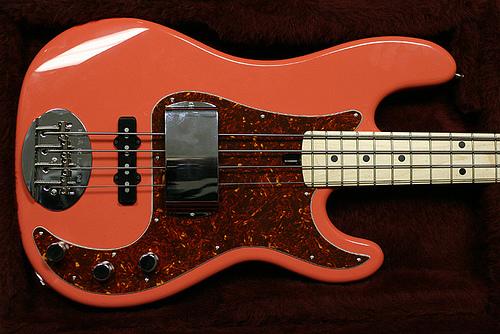
Just thought I'd post a pic of my USBGPJ in Coral Pink. This was when it still had a maple board. I've since changed the neck to rosewood with a matching pink headstock. More pics to come!
2505104586_14d2ab4ab6.jpg
 
not sure....BUT maybe all it needs is a good set up...either way, Carl at Lakland should be able to set you up.....also, there is that "thing"..cannot remember the name right now...Evan had one for US JO....it is a weight that supposedly gets rid of dead spots and he swears it works.....

Evan...can you chime in here????

glad you are lovin' the 44-02!!!

A website visitor asks: Many basses have that dreaded "dead spot" around the fifth to seventh fret on the G-string. Can this be lessened in any way?

Roger Sadowsky answers: Dead spots are a fact of life, especially on 34" scale bolt on instruments. In order to reduce dead spots as much as possible we have increased the thickness of our headstocks and increased the overall stiffness of our necks. An all graphite neck will move the dead spot to where you won’t look for it but a graphite neck really changes the tone of the bass. The best aftermarket device for dealing with dead spots is the Groove Tubes Fat Finger, which is a small metal clamp that attaches to the headstock and increases mass at that end of the neck. It really works!
 
A website visitor asks: Many basses have that dreaded "dead spot" around the fifth to seventh fret on the G-string. Can this be lessened in any way?

Roger Sadowsky answers: Dead spots are a fact of life, especially on 34" scale bolt on instruments. In order to reduce dead spots as much as possible we have increased the thickness of our headstocks and increased the overall stiffness of our necks. An all graphite neck will move the dead spot to where you won’t look for it but a graphite neck really changes the tone of the bass. The best aftermarket device for dealing with dead spots is the Groove Tubes Fat Finger, which is a small metal clamp that attaches to the headstock and increases mass at that end of the neck. It really works!


See? That's what I was talking about above, both the mass and graphite factors. The 44-02 necks don't have graphite rods so such may happen once in a while. I would propose sending the bass to Lakland. If setup doesn't help I'm sure they can propose a decision.
 
As of today, I have a fretless 55-02 on it's way to me. Nothing particularly special about it. Natural finish, lined ebony board and Lakland gizzards. This will be my fourth Lakland after a 55-02, 44-02 and DJ5. The DJ I no longer have, but I really liked it. The 44/55 series basses are just "it" for me. I've had these for a while now and not even a hint of dissatisfaction with them.

Quick question about the fretless. What are the lines made of? They standout pretty good in the pictures I've seen. I'm wondering if I could obscure them a bit with some oil or a light stain?
 
I believe so.....absolutely LOVE my Fralin-equipped BG! asked Carl about this the last time I was in there and he believes they do make at least one 5er P......he also thinks they are special......if he likes them also - they gotta be special.....Carl is trying to figure out what is "different" about Fralins....has not got it yet but he is one smart Jedi so.....maybe some day!

Thanks, that is good news.
Well, week two and no DJ5 yet, hopefully only one week to go:hyper:
 
Status
Not open for further replies.

Latest posts