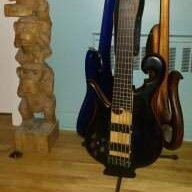
Exactly what I was thinking, wood gets better with aging, considering it is well taken care of.From a hardware standpoint, I would agree any mid priced modern bass is vastly superior to my 63 P Bass. The fretwork on my 63 (which has original frets owing to a lifetime of flatwounds) is passable, but it is not on par with most modern basses. The big advantage to a vintage instrument, in my opinion, is the wood. My 63's body is a lightweight resonant old growth alder and the neck is straight-grained maple with a Brazilian rosewood fingerboard. Those woods are virtually impossible to obtain today, especially with the benefit of fifty years of aging. Wood is the one reason why old instruments will always be special.

Enjoy the benefits of a premium membership!
Upgrade Account
-
TalkBass has been independent since 1998. Add your voice.
Create a free account to reply to discussions, view embedded media, and browse with fewer display ads.
Join free Log in
Want zero display ads or expanded classifieds tools? Compare plans.
You are using an out of date browser. It may not display this or other websites correctly.
You should upgrade or use an alternative browser.
You should upgrade or use an alternative browser.
Let's be completely honest here about vintage basses...
- Thread starter nerkoids
- Start date
-
- Tags
- vintage bass
More options
Who Replied?

The marketplace has spoken loudly and clearly about vintage instruments. They cost more. Something to always remember about the marketplace is that it does not seek wisdom or enlightenment; it merely seeks the best price—for buyers AND sellers. That having been said, it should be clear to all that some vintage instruments are really nice.
The question to ask is, are you willing to go out of your way to get one? My own answer is 'No'. I am content with my decision, and it does not matter to me in the least that the marketplace places such a high premium on certain vintage items. So far they just haven't been worth it to me.
Maybe someday I'll run across one that really turns me on and makes me want to have it.
The question to ask is, are you willing to go out of your way to get one? My own answer is 'No'. I am content with my decision, and it does not matter to me in the least that the marketplace places such a high premium on certain vintage items. So far they just haven't been worth it to me.
Maybe someday I'll run across one that really turns me on and makes me want to have it.

honest about vintage?
some people like them, and that's just fine
and some people like brand new instruments and that's also fine
some people like cheap off the rack basses
and some people like one of a kind boutique ones
and some people like a modern tone
and some people like a classic tone
and some people like a p with flats
and other people are wrong
it's all good.
some people like them, and that's just fine
and some people like brand new instruments and that's also fine
some people like cheap off the rack basses
and some people like one of a kind boutique ones
and some people like a modern tone
and some people like a classic tone
and some people like a p with flats
and other people are wrong
it's all good.
honest about vintage?
some people like them, and that's just fine
and some people like brand new instruments and that's also fine
some people like cheap off the rack basses
and some people like one of a kind boutique ones
and some people like a modern tone
and some people like a classic tone
and some people like a p with flats
and other people are wrong
it's all good.
I really wish this rhymed...
I once heard a piece of advice from a professional upright player. He said you should wear a blindfold when trying out basses so all you know about the instrument is feel and tone which is all that really matters. (this same discussion happen in the upright world, only vintage there means 150 years old and they cost $50,000) Imagine sitting in a music store and the manager brings you bass after bass and you are blindfolded. It would be an interesting experiment to play 10 vintage basses vs ten modern ones and see if you could a) tell the difference not knowing which is which, and b) be truly happy with what your hands and ears alone told you was the best bass for you. Who knows what you would end up driving home with.

To me personally they aren't worth the money. I play stingrays, that's about as "vintage" as I go.


To echo a lot of the other answers on this thread....there is no right or wrong answer. This topic is completely subjective and is purely up to the individual to come to their own conclusion.
Reported for truth and level-headedness.
I'm more of a free form poet, but I'll see what I can doI really wish this rhymed...
some people like vintage, and that's just fine
and others like instruments straight off the line
some like off the rack basses to fill their stable
and some like a boutique seven string coffee table
some people like a tone that's modern and new
and some people haven't changed strings since 72
some prefer a p with flats and about this they feel strong
and other people don't and those people are wrong
Last edited:
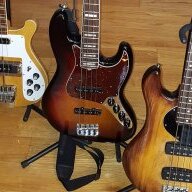
I can envision a builder using reclaimed wood to sell the idea that old wood has a distinctive tone. It probably doesn't, but depends on the builder. The answer to the question of what is better is subjective. Older instruments are hard to find and quite expensive. Collectors and sellers often exaggerate the qualities of older instruments to justify it's higher price, that doesn't make it play better. I think a 60 year old bassist that still plays his or her first fender might have a special relationship with that bass, that doesn't make it better. Some people just have an inherent biase when it comes to giving a valuation of something they are financially or emotionally vested in.

Regardless if it's a Fender, Gibson, or a Rickenbacker... are the vintage basses inherently better quality than newer stuff?
The more important question is if vintage basses are inherently better for metal than newer basses?
/s
In my opinion, vintage basses aren't necessarily older, but they are definitely different. I'm not terribly interested in vintage instruments myself, but I can understand why many musicians hold them in such high esteem.

Basses are like cars, sometimes they are better than newer ones, sometimes equal, or worse....
Untrue, I say. I wish I could say they don't make cars as good as they used to, but that's not true. Today's cars get their first tune-up at about the same time older cars started burning oil (100K miles). More reliable. Better gas mileage. Stronger engines. Finer suspensions. Today's Honda Odyssey minivans will clobber many of the celebrated muscle cars and Porsches of yesteryear on a race track. Nevertheless, those old cars sometimes sell for six figures. A similar phenomenon has developed with vintage instruments.

You make a great point about feel.
My '66 Jazz has a very light body and neck. It balances perfectly for me, whether sitting or standing. Despite the light weight, the neck itself (and neck joint) is dead stable. When you play it, the whole thing vibrates in a pleasing way. The finish on the neck is worn to the point where it feels "just right" under the fingers; not a hint of stickiness or roughness; it feels like skin if you know what I mean. The original frets were in great shape to begin with (original owner was a flat-wound guy) and it's even better after a professional level/crown/polish. I love the low/narrow feel of '50s/'60s fretwire. Like the banjo fretwire used by Lee Sklar, Sheldon Dingwall, and others, it lets you feel the fretboard under your fingers. For some reason, that feels "right" to me. As for the tone...what can I say? I love the sound of a good, passive, '60s Jazz Bass.
I'm sure people like Alleva-Coppolo or the Fender Custom Shop could build me a bass that feels and sounds exactly the same (that Custom Shop Esquire I mentioned earlier absolutely nails the '50s Fender tone and feel). But you're not going to pay less than $4k for one of them. And you're not going to get the same feel and tone from an off-the-shelf modern Fender.
When a real '50s Esquire sells for $25k, I would go for the $4k Custom Shop version any day.
But if I can buy a real '60s Jazz for $5-7k, then the Custom Shop version seems like less of a good deal.
My '66 Jazz has a very light body and neck. It balances perfectly for me, whether sitting or standing. Despite the light weight, the neck itself (and neck joint) is dead stable. When you play it, the whole thing vibrates in a pleasing way. The finish on the neck is worn to the point where it feels "just right" under the fingers; not a hint of stickiness or roughness; it feels like skin if you know what I mean. The original frets were in great shape to begin with (original owner was a flat-wound guy) and it's even better after a professional level/crown/polish. I love the low/narrow feel of '50s/'60s fretwire. Like the banjo fretwire used by Lee Sklar, Sheldon Dingwall, and others, it lets you feel the fretboard under your fingers. For some reason, that feels "right" to me. As for the tone...what can I say? I love the sound of a good, passive, '60s Jazz Bass.
I'm sure people like Alleva-Coppolo or the Fender Custom Shop could build me a bass that feels and sounds exactly the same (that Custom Shop Esquire I mentioned earlier absolutely nails the '50s Fender tone and feel). But you're not going to pay less than $4k for one of them. And you're not going to get the same feel and tone from an off-the-shelf modern Fender.
When a real '50s Esquire sells for $25k, I would go for the $4k Custom Shop version any day.
But if I can buy a real '60s Jazz for $5-7k, then the Custom Shop version seems like less of a good deal.
I'm more of a free form poet, but I'll see what I can do
some people like vintage, and that's just fine
and others like instruments straight off the line
some like off the rack basses to fill their stable
and some like a boutique seven string coffee table
some people like a tone that's modern and new
and some people haven't changed strings since 72
some prefer a p with flats and about this they feel strong
and other people don't and those people are wrong
I've already chimed in, but at base (no pun) I personally think (especially with regards to solidbody electric instruments) the whole debate over the minutiae of wood and other components is overstated. YES, I believe it makes a difference, but I also believe if you look and listen and feel hard enough you will find differences between ANY two instruments, even if they were made by the same company from wood cut from the same tree and aged the same way and same length of time, and which rolled off the line the same day with sequential serial numbers.
If you are playing acoustic music--say classical transcriptions--on acoustic instruments, I think things like wood, age, etc. makes a more significant difference. If you are plugging in an electric guitar or bass and playing in a band mix at some club rocking out with all the extraneous noise, those differences become negligible.
I dunno. I guess over time I have become more of a caveman about it. I'm pretty much of the opinion that if the neck is true, it holds tune, intonates well and has reliable enough electronics that when I plug a cord into the instrument, and the other end of the cord into an amplifier, and sound comes out, I'm good to go. I'm not really interested in comparisons of ash vs. alder, high-mass aftermarket bridges vs. stock bent plates, swapping pickups a dozen times, and so on. "Chasing the tone dragon" as it were.
I've been at this long enough that I know through playing techniques, hand placement, on- and off-board EQ and effects, not to mention modelers available now (which I don't use, but are of course available) you can get a ton of sounds out of any bass. And if you can't, that's not the instrument's fault or deficiency, it's yours.
So I've hit the point where I just don't feel as though it matters (to me) what the instrument costs, what brand name is on the headstock, what country it was manufactured in, what year it was made, when and how and where the wood was harvested, and so on, when it comes to having a decent, fun, playable instrument.
If you are playing acoustic music--say classical transcriptions--on acoustic instruments, I think things like wood, age, etc. makes a more significant difference. If you are plugging in an electric guitar or bass and playing in a band mix at some club rocking out with all the extraneous noise, those differences become negligible.
I dunno. I guess over time I have become more of a caveman about it. I'm pretty much of the opinion that if the neck is true, it holds tune, intonates well and has reliable enough electronics that when I plug a cord into the instrument, and the other end of the cord into an amplifier, and sound comes out, I'm good to go. I'm not really interested in comparisons of ash vs. alder, high-mass aftermarket bridges vs. stock bent plates, swapping pickups a dozen times, and so on. "Chasing the tone dragon" as it were.
I've been at this long enough that I know through playing techniques, hand placement, on- and off-board EQ and effects, not to mention modelers available now (which I don't use, but are of course available) you can get a ton of sounds out of any bass. And if you can't, that's not the instrument's fault or deficiency, it's yours.
So I've hit the point where I just don't feel as though it matters (to me) what the instrument costs, what brand name is on the headstock, what country it was manufactured in, what year it was made, when and how and where the wood was harvested, and so on, when it comes to having a decent, fun, playable instrument.
Man, let me tell you what a great country this is. If I like Vintage Basses, I can buy one if I have the money! And if I don't like Vintage Basses? You know what? I don't have to buy one! Try that in North Korea.
If you are playing acoustic music--say classical transcriptions--on acoustic instruments, I think things like wood, age, etc. makes a more significant difference. If you are plugging in an electric guitar or bass and playing in a band mix at some club rocking out with all the extraneous noise, those differences become negligible.
I dunno. I guess over time I have become more of a caveman about it. I'm pretty much of the opinion that if the neck is true, it holds tune, intonates well and has reliable enough electronics that when I plug a cord into the instrument, and the other end of the cord into an amplifier, and sound comes out, I'm good to go. I'm not really interested in comparisons of ash vs. alder, high-mass aftermarket bridges vs. stock bent plates, swapping pickups a dozen times, and so on. "Chasing the tone dragon" as it were.
I've been at this long enough that I know through playing techniques, hand placement, on- and off-board EQ and effects, not to mention modelers available now (which I don't use, but are of course available) you can get a ton of sounds out of any bass. And if you can't, that's not the instrument's fault or deficiency, it's yours.
So I've hit the point where I just don't feel as though it matters (to me) what the instrument costs, what brand name is on the headstock, what country it was manufactured in, what year it was made, when and how and where the wood was harvested, and so on, when it comes to having a decent, fun, playable instrument.
I agree with you up to a point and have come to a similar conclusion, just at a higher price point. I think the $1000-$1200 mark is where you see a really well built instrument that will last forever. My main player is a Lakland skyline 44-64 PJ. Passive, simple, great tone and very solidly built and cost 1/3 or so of what a US one would cost and I bet very few people could tell the difference in tone with a blind a/b test since the electronics are the same. What bass did you buy new for $130? I have spent HOURS playing basses at GC over the last year and the cheapest basses absolutely don't sound or feel as good as USA Fenders, or even Mexican Fenders. And cheaper basses tend to have neck issues as they just aren't as stable. IME experience at least. I do agree that the secret of tone is more about your hands and your rig. This is why NO one sounds or feels like James Jamerson, even when playing his exact rig (which was pretty basic and inexpensive)
Speaking of Jamerson, the Funk Machine is a vintage bass I would absolutely pay top dollar for, but as a collectible. I know I couldn't play it with the mile high action. How has this bass not turned up in someone's collection? It should be in a museum really.
Well, on basses, the Fenders were Schallers and a HUGE improvement over Klusons (though, again on bass they were better than the guitar ones). On guitar, the only tuners WORSE than the old klusons was the "F" tuners - though they were extremely cool looking.Let's put aside mojo, collectability, value, colour, quality of tort, etc...
Regardless if it's a Fender, Gibson, or a Rickenbacker... are the vintage basses inherently better quality than newer stuff?
Allow me to narrow down to this example (just to get things started, obviously we can talk about anything that's on a bass) Pre-CBS Kluson tuners, better, worse, equal to the Gotoh/Hipshot replacements?
How about Pre-CBS Klusons vs. In-house Fender tuners?
Discuss.
So, if you are making the point I THINK you are making - you have succeeded - Vintage is NOT inherently superior. Same goes with overall quality control (I've played/owned some REAL pre-CBS dogs), truss-rods, hardware in general. Most people agree that Nitro is better than Poly, and an aged finish generally sounds better than a new one, but as new a current Nitro finish is no worse or better than a vintage one. Pickups are 50/50 - there is a sound to vintage ones that is hard to capture even when all specs are matched - but there are LOTS of good vintage repros now and a pretty significant percentage of players want something "more" from pickups - better hum cancelling or higher output - or simply tones that weren't available - so I don't thing either wins out hands down here either.
Of course, vintage always wins out in nostalgia - but that definition of vintage must include at this point guitars of the early 90s as players of my generation are now seeking out the guitars they began playing on, or which they lusted after as mis-guided youths.

How do you explain that if it's not the wood?
Old growth lumber will have a different weight (most times) than farmed hardwood - which a lot of what gets used is. No argument from me on that point.
But are we talking about weight or the sonic qualities of a vintage bass? I was talking about the way they sound.
Most of the people who are advocating for the superiority of vintage instruments are arguing that they sound better than newer instruments. Not that they weigh less.
As far as that goes, I'm in the "lighter is better" camp so I'd agree it's a plus. But if something sounds really good I'll tolerate a few extra pounds. I can always play seated if it gets too uncomfortable.


