

Enjoy the benefits of a premium membership!
Upgrade Account
-
TalkBass has been independent since 1998. Add your voice.
Create a free account to reply to discussions, view embedded media, and browse with fewer display ads.
Join free Log in
Want zero display ads or expanded classifieds tools? Compare plans.
You are using an out of date browser. It may not display this or other websites correctly.
You should upgrade or use an alternative browser.
You should upgrade or use an alternative browser.
Let's spread some musical misinformation
- Thread starter pklima
- Start date
More options
Who Replied?
Metronome s were originally midgets. In the 1600's it was hard for midgets to find gainful employment, many worked in courts as jesters. Feeling that jester ism was not dignified many sought employment as page turners for harpsichord and piano players, often tapping their adorable little feet while they dangled off the piano top, helping the pianist keep time. As many traveled to the more metropolitan areas to find the highest paid musicians, they came to be known as metro gnomes. Soon some became so relied opon as time keepers their page turning was less and less important, eventually being phased out. When the first clockwork metronome was made it had the pointed hat as a top cap, that is why metronome s are tapered.

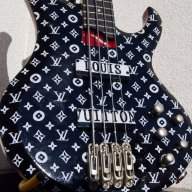
After the success of the Squier Jazzmaster Baritone, Fender is gearing up to release another inexpensive Bass VI type instrument - an officially licensed Squier Winnie-the-Pooh Bearitone.


Guitarists are reliables and the ones you can always count on when loading the gear after a gig.
Last edited:
Joseph Staline used to send bad drummers to a Siberian reeducation camp and forced them to learn how to play the Balalaika instead.
Sill today, most Russian bands replace the drummer by a Balalaika player to pay their respect to the great Staline.
Sill today, most Russian bands replace the drummer by a Balalaika player to pay their respect to the great Staline.
Last edited:
Before being used to stiffen guitar necks, truss rods were actually instruments of torture used for police interrogations called "truth rods". I let you guess how it was utilized. Later, Mexican workers at the Fender factory would pronounce it "truss rods" instead of "truth rods".
Last edited:
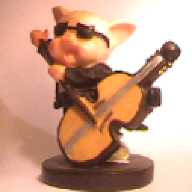
Stalin was also known to send saxophonists, clarinetists, oboists and bassoonists to reeducation camps in the Baltics.
Reeds come from arundo donax, a fibrous perennial plant. Arundo donax is a member of the grass family and a cousin of bamboo. It grows all over the world, but commercial reed cane comes primarily from Spain, Italy, Mexico, Australia, China, Central America and South America. The best cane for reeds comes principally from two countries: France and Argentina. Historically, the absolute finest reed cane comes from the south of France in a region near the French Riviera known as the Var. This is also true for the finest wines in the world. The climate is perfect and the soil contains exactly the right chemical balance for growing great reed cane and flavourful wine grapes. Arundo donax is known as “music cane” by the natives of the Var region.
For a sweeter tone, reed players will ditch the donax and use sugarcane to form their reeds...
Reeds come from arundo donax, a fibrous perennial plant. Arundo donax is a member of the grass family and a cousin of bamboo. It grows all over the world, but commercial reed cane comes primarily from Spain, Italy, Mexico, Australia, China, Central America and South America. The best cane for reeds comes principally from two countries: France and Argentina. Historically, the absolute finest reed cane comes from the south of France in a region near the French Riviera known as the Var. This is also true for the finest wines in the world. The climate is perfect and the soil contains exactly the right chemical balance for growing great reed cane and flavourful wine grapes. Arundo donax is known as “music cane” by the natives of the Var region.
For a sweeter tone, reed players will ditch the donax and use sugarcane to form their reeds...

Guitar Polish was originally invented as a dessert topping in Poland.
"It's a floor wax."

(From the late French humorist Coluche) Beethoven was so deaf he lived his entire life convinced he was a painter
Last edited:
If you "Bop 'til You Drop" you may be at risk from injury.
Research has shown that bopping while wearing elbow pads and a helmet can extend a person's life by 8 years.
French Lefty :- yes you're right...."truth rods' are still used in the Mexican Fender factory by managers and supervisors on errant workers......
Research has shown that bopping while wearing elbow pads and a helmet can extend a person's life by 8 years.
French Lefty :- yes you're right...."truth rods' are still used in the Mexican Fender factory by managers and supervisors on errant workers......
Robert Plant has announced he will be substituting as manager of Oprah's t.v. channel next year.
93% of the world's population are failed guitar players.
Of that, 41% are failed bass players...
However , ironically you can almost never find the bass or guitar you're looking for on Craigslist or E-bay.
Of that, 41% are failed bass players...
However , ironically you can almost never find the bass or guitar you're looking for on Craigslist or E-bay.

That's because we, the ones who didn't fail, aren't looking for loser type basses.93% of the world's population are failed guitar players.
Of that, 41% are failed bass players...
However , ironically you can almost never find the bass or guitar you're looking for on Craigslist or E-bay.
Instruments with mojo, basses in particular, aren't sold in regular music stores. Of course, every bass started its carreer as a new instrument, most likely sold by a specialized store. Mojo, however, has to be earned, mojo has to grow gradually. Basses previously owned by celebrities don't have any mojo left, as it has been totally exhausted. The best place to find a mojo gifted bass is the pawn shop.
It's usually called 'road-worn', available in either spray or roll-on.You can buy mojo online


