• TalkBass has been independent since 1998. Add your voice.
    Create a free account to reply to discussions, view embedded media, and browse with fewer display ads.
    Join freeLog in
    Want zero display ads or expanded classifieds tools? Compare plans.

Let's spread some musical misinformation

If a capo makes things go up in pitch, if I put four hipshots on a bass, is that an acapella?

That's a good question.

If barber shop quartets were there to amuse people waiting for a haircut, why isn't there a post office quintet,

Well, at the local post office yesterday they had only a quartet. Turns out one of the band members stayed home because of the sleet and snow.

or a grocery store trio tradition?

That used to be a quartet tradition too but too many of them would lose their gourds.

Or an entire orchestra outside major tourist attractions?

There's a bassoonist shortage. The local zoo tried to teach the baboons to play the bassoons but they'd keep getting distracted by the balloons.

In the UK there isn't a barber shop quartet tradition, although there are barber shops. But the UK has tea to help you wait, so is the Boston Tea Party the cause of barber shop quartets?

The barbershop quartets were a cost cutting measure in the USA. They used to serve tea but the barbers found the costs too taxing.

And isn't rock and roll just a reaction against barber shop quartets? If it wasn't for tax on tea there would be no TalkBass!

Just think of it. If it wasn't for that then I'd still not know what "acapella" meant!
 
Because the 5th Doctor listens to rap

I thought the Fifth Doctor listened to the sound of drums.

Fifth_Doctor_%28Doctor_Who%29.jpg


(Is that too obscure of a joke?)
 
The lower the note, the harder it is to hear, so more likely that it will be out of tune, but less likely anyone will notice. This is why if the sound engineer turns your bass into a sine wave you should rejoice, as now as long as you get the timing right, since pitch no longer matters, it will be fine.
So that's the secret behind the djent stick.
 
In the USA experimental tanks received a T designation, such as the T17, T23, or T26. The last of these was the T40. When you try a Peavey T40 and complain it weighs a ton, remember it's acutally a military vehicle and it really does weigh a ton.
The way I understand it is that the T40 is engineered to sound like a dozen other basses so to incorporate all of these sounds the T40 had to weigh as much as these basses combined.
 
In the USA experimental tanks received a T designation, such as the T17, T23, or T26. The last of these was the T40. When you try a Peavey T40 and complain it weighs a ton, remember it's acutally a military vehicle and it really does weigh a ton.

That's fascinating. I found my dad's old book on WWII military vehicles and I see that the T40 was considered a "MEDIUM" tank. The earlier T28 "super heavy" was far too large to be produced in any quantity so they did what they could to save on weight and material costs. The earlier variants of the T40, the T22 and T7, were "light" tanks (still quite heavy) that were unreliable and could not hold up to their own weight. They would hold together just fine when sitting still but when actually needed to move the early light tanks just shook themselves apart.

The T40 was really the last of the "light" tanks and all that followed would be much heavier. I hear through my Army buddies that got to drive some of the latest and greatest in technology that new vehicles are much lighter than they appear. The materials used in their construction is classified and patented. We could see this technology in guitars when the patents run out in 20 or 30 years.
 
That's fascinating. I found my dad's old book on WWII military vehicles and I see that the T40 was considered a "MEDIUM" tank. The earlier T28 "super heavy" was far too large to be produced in any quantity so they did what they could to save on weight and material costs. The earlier variants of the T40, the T22 and T7, were "light" tanks (still quite heavy) that were unreliable and could not hold up to their own weight. They would hold together just fine when sitting still but when actually needed to move the early light tanks just shook themselves apart.

The T40 was really the last of the "light" tanks and all that followed would be much heavier. I hear through my Army buddies that got to drive some of the latest and greatest in technology that new vehicles are much lighter than they appear. The materials used in their construction is classified and patented. We could see this technology in guitars when the patents run out in 20 or 30 years.

So when someone says, in 20 years, that their amp is "built like a tank" it will, finally, be actually true.
 
  • Like
Reactions: Bad azz tone
A pentave is 500 Hz. An octave is 800 Hz. Must have been a misprint. :)

More fun trivia. I discovered that an octave is 800 Hz in imperial units. In standard units it's more like 784 Hz. I discovered this when tuning my bass with a freeware tuning app that did not account for this difference in units and later getting a device used for tuning a bass, I found that they didn't agree on when I was in tune. I showed this to my bass instructor and she explained some of the history on why this is so. When standard units were developed it was independent from the musical community, only scientists established these units.

Most people won't even hear the 2% to 10% difference between the two, only like 1 in 100 people can. This "sloppy" definition of the octave is actually fortunate. Since it is rare for two basses to be truly tuned identically there is little risk for them to be in resonance. In a professional orchestra the property manager that is responsible for tuning the instruments will intentionally put each instrument slightly out of tune. If too many instruments are on the same tuning in one place the first note could resonate through the orchestra and destroy the instruments and injure the musicians.

When fretted instruments came along the frets were called such because now the musicians were more likely to stay on the proper note and for longer periods. This made musicians "fret" over if they'd resonate with the other instruments. The longer they'd be in tune and playing the same notes the energy builds up in the instrument and could be released violently. Professional musicians will have had some experience with this and will develop some intuition on how much energy their instrument can hold up to. In a live performance they will intentionally play a wrong note to relieve this pressure. They will not have to do this in a recorded session as the entire band is rarely in the same room at the same time while recording, they will record the separate sessions and splice them together later.

So, don't worry about playing a wrong note in a live performance. Most people won't notice and the professionals that do will think you are releasing built up resonant energy from being in tune for so long.
 
If too many instruments are on the same tuning in one place the first note could resonate through the orchestra and destroy the instruments and injure the musicians.

Indeed, viola players are selected for their inability to play in tune with anyone else, thus saving the violinists from almost certain harm by breaking up the resonant waves. It's also why, with the rise of rock and/or roll bands conga players started appearing (Cf. Sympathy for the Devil by The Rolling Stones, and most output by T. Rex). Since conga players are the drumming equivalent of viola players, it allows the pounding, sexual rhythm of rock and roll to be broken up, thus stopping people from being driven to commit lewd acts by the repetitive and seductive beat. Then someone invented house music.
 
Indeed, viola players are selected for their inability to play in tune with anyone else, thus saving the violinists from almost certain harm by breaking up the resonant waves.

Oh, wow, I didn't know that. So, you've heard of this resonant effect too. This might also explain why cellos, violins, and basses have standardized sizes but violas do not. With variations in the string lengths among violas the chances of getting them in tune and hitting a resonance must go down.

This also explains the popularity of the violin string quartet, because having just two violins and a cello would be suicide. What of a bluegrass quartet? They'll have a bass, guitar, mandolin or banjo, and a violin. Does this mean banjo and mandolin players break up the resonance instead? Or is it the responsibility of the bass player to hit a wrong note in the middle of the song to disperse this built up energy?

If I'm going to play bass in a bluegrass quartet then I'll need to know these things, I don't want to be responsible for injuring someone.
 
I thought of this resonant effect and went back to this video because I thought something was odd but couldn't put my finger on it. If you look and listen real close to the video you'll see at 2:28 the mandolin player, with his electronic tuner on the head of the instrument, will glance at the tuner and hit a wrong note.


I've seen this band play before and that tuner can be seen every time they play the since they got a new bass player. Coincidence? I think not.
 
...Or is it the responsibility of the bass player to hit a wrong note in the middle of the song to disperse this built up energy? ...I don't want to be responsible for injuring someone.
That resonance is now known known as "bassballs". The chance for injury has been reviewed and documented on 61 Minutes, Special Investigation with Geraldo Riviera.
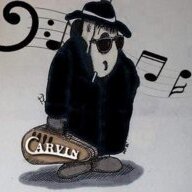
And, if it happens on a blue note, you may be subject to the "blueballs" affect or effect(if you use pedals).

You can reduce the chances of this if you keep your nut(s) adjusted.
 
That resonance is now known known as "bassballs". The chance for injury has been reviewed and documented on 61 Minutes, Special Investigation with Geraldo Riviera.

I think I remember seeing that. When was that? 1989? I now recall the "correction" they aired after a jazz player was accused of attempted murder using this effect. The guy got in a fight with the bass player and the upright bass and some other instruments were damaged shortly before they were to go on stage. This forced the quintet (or was it sextet?) to play with two banjos and the bass player's backup fretted acoustic bass guitar. The claim was that this was planned in advance as the accused was normally mildly competent on the banjo but this time played every note perfectly. Near the end of the set the bass exploded and injured the bass player seriously.

In court the injured party claimed the accused knew of this effect from the 61 Minutes program and set up the events to create the effect in public, where witnesses would no doubt be able to see that the accused did not approach the bass player in the attempt. The accused claimed ignorance and the difficulty it would take to recreate this effect so perfectly as to be deadly. The 61 Minutes "correction" tried to show the difficulty in creating this effect but I found it not very convincing. Even then I knew a highly accurate frequency detector was not that hard to build with parts from Radio Shack. The guy even admitted to tuning the instruments they played, trying to make up for damaging their primary instruments. He said his perfect playing was just a means to show he took his job seriously and didn't want to be fired after the fight.

Even after being found innocent the accused was still persona non grata after that. Even if he didn't try to kill the guy his temper left him playing solo for the rest of his life. I think that 61 Minutes was just covering themselves from further accusations of being complicit by "proving" the difficulty of this resonance effect to destroy instruments.
 
Last edited:
  • Like
Reactions: Bad azz tone
I thought of this resonant effect and went back to this video because I thought something was odd but couldn't put my finger on it. If you look and listen real close to the video you'll see at 2:28 the mandolin player, with his electronic tuner on the head of the instrument, will glance at the tuner and hit a wrong note.


I've seen this band play before and that tuner can be seen every time they play the since they got a new bass player. Coincidence? I think not.


If the tuner was on while he played - big mistake! Everybody knows this reduces sustain by 82%. He should either turn the tuner off when he's playing or use a compression/sustain pedal, and while he's at it a little tube overdrive would also be an improvement.
 
  • Like
Reactions: Jay2U