
Enjoy the benefits of a premium membership!
Upgrade Account
-
TalkBass has been independent since 1998. Add your voice.
Create a free account to reply to discussions, view embedded media, and browse with fewer display ads.
Join free Log in
Want zero display ads or expanded classifieds tools? Compare plans.
You are using an out of date browser. It may not display this or other websites correctly.
You should upgrade or use an alternative browser.
You should upgrade or use an alternative browser.
Manufacturers have given up
- Thread starter Coolhandjjl
- Start date
More options
Who Replied?
I think this is from Sweetwater.
The GK website for this combo mentions switch-mode power but no digital.
The GK website for this combo mentions switch-mode power but no digital.

I've read arguments that class D is not truly digital because it uses pulse width modulation (PWM, analog) rather than pulse code modulation (PCM, digital).
There's some confusion because class D amps can be used to convert digital audio to analog without requiring a D/A converter, this is used in devices like cell phones to save components. Class D was first developed for controlling motors, believe it or not. Audio applications came later.
I recall speaker mfr Infinity selling a "digital" amplifier in 1976 (it disappeared quickly from the market) called the SWAMP-1 (switching amp?) that was reportedly the first commercially available class D audio amp.
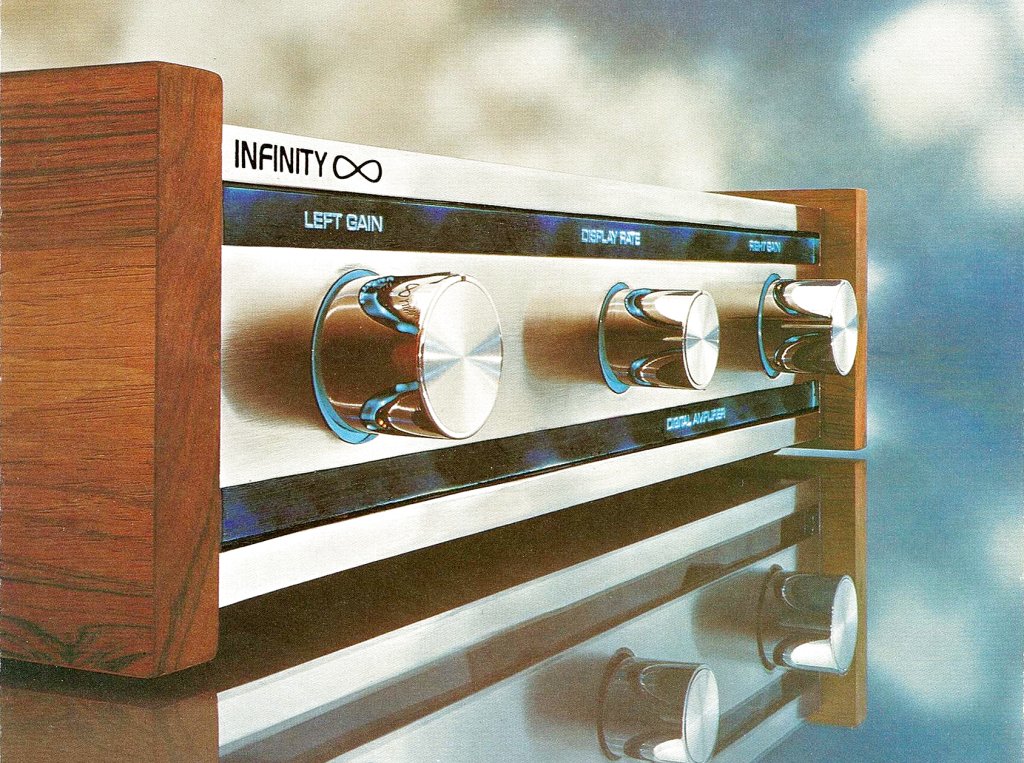
The next time I heard the word digital used for amps was the Peavey DECA power amps of the 1980s, these were also class D. The name was an acronym for Digital Energy Conversion Amplifier.
There's some confusion because class D amps can be used to convert digital audio to analog without requiring a D/A converter, this is used in devices like cell phones to save components. Class D was first developed for controlling motors, believe it or not. Audio applications came later.
I recall speaker mfr Infinity selling a "digital" amplifier in 1976 (it disappeared quickly from the market) called the SWAMP-1 (switching amp?) that was reportedly the first commercially available class D audio amp.
The next time I heard the word digital used for amps was the Peavey DECA power amps of the 1980s, these were also class D. The name was an acronym for Digital Energy Conversion Amplifier.


- Feb 12, 2006
- 60,949
- 5
- 220,568
- Disclosures
- Development Engineer-Mesa Boogie, Development Engineer-Genzler (pedals), Product Support-Genz Benz
There are a few lower powered chipsets that are in fact true digital platforms where the digital data is converted directly to a PWM signal in the didital domain. Mostly this is to reduce power consumption, increasing battery life. I frankly don't know if this technology will evolve into larger products or not. I do not know of any bass amplifiers that use this technology.

People that write ad copy often majored in creative writing.

I'm a ham radio operator and a broadcast technician. I guess that makes me a double dog radio junkie?If musicians were ham radio operators this might matter, but they aren't and it doesn't. I don't know any musician unless they are also an amp designer, EE, or radio junkie that can actually define class A, A/B, D, H, B or any of the other many configurations an output section can take. So call it digital. it's wrong but most people here refer to all micro SMPS style amps as "class D" even though half of them aren't. It's wrong but nobody even cares enough to understand what output class is or means in the first place.
My MB500 amps sound fantastic and that's all any musician cares or needs to know about.

And as a double dog radio junkie I would like to point out that you clearly neglected to mention Class C.

Not that it has anything to do with audio, but my standing in the Royal Order of the Wouff Hong would most assuredly be in jeopardy, where after I might suffer the Rettysnitch, had I not made mention.

[Invalid or Expired Link Removed]

Al Kraft
Supporting Member
- May 2, 2016
- 10,767
- 40,429
- Disclosures
- Mesa Boogie beta product tester and player support
It often reminds me of what elected officials explain as the difference between campaigning to get elected and the realities of actually governing after being elected.People that write ad copy often majored in creative writing.
Al Kraft
Supporting Member
- May 2, 2016
- 10,767
- 40,429
- Disclosures
- Mesa Boogie beta product tester and player support
This post was a learning experience I hadn't expected!I'm a ham radio operator and a broadcast technician. I guess that makes me a double dog radio junkie?
And as a double dog radio junkie I would like to point out that you clearly neglected to mention Class C.
Not that it has anything to do with audio, but my standing in the Royal Order of the Wouff Hong would most assuredly be in jeopardy, where after I might suffer the Rettysnitch, had I not made mention.
[Invalid or Expired Link Removed]

I've read arguments...
There's some confusion because class D amps can be used to convert digital audio to analog without requiring a D/A converter, this is used in devices like cell phones to save components. Class D was first developed for controlling motors, believe it or not. Audio applications came later.
I've read arguments that the world is flat and we never sent men to the moon. (This is not intended to start a further discussion on those points. Those with different beliefs, take it outside please. Thank you.) For me, reading such things is not automatic confirmation of fact.
The confusion is there because, as has been pointed out in this thread to a large degree, marketing writes brochures and customers read them believing it all at face value. Then those same people having read and believed the sales pitch go on to parrot what they read without undertaking any further self discovery of the facts.
Again I have no particular argument with you saying what you said.
My complaint is about those who don't go beyond what is printed in a slick brochure or a nice looking website.
If musicians were ham radio operators this might matter, but they aren't and it doesn't.
I had to learn class A, B and A/B topologies for my Advanced ham test many years ago. Yes I am a ham operator. No it doesn't matter to me.
73 de n1as sk

They are still working to optimize the distributed framework to engage in a strategic deployment that will achieve a reduced opex and capex investment, resulting in marked customer satisfaction and time management potentials.Cloud-based Class-C sure is taking forever to work itself into the MI market. I expect it to completely disrupt the ecosystem when it does.

You forgot blockchain... it's gotta have blockchain.They are still working to optimize the distributed framework to engage in a strategic deployment that will achieve a reduced opex and capex investment, resulting in marked customer satisfaction and time management potentials.
D
Deleted member 165050
Guest
You forgot blockchain... it's gotta have blockchain.
As blockchain is a cryptographic hash of the incoming information, this could lead to some interesting sounds when applied to audio.
Al Kraft
Supporting Member
- May 2, 2016
- 10,767
- 40,429
- Disclosures
- Mesa Boogie beta product tester and player support
Isn't it amazing how everything has to somehow incorporate the latest greatest tool/technology of the day even when it doesn't apply?You forgot blockchain... it's gotta have blockchain.
Al Kraft
Supporting Member
- May 2, 2016
- 10,767
- 40,429
- Disclosures
- Mesa Boogie beta product tester and player support
...and I assume would require a public ledger consensus before the note could be played???As blockchain is a cryptographic hash of the incoming information, this could lead to some interesting sounds when applied to audio.
D
Deleted member 165050
Guest
...and I assume would require a public ledger consensus before the note could be played???
I think I’d restrict the ledger to just the notes in the current song otherwise the chain could get too long to process quickly enough...
Hey did Fleetwood Mac predict blockchain?
- Feb 12, 2006
- 60,949
- 5
- 220,568
- Disclosures
- Development Engineer-Mesa Boogie, Development Engineer-Genzler (pedals), Product Support-Genz Benz
I believe the concept of class D was developed by Western Electric or AT&T back in the 1930's when they were looking at more efficient amplifiers to drive very long cable runs where intermediate amplifiers (active repeaters) were not practical or even possible. Think underwater trans-continental cables.
The first commercial class D amp was introduced by Clive Sinclair, while it worked, it was neither good sounding or reliable.
I don't recall any early motor control applications that used class D, virtually everything I am familiar with used either linear error amps or direct PWM control/amplification in more of a level shifting function. There was no reconstruction of the signal as in a class D amplifier. Pure PWM is not (IMO) the same as class D (which uses PWM as one of it's elements).
The first commercial class D amp was introduced by Clive Sinclair, while it worked, it was neither good sounding or reliable.
I don't recall any early motor control applications that used class D, virtually everything I am familiar with used either linear error amps or direct PWM control/amplification in more of a level shifting function. There was no reconstruction of the signal as in a class D amplifier. Pure PWM is not (IMO) the same as class D (which uses PWM as one of it's elements).

...For example, look up Rickenbacker guitars on their website. The 330 is listed as a “thinline” and 620 is a “deluxe” and the 360 is a “deluxe thinline.” I’ve been a Rick enthusiast for 25 years (guitars and basses) and I’ve never heard those instruments described as that.
Rickenbacker's own literature used these terms back in 1975. You're just not old enough.
[Invalid or Expired Link Removed]
I've seen class D hardware marketed as "digital amplification" ever since audio products started coming out with Tripath TA-series chips in them (which itself was marketed as "class T", just to confuse things further).
That was around the turn of the millennium, so disregarding for a moment whether the term "digital" is accurate, at least it's not new.
That was around the turn of the millennium, so disregarding for a moment whether the term "digital" is accurate, at least it's not new.

If musicians were ham radio operators this might matter, but they aren't and it doesn't. I don't know any musician unless they are also an amp designer, EE, or radio junkie that can actually define class A, A/B, D, H, B or any of the other many configurations an output section can take. So call it digital. it's wrong but most people here refer to all micro SMPS style amps as "class D" even though half of them aren't. It's wrong but nobody even cares enough to understand what output class is or means in the first place.
My MB500 amps sound fantastic and that's all any musician cares or needs to know about.
Bravo India November Golf Oscar.
73s


