

Enjoy the benefits of a premium membership!
Upgrade Account
-
TalkBass has been independent since 1998. Add your voice.
Create a free account to reply to discussions, view embedded media, and browse with fewer display ads.
Join free Log in
Want zero display ads or expanded classifieds tools? Compare plans.
You are using an out of date browser. It may not display this or other websites correctly.
You should upgrade or use an alternative browser.
You should upgrade or use an alternative browser.
Modulus; nice...but you are getting jacked....hard
- Thread starter Thir13teen
- Start date
More options
Who Replied?

SirMjac28
Patiently Waiting For The Next British Invasion

Modulus necks with truss rods have a middle "neutral" position where the rod is loose. If you tighten it either way, it adds or takes away relief. Just FYI. I've never heard of the truss being able to wreck the neck (unless you break it).Be aware of Modulus basses with the truss rod on anything of age - I had 2 that had been torqued quite a bit (truss rod adjustments) to the point that they were "free wheeling" - that is to say, you could move the truss rod almost with your finger they were so loose - bought them both used and was not told about the issue - I guess, due to the carbon fiber material, once they get adjusted enough, they dig out the carbon to the point they are useless - found that out not too earlier on that Peavey G bass had the custom neck from Modulus - had same issue -- so if you get one, be careful about how the truss rod can render itself useless after many many turns
I typed these stories just to suggest that Modulus instruments while usually great, aren't necessarily as stable in the long run as some would suspect.
.
This is my experience too. I think such companies should just stay nationwide, or even just regionally in order to be able to make up for warped necks. It may even turn out the same as on any acoustic guitar of some repute, that after a while, a neck reset has to be done. Mind you my friends Modulus ws bought new in 1995, and as of 2001 just 6 years later, the bass needed shipment (with body) across the pond and back, and was at repair for 8 months. Maybe that one seems to be incorporated in the overall reasons (contributing, not solely) for Modulus to go bankrupt.
These is/was a false assumption that any graphite (carbon fiber, kevlar, whatnot) should outlive wooden necks, and even (this one is beyond me) not needing any truss rod at all. And now some 20-30 years ahead you'll see it happening to Steinbergers too. I don't know about Zon though. The only one's I've heard of not going south after a few decades are Status, but they may have other "idiosyncrasies" that may not show up immediately. But again, Status seems to hold the most expensive ones out there as for now.
Moses are the cheapest. And I've heard loads of **** about them too, and encountered quite a few irks with them too myself. The most annoying one is that they're way too flexible and sensitive to string tension. I e their necks behaves the same as of that of a strat with floating tremolo bridge. If you tune up one string, and starts to tune up the adjacent stirng, the first string you tuned up changes too. And if you tune down to D on the low E, an increased buzz can be heard since the relief reacts accordingly, immediately, because of the backbow induced. If a g-string should snap, it's impossible to carry on playing as the neck turns a backbow immediately. They're just too flexible.
I still find it strange that Moses makes direct replacement necks for Modulus (Quantum only it seems). It should've been the other way around...really.

The tell tale of Moses, is at their website, on their info page, they just have to put out a rant/blog about "Should You Believe Everything Written on the Internet?" in their FAQ chapter, and it's a slight...uh uh..disservice to them, themselves. They don't know how much gas on the fire they pour on top of it, with that one. If you have to put out a statement like that, then it's no smoke without fire. No other company does this. Graphite or not.
Last edited by a moderator:
huh?Modulus necks with truss rods have a middle "neutral" position where the rod is loose. If you tighten it either way, it adds or takes away relief. Just FYI. I've never heard of the truss being able to wreck the neck (unless you break it).
As for Status being the most stable, I've read and heard that at least one of the prototypes of John Entwistles Buzzard basses, caved in, and shattered in front of him due to no apparent reason:
From December 1996 Total Guitar interview
[Regarding the June 1996 Hyde Park Quadrophenia performance] You were playing your Buzzard bass…
“Yeah, it’s a Status Buzzard and I had the two prototypes with me on that gig. It’s completely graphite, a one-piece mould. But the second one caved in on me. They are, or were, absolutely identical in every way; they feel and sound the same, so I had to put a different colour hip shot on each of them so I could tell the difference.
Caved in on me !??!

But hey, prototypes, they eventually got it right, when the production models came around. But I really hope that the one didn't cave in on him during that gig.
From December 1996 Total Guitar interview
[Regarding the June 1996 Hyde Park Quadrophenia performance] You were playing your Buzzard bass…
“Yeah, it’s a Status Buzzard and I had the two prototypes with me on that gig. It’s completely graphite, a one-piece mould. But the second one caved in on me. They are, or were, absolutely identical in every way; they feel and sound the same, so I had to put a different colour hip shot on each of them so I could tell the difference.
Caved in on me !??!
But hey, prototypes, they eventually got it right, when the production models came around. But I really hope that the one didn't cave in on him during that gig.
From an old forum by another user back in 2008:
"Graphite necks will move, and anyone who says that they don't or can't is flat-out wrong. I had a Modulus Q5 a few years ago...one of the older ones without a truss rod. After changing strings from an unknown brand to DR HiBeams, the bass developed a pretty bad backbow and was unplayable. I called Modulus, thinking that I would need a new neck. I described the problem to their tech over the phone, and he replied by asking me if I was using DR's.
When I said "yes," he told me to throw another brand on the bass and assured me that the problem would go away. I thought he was either lying or crazy, but I did what he suggested and put a set of GHS Bass Boomers on the bass. Within 2 weeks the bass was back in perfect relief. I have since learned that DR HiBeams, which are great strings IMHO, have a much lower tension than most other roundwounds of a comparable gauge.
Bottom line: graphite necks move."
[Invalid or Expired Link Removed]
"Graphite necks will move, and anyone who says that they don't or can't is flat-out wrong. I had a Modulus Q5 a few years ago...one of the older ones without a truss rod. After changing strings from an unknown brand to DR HiBeams, the bass developed a pretty bad backbow and was unplayable. I called Modulus, thinking that I would need a new neck. I described the problem to their tech over the phone, and he replied by asking me if I was using DR's.
When I said "yes," he told me to throw another brand on the bass and assured me that the problem would go away. I thought he was either lying or crazy, but I did what he suggested and put a set of GHS Bass Boomers on the bass. Within 2 weeks the bass was back in perfect relief. I have since learned that DR HiBeams, which are great strings IMHO, have a much lower tension than most other roundwounds of a comparable gauge.
Bottom line: graphite necks move."
[Invalid or Expired Link Removed]
And at the same page, a looong winded post from David Fung (Modulus fan, so very biased!) who elaborates and then some, but really is a very interesting read and crucial for further discussion:
- - - - - - - - - -
"Normally, I burst in on the graphite discussions earlier, but have been swamped lately!
As some of you long-time viewers already know, I'm a big Modulus fan and have been close friends with Geoff Gould who developed the original Modulus neck in conjunction with Alembic for many years now. So, we've chattered about why things were done the way they were many times in the past.
The interesting thing about building things out of composite materials is that you can engineer the characteristics of the final piece fairly precisely and repeatably. You'd have a hard time building a one piece wood neck that had specific stiffness or resonant frequency. You can get closer by laminating the neck, since the layers in opposition can counteract some of the natural irregularities in the wood. With something like a graphite neck, you can build in a very specific stiffness and you can control where the stiffness is directed. You see this to a greater extent in composite stuff like bike frames or golf club shafts, where they can engineer flex in in one direction and stiffness in a different direction.
When Geoff first got the idea of building a graphite bass neck, he was working at Ford Aerospace in Palo Alto, CA as a technician and composites fabricator. He was making satellite parts, totally cutting edge stuff at the time. These sorts of applications are totally weight-conscious - lifting a payload was monumentally expensive and very limited, so if you couldn't hit a weight target, you just couldn't do that mission. The strength of engineered graphite vs. steel, aluminum, or titanium was so much greater that they could use a lot less material for the same strength.
This is where the idea for the Modulus neck came from. Geoff saw Phil Lesh battling neck dive at a Dead show and thought that a lighter-weight graphite neck would solve the problem. He ended up talking with Alembic who built the first instruments with graphite necks, and the rest was history.
The lack of a trussrod in the original Modulus design was intentional on Geoff's part. From a purist's standpoint, he wanted the entire tension of the string, from end to end, to be borne only by graphite. The graphite material he used was exactly the same stuff that he was buiding satellite parts and Indy car tubs from, a graphite fabric that was impregnated with epoxy resin. Sheets of the pre-preg were cut and laid in a mold which was then cooked under heat and pressure in a giant autoclave until the resin cured and locked the graphite fibers into a solid matrix. The pre-preg fabric is unidirectional - the fibers all run parallel to each other - so you can engineer the performance of the parts by adjusting the direction that the grain of the graphite fibers and overlapping them in different directions. The material is thermoset, which means that the heat changes the material. The fabric is flexible before it's cooked, but after the curing reaction it is pretty impervious to heat and humidity. This is different than a thermoplastic material which is molded to a shape under heat, but will change again if you re-heat it later.
Even today, Modulus and Status necks are built using this process (Vigier was like this too back when they had graphite necks). Modulus necks are multi-piece assemblies which are laid up in molds. Status instruments are made by wrapping the pre-preg around a styrofoam core, basically the same process that you use to make surfboards. The Steinberger and Moses necks are made with a different process, where the neck is poured from a liquid resin around a graphite "backbone". The latter necks gain strength and stiffness from the backbone, but the structural characteristics aren't as controllable as the monocoque structure of Modulus necks (of course, the Steinberger and Moses necks are poured from a uniform material, so there is less variation than wood).
The resulting neck in a Modulus is really strong and stiff relative to wood, but still flexes under string tension, which it was intended to do. You can make a super-strong neck that doesn't flex or deflect at all under string tension, but this requires use of a stronger and more expensive pre-preg fabric. If you handled a Modulus or Steinberger, you'll immediately notice that, if anything, it's heavier than a wood neck rather than lighter. That's because the neck could be engineered to flex to the proper position under tension using less exotic materials which were heavier.
The earliest Modulus necks were made of these super-strong fabrics. A couple of years ago, a very old six-string Quantum through-body appeared on eBay. It turned out that this instrument, the second or third Modulus-logo'ed bass had been stolen from Geoff's office years before. The seller (who had purchased the instrument at a pawn shop) returned the instrument to Geoff, who was surprised to find that this BEADGC bass had it's regular low-B strings on it but was tuned up a fourth like a guitar! It was actually still playable, although I would insist on safety goggles and a full face shield before I'd touch it myself. There's no way that a wood neck could handle that sort of tension. And yes, these very old Modulus necks defintitely have a different tone than the regular production.
If there's a sonic advantage to no trussrod, there's certainly a physical disadvantage which is that you can't easily fine tune the action for your playing style and desired strings. As has been mentioned above, if you want to modify the relief, it needs to be done via a very expert fret milling. Ultimately, this is why all the makers of composite necks today have trussrods. The latitude of change in these necks is much less than the trussrod would yield in a wood neck, but sufficient to tune for different strings and desired action.
This helps make the instruments more produceable as well. In the case of Modulus, the "secret recipe" of the materials and construction is carefully tuned so that the fretboard can be planed to dead level and frets installed dead level under no tension, then will pull into the desired target relief when strung up. Over time as the materials change, they need to adjust the fabrication instructions to compensate, and this slowed down production because transitional instruments needed to have additional fretwork before they could go out the door.
Incidentally, the fingerboard on Modulus, Status, and original Steinberger is phenolic, the very first composite material. The graphite is way too hard to be shaped into a playing surface (it will quickly dull regular tools). Geoff considered a wood fingerboard but was concerned that it might not be stable since wood can be very subject to expansion with humidity and heat. He ended up selecting phenolic because it's easy to work (pretty much the same as wood) and aesthetically he wanted the neck not to have any wood in it.
The graphite in a Modulus neck is fabricated in two pieces - a main molded U-shaped part that has the shape of the back of a guitar neck and a thick flat plate that it bonded on to the top of the U. Together they form a monocoque tube which structurally is stronger than a solid neck (and saves on expensive materials as well). The phenolic fingerboard is epoxied on top of the flat piece.
The individual pieces are REALLY strong and stable. If properly constructed they won't bend, twist, or warp over time. It turns out that that's actually the Achilles heel of the Modulus neck. The curved main part is cooked in a mold, then the open side of the "U" is milled with a carbide tool to be dead flat and the flat piece is bonded on top of that. The problem arises when the milling isn't done properly. This can leave an internal tension in the neck assembly where the parts want to spring apart with only the epoxy bond holding them together. Ultimately, a neck like this can fail and split along the bond line. This is the dreaded "delamination" which is largely fatal for Modulus necks as it requires the neck to be completely disassembled, remilled, reassembled, refretted, etc. Even with perfectly machined parts, the epoxy bond line is actually not that strong relative to the neck pieces and can be compromised by heat or when an instrument takes a dive off the stand. I think most of the reports of "warped" necks are actually delaminations (actually, it is a warp that's causing this).
I don't think you can find a better sounding instrument that a Series bass with Modulus neck. But it's got to be a nightmare for both Alembic and Modulus. Unlike regular Modulus production (which is mostly bolt-ons), graphite Alembics were very rare, so there was much less opportunity to tune the neck recipe for easy setup. The threat of a delamination is bad enough on a bolt-on where you have to scrap the neck, but a nightmare on a through-body where it could potentially lead to a non-repairable instrument. For these rare instruments (by all accounts much less than 100 total), there was also some jockeying around about exactly how they were made - Modulus always fabricated the parts, but in some cases the neck assembly was done at Alembic (where they had less experience but could maintain more control) and some at Modulus (where they had more assembly experience but no insight into how the neck would be mated to the body).
I was fortunate to have a Series II graphite neck made back around 1987, probably one of the last. I have no issues with stability although the action was never quite to my liking out of the factory (insufficent relief). Years later, I had this corrected in a very expensive fret mill by the builder who did most of Modulus' custom shop work, but even with his level of experience, it was hard to convince him to take on the job as he was concerned about disturbing the side LEDs in the event that he had to remove a fret. He didn't have to and it all worked out OK for my bass in the end though.
The fab process of graphite necks is so radically different than the woodworking that goes into a wood-necked Alembic, that it's not suprising that it's not offered anymore. Not only is it hard to manufacture, but you lose the ability to customize profile, scale length, and more"
David Fung
- - - - - - - - - -
"Normally, I burst in on the graphite discussions earlier, but have been swamped lately!
As some of you long-time viewers already know, I'm a big Modulus fan and have been close friends with Geoff Gould who developed the original Modulus neck in conjunction with Alembic for many years now. So, we've chattered about why things were done the way they were many times in the past.
The interesting thing about building things out of composite materials is that you can engineer the characteristics of the final piece fairly precisely and repeatably. You'd have a hard time building a one piece wood neck that had specific stiffness or resonant frequency. You can get closer by laminating the neck, since the layers in opposition can counteract some of the natural irregularities in the wood. With something like a graphite neck, you can build in a very specific stiffness and you can control where the stiffness is directed. You see this to a greater extent in composite stuff like bike frames or golf club shafts, where they can engineer flex in in one direction and stiffness in a different direction.
When Geoff first got the idea of building a graphite bass neck, he was working at Ford Aerospace in Palo Alto, CA as a technician and composites fabricator. He was making satellite parts, totally cutting edge stuff at the time. These sorts of applications are totally weight-conscious - lifting a payload was monumentally expensive and very limited, so if you couldn't hit a weight target, you just couldn't do that mission. The strength of engineered graphite vs. steel, aluminum, or titanium was so much greater that they could use a lot less material for the same strength.
This is where the idea for the Modulus neck came from. Geoff saw Phil Lesh battling neck dive at a Dead show and thought that a lighter-weight graphite neck would solve the problem. He ended up talking with Alembic who built the first instruments with graphite necks, and the rest was history.
The lack of a trussrod in the original Modulus design was intentional on Geoff's part. From a purist's standpoint, he wanted the entire tension of the string, from end to end, to be borne only by graphite. The graphite material he used was exactly the same stuff that he was buiding satellite parts and Indy car tubs from, a graphite fabric that was impregnated with epoxy resin. Sheets of the pre-preg were cut and laid in a mold which was then cooked under heat and pressure in a giant autoclave until the resin cured and locked the graphite fibers into a solid matrix. The pre-preg fabric is unidirectional - the fibers all run parallel to each other - so you can engineer the performance of the parts by adjusting the direction that the grain of the graphite fibers and overlapping them in different directions. The material is thermoset, which means that the heat changes the material. The fabric is flexible before it's cooked, but after the curing reaction it is pretty impervious to heat and humidity. This is different than a thermoplastic material which is molded to a shape under heat, but will change again if you re-heat it later.
Even today, Modulus and Status necks are built using this process (Vigier was like this too back when they had graphite necks). Modulus necks are multi-piece assemblies which are laid up in molds. Status instruments are made by wrapping the pre-preg around a styrofoam core, basically the same process that you use to make surfboards. The Steinberger and Moses necks are made with a different process, where the neck is poured from a liquid resin around a graphite "backbone". The latter necks gain strength and stiffness from the backbone, but the structural characteristics aren't as controllable as the monocoque structure of Modulus necks (of course, the Steinberger and Moses necks are poured from a uniform material, so there is less variation than wood).
The resulting neck in a Modulus is really strong and stiff relative to wood, but still flexes under string tension, which it was intended to do. You can make a super-strong neck that doesn't flex or deflect at all under string tension, but this requires use of a stronger and more expensive pre-preg fabric. If you handled a Modulus or Steinberger, you'll immediately notice that, if anything, it's heavier than a wood neck rather than lighter. That's because the neck could be engineered to flex to the proper position under tension using less exotic materials which were heavier.
The earliest Modulus necks were made of these super-strong fabrics. A couple of years ago, a very old six-string Quantum through-body appeared on eBay. It turned out that this instrument, the second or third Modulus-logo'ed bass had been stolen from Geoff's office years before. The seller (who had purchased the instrument at a pawn shop) returned the instrument to Geoff, who was surprised to find that this BEADGC bass had it's regular low-B strings on it but was tuned up a fourth like a guitar! It was actually still playable, although I would insist on safety goggles and a full face shield before I'd touch it myself. There's no way that a wood neck could handle that sort of tension. And yes, these very old Modulus necks defintitely have a different tone than the regular production.
If there's a sonic advantage to no trussrod, there's certainly a physical disadvantage which is that you can't easily fine tune the action for your playing style and desired strings. As has been mentioned above, if you want to modify the relief, it needs to be done via a very expert fret milling. Ultimately, this is why all the makers of composite necks today have trussrods. The latitude of change in these necks is much less than the trussrod would yield in a wood neck, but sufficient to tune for different strings and desired action.
This helps make the instruments more produceable as well. In the case of Modulus, the "secret recipe" of the materials and construction is carefully tuned so that the fretboard can be planed to dead level and frets installed dead level under no tension, then will pull into the desired target relief when strung up. Over time as the materials change, they need to adjust the fabrication instructions to compensate, and this slowed down production because transitional instruments needed to have additional fretwork before they could go out the door.
Incidentally, the fingerboard on Modulus, Status, and original Steinberger is phenolic, the very first composite material. The graphite is way too hard to be shaped into a playing surface (it will quickly dull regular tools). Geoff considered a wood fingerboard but was concerned that it might not be stable since wood can be very subject to expansion with humidity and heat. He ended up selecting phenolic because it's easy to work (pretty much the same as wood) and aesthetically he wanted the neck not to have any wood in it.
The graphite in a Modulus neck is fabricated in two pieces - a main molded U-shaped part that has the shape of the back of a guitar neck and a thick flat plate that it bonded on to the top of the U. Together they form a monocoque tube which structurally is stronger than a solid neck (and saves on expensive materials as well). The phenolic fingerboard is epoxied on top of the flat piece.
The individual pieces are REALLY strong and stable. If properly constructed they won't bend, twist, or warp over time. It turns out that that's actually the Achilles heel of the Modulus neck. The curved main part is cooked in a mold, then the open side of the "U" is milled with a carbide tool to be dead flat and the flat piece is bonded on top of that. The problem arises when the milling isn't done properly. This can leave an internal tension in the neck assembly where the parts want to spring apart with only the epoxy bond holding them together. Ultimately, a neck like this can fail and split along the bond line. This is the dreaded "delamination" which is largely fatal for Modulus necks as it requires the neck to be completely disassembled, remilled, reassembled, refretted, etc. Even with perfectly machined parts, the epoxy bond line is actually not that strong relative to the neck pieces and can be compromised by heat or when an instrument takes a dive off the stand. I think most of the reports of "warped" necks are actually delaminations (actually, it is a warp that's causing this).
I don't think you can find a better sounding instrument that a Series bass with Modulus neck. But it's got to be a nightmare for both Alembic and Modulus. Unlike regular Modulus production (which is mostly bolt-ons), graphite Alembics were very rare, so there was much less opportunity to tune the neck recipe for easy setup. The threat of a delamination is bad enough on a bolt-on where you have to scrap the neck, but a nightmare on a through-body where it could potentially lead to a non-repairable instrument. For these rare instruments (by all accounts much less than 100 total), there was also some jockeying around about exactly how they were made - Modulus always fabricated the parts, but in some cases the neck assembly was done at Alembic (where they had less experience but could maintain more control) and some at Modulus (where they had more assembly experience but no insight into how the neck would be mated to the body).
I was fortunate to have a Series II graphite neck made back around 1987, probably one of the last. I have no issues with stability although the action was never quite to my liking out of the factory (insufficent relief). Years later, I had this corrected in a very expensive fret mill by the builder who did most of Modulus' custom shop work, but even with his level of experience, it was hard to convince him to take on the job as he was concerned about disturbing the side LEDs in the event that he had to remove a fret. He didn't have to and it all worked out OK for my bass in the end though.
The fab process of graphite necks is so radically different than the woodworking that goes into a wood-necked Alembic, that it's not suprising that it's not offered anymore. Not only is it hard to manufacture, but you lose the ability to customize profile, scale length, and more"
David Fung
Last edited:
Wow fascinating read!And at the same page, a looong winded post from David Fung (Modulus fan, so very biased!) who elaborates and then some, but really is a very interesting read and crucial for further discussion:
- - - - - - - - - -
"Normally, I burst in on the graphite discussions earlier, but have been swamped lately!
As some of you long-time viewers already know, I'm a big Modulus fan and have been close friends with Geoff Gould who developed the original Modulus neck in conjunction with Alembic for many years now. So, we've chattered about why things were done the way they were many times in the past.
The interesting thing about building things out of composite materials is that you can engineer the characteristics of the final piece fairly precisely and repeatably. You'd have a hard time building a one piece wood neck that had specific stiffness or resonant frequency. You can get closer by laminating the neck, since the layers in opposition can counteract some of the natural irregularities in the wood. With something like a graphite neck, you can build in a very specific stiffness and you can control where the stiffness is directed. You see this to a greater extent in composite stuff like bike frames or golf club shafts, where they can engineer flex in in one direction and stiffness in a different direction.
When Geoff first got the idea of building a graphite bass neck, he was working at Ford Aerospace in Palo Alto, CA as a technician and composites fabricator. He was making satellite parts, totally cutting edge stuff at the time. These sorts of applications are totally weight-conscious - lifting a payload was monumentally expensive and very limited, so if you couldn't hit a weight target, you just couldn't do that mission. The strength of engineered graphite vs. steel, aluminum, or titanium was so much greater that they could use a lot less material for the same strength.
This is where the idea for the Modulus neck came from. Geoff saw Phil Lesh battling neck dive at a Dead show and thought that a lighter-weight graphite neck would solve the problem. He ended up talking with Alembic who built the first instruments with graphite necks, and the rest was history.
The lack of a trussrod in the original Modulus design was intentional on Geoff's part. From a purist's standpoint, he wanted the entire tension of the string, from end to end, to be borne only by graphite. The graphite material he used was exactly the same stuff that he was buiding satellite parts and Indy car tubs from, a graphite fabric that was impregnated with epoxy resin. Sheets of the pre-preg were cut and laid in a mold which was then cooked under heat and pressure in a giant autoclave until the resin cured and locked the graphite fibers into a solid matrix. The pre-preg fabric is unidirectional - the fibers all run parallel to each other - so you can engineer the performance of the parts by adjusting the direction that the grain of the graphite fibers and overlapping them in different directions. The material is thermoset, which means that the heat changes the material. The fabric is flexible before it's cooked, but after the curing reaction it is pretty impervious to heat and humidity. This is different than a thermoplastic material which is molded to a shape under heat, but will change again if you re-heat it later.
Even today, Modulus and Status necks are built using this process (Vigier was like this too back when they had graphite necks). Modulus necks are multi-piece assemblies which are laid up in molds. Status instruments are made by wrapping the pre-preg around a styrofoam core, basically the same process that you use to make surfboards. The Steinberger and Moses necks are made with a different process, where the neck is poured from a liquid resin around a graphite "backbone". The latter necks gain strength and stiffness from the backbone, but the structural characteristics aren't as controllable as the monocoque structure of Modulus necks (of course, the Steinberger and Moses necks are poured from a uniform material, so there is less variation than wood).
The resulting neck in a Modulus is really strong and stiff relative to wood, but still flexes under string tension, which it was intended to do. You can make a super-strong neck that doesn't flex or deflect at all under string tension, but this requires use of a stronger and more expensive pre-preg fabric. If you handled a Modulus or Steinberger, you'll immediately notice that, if anything, it's heavier than a wood neck rather than lighter. That's because the neck could be engineered to flex to the proper position under tension using less exotic materials which were heavier.
The earliest Modulus necks were made of these super-strong fabrics. A couple of years ago, a very old six-string Quantum through-body appeared on eBay. It turned out that this instrument, the second or third Modulus-logo'ed bass had been stolen from Geoff's office years before. The seller (who had purchased the instrument at a pawn shop) returned the instrument to Geoff, who was surprised to find that this BEADGC bass had it's regular low-B strings on it but was tuned up a fourth like a guitar! It was actually still playable, although I would insist on safety goggles and a full face shield before I'd touch it myself. There's no way that a wood neck could handle that sort of tension. And yes, these very old Modulus necks defintitely have a different tone than the regular production.
If there's a sonic advantage to no trussrod, there's certainly a physical disadvantage which is that you can't easily fine tune the action for your playing style and desired strings. As has been mentioned above, if you want to modify the relief, it needs to be done via a very expert fret milling. Ultimately, this is why all the makers of composite necks today have trussrods. The latitude of change in these necks is much less than the trussrod would yield in a wood neck, but sufficient to tune for different strings and desired action.
This helps make the instruments more produceable as well. In the case of Modulus, the "secret recipe" of the materials and construction is carefully tuned so that the fretboard can be planed to dead level and frets installed dead level under no tension, then will pull into the desired target relief when strung up. Over time as the materials change, they need to adjust the fabrication instructions to compensate, and this slowed down production because transitional instruments needed to have additional fretwork before they could go out the door.
Incidentally, the fingerboard on Modulus, Status, and original Steinberger is phenolic, the very first composite material. The graphite is way too hard to be shaped into a playing surface (it will quickly dull regular tools). Geoff considered a wood fingerboard but was concerned that it might not be stable since wood can be very subject to expansion with humidity and heat. He ended up selecting phenolic because it's easy to work (pretty much the same as wood) and aesthetically he wanted the neck not to have any wood in it.
The graphite in a Modulus neck is fabricated in two pieces - a main molded U-shaped part that has the shape of the back of a guitar neck and a thick flat plate that it bonded on to the top of the U. Together they form a monocoque tube which structurally is stronger than a solid neck (and saves on expensive materials as well). The phenolic fingerboard is epoxied on top of the flat piece.
The individual pieces are REALLY strong and stable. If properly constructed they won't bend, twist, or warp over time. It turns out that that's actually the Achilles heel of the Modulus neck. The curved main part is cooked in a mold, then the open side of the "U" is milled with a carbide tool to be dead flat and the flat piece is bonded on top of that. The problem arises when the milling isn't done properly. This can leave an internal tension in the neck assembly where the parts want to spring apart with only the epoxy bond holding them together. Ultimately, a neck like this can fail and split along the bond line. This is the dreaded "delamination" which is largely fatal for Modulus necks as it requires the neck to be completely disassembled, remilled, reassembled, refretted, etc. Even with perfectly machined parts, the epoxy bond line is actually not that strong relative to the neck pieces and can be compromised by heat or when an instrument takes a dive off the stand. I think most of the reports of "warped" necks are actually delaminations (actually, it is a warp that's causing this).
I don't think you can find a better sounding instrument that a Series bass with Modulus neck. But it's got to be a nightmare for both Alembic and Modulus. Unlike regular Modulus production (which is mostly bolt-ons), graphite Alembics were very rare, so there was much less opportunity to tune the neck recipe for easy setup. The threat of a delamination is bad enough on a bolt-on where you have to scrap the neck, but a nightmare on a through-body where it could potentially lead to a non-repairable instrument. For these rare instruments (by all accounts much less than 100 total), there was also some jockeying around about exactly how they were made - Modulus always fabricated the parts, but in some cases the neck assembly was done at Alembic (where they had less experience but could maintain more control) and some at Modulus (where they had more assembly experience but no insight into how the neck would be mated to the body).
I was fortunate to have a Series II graphite neck made back around 1987, probably one of the last. I have no issues with stability although the action was never quite to my liking out of the factory (insufficent relief). Years later, I had this corrected in a very expensive fret mill by the builder who did most of Modulus' custom shop work, but even with his level of experience, it was hard to convince him to take on the job as he was concerned about disturbing the side LEDs in the event that he had to remove a fret. He didn't have to and it all worked out OK for my bass in the end though.
The fab process of graphite necks is so radically different than the woodworking that goes into a wood-necked Alembic, that it's not suprising that it's not offered anymore. Not only is it hard to manufacture, but you lose the ability to customize profile, scale length, and more.
David Fung"
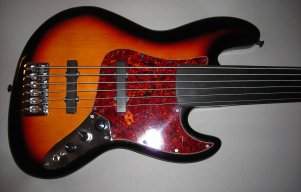
You said $4200? That's cheap. My Quantum 6 with the extra features (bartolini pickups/3 band pre, 5A quilted maple top, custom color, gloss finished neck) is $6,424.00

Yeah, you got jacked...hard!
You see your Quantum 6 is just like MY Quantum 6 except mine (also purpleish...I think it may be called "wine") just has a kind of darker flamed maple top rather than the jaw-dropping quilt.
One other thing. Got mine used for $2000.
So if you want a bass that PLAYS and SOUNDS like it cost $4000 this is it. If you want one that LOOKS like it cost $6,434.00, then it costs $6,424.00 (until you get tired of yours)


I have seen 5 or 6 forward bowed pre-truss rod Modulus necks, but none with the delamination mentioned above. All but one was a 4 string, the other a 5 string. The theory I read on TB was that the phenolic material in the fingerboard shrinks over time.
I sent two out to Jerry Dorsch who did a good job defretting/planing/and refretting the instruments. With shipping and local luthier setup of the neck angle and nut recalibration, it cost $300 to fix and makea warped neck play like new.
I also have successfully adjusted the truss rods on a couple of Q5s to correct forward bowing.
I love these basses and feel that they share a unique sound.
I almost never buy new gear, so their new retail prices only serve to reinforce Modulus's used value.
I sent two out to Jerry Dorsch who did a good job defretting/planing/and refretting the instruments. With shipping and local luthier setup of the neck angle and nut recalibration, it cost $300 to fix and makea warped neck play like new.
I also have successfully adjusted the truss rods on a couple of Q5s to correct forward bowing.
I love these basses and feel that they share a unique sound.
I almost never buy new gear, so their new retail prices only serve to reinforce Modulus's used value.
The main problem is the phenolic fretboard, that shrinks, warps over time, while whatever graphite, carbon fiber, doesn't. Note, we
are talking the actual fretboard only. Here's what Moses has to say (very very biased! DISCLAIMER: It's a pure sales pitch, but nevertheless valid):
Invalid Link Removed
- - - - - - start of quote - - - - -
The Phenolic used for fingerboards is dense, stiff and cheap. However…most Phenolic fingerboards are not impervious to temperature & moisture. Phenolic fingerboards wear out. Phenolic is used by manufacturers because:
lighter colored (whiter) lines running in the direction of the strings as phenolic fingerboards get older. Thus they are not impervious to humidity.
One manufacturer states that they attempt to ‘renew’ phenolic boards by applying WD-40 lubricant. This is because WD-40 displaces moisture on the surface of parts. However, it does not displace moisture that has ‘wicked’ into it and remains trapped in the interior of the fingerboard. Regardless, do you really want an ‘oily’ WD-40 liquid on your fingerboard? Moses Graphite fingerboards do not have any paper or cotton materials that do this. The boards are composed entirely of moisture-proof epoxies and carbon-based materials.
Phenolic is not stable. It warps when heat is applied to one side of the fingerboard. And when the fingerboard cools down, it stays warped; it has no "memory". Shine a 60 watt light bulb on one side of a phenolic fingerboard for a while and see what happens if you dare. Phenolic fingerboards (along with wood) are not impervious to temperature. Imagine the internal stresses (battle) going on in a carbon graphite or wood neck, when the neck beam is staying stable or moving at one rate, and a phenolic or wood fingerboard is trying to pull in another. Why bother having a neck with this happening?
Moses Graphite fingerboards for classical stringed instruments are designed to have the overall textbook density of Ebony. Thus, they are entirely compatible with wood-necks instruments. Moses fingerboards incorporated into finished Moses electric stringed instrument necks are designed to be impervious to wear, and for sonic and tonal reasons only. Stiffness is provided elsewhere in the necks. Thus we have the freedom to do precisely what is right for the sound and longevity of the neck.
Phenolic and some woods are dense but wear out. Strings and fingernails dig grooves in these fingerboards. Then the boards need to be re-leveled or replaced. They are not impervious to neither wear, temperature nor moisture.
- - - - - - End of quote - - - - - - -
are talking the actual fretboard only. Here's what Moses has to say (very very biased! DISCLAIMER: It's a pure sales pitch, but nevertheless valid):
Invalid Link Removed
- - - - - - start of quote - - - - -
The Phenolic used for fingerboards is dense, stiff and cheap. However…most Phenolic fingerboards are not impervious to temperature & moisture. Phenolic fingerboards wear out. Phenolic is used by manufacturers because:
- They have not developed a better material.
- They can buy it in the correct slab dimensions.
- It is not expensive.
- They may believe that it ‘lessens’ string wear.
- It looks acceptable when new.
- Impervious to string wear.
- Satin smooth to the touch
- Absolutely impervious to moisture.
- Tonally consistent and even throughout the entire fingerboard surface.
lighter colored (whiter) lines running in the direction of the strings as phenolic fingerboards get older. Thus they are not impervious to humidity.
One manufacturer states that they attempt to ‘renew’ phenolic boards by applying WD-40 lubricant. This is because WD-40 displaces moisture on the surface of parts. However, it does not displace moisture that has ‘wicked’ into it and remains trapped in the interior of the fingerboard. Regardless, do you really want an ‘oily’ WD-40 liquid on your fingerboard? Moses Graphite fingerboards do not have any paper or cotton materials that do this. The boards are composed entirely of moisture-proof epoxies and carbon-based materials.
Phenolic is not stable. It warps when heat is applied to one side of the fingerboard. And when the fingerboard cools down, it stays warped; it has no "memory". Shine a 60 watt light bulb on one side of a phenolic fingerboard for a while and see what happens if you dare. Phenolic fingerboards (along with wood) are not impervious to temperature. Imagine the internal stresses (battle) going on in a carbon graphite or wood neck, when the neck beam is staying stable or moving at one rate, and a phenolic or wood fingerboard is trying to pull in another. Why bother having a neck with this happening?
Moses Graphite fingerboards for classical stringed instruments are designed to have the overall textbook density of Ebony. Thus, they are entirely compatible with wood-necks instruments. Moses fingerboards incorporated into finished Moses electric stringed instrument necks are designed to be impervious to wear, and for sonic and tonal reasons only. Stiffness is provided elsewhere in the necks. Thus we have the freedom to do precisely what is right for the sound and longevity of the neck.
Phenolic and some woods are dense but wear out. Strings and fingernails dig grooves in these fingerboards. Then the boards need to be re-leveled or replaced. They are not impervious to neither wear, temperature nor moisture.
- - - - - - End of quote - - - - - - -
Last edited:
The problem arises when the milling isn't done properly. - David Fung
All in all, when seeking out any second hand Modulus on e-bay or anything else, I think with all old Modulus, it's best to try them out in the first place, because of the above. It seems that if the milling was done properly in the first place, these necks will never go south. If the milling had the tiniest gap or errors, it's only a matter of time before they'll start to "de-laminate", and warp. I usually think that this is the reason they might sell it in first place. You can detect very early on, if they're just starting to go south, and try to sell it before it becomes worse, because one knows that you can't do anything to it anymore.
I, for one, would be very wary of any ancient Modulus (especially without trussrods) for sale if I can't check it out physically and get it in hands. Actually. Recent ones, I mean "half old" 5-6 years, I would be less wary about. While this is so with most basses anyway, there's a greater chance that you can fix things by the local luthier. Not so with any graphite, which has to have be sent back to original manufacturer more often than not.
- - - - - - - - - - -
And actually, believe it or not, I like that the necks relief are sluggish, and takes a long time to "flex back" to some original position as in this:
I e not me who said it, but the original poster at another forum.Within 2 weeks the bass was back in perfect relief
That the neck is somewhat sluggish, and takes a while to go back to its former position. Which means you can still play on stage, if a string snaps, or do a temporary retune or detune to play another song, that requires it. Moses can't cope with this. I wonder how the !"##€%& they could cope with being stuck on Steinberger guitars equipped with a Trans-Trem? If you worked that one out to the most extreme positions, the relief would change accordingly, and the neck flex from a severe backbow to a severe bow. Beats me. Moses did necks for Steines for quite a while, and still does it seems.
with respect to Modulus neck issues:
currently have 3 ('90 q6, '91 q6, '91 q5). had a '96 TBX and '04 q6. Didn't like the TBX (16mm spacing) nor the sound/feel of the '04 with truss rod, so parted. Big Issue was the ones I liked and still have, had neck issues...all of them! to be specific, noticeable bow and thus very high action. I bought the '91q6 unplayed and its neck was like a ski jump! (stupid is as stupid does) so, if in the market for a pre-truss rod modulus...play before you pay or get a clear understanding of the neck from the seller.
I still have all of the early 90s models because I fixed them in the sense that I got the original neck relief back. I should add that I much prefer these necks to the truss versions so I was very motivated for a fix. While the other posts may be true with respect to improper milling and phenolic shrinkage, my hunch was that it was the epoxy between the neck and the board under string tension basically resetting the neck relief over time and keeping it there (this deterioration probably aided from time spent in the case in hot places (trunk, storage, etc) but not exclusively so. to fix was a very painstaking and time consuming process of removing the neck, stabilizing it in "traction", tensioning the neck in the form, and then SLOWLY heating the full of the neck to just soften the bond without delaminating it in the process, then allowing it to cool before removing the tension. result was just the right back bow before stringing up. Fibbing if I said i got it right the first time. the '91q6 which is my favorite, took about 3 shots to get right. However, I got better with experience and now all 3 have what I consider perfect reveal. as I'm the original owner of the '91 q5, it was satisfying to return it to the original action I remember when first bringing it home.
going forward, I do take the precaution of detensioning the strings when storing so that the neck's "resting"state is a little back bow.
Cant fully endorse this process as it is definitely full of home brew but it definitely brought the basses back to life and I no longer shy away from no truss rod versions with neck problems.
and to Tony, I'm still saving for a TBX!! one of these days.....
currently have 3 ('90 q6, '91 q6, '91 q5). had a '96 TBX and '04 q6. Didn't like the TBX (16mm spacing) nor the sound/feel of the '04 with truss rod, so parted. Big Issue was the ones I liked and still have, had neck issues...all of them! to be specific, noticeable bow and thus very high action. I bought the '91q6 unplayed and its neck was like a ski jump! (stupid is as stupid does) so, if in the market for a pre-truss rod modulus...play before you pay or get a clear understanding of the neck from the seller.
I still have all of the early 90s models because I fixed them in the sense that I got the original neck relief back. I should add that I much prefer these necks to the truss versions so I was very motivated for a fix. While the other posts may be true with respect to improper milling and phenolic shrinkage, my hunch was that it was the epoxy between the neck and the board under string tension basically resetting the neck relief over time and keeping it there (this deterioration probably aided from time spent in the case in hot places (trunk, storage, etc) but not exclusively so. to fix was a very painstaking and time consuming process of removing the neck, stabilizing it in "traction", tensioning the neck in the form, and then SLOWLY heating the full of the neck to just soften the bond without delaminating it in the process, then allowing it to cool before removing the tension. result was just the right back bow before stringing up. Fibbing if I said i got it right the first time. the '91q6 which is my favorite, took about 3 shots to get right. However, I got better with experience and now all 3 have what I consider perfect reveal. as I'm the original owner of the '91 q5, it was satisfying to return it to the original action I remember when first bringing it home.
going forward, I do take the precaution of detensioning the strings when storing so that the neck's "resting"state is a little back bow.
Cant fully endorse this process as it is definitely full of home brew but it definitely brought the basses back to life and I no longer shy away from no truss rod versions with neck problems.
and to Tony, I'm still saving for a TBX!! one of these days.....

Modulus necks with truss rods have a middle "neutral" position where the rod is loose. If you tighten it either way, it adds or takes away relief. Just FYI. I've never heard of the truss being able to wreck the neck (unless you break it).
I dont know if anyone is still following this thread, but in case: My Modulus 1995 Q5 had its neck replaced in 2010 with a new one with a truss rod. Unfortunately, the neck has now a slight concave bow and the truss rod is very loose. Does it mean I should keep on turning clockwise until it's firm again ? It looks to me it is beyond normal... No risk to "unscrew" anything definitively in the neck ?

Ya, I never understood paying over a couple grand for a bass ( unless it’s a Sadowsky ) I am really targeting the 10,000 bass price bracket. If someone has money lying around I’m not knocking them for buying one, hey let’s face it there are millionaires. If one has “middle income” and isn’t a pro I really find it a total was waste to pay 10,000 for some wood and metal. Now that I said this I’m sure I will be punished for it

It is weird, but it makes sense if I think about. Carbon fiber, or graphite composite, or whatever Modulus calls their neck material, was a new technology in what, the 70s, 80s? New tech is always a Godzillion dollars, but it gets cheaper and cheaper til it's nothing special anymore. I mean, weren't microwave ovens like 1000 bucks in the 70s?I was thinking the same. I bought a Modulus Jazz Bass neck directly from Modulus in 1983 and it was close to $500 at that time. I haven't watched the prices more recently but interesting if they kept it that low (relatively speaking).
LOL, and on top of that it comes with a non-understandable truss rod system... ;-) Joke apart it's a fantastic bass, that used to be way much cheaper in 1995![...]I really find it a total was waste to pay 10,000 for some wood and metal. Now that I said this I’m sure I will be punished for it
Any insights on the truss rod question ?
Do you mean a forward bow? If so, then yes, tighten the truss rod. Bring it to finger tight, then adjust it about a quarter turn at a time til it's close, then smaller increments til it's right. You'll probably want about .006"-.010" relief.I dont know if anyone is still following this thread, but in case: My Modulus 1995 Q5 had its neck replaced in 2010 with a new one with a truss rod. Unfortunately, the neck has now a slight concave bow and the truss rod is very loose. Does it mean I should keep on turning clockwise until it's firm again ? It looks to me it is beyond normal... No risk to "unscrew" anything definitively in the neck ?


