

Enjoy the benefits of a premium membership!
Upgrade Account
-
TalkBass has been independent since 1998. Add your voice.
Create a free account to reply to discussions, view embedded media, and browse with fewer display ads.
Join free Log in
Want zero display ads or expanded classifieds tools? Compare plans.
You are using an out of date browser. It may not display this or other websites correctly.
You should upgrade or use an alternative browser.
You should upgrade or use an alternative browser.
My friends a idiot
- Thread starter matty4string
- Start date
- Status
- Not open for further replies.
More options
Who Replied?

How does this work as a defining line: its still a Fender, its just not all "factory original". Come on guys, by some of your standards, the day you changed the strings it was no longer "all Fender".i have a p bass made completely from genuine fender parts. My friend told me that it is not a real p bass because it wasn't built from the factory. Even though all the parts were. Anyone else think parts fenders and frankenfenders are not legit fenders even though all the parts were made by fender smh
Hey, according to your theory, I have a 100% original american std fender J! Those are the stock fender strings on the bass!How does this work as a defining line: its still a Fender, its just not all "factory original". Come on guys, by some of your standards, the day you changed the strings it was no longer "all Fender".
How does this work as a defining line: its still a Fender, its just not all "factory original". Come on guys, by some of your standards, the day you changed the strings it was no longer "all Fender".
If I acquired 100% original Sadowsky parts and put the bass
together would you pay me the same asking price as a Sadowsky
manufactured at the NYC & Japan Sadowsky shops?
Last edited:
If I acquired 100% original Sadowsky parts and put the bass
together would you pay me the same asking price as a Sadowsky
manufactured at the NYC & Japan Sadowsky shops?
You can't buy a brand new sadowsky neck or body but you can buy the whole (completely finished) bass assemled by sadowsky guitars.
It would be a Sadowsky, just not a "factory original". No, your right, I probably would not pay the same as a "factory original" and I would be more than upset if you represented it otherwise; on the other hand, maybe you put them together better than the guys in New York or Japan.If I acquired 100% original Sadowsky parts and put the bass
together would you pay me the same asking price as a Sadowsky
manufactured at the NYC & Japan Sadowsky shops?

You misunderstood what I was saying, I was only making a point!You can't buy a brand new sadowsky neck or body but you can buy the whole (completely finished) bass assemled by sadowsky guitars.
By Mr. Sadowsky not approving aftermarket necks and bodies he has
eliminated the problem of parts basses being called Sadowsky basses.
Last edited:

maybe I missed it somewhere in the middle of the thread - has Punctuation Nazi's new album dropped yet?
You misunderstood what I was saying, I was only making a point!
By Mr. Sadowsky not approving after market necks and bodies he has
eliminated the problem of parts basses being called Sadowsky basses.
Exactly!
I would need to have mad skills to out luthier Mr. Sadowsky and his crew!It would be a Sadowsky, just not a "factory original". No, your right, I probably would not pay the same as a "factory original" and I would be more than upset if you represented it otherwise; on the other hand, maybe you put them together better than the guys in New York or Japan.

FWIW, a local music store owner wanted me to play his "Custom Fender".
I played the bass and the tone was nice. He then explained to me that
he swapped the original neck with an aftermarket neck.
He increased the cost of the bass and then listed the bass as a "Custom Fender".
I didn't know that the new definition of a Custom Fender is swapping the original neck
with an aftermarket neck. Someone should tell the Fender Custom Shop that there is
a much easier way to make a Fender CS bass!
Last edited:
Just curious...If I have an Amer Stnd Jazz and friend has an Amer Stnd P bass and we swap necks, in your view are they still Fenders?If I acquired 100% original Sadowsky parts and put the bass
together would you pay me the same asking price as a Sadowsky
manufactured at the NYC & Japan Sadowsky shops?
I get your point and I agree.I would have to have mad skills to out luthier Mr. Sadowsky and his crew!
FWIW, a local music store owner wanted me to play his "Custom Fender".
I played the bass and the tone was nice. He then explained to me that
he swapped the original neck with an aftermarket neck.
He increased the cost of the bass and then listed the bass as a "Custom Fender".
I didn't know that the new definition of a Custom Fender is swapping the original neck
with an aftermarket neck. Someone should tell the Fender Custom Shop that there is
a much easier way to make a Fender CS bass!

Deal is in quality of parts, guys. Fender made body with their wood, their qc, their paintjob. Same with necks - fender fretwork, trusrods, quality control and other. Screwing four bolts - it does not require great knowledge and it is made every day by a guy who can live in the house next door. he just does not do it in his garage, but in a well-lit factory with same screwdriver , wearing a T-shirt with Fender logo. Take the final price Fender - body price, neck and other parts prices with added of salary of workers, taxes, logistics, office salaries and so on. That's all! no magic and no special skills in the screwing four bolts on factory
Last edited:
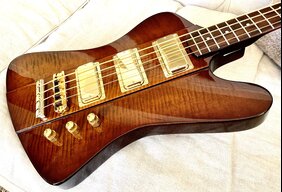
Deal is in quality of parts, guys. Fender made body with their wood, their qc, their paintjob. Same with necks - fender fretwork, trusrods, quality control and other. Screwing four bolts - it does not require great knowledge and it is made every day by a guy who can live in the house next door. he just does not do it in his garage, but in a well-lit factory with same screwdriver , wearing a T-shirt with Fender logo. Take the final price Fender - body price, neck and other parts prices with added of salary of workers, taxes, logistics, office salaries and so on. That's all! no magic and no special skills in the screwing four bolts on factory
Well, actually there's a fair bit of skill or knowledge required to swap necks correctly resulting in a good functioning bass.
I've seen the aftermath of necks that have been unbolted prior to the string tension being relieved. I've seen the aftermath of neck bolts over tightened and sheared off in the neck. We've all seen a poor neck job set up where relief was horrible or shims were needed or the strings were wound around the tuners incorrectly. And that doesn't even account for sloppy neck pocket fits where the neck can be out of alignment with the body.
So yes, there is actually some skill required to do the job correctly, it's rarely a straight forward drop in with no adjustments or skill required proposition.
And you want to say that only Fender factory workers, which probably spend 10 years in meditations on top of Tibet mountain can do it right?Well, actually there's a fair bit of skill or knowledge required to swap necks correctly resulting in a good functioning bass.
I've seen the aftermath of necks that have been unbolted prior to the string tension being relieved. I've seen the aftermath of neck bolts over tightened and sheared off in the neck. We've all seen a poor neck job set up where relief was horrible or shims were needed or the strings were wound around the tuners incorrectly. And that doesn't even account for sloppy neck pocket fits where the neck can be out of alignment with the body.
So yes, there is actually some skill required to do the job correctly, it's rarely a straight forward drop in with no adjustments or skill required proposition.

Im going to take a break from poking fun of bad grammar and the copious amounts of butt-hurtedness occurring on what has now become two fixed positions: one side says, any tinkering or modifying its not a fender and the other side says as long as its fender parts its still a fender no matter what you combine.
Cmon both you two collective "a-idiots", I think its somewhere in the middle. Im not sure where the threshold is, but Im guessing that if you have to replace a few parts yourself like a tone knob or a string or something, its still a fender and if you really drastically combine a bunch of different parts and really reconfigure the whole thing, its not factory any more.
Feel free to return to really crappy grammar and argue incessantly about where that line is now.
Original body, and original neck; it's a Fender bass.
All electronics replaced; all trim replaced, but original body and original neck; it's still a Fender bass.
Frets too? Still a Fender bass.
Replace the body OR the neck, and it is now a parts bass.
EXCEPT:
Original body, electronics, decal, and at least one fret, and you replace the neck? It is now a Gibson.
If that's your take on what I said you have some serious reading comprehension issues. Swapping necks correctly on Fender basses involves more than turning four screws - fact. Now if you're not concerned about a well functioning bass you might be right but I'd hope you aren't suggesting folks just start swapping necks without any thought about proper fit and setup.And you want to say that only Fender factory workers, which probably spend 10 years in meditations on top of Tibet mountain can do it right?
Agree!Original body, and original neck; it's a Fender bass.
All electronics replaced; all trim replaced, but original body and original neck; it's still a Fender bass.
Frets too? Still a Fender bass.
Replace the body OR the neck, and it is now a parts bass.
EXCEPT:
Original body, electronics, decal, and at least one fret, and you replace the neck? It is now a Gibson.
However, you're last comment might be even more accurate if you said...
Original body, electronics, decal, and at least one fret and you replace a snapped off headstock? It's still a Gibson.

That all depends on which Tibetan mountain top we are talking about.And you want to say that only Fender factory workers, which probably spend 10 years in meditations on top of Tibet mountain can do it right?
And what special is in correctly Fenders necks and swamping them? What is different with any other bass guitars? Same deal. Same fit and setup. With stupidity and dick could be broken mate. But nothing special in assembling if folks can read some manuals and watch some videos. And thats all. Maybe you live somewhere, where knowing how to use solder, screwdriver, and any special tool is something special. In our schools children learns how to deal with that. Even with simlpe electric chains. And few special moments of fitting and setup is such a small thing.If that's your take on what I said you have some serious reading comprehension issues. Swapping necks correctly on Fender basses involves more than turning four screws - fact. Now if you're not concerned about a well functioning bass you might be right but I'd hope you aren't suggesting folks just start swapping necks without any thought about proper fit and setup.
- Status
- Not open for further replies.


