• TalkBass has been independent since 1998. Add your voice.
    Create a free account to reply to discussions, view embedded media, and browse with fewer display ads.
    Join freeLog in
    Want zero display ads or expanded classifieds tools? Compare plans.

Double Bass NBD

"OR if he just wants to play roots music with his fingers, plywood basses are appropriate."

Please try harder - you're not being as dismissive of specific styles as you could. Please list bluegrass, old time, traditional country as well as others I can't think of. Should you include jazz, which involves "fingers?"

"The difference between us and the be-boppers is that the boppers flat their fifths; we drink ours." Eddie Condon

So it is. Jazzers drink bourbon. Bluegrass, old time, and trad country drink 'shine.
 
With respect AG, I think you're missing both Damon's and my points. I'm talking about the ability to learn. As I understand it, Damon continues to insist that any less than a solid wood bass will hinder ones ability to learn to play. I disagree.
From my recollection Damon recommends hybrid over ply quiet a bit, so I don't think this is really accurate.

I know he can be infuriating, but Damon also acknowledges that advantages of laminated basses, so I think he is trying to provide a balanced objective opinion...of course that's not always easy to do.

While I think it's possible to find examples where a laminated bass would be all-around better than a fully carved bass, in my experience it would involve a really poor quality carved BSO. Basically a laminated bass can only sound so good, and I concede that a carved BSO can definitely sound worse. But if you are buying a carved bass, you should be looking to spend a bit more and get a bass that is superior to what you can get in a laminated bass.

The differences tend to be most dramatic under the bow. The pizz sound of a really good laminated bass may compare pretty favorably to a decent entry level carved bass. Depending on the genre you play, you might even like the pizz sound of the laminated bass better, as some seem to consider it sort of iconic for bluegrass. But I have never found a laminated bass that responded well to the bow or produced what I would consider a nice tone under the bow. Most laminated basses I have played were honky and boxy under the bow....If you can find one that is not honky and boxy under the bow, chances are it's tone will be lacking in complexity.

I spent a day going through the basses at Robertson & Sons about 10-15 years ago, and I was really surprised to that my favorite basses where the Shens in the $6k range. I think the most expensive basses I bothered playing were in the $30K range. I didn't really see any point in playing a bunch of basses that were way above my price range, so I stopped there.

All of the laminate basses sounded exactly like I expected. I spent about 30 seconds on each one :vomit:. They had one hybrid for somewhere between $3-$4k that was 80%-90% as nice as the $6K Shens...IMHO this was a standout bass. The other hybrids were closer in sound and response to the laminated basses.

Like Damon, I think that it's easier to learn on a nice instrument that plays well and doesn't put up too much of a fight.

For the record I learned on and have only owned plywood basses. During my professional career I played exclusively on carved basses of varying quality that were owned by the different military bands I worked in.

At this point I am retired and considering buying my own bass. I had planned on making road trips last spring to audition and hopefully buy a carved bass for under $6K. After playing decent carved basses professionally for over two decades, I have no interest in playing a laminated bass. That doesn't mean I won't try one, but my expectations are extremely low.
 
Last edited:
I understand the differences between laminated and carved tops, that's not my point. I'm calling out Damon's condescension and dogma. He and I completely agree on "the right tool for the right job." However, he tends to bring an absolute righteousness to any discussion of bass construction that only allows that is he right and anyone that disagrees or has a different experience is wrong. In my opinion, a poorly set up bass will hold someone back much more than the any diffences in construction. At the point where construction starts to matter, it's beyond he or me to really influence that persons next bass decision anyway. They will have their own experiences with which to make that choice. I object to his assertion that a laminated bass, simply because of it's inherent "plyness" is a bad/wrong choice, especially for novice players.
 
Last edited:
  • Like
Reactions: longfinger
I'm sorry I wasn't clearer. I don't mean to dismiss ANY kind of music. I simply got tired of repetitively listing all the genres in which pizzicato is the norm. You will have to look hard to find someone who loves bluegrass, trad country, and jazz more than I do.
Understood. I guess I jumped to a conclusion. Let's all play whatever we want. Since I have one of each - ply and hybrid - I can handle the deficiencies of one over the other.
 
  • Like
Reactions: AGCurry
he tends to bring an absolute righteousness to any discussion of bass construction that only allows that is he right and anyone that disagrees or has a different experience is wrong.

Perhaps Damon could work on his style a bit... he does get us worked up! I, for one, enjoy the spirited discussion.

But facts and beliefs are not the same things.

It is fact that basses with solid-wood tops, all other things being equal, are more capable of sounding good in diverse applications than basses with plywood tops.

It is belief, based on experience and observation, that a better-sounding instrument will better inspire a musician to practice and play. I believe it to be true, but you may not.
 
  • Like
Reactions: Wasnex
I understand the differences between laminated and carved tops, that's not my point. I'm calling out Damon's condescension and dogma. He and I completely agree on "the right tool for the right job." However, he tends to bring an absolute righteousness to any discussion of bass construction that only allows that is he right and anyone that disagrees or has a different experience is wrong. In my opinion, a poorly set up bass will hold someone back much more than the any diffences in construction. At the point where construction starts to matter, it's beyond he or me to really influence that persons next bass decision. They will have their own experiences with which to make that choice. I object to his assertion that a laminated bass, simply because of it's inherent "plyness" is a bad/wrong choice, especially for novice players.


You have at least three people telling you that a plywood bass can hold a players development back, specifically with the bow. Whether this is true, IMHO, will tend to relate to the player's talent level. If a player lacks sufficient talent, then a plywood bass will probably make no difference. If a player is significantly talented, then a plywood bass will most likely limit the player's bow technique and musicianship almost immediately. Sure they can develop as a player on a plywood bass, but IMHO the bass will be holding them back to some degree.

At this point, it's not really a matter of whether a better bass would be beneficial, but whether it's the right decision for the family. IMHO that's a totally different question. If the parents can afford a better instrument and the student is really showing promise, desire, and commitment as a player; and especially if the student is asking about an upgrade, I would encourage them to consider a hybrid or carved instrument. If the student's parents cannot afford a nicer instrument or the student lacks the proper motivation or talent, by all means continue with the laminated bass.
 
  • Like
Reactions: AGCurry
Yeah, but, no one has ever defended poorly set up basses. I would say getting a good set up is a given necessity. Still, you can set your plywood bass up however you want and the energy you put into it is going to dissipate faster than you can redirect it.
It isn't condescending or dogmatic, it is about physics and facts which are unchanging.

Keep in mind, I am only talking about the function of physical properties and the relationship of the body to the object. Not tone, genre, projection or any artistic or performance choices.
If your relationship to the instrument ends at the strings and set up (I highly doubt it does), I would encourage you to examine view that more closely.

In my opinion, the top starts to matter the minute a bassist wants clean bow changes or far less labor intensive pizzicato lines, which is pretty quickly.

I understand the differences between laminated and carved tops, that's not my point. I'm calling out Damon's condescension and dogma. He and I completely agree on "the right tool for the right job." However, he tends to bring an absolute righteousness to any discussion of bass construction that only allows that is he right and anyone that disagrees or has a different experience is wrong. In my opinion, a poorly set up bass will hold someone back much more than the any diffences in construction. At the point where construction starts to matter, it's beyond he or me to really influence that persons next bass decision. They will have their own experiences with which to make that choice. I object to his assertion that a laminated bass, simply because of it's inherent "plyness" is a bad/wrong choice, especially for novice players.
 
  • Like
Reactions: Wasnex
From my recollection Damon recommends hybrid over ply quiet a bit, so I don't think this is really accurate.
Uh, yeah. This part of the discussion started with the Upton Hybrid in question proving a lot of points I tend to make.
I tend to recommend Shen Hybrids to beginners for an across the board recommendation. I also think the Krutz basses from STL/KC strings are solid as well as any number of others like Christopher. New Standard hybrids are fantastic instruments.
My Chadwick hybrid, which is a Shen, is solidly adequate and gets better as it gets more and more broken in.
 
I think my difficulty w/ the hybrid/carved>ply opinions (and how they are expressed) is that they often fail to acknowledge that a great many upright players can have wonderful longterm experiences w/o ever touching a bow. Yes, many of the regular (and most opinionated) posters are very serious students/players, and they seem to skew towards jazz/classical. And yes, bow work CAN BE a very useful practice exercise for bassists outside of those genres.

But I'm confident that there are many (I don't know what percentage) bassists who enjoy the instrument and wish to get better - for whom a ply would be at least as good of an option as a hybrid, but possibly even better. Cost, stability, availability are just a couple of factors. If you live in an extreme climate, or are hauling your bass about to play in different environments in and outdoors in changing seasons, there are definite reasons to prefer ply - or at least hybrid over carved.

I think one thing which has bothered me recently is the willingness of some posters to respond to someone who is excited about a recent or impending purchase that they are essentially "wasting their money", or limiting their potential progress. Or that certain (IMO) higher quality plys are grossly overpriced and inherently limited. IMO, that is just uncalled for dickishness.

I would bet that there are a lot of bassists who never intend to play jazz or classical, but who want to experiment w/ a bow for whatever reason, who could be perfectly satisfied over the long run w/ a good quality, well setup ply. Many of the folk favoring hybrids are very serious players. My personal opinion is that a recreational/hobbyist player who puts 30 minutes in every other day will never get to the point where the "physics" limit his progress and enjoyment.

Moreover, any particular player could get several years of enjoyment out of a good quality ply before they decided they want to take their playing to a different level, and/or upgrade their axe.

Apologies for the disjointed post. In large part, I think my objection is more to the tone used than the opinions expressed.
 
Thanks for this post. Primarily validating where I was going with this thread, which at least makes me feel better about hijacking it a little bit. Part of this is selfish. I'm about to make said large purchase...An electric player for 25 years and a working musician and teacher (former life teaching), the pandemic gave me the opportunity to dust off my entry level carved that I really only spent a semester on in college and put some time into it. Now I've become quite serious about pursuing double bass as my instrument of choice and adding new hopeful gigs as lockdown begins to ease on DB vs my corporate electric bass gigs.

Anyway, so ALL of those factors you talk about are built into this purchase. I want to pursue jazz bowing...surely not going to become a classical player (at least not in the traditional orchestra). I love Olivier Babaz's sound and that's what I'm going for. Even if I had the money, I wouldn't want to drag a 15K bass from gig to gig. I would want something stable (actually my entry level Kremona has been VERY stable, though that is likely also due to the massive thickness of the top and back, which makes it also very heavy, and also compressed sounding).

How do I get that Ray Brown "Night Train" sound AND the great bow sound and be able to record and gig in big bands, jazz combos, corporate "dinner gigs" and the annual Christmas jazz brunch...All with the same bass, while not freaking out every time it gets loaded and unloaded into the car, through narrow doors, having a cymbal stand fall near it, etc.

I know many accomplished players don't take their main bass with them on tours (they use rental basses), but even locally, they might have a "gigging" bass that they are less precious about. I won't have that luxury, nor do I want it.

This makes me THINK a hybrid is the right choice to tick all those boxes, vs even a nicer carved Shen.
 
  • Like
Reactions: longfinger
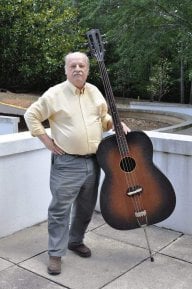
It is so nice to see someone on TalkBass have a NBD and it is an acoustical stand-up bass. 99% of the time, NBD is an electric bass.

Congratulations and thanks for sharing your photos with us!

Enjoy!

Stand-up basses are the real bass!
 
It should be said that there is a big difference between someone saying they like their plywood bass vs. recommending a plywood bass to someone who doesn't understand the difference yet.

I think my difficulty w/ the hybrid/carved>ply opinions (and how they are expressed) is that they often fail to acknowledge that a great many upright players can have wonderful longterm experiences w/o ever touching a bow. Yes, many of the regular (and most opinionated) posters are very serious students/players, and they seem to skew towards jazz/classical. And yes, bow work CAN BE a very useful practice exercise for bassists outside of those genres.

But I'm confident that there are many (I don't know what percentage) bassists who enjoy the instrument and wish to get better - for whom a ply would be at least as good of an option as a hybrid, but possibly even better. Cost, stability, availability are just a couple of factors. If you live in an extreme climate, or are hauling your bass about to play in different environments in and outdoors in changing seasons, there are definite reasons to prefer ply - or at least hybrid over carved.

I think one thing which has bothered me recently is the willingness of some posters to respond to someone who is excited about a recent or impending purchase that they are essentially "wasting their money", or limiting their potential progress. Or that certain (IMO) higher quality plys are grossly overpriced and inherently limited. IMO, that is just uncalled for dickishness.

I would bet that there are a lot of bassists who never intend to play jazz or classical, but who want to experiment w/ a bow for whatever reason, who could be perfectly satisfied over the long run w/ a good quality, well setup ply. Many of the folk favoring hybrids are very serious players. My personal opinion is that a recreational/hobbyist player who puts 30 minutes in every other day will never get to the point where the "physics" limit his progress and enjoyment.

Moreover, any particular player could get several years of enjoyment out of a good quality ply before they decided they want to take their playing to a different level, and/or upgrade their axe.

Apologies for the disjointed post. In large part, I think my objection is more to the tone used than the opinions expressed.
 
  • Like
Reactions: Wasnex
...

I know many accomplished players don't take their main bass with them on tours (they use rental basses), but even locally, they might have a "gigging" bass that they are less precious about. I won't have that luxury, nor do I want it.
...

One that shocked me was when I talked to a pro in one of my fave BG-ish bands, and he said his bass was - I forget the specific brand, but I think it was a Sam Ash piece of $hit. The kind I've played before and couldn't get out of my hands quickly enough. Panormo or Cremona or something.

I happened to mention that shortly thereafter when talking w/ one of Chicago's most prominent bass luthiers (I was trying out Kays), and he said exactly what you say. These guys are traveling constantly. The bassist wanted something bulletproof, so he was best served by an optimally setup inexpensive ply.
 
How do I get that Ray Brown "Night Train" sound AND the great bow sound and be able to record and gig in big bands, jazz combos, corporate "dinner gigs" and the annual Christmas jazz brunch...All with the same bass, while not freaking out every time it gets loaded and unloaded into the car, through narrow doors, having a cymbal stand fall near it, etc.
...
This makes me THINK a hybrid is the right choice to tick all those boxes, vs even a nicer carved Shen.

Your thinking is sound. A decent hybrid bass fits the bill.
 
I think my difficulty w/ the hybrid/carved>ply opinions (and how they are expressed) is that they often fail to acknowledge that a great many upright players can have wonderful longterm experiences w/o ever touching a bow. Yes, many of the regular (and most opinionated) posters are very serious students/players, and they seem to skew towards jazz/classical. And yes, bow work CAN BE a very useful practice exercise for bassists outside of those genres.

But I'm confident that there are many (I don't know what percentage) bassists who enjoy the instrument and wish to get better - for whom a ply would be at least as good of an option as a hybrid, but possibly even better. Cost, stability, availability are just a couple of factors. If you live in an extreme climate, or are hauling your bass about to play in different environments in and outdoors in changing seasons, there are definite reasons to prefer ply - or at least hybrid over carved.

I think one thing which has bothered me recently is the willingness of some posters to respond to someone who is excited about a recent or impending purchase that they are essentially "wasting their money", or limiting their potential progress. Or that certain (IMO) higher quality plys are grossly overpriced and inherently limited. IMO, that is just uncalled for dickishness.

I would bet that there are a lot of bassists who never intend to play jazz or classical, but who want to experiment w/ a bow for whatever reason, who could be perfectly satisfied over the long run w/ a good quality, well setup ply. Many of the folk favoring hybrids are very serious players. My personal opinion is that a recreational/hobbyist player who puts 30 minutes in every other day will never get to the point where the "physics" limit his progress and enjoyment.

Moreover, any particular player could get several years of enjoyment out of a good quality ply before they decided they want to take their playing to a different level, and/or upgrade their axe.

Apologies for the disjointed post. In large part, I think my objection is more to the tone used than the opinions expressed.

Pretty sure I mentioned bow in every response I have made in this thread...so I am trying to be very specific that this is where I think the difference most counts. I would be very surprised to find someone who really prefers the arco sound and response of a laminated bass.

The difference is also a factor with pizz, but as I said in one of my posts, some actually prefer the pizz sound of laminated basses because it fits stylistically with the music they play. Also some carved basses sound wonderful acoustically, but they do not amplify well.

I understand what you mean about people poo pooing on someone's excitement inappropriately. Perhaps I missed it, but I didn't catch any of that here. If anything, there seems to be a bit of anger being injected into this thread that was carried over from interactions and comments made in other threads. If someone wants to address something they perceive as bad behavior IMHO, it should be done as soon as possible and in the location where the transgression originally occurred. Ambushing someone later in a totally different thread, when the offender has not repeated the behavior is pretty dickish as well.

Something else to keep in mind is there are plenty of posts poo pooing crappy carved basses as BSOs that are not worth buying at any price as well. My point is people poo poo what they perceive as crappy basses regardless of construction method. Then again the saying goes: "One man's trash is another mans treasure," so maybe we shouldn't be so sensitive to what others think.

If a talented recreational player has the dedication to practice arco 30 minutes a day, I am pretty sure they would benefit from access to a higher quality instrument. That doesn't mean they need to go out a drop a boat load of money. Everyone has different priorities and is free to use there resources however they see fit. If they decide to buy a BSO, I see no reason to shame them...what I often see is a recommendation to buy something that cost the same or less, but provides a better value.

Not sure if you have had to opportunity to play the type of instrument by a principal bassists in professional orchestra. I have played a few that were light years better than most of the carved bass I have played professionally.

All of the points about coping with weather changes and not worrying about the instrument getting bashed in a bar fight have nothing to do with how the bass sounds or how it responds under the bow. But these are valid reasons that inform one's purchase decision.

I live in the midwest and the seasonal humidity changes are rather extreme. I don't plan to gig. I do plan to get a fully carved bass, but I don't want to buy a brand new one. I would rather get an instrument that has been around for awhile to see if it is stable.

By the way, from what I can tell you have a really nice bass and are very happy with it. Congratulations.
 
  • Like
Reactions: AGCurry
Thanks for this post. Primarily validating where I was going with this thread, which at least makes me feel better about hijacking it a little bit. Part of this is selfish. I'm about to make said large purchase...An electric player for 25 years and a working musician and teacher (former life teaching), the pandemic gave me the opportunity to dust off my entry level carved that I really only spent a semester on in college and put some time into it. Now I've become quite serious about pursuing double bass as my instrument of choice and adding new hopeful gigs as lockdown begins to ease on DB vs my corporate electric bass gigs.

Anyway, so ALL of those factors you talk about are built into this purchase. I want to pursue jazz bowing...surely not going to become a classical player (at least not in the traditional orchestra). I love Olivier Babaz's sound and that's what I'm going for. Even if I had the money, I wouldn't want to drag a 15K bass from gig to gig. I would want something stable (actually my entry level Kremona has been VERY stable, though that is likely also due to the massive thickness of the top and back, which makes it also very heavy, and also compressed sounding).

How do I get that Ray Brown "Night Train" sound AND the great bow sound and be able to record and gig in big bands, jazz combos, corporate "dinner gigs" and the annual Christmas jazz brunch...All with the same bass, while not freaking out every time it gets loaded and unloaded into the car, through narrow doors, having a cymbal stand fall near it, etc.

I know many accomplished players don't take their main bass with them on tours (they use rental basses), but even locally, they might have a "gigging" bass that they are less precious about. I won't have that luxury, nor do I want it.

This makes me THINK a hybrid is the right choice to tick all those boxes, vs even a nicer carved Shen.

IMHO it depends somewhat on the type of gigging you are doing. I hardly ever used an upright for jazz combo gigs because we need to be able to get in and out really fast (like <2 minutes) and we crammed everything into a 15pax van. Usually I played on bass guitar...towards the middle part of my career I asked the organization to buy me an NS Design EUB that I used quite a bit.

Some players who use upright for jazz combo tend to prefer a smaller bass, like a 5/8. If it takes up less room, it's less likely to get whacked.

The last upright I played professionally was 7/8s monster. I toured with this and used in big band and concert band. We had a coffin case for the bass and it was the last thing loaded in our cargo truck. The back of the load was braced with load bars and straps. Then the bass case was loaded at the back of the truck and strapped to the wall.

One thing I learned fairly early in my career is to not be a slave to tone. If you don't achieve this you will waste time constantly tweaking stuff to try and get perfect tone, which is pretty much impossible live. Most of the time when I went to a new organization, I went through gear and instruments that where on the shelf and picked the pieces that worked best for me, rather than asking for the organization to by me instruments, amps, and speakers that I had chosen for myself. But let's be clear, a lot of the gear on the shelf did not meet my expectations. I was not a slave to tone, but tone was still very important to me.

I have read stories of some of the greats renting and borrowing basses on tours. They basically played whatever they could get, some of the basses were total crap. A master player may actually revel in an instrument's crappy qualities and use these qualities as a feature rather than a hindrance. I have seen a couple of players do this with instruments that had uneven tone and a few notes that jumped out. Instead of avoiding the load notes they found ways to play around with them in sort of a joking way. You have to have monster chops to be able to pull this off. You have to be prepared to pull your sound out of a really crappy BSO that has the strings 3 inches of the finger board...sorry, I am not down with that.
 
I think Ed S (remember him?) would recommend an Upton hybrid! :thumbsup:
The Upton Brescian I was considering (it was amazing looking) was sold.
IMHO it depends somewhat on the type of gigging you are doing. I hardly ever used an upright for jazz combo gigs because we need to be able to get in and out really fast (like <2 minutes) and we crammed everything into a 15pax van. Usually I played on bass guitar...towards the middle part of my career I asked the organization to buy me an NS Design EUB that I used quite a bit.

Some players who use upright for jazz combo tend to prefer a smaller bass, like a 5/8. If it takes up less room, it's less likely to get whacked.

The last upright I played professionally was 7/8s monster. I toured with this and used in big band and concert band. We had a coffin case for the bass and it was the last thing loaded in our cargo truck. The back of the load was braced with load bars and straps. Then the bass case was loaded at the back of the truck and strapped to the wall.

One thing I learned fairly early in my career is to not be a slave to tone. If you don't achieve this you will waste time constantly tweaking stuff to try and get perfect tone, which is pretty much impossible live. Most of the time when I went to a new organization, I went through gear and instruments that where on the shelf and picked the pieces that worked best for me, rather than asking for the organization to by me instruments, amps, and speakers that I had chosen for myself. But let's be clear, a lot of the gear on the shelf did not meet my expectations. I was not a slave to tone, but tone was still very important to me.

I have read stories of some of the greats renting and borrowing basses on tours. They basically played whatever they could get, some of the basses were total crap. A master player may actually revel in an instrument's crappy qualities and use these qualities as a feature rather than a hindrance. I have seen a couple of players do this with instruments that had uneven tone and a few notes that jumped out. Instead of avoiding the load notes they found ways to play around with them in sort of a joking way. You have to have monster chops to be able to pull this off. You have to be prepared to pull your sound out of a really crappy BSO that has the strings 3 inches of the finger board...sorry, I am not down with that.
I get you. I spent lots of $$ buying and selling tons of bass guitars, including many boutique basses...many lovely, some not. But always huge amounts of stress for me. Now I have a 4 and 5 string StingRay and a Jazz bass I bought off eBay and have no desire ever to even look at bass guitars. I haven't bought any in at least 10 years...maybe 15. I can get "my" sound (for better or worse) out of any of them, even though those instruments all have a signature. That's what I'm generally looking for here. I spend a LOT of time practicing now, which in and of itself I want a quality instrument that will be a constant companion and eventually something I'll record with. As far as gigging, I gotta imagine for the most part, my electric bass gigs are going to outnumber and out-money my upright gigs, but I definitely want to explore those avenues, find new musical collaborators, etc. Playing the same dance tunes, as fun as they can be, and as good as that band is...is just WAY inside my comfort zone now. So yes...Looking for that sweet spot where I can find the right lifetime bass and then never think about it again.
 
  • Like
Reactions: marcox
The Upton Brescian I was considering (it was amazing looking) was sold.

I get you. I spent lots of $$ buying and selling tons of bass guitars, including many boutique basses...many lovely, some not. But always huge amounts of stress for me. Now I have a 4 and 5 string StingRay and a Jazz bass I bought off eBay and have no desire ever to even look at bass guitars. I haven't bought any in at least 10 years...maybe 15. I can get "my" sound (for better or worse) out of any of them, even though those instruments all have a signature. That's what I'm generally looking for here. I spend a LOT of time practicing now, which in and of itself I want a quality instrument that will be a constant companion and eventually something I'll record with. As far as gigging, I gotta imagine for the most part, my electric bass gigs are going to outnumber and out-money my upright gigs, but I definitely want to explore those avenues, find new musical collaborators, etc. Playing the same dance tunes, as fun as they can be, and as good as that band is...is just WAY inside my comfort zone now. So yes...Looking for that sweet spot where I can find the right lifetime bass and then never think about it again.

Play as many basses as possible and choose the one that seduces you. Identify and plan road trips to some of places that have decent collections of basses for sale. The two shops I have visited with the biggest inventory of basses are Robertson & Sons in Albuquerqu NM and Hammond Ashley up in Washington state.

Before the pandemic I was hoping to make some road trips. I believe the closest shop with a significant collection of basses is KC strings. I have actually played some of their basses at trade shows that I really liked, unfortunately none of the basses they brought in my price range really appealed to me.

The next closest shops in one direction are Ross Double Bass in Denver CO, Robertson & Sons, and String Emporium in Chandler AZ. In particular I would like to try some of String Emporium's Wan-Bernadel basses, which sound fabulous in the recordings I have heard. Going in the other direction, the closest shops are Double Bass Workshop in Madison WI, and Cincinnati Bass Cellar.

I've tried about eight basses within a 50 miles radius and none of them really spoke strongly enough to justify it's asking price. If I had to buy one of them, it would probably be one of the Christopher 401Ts. While one of the Christophers would work fine, I think it's best to hold off until I can find a bass that I really like. Flipping an upright tends to take time.

If not for Covid, I probably would have taken a trip to KC to audition the Shen SB800 the recently sold in the TB classifieds (after being listed for 8 years). I have played several Shens in the $6K price range that I thought were fabulous.