

Enjoy the benefits of a premium membership!
Upgrade Account
-
TalkBass has been independent since 1998. Add your voice.
Create a free account to reply to discussions, view embedded media, and browse with fewer display ads.
Join free Log in
Want zero display ads or expanded classifieds tools? Compare plans.
You are using an out of date browser. It may not display this or other websites correctly.
You should upgrade or use an alternative browser.
You should upgrade or use an alternative browser.
Old School vs. New School Amplification
- Thread starter jazztonebass
- Start date
More options
Who Replied?


There's one other factor involved when discussing switched mode power supply amps - everyone of those designs pull power from its ac source several hundred thousand times per second. Sometimes brownouts or low current won't let those amps perform optimally. A class A or AB amp stores energy in its capacitors so it can withstand current variations a little better.

- Feb 12, 2006
- 61,035
- 5
- 220,956
- Disclosures
- Development Engineer-Mesa Boogie, Development Engineer-Genzler (pedals), Product Support-Genz Benz
There's one other factor involved when discussing switched mode power supply amps - everyone of those designs pull power from its ac source several hundred thousand times per second. Sometimes brownouts or low current won't let those amps perform optimally. A class A or AB amp stores energy in its capacitors so it can withstand current variations a little better.
This is inaccurate. A switchmode power supply has a line frequency (50 or 60Hz) to DC conversion just like any other power supply (minus the line frequency transformer which is replaced later in the circuit by a high frequency transformer). This bulk DC bus has capacitors just like any other DC power supply and as it's much higher voltage (typically ~350V) so the capacitor value can be lower for identical energy storage because the energy stored by the cap is a function of the square of the voltage. Then, this rectified DC is switched at very high frequency (typically 50kHz-500kHz) and passes through a high frequency transformer, is then rectified again to create the amp's operating DC busses. These operating DC busses also have filtering/energy storage capacitors associated with them and these are independant of the but also in addition to the line frequency's DC bus energy storage.
It is entirely possible to create an SMPS that if functionally IDENTICAL in all important specifications to a line frequency power supply. This is exactly what we did in the old GB NeoPak amplifier, and it's not possible to tell which supply is which until you pick the unit up.
It's also possible to regulate the SMPS (via feedback to the PWM's duty cycle generator) to eliminate any changes in DC operating voltages with varying AC input voltage. This is what is done in IcePower's ASC models and is very, very effective. The voltage can drop to below 100V with no difference in output.

This is anecdotal and tells you nothing about reliability.
Just an interesting perspective.
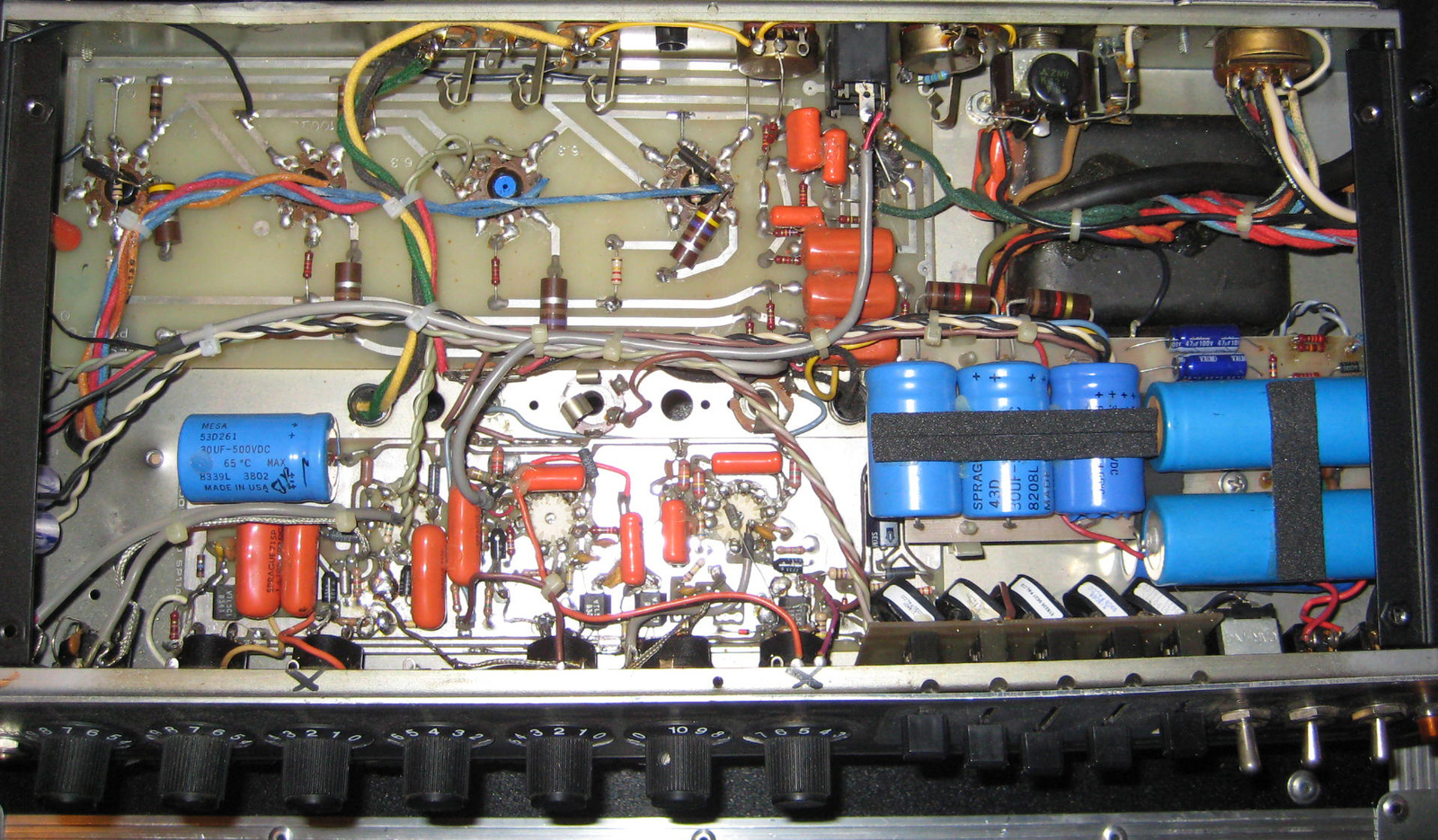
Mesa Mark II
Mesa Mark V
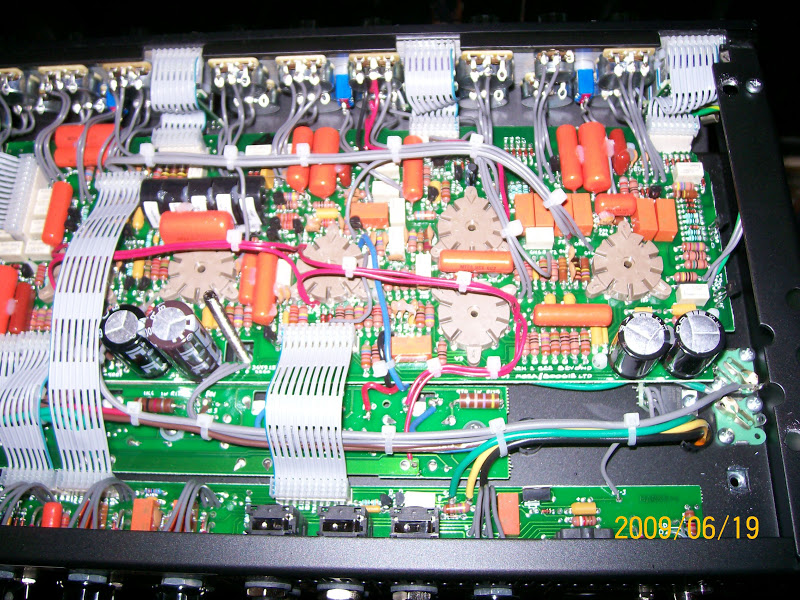
Not sure if current production has changed or not.
Just being honest, I have to wonder if this designer went to the same school as the guy who designed the V-6 GM's where you had to jack up the motor to replace a spark plug.

I'm using a GB Streamliner 900 and love for portability, reliability, and it sounds great with my LDS 15/6 OR custom 4x10.But there is a big difference with a full on tube amp!! I love both!! I'm having a cuustom made tube amp built because there is no substitute for that sound..Check out organdonoramps

- Jan 12, 2011
- 4,578
- 2,460
- Disclosures
- Artist, Trickfish Amplification Bartolini Emerging Artist, MTD Kingston Emerging Artist. Artist, Tsunami Cables
I own a Puma 500 and use and old Trace Elliot GPSM7 300 as a backup. And Friday I played through my friends Aggie TH500 with an Aggie 4x10. The micro heads can get the job done. No need to carry around all that weight. When I'm able, I'll get another micro to backup my Puma500.
If you want a NEW Marshall circuit built right, the pros like Foo Fighters are going to Friedman Amps
Here's the Friedman Amps Steve Stevens Signature #1

Germino, another Old School Marshall specialist, Headroom 100

Here a modern Marshall JCM900
At least the tube sockets are not PCB mounted.
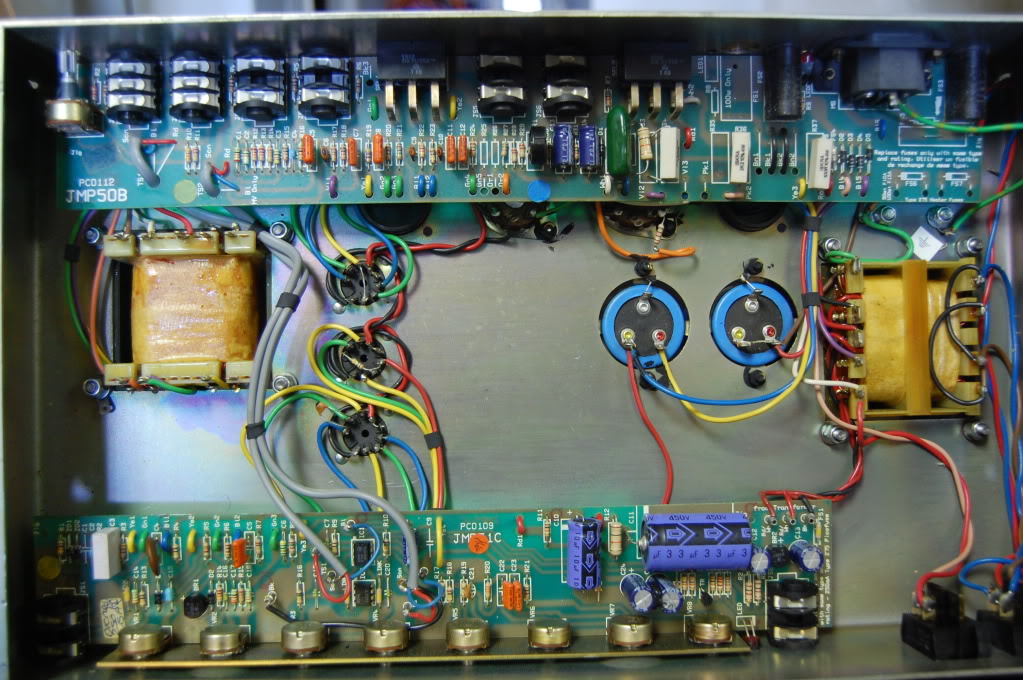
Here's the Friedman Amps Steve Stevens Signature #1
Germino, another Old School Marshall specialist, Headroom 100
Here a modern Marshall JCM900
At least the tube sockets are not PCB mounted.
Last edited:

You can "mimic" the sound of tubes, but if you want a real tube sound, you need tubes. I don't care what engineers say. They were proven wrong over 20 years ago. Music is odd harmonics. Tubes enhance odd harmonics. Solid State enhances even harmonics.
Again anecdotal. You can not confirm quality simply by posting pictures of tidy builds. That tells you nothing about the components used, or the quality of assembly.
If you want a NEW Marshall circuit built right, the pros like Foo Fighters are going to Friedman Amps
Here's the Friedman Amps Steve Stevens Signature #1

Germino, another Old School Marshall specialist, Headroom 100

Here a modern Marshall JCM900
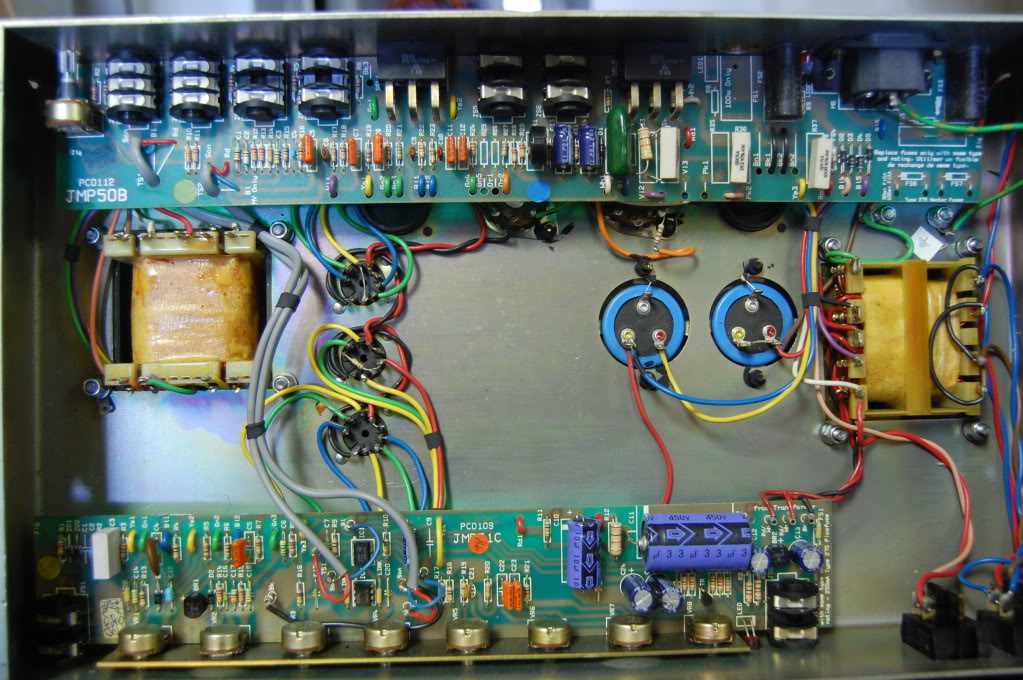
I can tell from one simply look why I would never buy that MESA Mark VAgain anecdotal. You can not confirm quality simply by posting pictures of tidy builds. That tells you nothing about the components used, or the quality of assembly.
If you want to add something constructive, how about showing us a gut shot of your Peavy.
Or maybe you just prefer to score points by resorting to personal attacks?
This isnt personal. This is pointing out that your logic is flawed.
I can tell from one simply look why I would never buy that MESA Mark V
If you want to add something constructive, how about showing us a gut shot of your Peavy.
Or maybe you just prefer to score points by resorting to personal attacks?
The point is from gut shots, you cant even tell if those hand wired amps turn on. You cant confirm if the insides just look pretty, or if are even functional.
You are being called out on your logical error.
You point towards anecdotal evidence. Be it cost, rarity, or build method. Then you wave your hands and smugly allude to magical unquantified qualities that "we just dont get", but you cant even explain.
Reliability of product, and quality of tone, are not exclusive to any build method, or for that matter specific parts. It is the final implementation that matters in quality, and tone is subjective. An amp isnt reliable with great tone, specifically because it is hand wired. Similarly, amps built on PCB are not unreliable with bad tone.
What you are touting is an elitist attitude.
You point towards anecdotal evidence. Be it cost, rarity, or build method. Then you wave your hands and smugly allude to magical unquantified qualities that "we just dont get", but you cant even explain.
Reliability of product, and quality of tone, are not exclusive to any build method, or for that matter specific parts. It is the final implementation that matters in quality, and tone is subjective. An amp isnt reliable with great tone, specifically because it is hand wired. Similarly, amps built on PCB are not unreliable with bad tone.
What you are touting is an elitist attitude.

It's think this comes down a lot to a choice of preferences. some people really prefer hand built amps with well designed layouts, but to sum that doesn't mean squat, and truth be told handbuilt does not necessarily mean better built. for example, I tattoo for a living, and when it comes to tattoo machines you have a lot of choices between commercially built and hand built machines. I really love the uniqueness and attention to detail that you sometimes find hand built machines, but I have to admit some of my commercially made ones work a whole helluva lot better for the job. Amps are the same.
I personally had a whole bunch of boutique handbuilt amps and a whole bunch of commercially built ones, and honestly at this point I can only say each one's cool in and of itself but none of them were inherently "better".
I personally had a whole bunch of boutique handbuilt amps and a whole bunch of commercially built ones, and honestly at this point I can only say each one's cool in and of itself but none of them were inherently "better".
all I know is that red wires last longer and sound better.
My favorite bass tone I've achieved to date was an affinity p bass with cheapest rounds I could find straight into a fender bxr 200 1x15.
Let's see if my roadstar > Demeter > dually rig beats it for all the good attention to detail I paid for. When it gets here...
Let's see if my roadstar > Demeter > dually rig beats it for all the good attention to detail I paid for. When it gets here...

The point I have tried to make from the very beginning is to take a much closer look before you spend your hard earned money.
Any qualified tech can take a look at these chassis photos and see meticulous attention to every detail.
[Invalid or Expired Link Removed]
[Invalid or Expired Link Removed]
[Invalid or Expired Link Removed]
Little hint - he used to work for Ampeg
Any qualified tech can take a look at these chassis photos and see meticulous attention to every detail.
[Invalid or Expired Link Removed]
[Invalid or Expired Link Removed]
[Invalid or Expired Link Removed]
Little hint - he used to work for Ampeg
Last edited:


