

Enjoy the benefits of a premium membership!
Upgrade Account
-
TalkBass has been independent since 1998. Add your voice.
Create a free account to reply to discussions, view embedded media, and browse with fewer display ads.
Join free Log in
Want zero display ads or expanded classifieds tools? Compare plans.
You are using an out of date browser. It may not display this or other websites correctly.
You should upgrade or use an alternative browser.
You should upgrade or use an alternative browser.
Old School vs. New School Amplification
- Thread starter jazztonebass
- Start date
More options
Who Replied?

FFTT: Sam is right.. the red wires are the best!
but seriously.. I DO however believe that photos like the ones directly above can be used to guesstimate how good an amp could be, because IF someone pays that much attention to wiring, they probably paid the same attention to soldering, design and every other aspect. plus, I like amp porn... BUT Ive had a couple of handwired boutique $2K plus amps that were quite honestly headaches in a box that didnt perform as well as my production model Ashdown ABM, or my solid state SUNN 1200. its all a crapshoot.. that said, Dunwich is currently making ALOT of tempting hand built porn.
but seriously.. I DO however believe that photos like the ones directly above can be used to guesstimate how good an amp could be, because IF someone pays that much attention to wiring, they probably paid the same attention to soldering, design and every other aspect. plus, I like amp porn... BUT Ive had a couple of handwired boutique $2K plus amps that were quite honestly headaches in a box that didnt perform as well as my production model Ashdown ABM, or my solid state SUNN 1200. its all a crapshoot.. that said, Dunwich is currently making ALOT of tempting hand built porn.
A bunch of chassis photos covering quite a few brands.
Invalid Link Removed
Once you look under the hood, then maybe you'll choose to investigate further, find out more about the builder's reputation in quality, service, reliability, follow up care.
There are much higher quality alternatives than you will see at the big box retailers,
just as there are many fine custom built basses out there
that you won't see at Guitar Center or Thomann.
Invalid Link Removed
Once you look under the hood, then maybe you'll choose to investigate further, find out more about the builder's reputation in quality, service, reliability, follow up care.
There are much higher quality alternatives than you will see at the big box retailers,
just as there are many fine custom built basses out there
that you won't see at Guitar Center or Thomann.
But it's the Red cloth insulated silver wire 
I know nothing about this builder and have never had a chance to try one of his builds, but gee wiz look at this detail.
BC Audio #7
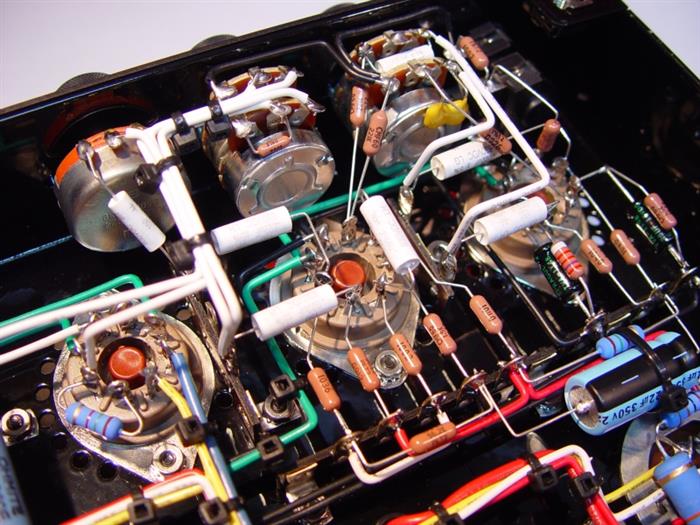
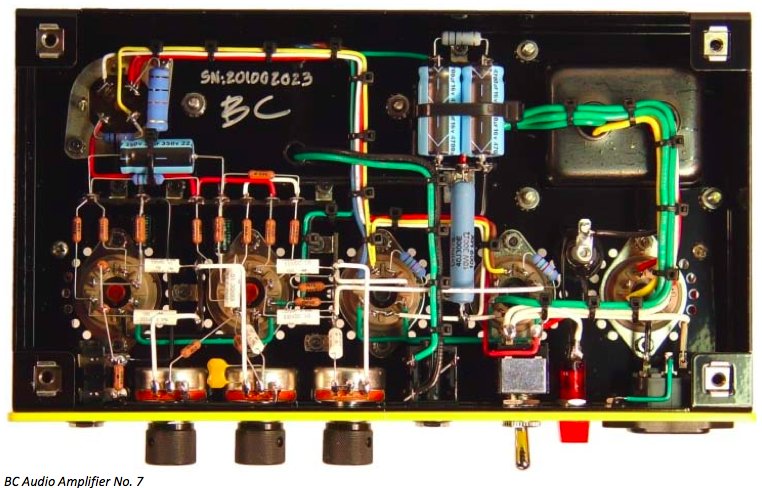
I know nothing about this builder and have never had a chance to try one of his builds, but gee wiz look at this detail.
BC Audio #7
FFTT: Sam is right.. the red wires are the best!
but seriously.. I DO however believe that photos like the ones directly above can be used to guesstimate how good an amp could be, because IF someone pays that much attention to wiring, they probably paid the same attention to soldering, design and every other aspect. plus, I like amp porn... BUT Ive had a couple of handwired boutique $2K plus amps that were quite honestly headaches in a box that didnt perform as well as my production model Ashdown ABM, or my solid state SUNN 1200. its all a crapshoot.. that said, Dunwich is currently making ALOT of tempting hand built porn.
Once you look under the hood, then maybe you'll choose to investigate further, find out more about the builder's reputation in quality, service, reliability, follow up care.
There are much higher quality alternatives than you will see at the big box retailers,
just as there are many fine custom built basses out there
that you won't see at Guitar Center or Thomann.
This I will agree with you on. I have a lot of high end gear, and that gear was purchased with the reputation of the source in mind, but it isnt the only factor.
If I show you a picture of my Dingwall, or my custom greenboy cabinets and simply say, "look at them they are the best!" you would ask me why I thought that. I could allude to things that I feel are good about the products, and just post pictures and say "Look at the quality!" but that doesnt ensure that there is actual quality there. Saying that PCB effects tone is like saying that cnc routed pick up cavities kill the tone of a bass. If they are not hand tooled, your tone suffers.

- Feb 12, 2006
- 61,035
- 5
- 220,956
- Disclosures
- Development Engineer-Mesa Boogie, Development Engineer-Genzler (pedals), Product Support-Genz Benz
I look at that wiring and the first thought that comes to mind is the potential for RF (radio frequency) intrusion in high RF environments, the possibility of stray capacitance increasing the liklihood of crosstalk between circuit elements, and large loop areas increasing the liklihood of noise intrusion and oscillation. This kind of layout violates many of the principles applied to scientific and engineering based design.The point I have tried to make from the very beginning is to take a much closer look before you spend your hard earned money.
Any qualified tech can take a look at these chassis photos and see meticulous attention to every detail.
[Invalid or Expired Link Removed]
[Invalid or Expired Link Removed]
[Invalid or Expired Link Removed]
Little hint - he used to work for Ampeg
This is of course based in looks and not rigorous scientific testing, the same casual observation you are applying to PCB based amps I might add.
I absolutely do appreciated the exquisite craftsmanship in these product however.

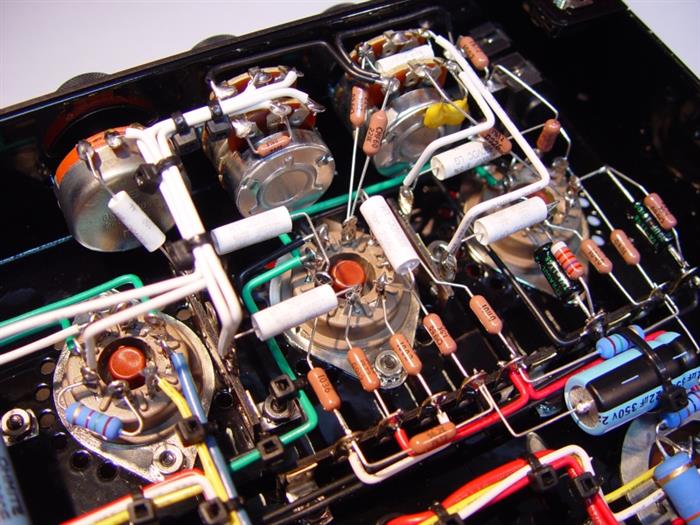
While pretty, the way those white caps have been soldered to the tube sockets looks like a pile of time bombs waiting to cause shorts to other pins. Perhaps the leads are rigid enough to make this unlikely, but this still looks like bad practice.
Having a resistor in physical contact with an electrolytic cap is bad practice as well, unless you like operating already failure-prone devices at out-of-spec temperatures.
See the big half watt resistor cable tied to what looks like a big power supply filter cap? This is not a good idea.
As others have pointed out, a pretty looking layout doesn't inoculate you from design flaws.
I also have no idea of the quality of the components used. What are the rated working hours or spec-ed temperature rating of said power supply cap? I have no idea.
Having a resistor in physical contact with an electrolytic cap is bad practice as well, unless you like operating already failure-prone devices at out-of-spec temperatures.
See the big half watt resistor cable tied to what looks like a big power supply filter cap? This is not a good idea.
As others have pointed out, a pretty looking layout doesn't inoculate you from design flaws.
I also have no idea of the quality of the components used. What are the rated working hours or spec-ed temperature rating of said power supply cap? I have no idea.
But it's the Red cloth insulated silver wire
I know nothing about this builder and have never had a chance to try one of his builds, but gee wiz look at this detail.
BC Audio #7

Passinwind
I know nothing.
- Dec 3, 2003
- 23,075
- 46,028
- Disclosures
- Designer/Toaster Tech @ Passinwind Electronics
This thread delivers.
Needs more tubes vs solid state, and lots more guitar amp gut shots. Link Removed
The only way to hear the quality is to plug in and experience it for yourself.
You can use youtube reference for a rough idea, but nothing compares to holding that guitar in your hand and hearing
the amp in the same room.
You may not be able to see quality, but even the most poorly informed can take a look at a chassis photo and come to a general conclusion about the quality in detail and workmanship.
Like any small custom builder, Dingwall had to prove himself and fight his way to cream of the crop recognition.
I'll take your word that the greenboy cab sounds great, but this is where a very small niche market can make re-sale painful.
Fortunately most reputable custom builders have a reasonable return policy.
You can use youtube reference for a rough idea, but nothing compares to holding that guitar in your hand and hearing
the amp in the same room.
You may not be able to see quality, but even the most poorly informed can take a look at a chassis photo and come to a general conclusion about the quality in detail and workmanship.
Like any small custom builder, Dingwall had to prove himself and fight his way to cream of the crop recognition.
I'll take your word that the greenboy cab sounds great, but this is where a very small niche market can make re-sale painful.
Fortunately most reputable custom builders have a reasonable return policy.
I appreciate the constructive feedback.
Your insight would be useful if you were considering one of these amps and could ask the builder about those specific details.
Every amp designer makes adjustments along the way even when building straight up legacy clones.
Your insight would be useful if you were considering one of these amps and could ask the builder about those specific details.
Every amp designer makes adjustments along the way even when building straight up legacy clones.
While pretty, the way those white caps have been soldered to the tube sockets looks like a pile of time bombs waiting to cause shorts to other pins. Perhaps the leads are rigid enough to make this unlikely, but this still looks like bad practice.
Having a resistor in physical contact with an electrolytic cap is bad practice as well, unless you like operating already failure-prone devices at out-of-spec temperatures.
See the big half watt resistor cable tied to what looks like a big power supply filter cap? This is not a good idea.
As others have pointed out, a pretty looking layout doesn't inoculate you from design flaws.
I also have no idea of the quality of the components used. What are the rated working hours or spec-ed temperature rating of said power supply cap? I have no idea.
The only way to hear the quality is to plug in and experience it for yourself.
You can use youtube reference for a rough idea, but nothing compares to holding that guitar in your hand and hearing the amp in the same room.
No. That tells you how the amp sounds, which has nothing to do with quality/reliability. There are plenty of very fine things that have poor track records of reliability.
You may not be able to see quality, but even the most poorly informed can take a look at a chassis photo and come to a general conclusion about the quality in detail and workmanship.
Like any small custom builder, Dingwall had to prove himself and fight his way to cream of the crop recognition.
As has been pointed out on your pictures, just because it looks pretty, doesnt ensure quality. I know my dingwall is of high quality and his builds have a good reputation. The point is, looks dont tell you how it sounds. There could be great pick ups in there, or trash under the covers.
I'll take your word that the greenboy cab sounds great, but this is where a very small niche market can make re-sale painful.
Fortunately most reputable custom builders have a reasonable return policy.
I have bought and sold a few. They hold their value better than most would expect. Nice dig though.

You may not be able to see quality, but even the most poorly informed can take a look at a chassis photo and come to a general conclusion about the quality in detail and workmanship.
I have been reading along here the last couple days and have come to the conclusion after listening to credited engineers on the subject that this statement holds no water. Just because something can look pretty or more subjectively look more "quality" has absolutely no meaning to its actual measurable quality and nothing to its tone. It seems it is less about the detail in appearance and more about the detail in design - which I am sure many of these boutique companies have as well, but just looking at it can tell me nothing other than it looks really nice inside
 . I also believe that like the cost of nice basses there is a law of diminishing returns - once the band gets going in a live room with people all over these tone details just really don't translate. Not that we should not enjoy them ourselves mind you, and if you have the money by all means, I know I would!
Needs more tubes vs solid state, and lots more guitar amp gut shots. Link Removed


If we level the playing field and flat out assume Murphy will haunt us and something will invariably fail sooner or later,
then Serviceability & Parts Availability & Anticipated Bench Time and Service Turnaround come into play.
Even a Lifetime Warranty is meaningless when all you care about is getting up and running again.
The cost & hassle to ship an amp round trip, may be more than the cost to figure out what's wrong going to a local tech.
It doesn't matter if you paid $500.00 or $5000.00 for the amp, all you care about is who is going to fix it, how long will it take and how much will it cost.
then Serviceability & Parts Availability & Anticipated Bench Time and Service Turnaround come into play.
Even a Lifetime Warranty is meaningless when all you care about is getting up and running again.
The cost & hassle to ship an amp round trip, may be more than the cost to figure out what's wrong going to a local tech.
It doesn't matter if you paid $500.00 or $5000.00 for the amp, all you care about is who is going to fix it, how long will it take and how much will it cost.
Good point. It has always appealed to me from an "ease of servicing" point of view. Twenty years from now replacement parts will still be easy to find compared to a pcb. HOWEVER, the flip side is I once had a small builder tube amp and the builder must have thought he reinvented the wheel because he would NOT provide a schematic to my local tech and insisted that the amp be shipped back to him for repairs. I was told "I'll need it for three days". I shipped it ($80), which took a week and then after dozens of calls and ignored emails and about SIX MONTHS it was finally shipped back.

Especially since those are both PCB amps. The second one is just a bit more complex.This is anecdotal and tells you nothing about reliability.
. There are plenty of very fine things that have poor track records of reliability.
.
Rolex... keeps horrible time. A cheap Japanese 80's Casio with a calculator is more accurate and reliable.
I have a $10k retail Zenith El Primero on my wrist every day, that loses at least a minute or two a week... The engineering in the movement sure is pretty though. Good thing I ,keep my cell phone in my pocket.
Again, what are you trying to say about Peaveys? You talk trash about another dude's amp and then accuse him of personal attacks? That's pretty low, IMO.I can tell from one simply look why I would never buy that MESA Mark V
If you want to add something constructive, how about showing us a gut shot of your Peavy.
Or maybe you just prefer to score points by resorting to personal attacks?
Not everyone shares your fetish for gut shots. I have never looked at my amp's undercarriage, and I don't really plan on doing so any time soon. I know there's probably a big old PCB in there, but that doesn't mean I'm going to sell it and get a Reeves, as the latter won't do what my D-180 does.
- Feb 12, 2006
- 61,035
- 5
- 220,956
- Disclosures
- Development Engineer-Mesa Boogie, Development Engineer-Genzler (pedals), Product Support-Genz Benz
Turnaround time on GB pcb based amps is 48 hours, I think there has been only one of two exceptions in the entire last year. Why? Because the GB amps have been designed to be highly reliable and easy to service at the component level (except for the SMPS/class D module) for a qualified professional service tech. Typical bench service time for a GB product is 1 hour for just about everything.

I thought I'd post a picture of the inside of my lunch. Can anyone tell me how it tastes?


