• TalkBass has been independent since 1998. Add your voice.
    Create a free account to reply to discussions, view embedded media, and browse with fewer display ads.
    Join freeLog in
    Want zero display ads or expanded classifieds tools? Compare plans.

Old School vs. New School Amplification

I learned today that because I didn't spend thousands of dollars on an amp, that it will never be reliable and I threw away my money. Also, I could probably get FFTT to puke if I dared show the utter pile of garbage that I force my poor band mates to listen too time and time again. In fact, it is probably illegal to even energize such an offensive mess of PCBs and plastic within city limits.

ampeg-portaflex-pf-350_zps40126bda.jpg
 
I learned today that because I didn't spend thousands of dollars on an amp, that it will never be reliable and I threw away my money. Also, I could probably get FFTT to puke if I dared show the utter pile of garbage that I force my poor band mates to listen too time and time again. In fact, it is probably illegal to even energize such an offensive mess of PCBs and plastic within city limits.

ampeg-portaflex-pf-350_zps40126bda.jpg

Yet, it is difficult to get a bad sound out of it, and its cost was so low that if it does fail, you can throw it away and buy a new on for fewer dollars than you would spend to have FFTT's amp repaired. It's all good. :hyper:
 
Yet, it is difficult to get a bad sound out of it, and its cost was so low that if it does fail, you can throw it away and buy a new on for fewer dollars than you would spend to have FFTT's amp repaired. It's all good. :hyper:

Yup, the cost was so low that I was able to eat, put fuel in the truck and keep the lights on ALL AT THE SAME TIME. I know, I should feel ashamed for being so selfish.
 
Plastic junk. :D

Actually I was thinking this thread was fairly civil for a thread like this. I guess my standards are lower than yours Thor.

Though I may be missing some stuff, the ignore feature works a lot better on the new site than the old site. You cant tell the folks you ignored are posting, really nice.
 
I lived through plenty of lean years raising three kids where there was no dad money.
I busted my tail working as much OT as they would throw me and ate plenty of humble pie in the process, saving
what I could before retirement.

Since retirement , I'm back to lean living, but I finally built a collection of amps, basses, guitars and recording gear, so
I can enjoy my retirement as a cantankerous old curmudgeon.
 
I lived through plenty of lean years raising three kids where there was no dad money.
I busted my tail working as much OT as they would throw me and ate plenty of humble pie in the process, saving
what I could before retirement.

Since retirement , I'm back to lean living, but I finally built a collection of amps, basses, guitars and recording gear, so
I can enjoy my retirement as a cantankerous old curmudgeon.
Sorry, but the rules of Internet Overreaction require that you now be labeled an enemy of the common man. That's just the way it goes.
 
  • Like
Reactions: Fat Steve
Good point. It has always appealed to me from an "ease of servicing" point of view. Twenty years from now replacement parts will still be easy to find compared to a pcb. HOWEVER, the flip side is I once had a small builder tube amp and the builder must have thought he reinvented the wheel because he would NOT provide a schematic to my local tech and insisted that the amp be shipped back to him for repairs. I was told "I'll need it for three days". I shipped it ($80), which took a week and then after dozens of calls and ignored emails and about SIX MONTHS it was finally shipped back.

That builder didn't go on some pretentious "avant-garde" guitarist's instructional video and proclaim that tubes sound better than transistors because they can more easily survive in a vacuum than a crystal lattice, did he? :smug:
 
loud 1.jpg
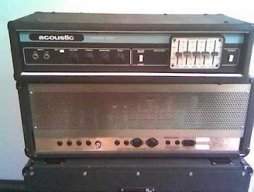
i connected my 70's Acoustic 220 head to this rehersal room stack in the foto i built with the horn "off" and the mid run all the way out to it natural rolloff. Power comes from 1980's QSC class ab-g amps. Ashly XR-1001 crossover. Ciare 15NDH-4S 15" neo woofer that flat to 40hz and a Ciare 10NDH-3 neo mid. It sounds killer. I like the old Ampeg SVT and HiWatt DR201. I like both tubes and transistors and each has their own sound. I'v listened to new stuff at Guitar Center and was talking to a bass player friend from the 70's about bass tones earlier tonight. He still likes the Acoustic 220/230 head and cabinets and thats what he would use if he starts playing bass out again. He currently plays lead guitar through a newer Acoustic amp and i forgot the model.
 
Last edited:
Quality of a build has nothing to do with Surface Mount and Thru Hole assembly and design versus Turret Board and hand wired construction. I am a Manufacturing Engineer in my day job and I build high reliability Military and Medical assemblies so I do know a little about the subject. Ultimately the difference in sound that may be discerned between to identical circuits, hand wired versus conventional construction would be attributed to the components used rather than how they are put together. That is where the magic is. The cost of labor to assemble old school versus modern techniques is what keeps reasonable prices on new gear and the form factor to shrink and give us amplifiers that weigh under 10lbs. Design and quality of the work done are what separates Genz Benz from Behringer as well as quality of components used.
 
  • Like
Reactions: Sartori and FFTT
I thought your post was quite helpful.

In less technical terms, I tried to explain that the way a circuit sounds comes from the sum of all components used in the circuit, as well as the quality and actual measured values of each component.

As far as build method and execution of the design, in hand wired amps, I have always accepted my father's opinion, that turret board was the most rugged and easy to service.

PCB done right can be rugged enough for a Mars mission or a Black Box, but those circuits are not designed for audio fidelity.

If Fender or Marshall or Ampeg were building amps with the methods and materials you use in your work, and paying American labor rates, I doubt they could deliver an amp for $400.00 and it certainly would not sound as good as their original hand wired legacy circuits.

I will admit, that when it was time for me to buy a new bass amp, I had serious ethical issues with supporting companies like Loud Technologies/Ampeg, Marshall or Fender or Vox because of what I consider unethical labor practices.

The new Ampeg, hand wired Heritage series is a result of pounding public pressure to offer Legacy hand wired circuits with American labor.

If you build it right, using fair labor practices, there are musicians who will gladly pay for that level of quality.


Quality of a build has nothing to do with Surface Mount and Thru Hole assembly and design versus Turret Board and hand wired construction. I am a Manufacturing Engineer in my day job and I build high reliability Military and Medical assemblies so I do know a little about the subject. Ultimately the difference in sound that may be discerned between to identical circuits, hand wired versus conventional construction would be attributed to the components used rather than how they are put together. That is where the magic is. The cost of labor to assemble old school versus modern techniques is what keeps reasonable prices on new gear and the form factor to shrink and give us amplifiers that weigh under 10lbs. Design and quality of the work done are what separates Genz Benz from Behringer as well as quality of components used.
 
Last edited:
Quality of a build has nothing to do with Surface Mount and Thru Hole assembly and design versus Turret Board and hand wired construction. I am a Manufacturing Engineer in my day job and I build high reliability Military and Medical assemblies so I do know a little about the subject. Ultimately the difference in sound that may be discerned between to identical circuits, hand wired versus conventional construction would be attributed to the components used rather than how they are put together. That is where the magic is. The cost of labor to assemble old school versus modern techniques is what keeps reasonable prices on new gear and the form factor to shrink and give us amplifiers that weigh under 10lbs. Design and quality of the work done are what separates Genz Benz from Behringer as well as quality of components used.

Agreed but this does not mean all component mount PCB construction is quality. There is an awful lot of crap out there and not much quality.
 
  • Like
Reactions: FFTT
This is a fun thread. I'll just add something that was not discussed. The sound of an SMPS vs. lead sled amp when pushed close to and into clipping. That's when they sound very dissimilar to me. Some enjoy a lead sled that's clipping a wee bit (some do it better than others of course). SMPS amps just shut down and if they don't, they generally sound awful when they start to clip.